
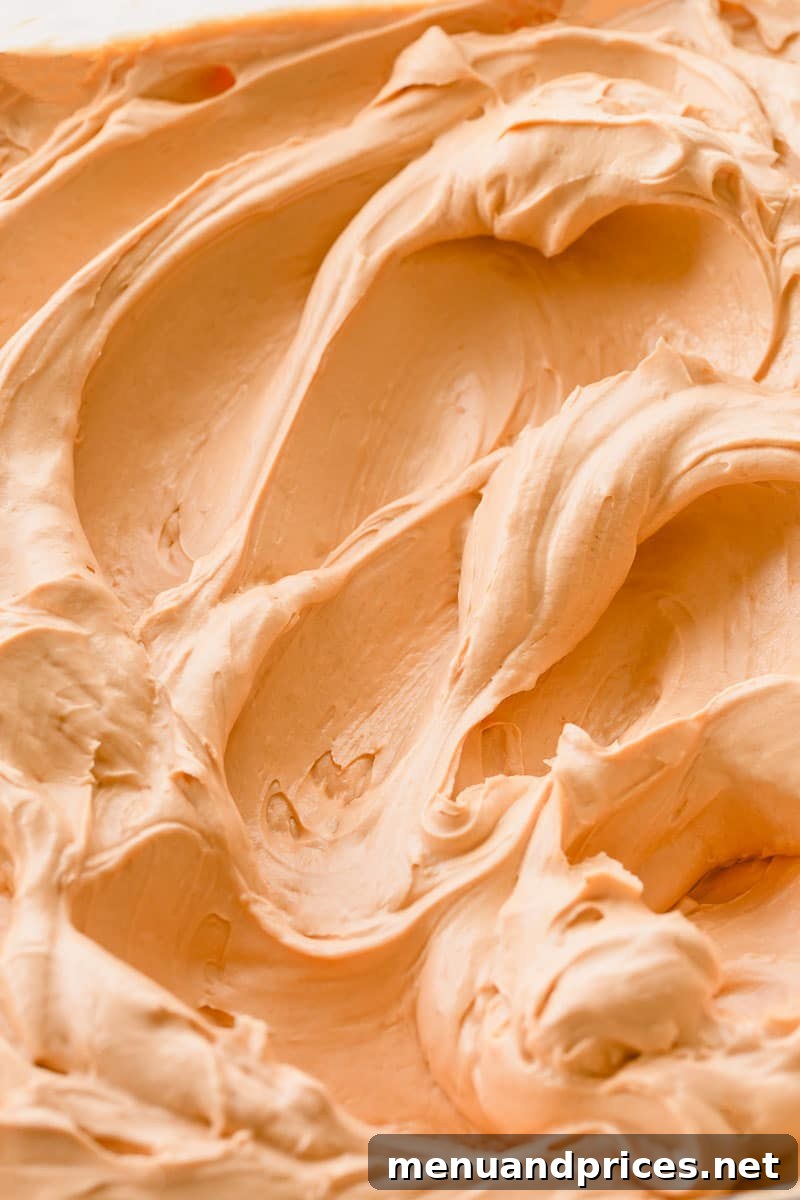
Prepare to create the most luxuriously smooth, incredibly light, and irresistibly creamy frosting you’ve ever tasted. Our Salted Caramel Swiss Meringue Buttercream is a dream come true for any dessert enthusiast. It’s renowned for its silky texture, delightful fluffiness, and perfectly balanced sweetness, making it a sophisticated step up from traditional buttercreams. And the best part? It’s surprisingly easy to master with our expert tips and detailed guidance!
This comprehensive guide will equip you with all the knowledge and techniques needed to achieve a flawless frosting every single time, ensuring your desserts stand out with a professional touch.
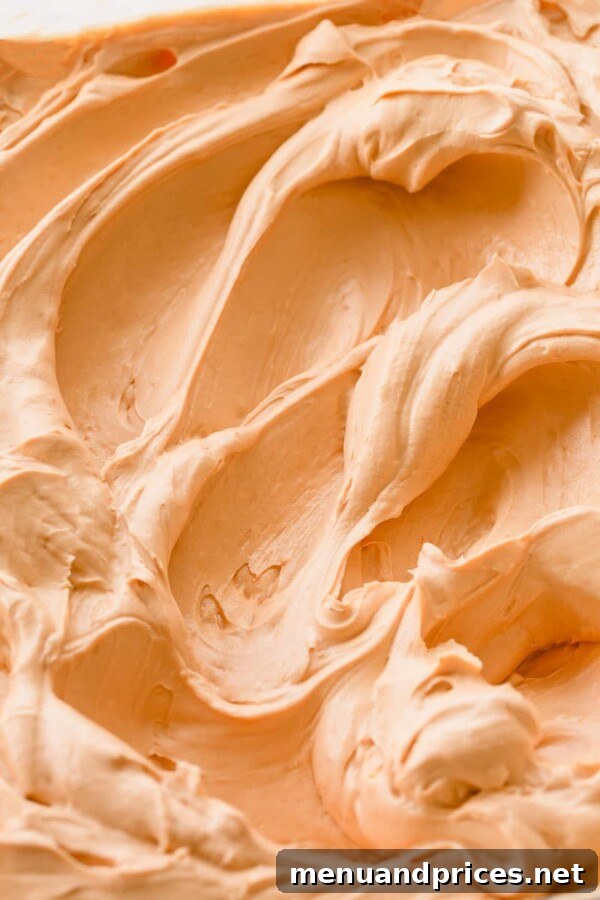
Salted Caramel Swiss Meringue Buttercream: Your New Favorite Frosting
Forget everything you thought you knew about buttercream! This salted caramel version is a game-changer. Imagine a frosting so light it almost floats, so creamy it melts in your mouth, and with a flavor profile that’s simply divine. It’s less sweet than American buttercream, allowing the rich, complex notes of homemade salted caramel to truly shine. This recipe isn’t just about frosting; it’s about elevating your baking to an art form.
Why You’ll Adore This Salted Caramel Swiss Meringue Buttercream
Unlike its American counterpart, which can sometimes be overly sweet and dense, this salted caramel Swiss meringue buttercream frosting offers a more refined and delicate experience. Here’s why it will become your go-to frosting:
- Unparalleled Texture: It boasts an incredibly silky smooth and light-as-air texture that’s simply irresistible. This is achieved by whipping meringue into a stable base before slowly incorporating butter.
- Perfectly Balanced Sweetness: While undeniably decadent, it’s significantly less sweet than traditional buttercreams, allowing the deep, caramelized notes and a hint of salt to truly stand out.
- Stable and Versatile: This buttercream holds its shape beautifully, making it perfect for intricate piping work on cakes, cupcakes, and even as a luxurious filling for delicate macarons. It’s also more stable in warmer temperatures than many other frostings.
- Professional Finish: Achieve bakery-quality results at home. Its pristine appearance and smooth finish will impress everyone.
- Make-Ahead Friendly: It stores exceptionally well, meaning you can prepare it in advance, saving you time and stress on busy baking days.
- Rich Flavor: The addition of homemade salted caramel sauce infuses the buttercream with a depth of flavor that is simply addictive – a perfect balance of sweet and salty.
This frosting isn’t just a topping; it’s a key component that enhances the entire dessert, transforming ordinary baked goods into extraordinary culinary delights.
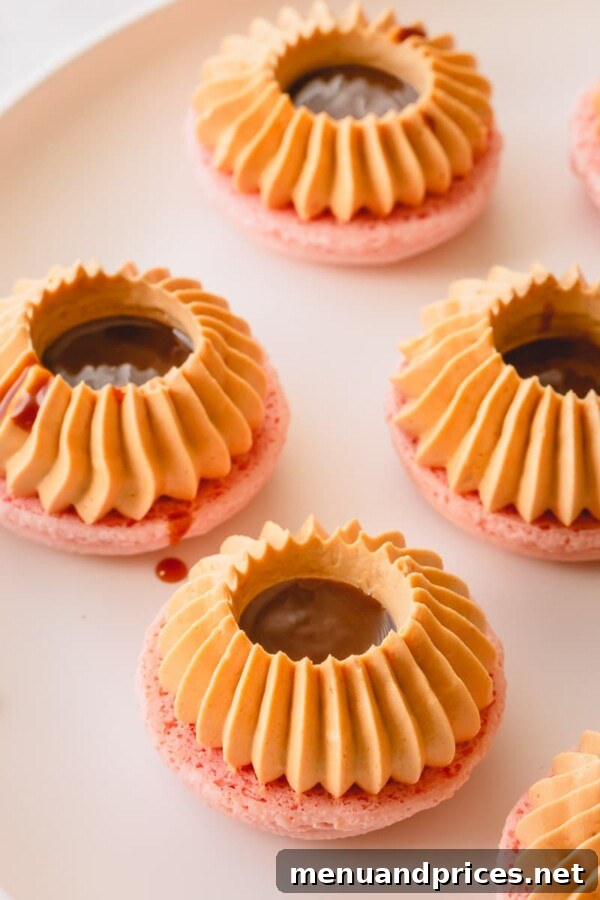
Crafting Your Masterpiece: A Step-by-Step Guide to Salted Caramel Swiss Meringue Buttercream
Creating this exquisite buttercream involves a few distinct steps, each contributing to its unique texture and flavor. Follow these instructions carefully, and you’ll be rewarded with a truly spectacular frosting.
Step 1: Prepare Your Irresistible Homemade Salted Caramel Sauce
While you can opt for store-bought caramel sauce, making it from scratch is not only more economical but also yields a far superior flavor and texture that truly elevates this buttercream. The depth and richness of homemade caramel are unparalleled.
It is crucial to prepare your caramel sauce well in advance. We highly recommend making it at least a few hours beforehand, or even a day (or a week!) prior to when you plan to make the buttercream. Why? Because the caramel needs to be completely chilled and thickened before being incorporated into the buttercream. Adding warm or even slightly cool caramel can destabilize the meringue and result in a runny frosting. For a perfect, thick, and utterly delicious caramel, allow ample time for it to cool down to refrigerator temperature.
For a detailed, step-by-step tutorial on crafting the perfect batch of homemade salted caramel sauce, complete with helpful tips and tricks, check out our dedicated guide. This will ensure your caramel foundation is absolutely flawless.
Step 2: Master the Art of Swiss Meringue
- Begin by combining your granulated sugar and egg whites in a clean, heat-proof bowl. A stainless steel or glass bowl is ideal here.
- Place this bowl directly over a saucepan containing about an inch or two of simmering water, creating a double boiler. Ensure the bottom of the bowl does not touch the simmering water.
- Gently cook the egg white and sugar mixture, whisking continuously to prevent the eggs from scrambling. Continue until the mixture reaches 160°F (70°C). At this point, you should not feel any sugar granules when you rub a small amount of the mixture between your fingertips. Cooking the egg whites to this temperature pasteurizes them, making the buttercream perfectly safe to eat.
- Immediately remove the bowl from the heat. Transfer it to a stand mixer fitted with the whisk attachment, or use a hand mixer.
- Whisk the hot meringue on medium speed for a minute, then gradually increase the speed to medium-high. Continue whisking until stiff, glossy peaks form and the meringue bowl is completely cool to the touch. This cooling process is crucial for the stability of your buttercream. Depending on your mixer, this can take 10-15 minutes or even longer with a hand mixer.
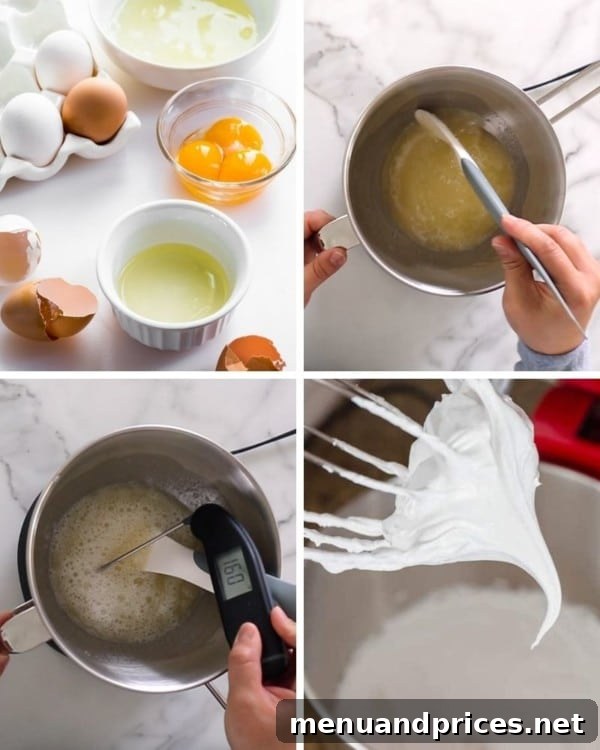
Essential Meringue Tips for Success
Cleanliness is Key: For a stable meringue, ensure your mixing bowl and whisk attachments are immaculately clean and completely grease-free. Even the tiniest speck of fat can prevent the egg whites from whipping up properly. Stainless steel or glass bowls are preferred for meringue making.
Egg Separation Precision: When separating eggs, be extremely careful not to get any yolk into the egg whites. Yolk contains fat, which will compromise your meringue’s ability to achieve stiff peaks. Understand why fat is the enemy of meringue here.
Temperature Matters: Whisking until the meringue is completely cool to the touch is critical. If the meringue is still warm when you add the butter, your buttercream will likely melt and become a soupy mess.
Is Swiss Meringue Buttercream Safe to Eat? Absolutely!
A common concern with meringue-based frostings is the use of raw egg whites. However, with Swiss meringue buttercream, this is precisely why we cook the egg whites over a double boiler until they reach a temperature of 160°F (70°C). This process effectively pasteurizes the egg whites, eliminating any potential bacterial risk and making the buttercream perfectly safe for consumption.
To ensure maximum safety and peace of mind, we highly recommend using an instant-read thermometer to accurately monitor the temperature of your egg white mixture. Reaching the proper temperature is key to both safety and the structural integrity of your meringue.
Don’t Waste Those Extra Egg Yolks!
Found yourself with extra egg yolks after making this recipe? Don’t let them go to waste! Click here for 6 delicious and creative egg yolk recipes that will put them to good use, from custards to rich sauces.
Step 3: Incorporate the Butter for Creaminess
- Once your meringue is completely cool and has achieved stiff peaks, it’s time to add the butter. With the mixer running on medium speed, gradually add room temperature unsalted butter, one tablespoon at a time.
- It’s crucial to whisk the frosting thoroughly after each addition. Allow each piece of butter to be fully incorporated before adding the next.
- Continue this process until all the butter has been added. The buttercream may look curdled or separated halfway through – this is completely normal! Do not panic. Keep whisking. It will magically come together into a super light, smooth, and fluffy frosting. This can take anywhere from 5-10 minutes after the last butter addition.
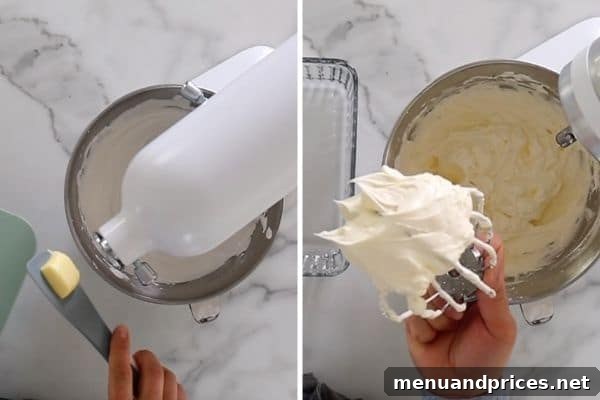
The Importance of Perfect Room Temperature Butter
Using butter at the correct temperature is absolutely critical for the success of your Swiss meringue buttercream. It shouldn’t be too hard or too soft. When you gently press your finger into it, the butter should dent with some resistance, but not go straight through. If it’s too cold, it won’t emulsify properly; if it’s too warm, it will melt the meringue, leading to a runny buttercream.
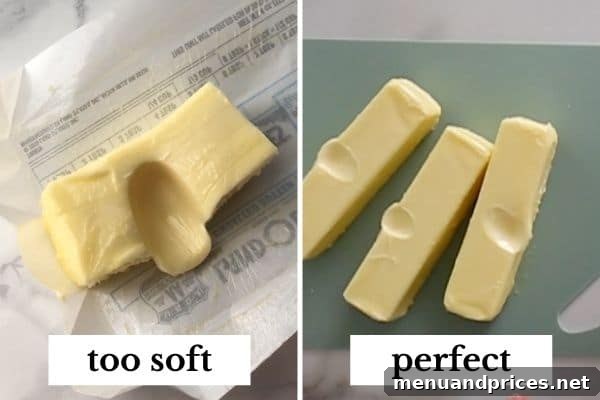
Buttercream Texture Troubleshooting
If your buttercream tastes greasy, too buttery, or seems a bit dense, it likely means it’s under-mixed. Don’t stop! Keep whisking it on medium-high speed. The air being incorporated will transform it. Properly mixed Swiss meringue buttercream should taste incredibly light, clean, and dissolve beautifully on your palate, without any heavy or greasy sensation.
Step 4: Swirl in the Salted Caramel Magic
- Once your buttercream has reached its perfectly smooth and fluffy consistency, it’s time for the star ingredient: the cold salted caramel sauce.
- Add the completely chilled salted caramel sauce into the buttercream.
- Switch your mixer attachment from the whisk to a paddle. Beat the frosting on low to medium speed until the caramel is thoroughly combined and evenly distributed throughout the buttercream. Be careful not to overmix at this stage, as you want to maintain the airiness of the buttercream. A minute or two should be sufficient to achieve a beautiful, uniform caramel flavor and color.
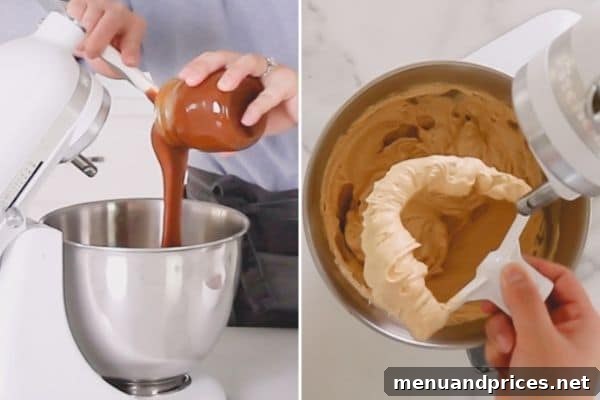
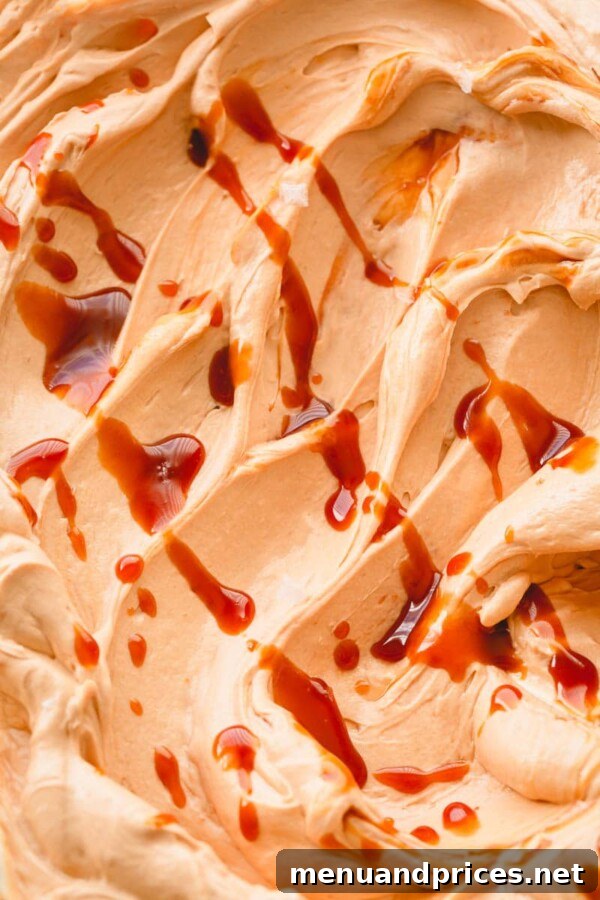
Make-Ahead Mastery: Storing Your Swiss Meringue Buttercream
One of the many fantastic qualities of Salted Caramel Swiss Meringue Buttercream is its excellent make-ahead potential. This makes it an ideal frosting for busy bakers or anyone who loves to prep components in advance. Here are the best ways to store your buttercream and keep it fresh:
- At Room Temperature (Overnight): Surprisingly, Swiss meringue buttercream is quite stable. You can safely keep it on your kitchen counter overnight (for up to 12-18 hours) in an airtight container. Its high sugar and fat content act as natural preservatives, keeping it from spoiling. Ensure your kitchen isn’t excessively warm, ideally below 75°F (24°C).
- In the Refrigerator: For longer storage, transfer the buttercream to an airtight container and refrigerate it for up to 2 weeks. Before using, let it come to room temperature for a few hours, then re-whip it on medium speed in your stand mixer until it’s light, fluffy, and smooth again. This helps restore its perfect consistency.
- In the Freezer: Swiss meringue buttercream freezes beautifully! Store it in a freezer-safe, airtight container for up to 3 months. When you’re ready to use it, thaw the frozen buttercream on your counter overnight. Once thawed and at room temperature, give it a good whip in your stand mixer to bring back its original light and airy texture.
Always remember to re-whip your buttercream after it has been refrigerated or frozen and brought back to room temperature. This re-emulsifies the ingredients and ensures it’s perfectly smooth and pipeable.
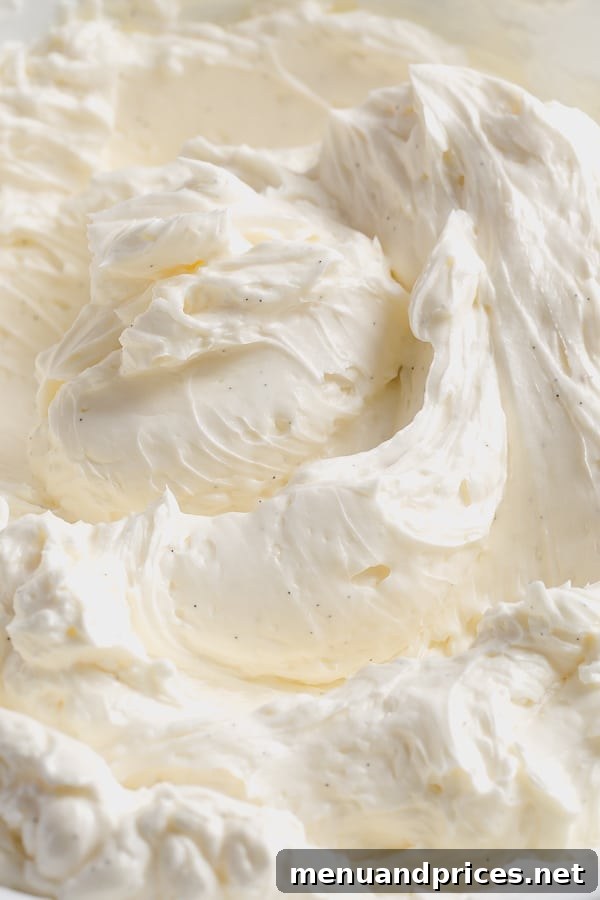
Buttercream Troubleshooting: Common Issues & Solutions
Even seasoned bakers encounter challenges with buttercream. Don’t worry if your Swiss meringue buttercream doesn’t turn out perfectly the first time. Most issues are easily fixable! Here are some common problems and their quick solutions:
- Runny or Soupy Buttercream: This is usually caused by the meringue not being fully cooled when butter was added, or the butter being too soft. Place the bowl (and its contents) in the refrigerator for 10-20 minutes, then re-whip on medium-high speed. Repeat if necessary.
- Curdled or Lumpy Buttercream: This is very common, especially during the butter addition phase. Keep whisking! It will come together. If it persists, ensure your butter was truly room temperature (not too cold). A slight chill in the fridge then re-whipping can help.
- Too Stiff Buttercream: If your buttercream is too firm after chilling, let it come to room temperature, then re-whip until fluffy. If it’s still too stiff, you can gently warm the bowl over a pan of warm (not hot) water for 30 seconds at a time, scraping down the sides, then re-whip.
- Greasy Taste: This indicates under-mixing. Continue beating the buttercream on medium-high speed to incorporate more air until it becomes light, fluffy, and tastes clean.
For a deep dive into every possible scenario and detailed remedies, be sure to check out our complete tutorial:
Explore Other Divine Buttercream Flavor Variations
While salted caramel is a showstopper, the beauty of Swiss meringue buttercream lies in its adaptability. Once you’ve mastered the basic technique, a world of flavor possibilities opens up!
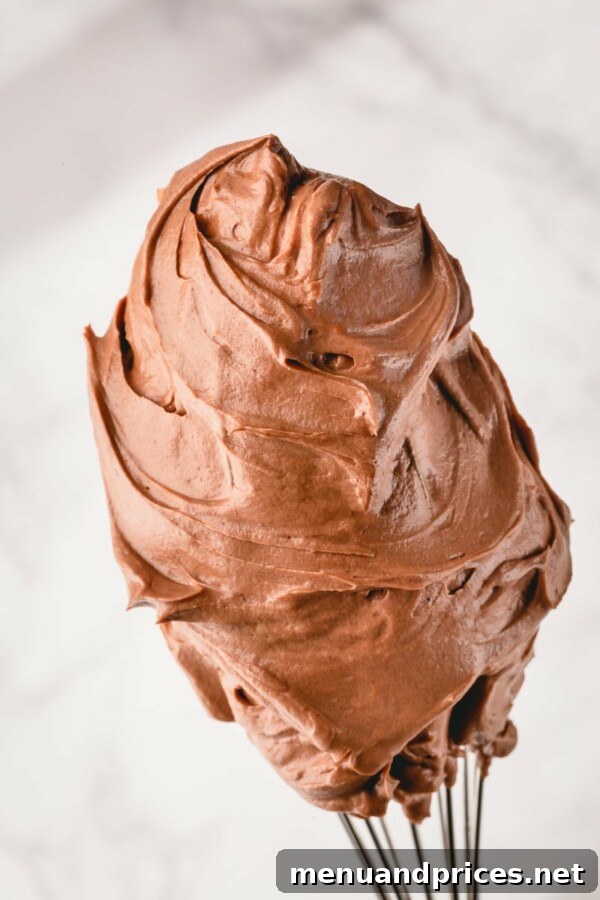
Indulgent Chocolate Swiss Meringue Buttercream
For the chocoholics, transforming this base into an intensely chocolatey, yet still unbelievably creamy and smooth frosting is absolutely divine. Simply melt high-quality dark or milk chocolate and allow it to cool slightly before folding it into your finished basic Swiss meringue buttercream. It creates a rich, sophisticated chocolate experience that’s perfect for any chocolate cake or cupcake.
Vanilla Bean Elegance
For a classic, sophisticated flavor, infuse your buttercream with the aromatic richness of real vanilla bean paste or extract. Add it along with the butter for a timeless appeal.
Coffee Bliss
Dissolve instant espresso powder in a tiny bit of hot water (and cool completely) or add a concentrated cold brew coffee reduction for a delightful coffee-flavored buttercream, perfect for tiramisu-inspired desserts.
Fruity Freshness
For a lighter, fruity touch, fold in a small amount of concentrated fruit puree (like raspberry, strawberry, or passion fruit) that has been reduced and cooled. Be mindful of adding too much liquid, as it can loosen the buttercream.
We’d love to hear about your creations! Let us know in the comments below if you try this recipe and how you customized it!
Salted Caramel Swiss Meringue Buttercream
Shinee Davaakhuu
30
4
cups
Comment
Print Recipe
Ingredients
-
6
egg whites
(Note 1) -
1 ½
cups
(300g) granulated sugar -
½
teaspoon
coarse kosher salt -
1 ½
cups
(340g) unsalted butter
at room temperature (Note 2) -
1
cup
salted caramel sauce
(Note 3)
Instructions
-
In a small saucepan, bring a small amount of water to a boil. Reduce the heat to simmer.
-
In medium heat-proof bowl (a stand mixer bowl works perfectly), whisk together egg whites and sugar and place it over the saucepan with simmering water. (This is a make-shift double boiler. Ensure the bottom of the top bowl doesn’t touch the water.)
-
Cook the egg white mixture until sugar is completely melted and it reaches 160°F (70°C) stirring continuously, about 5 minutes. (Using an instant-read thermometer is highly recommended for accuracy!)
-
Now, remove the bowl with egg white mixture from heat. Transfer to a stand mixer (or use a hand mixer). Then whisk it on medium speed for a minute, then slowly increase the speed to medium-high and beat until stiff peaks form and the mixture is completely cool to touch, about 10-15 minutes. (It may take longer with a hand-mixer.)
-
Once the meringue has reached stiff peaks and is cool, scrape the side of the bowl with a spatula and add the coarse kosher salt.
-
Turn on the mixer to medium speed and start adding the room temperature butter, one tablespoon at a time. Make sure each piece of butter is fully incorporated before adding the next. (NOTE: It’s normal if the buttercream starts to curdle halfway through; keep adding the butter and whisking!)
-
Keep whisking the buttercream on medium-high speed until it transforms into a smooth, light, and fluffy consistency, typically about 10 minutes after all butter is added.
-
Now, switch to a paddle attachment (if using a stand mixer) and add the completely chilled salted caramel sauce. Beat the buttercream until the caramel is well combined and evenly distributed, about a minute or two.
⭐️ Did you make this recipe?
Please leave a review and let us know how you liked it!
Tips & Notes
Make-Ahead Tip: Salted Caramel Swiss meringue buttercream is excellent for making in advance. It can be frozen for up to 3 months or refrigerated for up to 2 weeks in an airtight container. Always thaw frozen buttercream on the counter overnight and re-whip it to restore its perfect texture before using.
Note 1 – Egg Whites: While some carton egg whites can work, success varies by brand for meringue stability. If using liquid egg whites from a carton, you will need approximately 210g. Fresh egg whites are generally recommended for best results.
Note 2 – Butter Temperature: Ensure your unsalted butter is at true room temperature, meaning it yields slightly when pressed but still offers some resistance. Butter that is too soft will melt the meringue, while butter that is too cold will cause the buttercream to curdle and take longer to come together.
Note 3 – Caramel Sauce: For optimal results, it is highly recommended to make your salted caramel sauce at least a day in advance. This allows ample time for it to chill completely in the refrigerator, ensuring it is thick and cold before being added to the buttercream. This prevents the caramel from thinning out the frosting.
Nutrition
178
kcal
19
g
1
g
12
g
13
g
96
mg
Dessert
Swiss

Did you make this?
Leave a rating and your feedback. Thank you!