
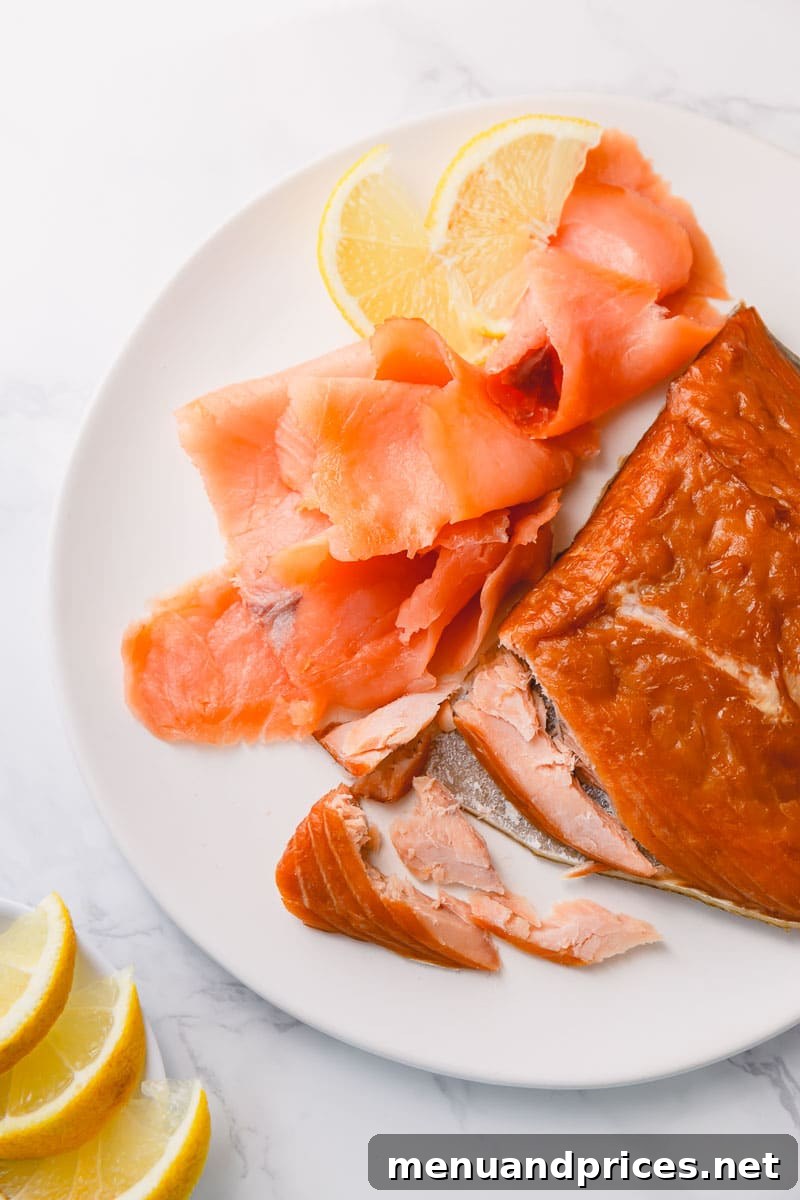
The Ultimate Guide to Smoked Salmon: Hot, Cold, Lox & More
Have you ever wondered why some smoked salmon melts in your mouth with a velvety texture, while other varieties are wonderfully firm and flaky? The world of smoked salmon is richer and more diverse than you might imagine, offering a delightful array of textures, flavors, and culinary applications. From sophisticated appetizers to hearty brunch staples, smoked salmon has carved out a unique place in kitchens and dining tables worldwide. Let’s embark on a comprehensive journey to unravel the secrets behind this beloved delicacy, exploring its fascinating varieties, unique preparation methods, and the best ways to enjoy each one.
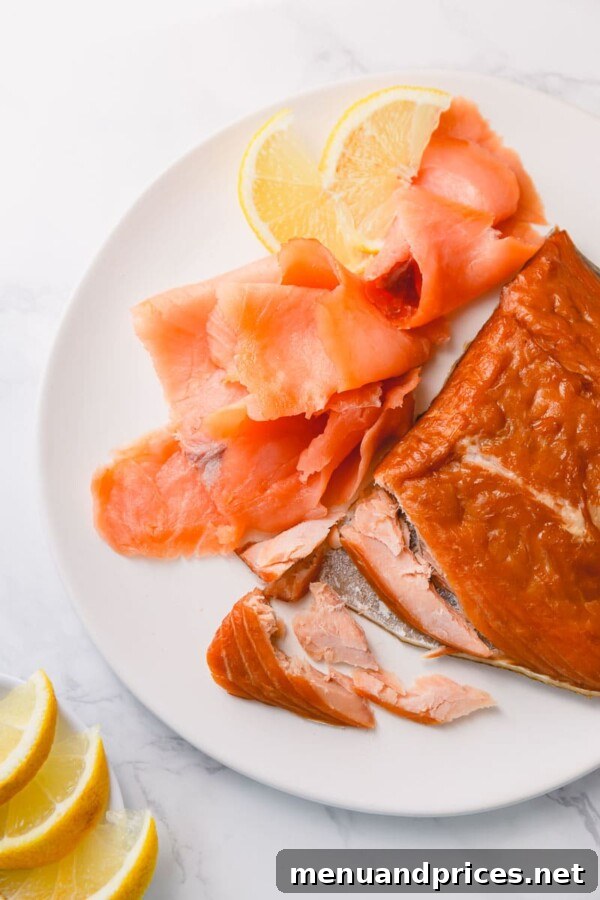
Smoked Salmon Varieties Unveiled: Hot, Cold, and Lox
My own deep dive into the nuances of smoked salmon began unexpectedly during a work conference in Alaska back in 2013. Upon returning home with several packages of local smoked salmon, I was struck by how different they were from the familiar, velvety-soft, refrigerated kind I was accustomed to. This surprising discovery led me down a rabbit hole of research, revealing that the key to these delightful differences lies primarily in the preparation process itself. It turns out, there are two fundamental methods for preparing this exquisite fish: cold-smoked and hot-smoked.
Understanding these distinctions is crucial for appreciating the full spectrum of smoked salmon products available today. Each method imparts unique characteristics, from its flavor profile and texture to its shelf life and culinary suitability. Beyond traditional smoking, there’s also the intriguing case of ‘lox,’ a close cousin often mistaken for smoked salmon but with its own distinct, unsmoked preparation. Together, these three forms represent the diverse world of cured salmon that delights palates globally.
The Ancient Art of Smoking Salmon: A Brief History and Cultural Significance
The practice of smoking fish dates back thousands of years, originally devised as a crucial method of food preservation long before the advent of refrigeration. Early civilizations, facing the challenge of seasonal catches, discovered that exposing fish to smoke not only extended its shelf life significantly but also imbued it with a desirable, rich, and complex flavor. Over centuries, these rudimentary techniques evolved into sophisticated culinary arts, with different regions developing their unique smoking traditions and curing recipes.
Smoked salmon, in particular, holds significant cultural importance in various parts of the world, from the indigenous communities of the Pacific Northwest, where salmon is a cornerstone of their diet and heritage, to the Jewish delis of Eastern Europe and America, where lox became an iconic breakfast item. What began as a necessity transformed into a cherished culinary tradition, with smoked salmon becoming a symbol of gourmet taste and celebratory dining. Today, it remains a testament to ancient ingenuity, cherished globally for its exquisite taste, versatility, and enduring legacy.
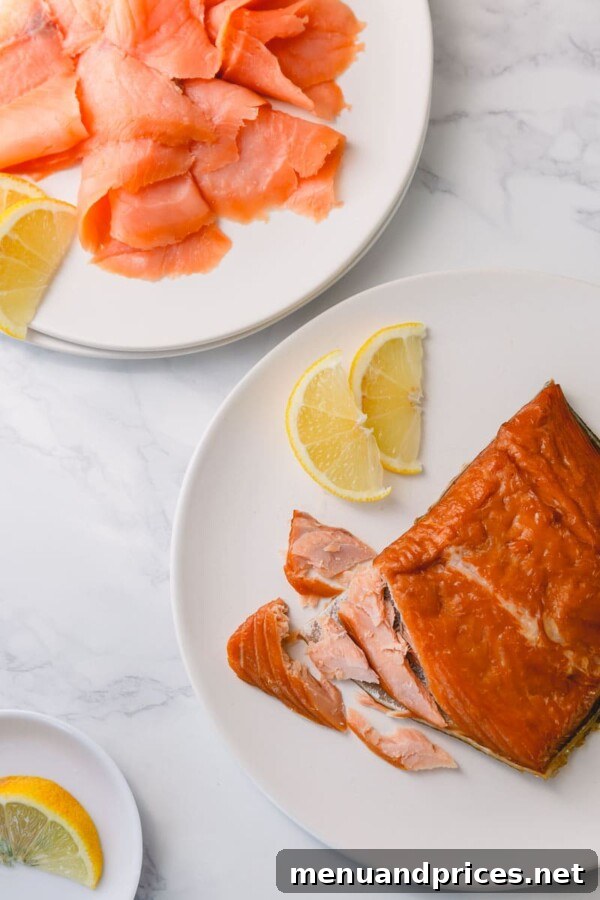
What is Hot-Smoked Salmon? A Deep Dive into Its Characteristics
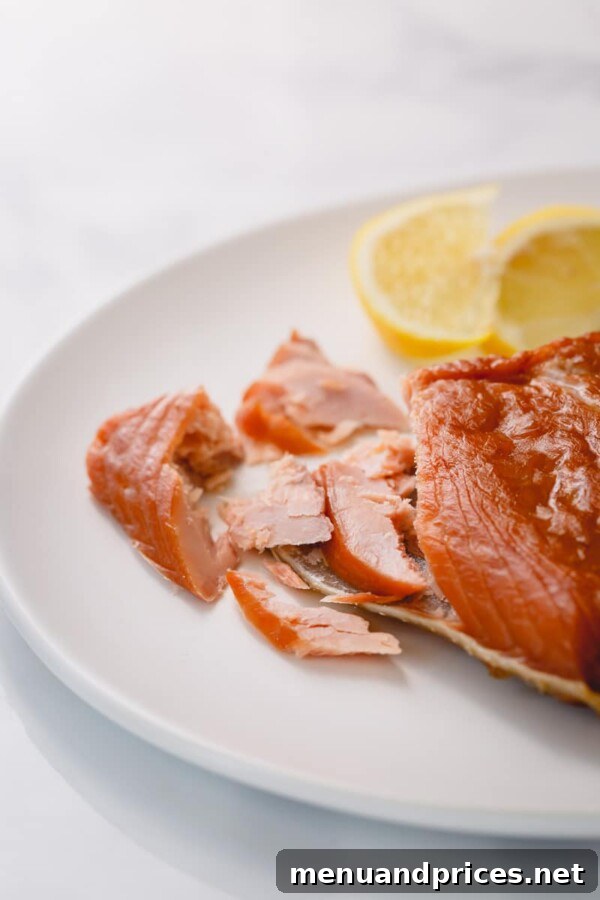
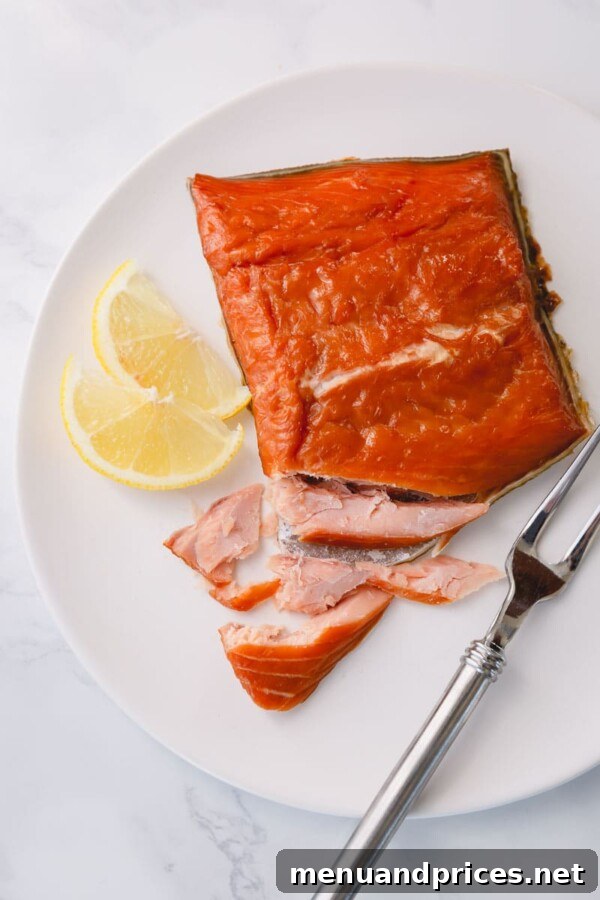
Hot-smoked salmon is a truly remarkable product, immediately identifiable by its distinctly rich, flaky texture and opaque, vibrant orange color. Unlike its cold-smoked counterpart, hot-smoked salmon is fully cooked during the smoking process, making it incredibly versatile and ready to eat straight from the package, similar to baked or grilled fish but with an added smoky dimension.
The method involves smoking salmon at significantly higher temperatures, typically ranging from 120-180°F (49-82°C). This extended exposure to both heat and smoke not only cooks the fish thoroughly but also imparts a deep, robust smoky flavor that penetrates every fiber of the salmon. Before entering the smoker, the salmon is usually cured with a salt or sugar brine for several hours. This curing process draws out moisture, seasons the fish, and contributes to its firm, yet tender, consistency. The result is a succulent, almost steak-like flesh that easily flakes apart, offering a satisfying mouthfeel and a pronounced smoky aroma that is both comforting and gourmet.
Hot-smoked salmon is often favored for its robustness in cooking. Its firm texture holds up exceptionally well under heat, making it an excellent addition to warm dishes like quiches, pasta, scrambled eggs, savory tarts, or even flaked over roasted vegetables. Its intense flavor can stand its ground amidst other ingredients, lending a sophisticated depth and richness to any meal. It’s an ideal choice when you desire a substantial, cooked salmon experience with a delightful smoky twist.
What is Cold-Smoked Salmon? A Delicate and Silky Experience
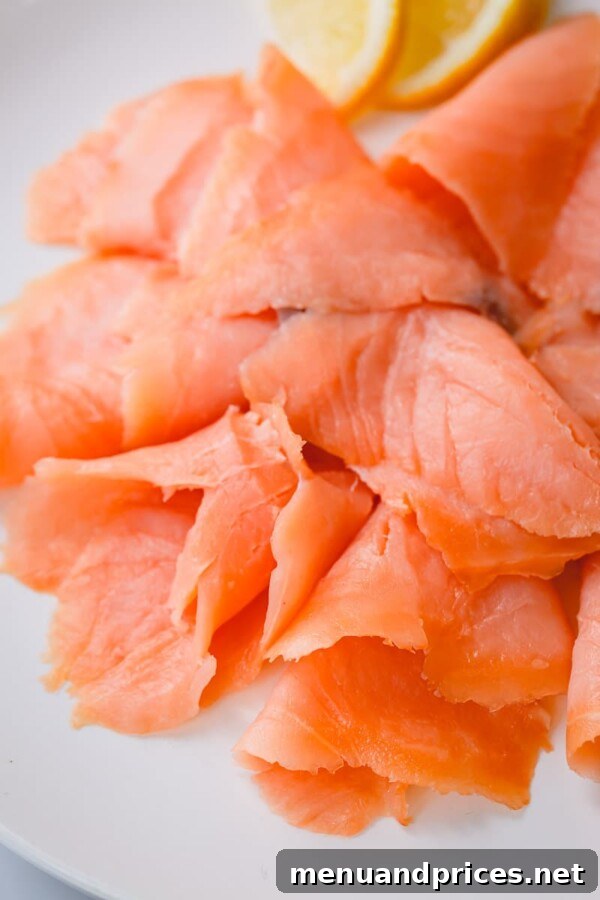
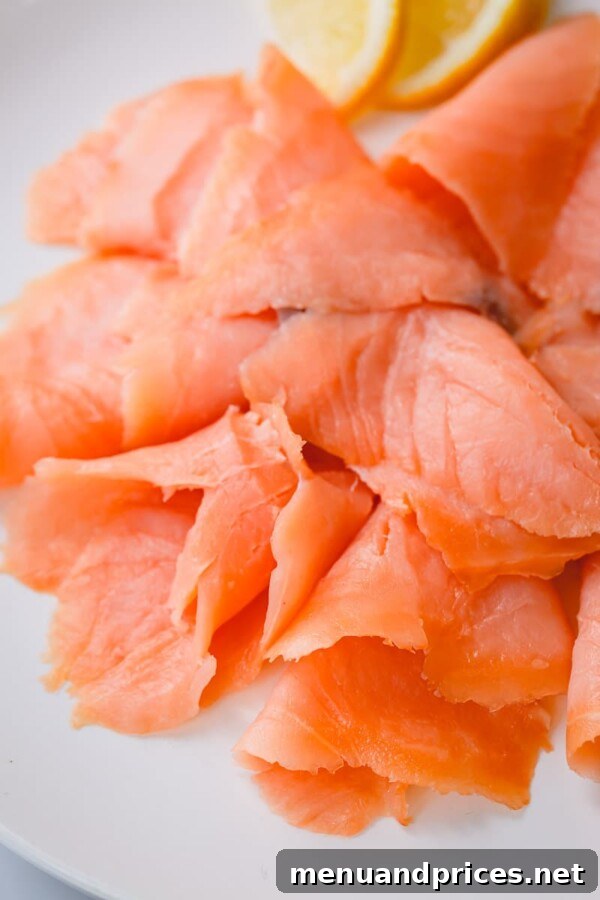
In stark contrast to its hot-smoked cousin, cold-smoked salmon is renowned for its exquisitely delicate, soft, and silky texture. Its color is a translucent pinkish-orange, often appearing more vibrant and less opaque than hot-smoked varieties. This method preserves the raw integrity of the fish, offering a nuanced flavor profile that is both fresh and subtly smoky, making it a true gourmet delight.
The cold-smoking method is a meticulous, multi-stage process that begins with thoroughly curing the fish. Typically, this involves covering the salmon fillets in a dry salt cure (often combined with sugar, dill, and other spices) for several hours or even a few days. This curing process draws out moisture, firms the flesh, and inhibits bacterial growth, while also infusing delicious flavor. After curing, the salmon is meticulously rinsed, patted dry, and allowed to air-dry further to form a pellicle—a slightly tacky surface layer essential for the smoke to adhere to properly.
The key to cold-smoking is maintaining a very low temperature, usually between 70-90°F (21-32°C), for an extended period, often 12 to 24 hours, or even longer depending on the desired intensity. Crucially, the fish is not cooked during this process; rather, it is gently infused with smoke at temperatures that do not denature the proteins. This low-temperature, long-duration smoking results in that signature melt-in-your-mouth texture and a delicate smoky essence that enhances the natural flavor of the salmon without overpowering it. Cold-smoked salmon is almost always consumed raw, making it a star ingredient in dishes where its texture and subtle flavor can truly shine, from elegant appetizers to classic bagel spreads.
What is Lox? The Unsmoked Delicacy Explained
Often confused with cold-smoked salmon, lox is a distinct preparation that shares many similarities but has one crucial difference: it is never smoked. Lox refers specifically to salmon belly that has been cured in a salt brine, a process also widely known as gravlax, especially when enhanced with herbs and spices like fresh dill. The curing process is similar to the initial stage of cold-smoked salmon, involving a solution of salt, and sometimes sugar and spices, which draws out moisture and ‘cooks’ the fish through osmosis and protein denaturation without the application of heat or smoke.
Historically rooted in Jewish culinary traditions, particularly popular in New York delis, lox is characterized by its incredibly rich, often intensely salty flavor and a luxuriously smooth, almost buttery texture. It typically has a brighter, fresher salmon flavor compared to smoked varieties, precisely because it lacks the smoky notes. Lox is almost exclusively served cold and raw, sliced paper-thin, and is a non-negotiable staple on bagels with cream cheese, capers, and red onion. Understanding that lox is cured, not smoked, helps differentiate it from its smoked relatives and appreciate its unique, unsmoked place in the culinary world, offering a pure salmon experience.
How to Store Smoked Salmon: Maintaining Freshness and Quality
Proper storage is absolutely essential to preserve the delicious flavor, delicate texture, and crucially, the safety of smoked salmon, given its perishable nature. The storage recommendations vary significantly between hot-smoked and cold-smoked/lox products due to their distinct preparation methods and inherent vulnerabilities.
Hot-Smoked Salmon Storage:
Because hot-smoked salmon is fully cooked during its preparation, it boasts a longer shelf life, especially when unopened. It’s often available canned or vacuum-sealed, allowing for stable storage at cool room temperature for extended periods, sometimes even months, as indicated by the best-by or expiration date on the packaging. Once the package is opened, however, it becomes perishable and susceptible to spoilage. It should be promptly refrigerated in an airtight container and consumed within 5 to 7 days. For longer-term storage, opened hot-smoked salmon can be tightly wrapped in plastic wrap and then aluminum foil, and frozen for up to 2-3 months without significant loss of quality, though its texture might become slightly softer upon thawing. Thaw frozen hot-smoked salmon slowly in the refrigerator.
Cold-Smoked Salmon and Lox Storage:
Both cold-smoked salmon and lox are considered raw and highly perishable, making refrigeration an absolute necessity from the moment of purchase. They must be stored in the coldest part of your refrigerator (usually the bottom shelf or a dedicated deli drawer). Unopened, vacuum-sealed packages typically last until the expiration date, which can range from a few weeks to a couple of months. Once opened, however, their delicate nature means their shelf life drastically shortens. It’s crucial to consume cold-smoked salmon and lox within 3 to 5 days after opening, regardless of the original expiration date, to ensure optimal freshness and safety. Freezing these delicate products is also an option for longer-term storage, up to 2-3 months. When freezing, ensure they are tightly wrapped in plastic wrap and then foil to prevent freezer burn. Always thaw cold-smoked salmon and lox slowly in the refrigerator overnight before use.
Always inspect any smoked salmon for signs of spoilage, such as an off-odor (sour, fishy), slimy texture, or noticeable discoloration, before consumption. If there’s any doubt about its freshness, it’s always best to err on the side of caution and discard the product to ensure food safety.
How to Use Smoked Salmon: Culinary Versatility at Its Best
The beauty of both hot-smoked and cold-smoked salmon, as well as lox, lies in their incredible versatility, allowing them to be enjoyed in myriad ways, often straight out of the packaging. However, understanding their unique characteristics helps in pairing them with the right dishes for the best culinary experience and to maximize their distinct qualities.
Hot-Smoked Salmon: Perfect for Cooking and Hearty Dishes
With its robust flavor and flaky, cooked texture, hot-smoked salmon is exceptionally well-suited for applications where it will be heated or integrated into more substantial, cooked dishes. Its ability to stand up to heat without disintegrating makes it a fantastic choice for:
- Flaking into creamy pasta dishes, like fettuccine alfredo or carbonara, for a rich, smoky depth and satisfying protein.
- Incorporating into savory quiches, frittatas, and omelets, where its firm texture adds substance and flavor.
- Mixing into hearty salads (like a smoked salmon potato salad) or grain bowls for a protein boost and gourmet twist.
- Creating delicious, spreads and dips, blended with cream cheese, sour cream, or Greek yogurt.
- Topping pizzas, flatbreads, or baked potatoes, adding a savory, smoky element.
- Serving simply as a main course alongside roasted vegetables, rice, or a fresh side salad.
- Adding to scrambled eggs for a luxurious breakfast.
Its rich flavor truly shines when warmed, releasing its aromatic compounds and complementing a variety of ingredients beautifully.
Cold-Smoked Salmon and Lox: Ideal for Fresh, Delicate Preparations
Conversely, cold-smoked salmon and lox, with their delicate, silky textures and subtle smoky or purely cured flavors, are best enjoyed cold or at room temperature. Their raw nature and elegant presentation make them star ingredients in appetizers and light, refreshing meals:
- The quintessential pairing: on a toasted bagel with a generous schmear of cream cheese, capers, fresh dill, and thinly sliced red onion.
- Elegant canapés and crostini, often adorned with dill, lemon zest, crème fraîche, or goat cheese.
- Wrapped around crisp asparagus spears or cool cucumber slices for a refreshing and impressive bite.
- As a gourmet addition to green salads, especially those with tender greens, avocado, and a light vinaigrette.
- Layered into sushi rolls, open-faced sandwiches, or delicate savory crepes for brunch.
- Used in gravlax-style presentations with a classic mustard-dill sauce for an authentic Scandinavian touch.
- Garnishing deviled eggs for an elevated appetizer.
Expert Tip
Due to its delicate, raw texture, cold-smoked salmon can lose its signature velvety mouthfeel and become tough, dry, or rubbery if exposed to high heat. It is best to avoid cooking cold-smoked salmon directly. If incorporating it into warm dishes, always add it at the very end, off the heat, just before serving. This allows it to gently warm through without altering its exquisite texture and subtle flavor, preserving its premium quality.
My Favorite Recipes Featuring Smoked Salmon
To inspire your culinary adventures and help you put your newfound knowledge to delicious use, here are some delightful recipes that beautifully showcase the best of smoked salmon, utilizing both hot and cold varieties:
- Smoked Salmon Quiche: A hearty and flavorful dish that shines with the robust character of hot-smoked salmon.
- Versatile Smoked Salmon Crostini Bar: An ideal self-serve brunch or party appetizer, fantastic for showcasing delicate cold-smoked salmon.
- Smoked Salmon Cucumber Bites: An effortlessly impressive and refreshing appetizer, best prepared with cold-smoked salmon for a light bite.
- Smoked Salmon Cottage Cheese Bites: An interesting and wholesome appetizer idea, offering a unique texture combination.
- Colorful Smoked Salmon Stuffed Sweet Peppers: A bright and flavorful appetizer that works well with either type, depending on your texture preference.
- Smoked Salmon Fettuccini Alfredo: A quick, easy, and satisfying weeknight pasta dish, greatly elevated by the richness of hot-smoked salmon.
- Smoked Salmon Deviled Eggs: A delicious and elegant twist on a classic appetizer, adding a gourmet touch.
- Dill Crepes with Smoked Salmon: An impressive and delectable brunch idea, perfect for any special celebration, typically using cold-smoked salmon.
Nutritional Benefits of Smoked Salmon
Beyond its exquisite taste and culinary versatility, smoked salmon also offers a wealth of nutritional benefits, making it a healthy and valuable addition to any balanced diet. Salmon is widely recognized as an excellent source of omega-3 fatty acids, particularly EPA and DHA, which are crucial for maintaining heart health, supporting brain function, and reducing inflammation throughout the body. These essential fatty acids are vital for overall well-being.
Furthermore, smoked salmon is packed with high-quality protein, essential for muscle repair, growth, and satiety. It’s also a good source of various important vitamins and minerals, including Vitamin D (important for bone health and immunity), B vitamins (B6, B12, niacin, which support energy metabolism), selenium (an antioxidant mineral), and potassium. While the curing and smoking processes can add sodium, enjoying smoked salmon in moderation can contribute significantly to a nutritious and health-conscious eating plan.
Can I Make Smoked Salmon at Home? Absolutely!
For the adventurous home cook, making your own smoked salmon or lox can be an incredibly rewarding and satisfying experience. It allows for complete control over the curing ingredients, the intensity of the smoke, and the type of wood used, resulting in a truly personalized and often superior delicacy. Especially if you have access to fresh, high-quality salmon fillets, crafting homemade smoked salmon can be a real treat that impresses both yourself and your guests. While it requires patience, attention to detail, and a good understanding of the curing and smoking processes, the results are often far more flavorful and fresh than many store-bought options.
Here are some excellent tutorials to guide you on your journey to mastering homemade smoked salmon and lox:
- Cold Smoked Salmon by Hey Grill Hey: A comprehensive guide to achieving that perfect delicate texture and subtle smoke right in your own backyard.
- Hot Smoked Salmon by House of Nash Eats: Learn how to create tender, flaky hot-smoked salmon with a delicious smoky crust.
- Lox Recipe (without a smoker) by Let the Baking Begin: Discover the art of curing salmon to make delicious, authentic lox, no smoker required.
Conclusion: Savoring the Smoked Salmon Experience
From the robust, cooked flakes of hot-smoked salmon to the melt-in-your-mouth delicacy of cold-smoked varieties, and the salty, buttery goodness of lox, this article has taken you on a comprehensive tour of the smoked salmon universe. Each type offers a unique sensory experience, dictated by its precise preparation method and best suited for specific culinary applications. Understanding these nuances not only deepens your appreciation but also empowers you to choose the perfect salmon for any dish or occasion.
Whether you’re spreading it luxuriously on a bagel, flaking it into a hearty pasta dish, or crafting elegant appetizers, knowing the differences between hot-smoked, cold-smoked, and lox will undoubtedly enhance your culinary adventures and enjoyment of this timeless seafood. So go ahead, confidently experiment with these incredible varieties, explore new recipes, and discover your new favorite way to savor the rich, flavorful, and versatile world of salmon.