
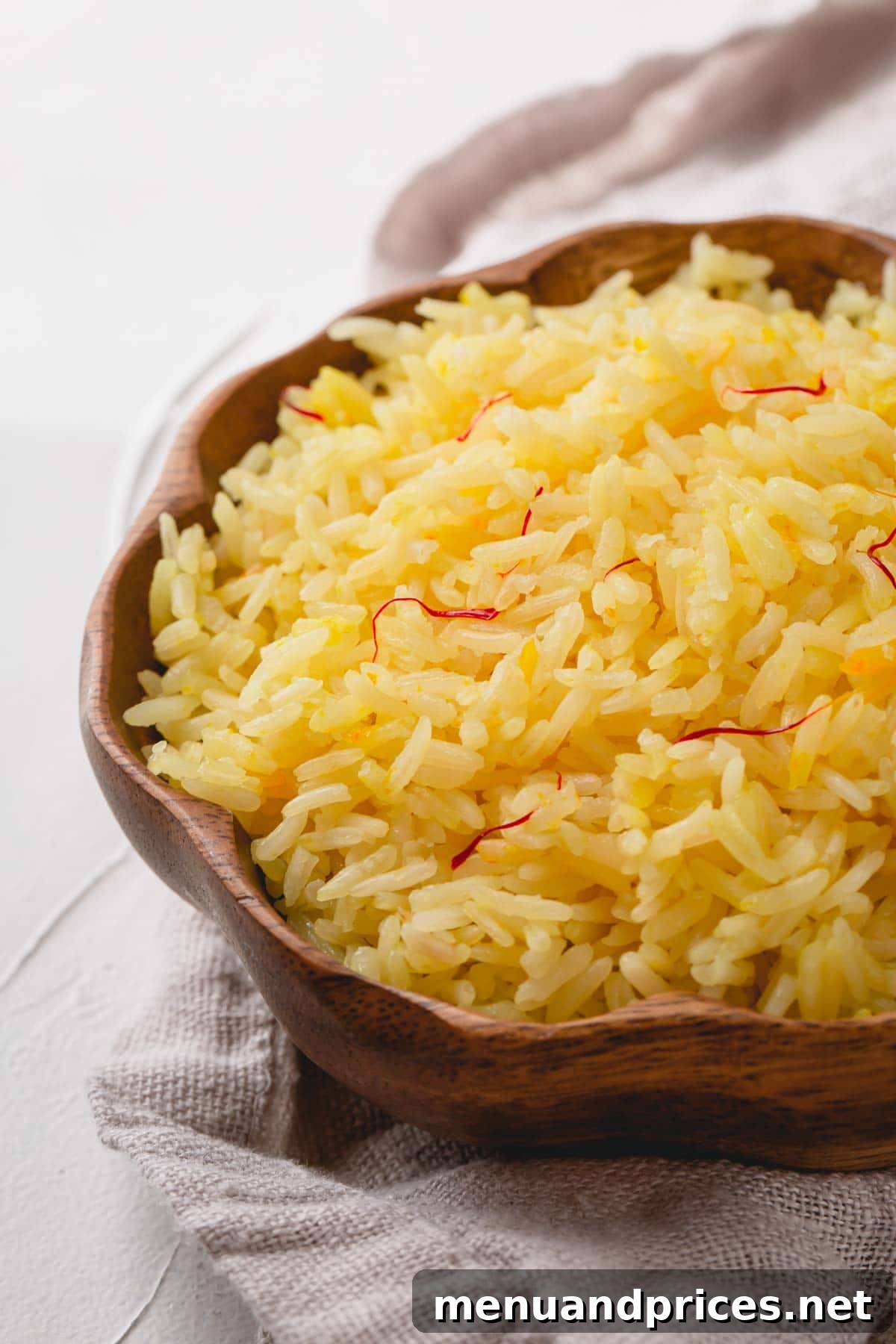
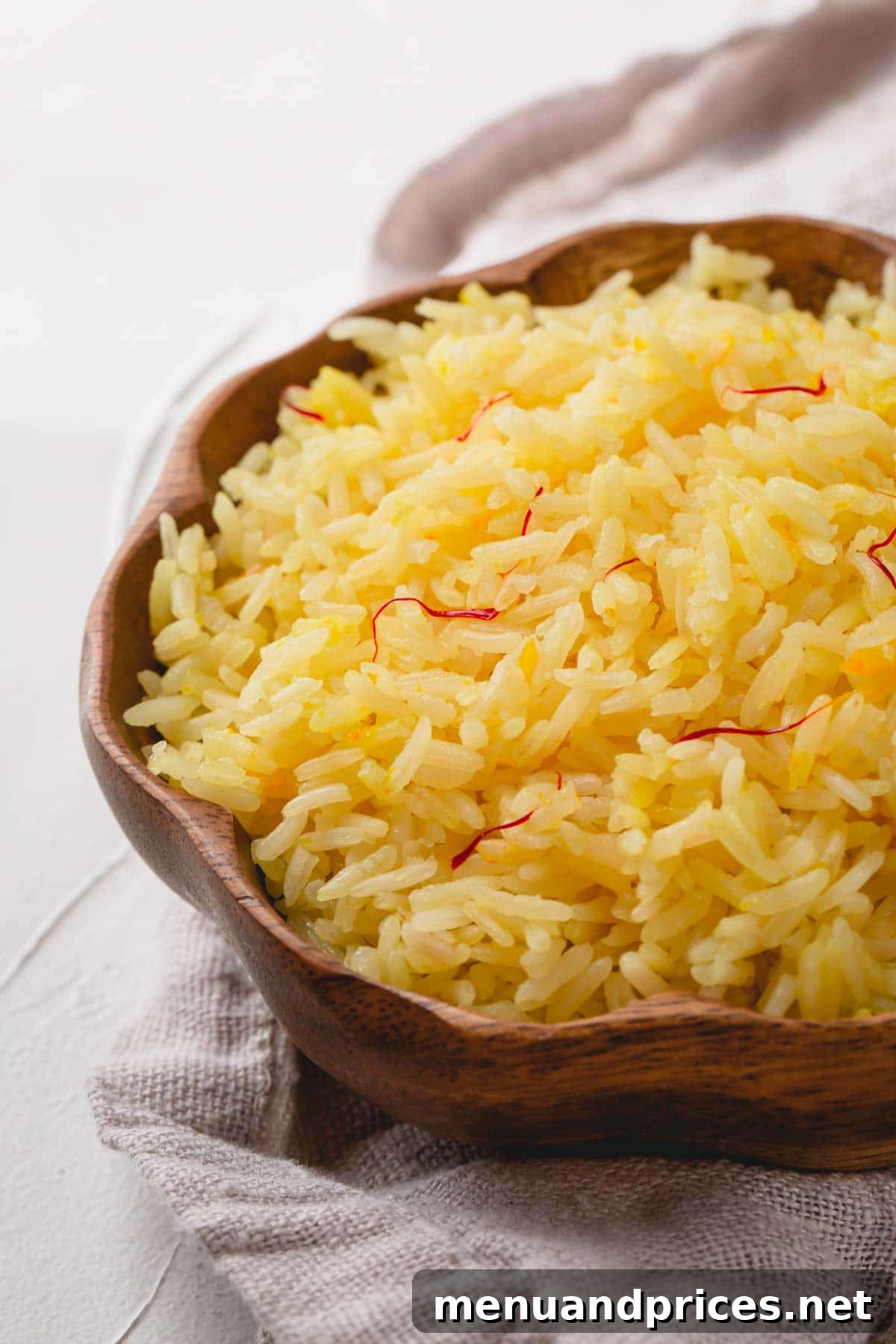
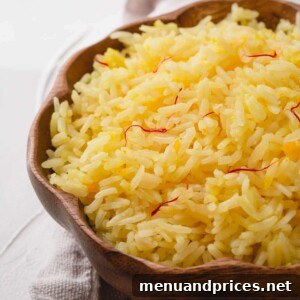
Transform your ordinary rice into an extraordinary side dish with this exquisite recipe for incredibly fluffy and aromatic saffron rice. This vibrant and flavorful accompaniment is not just a meal enhancer; it’s a culinary statement, perfect for elevating any occasion, from weeknight dinners to festive gatherings.
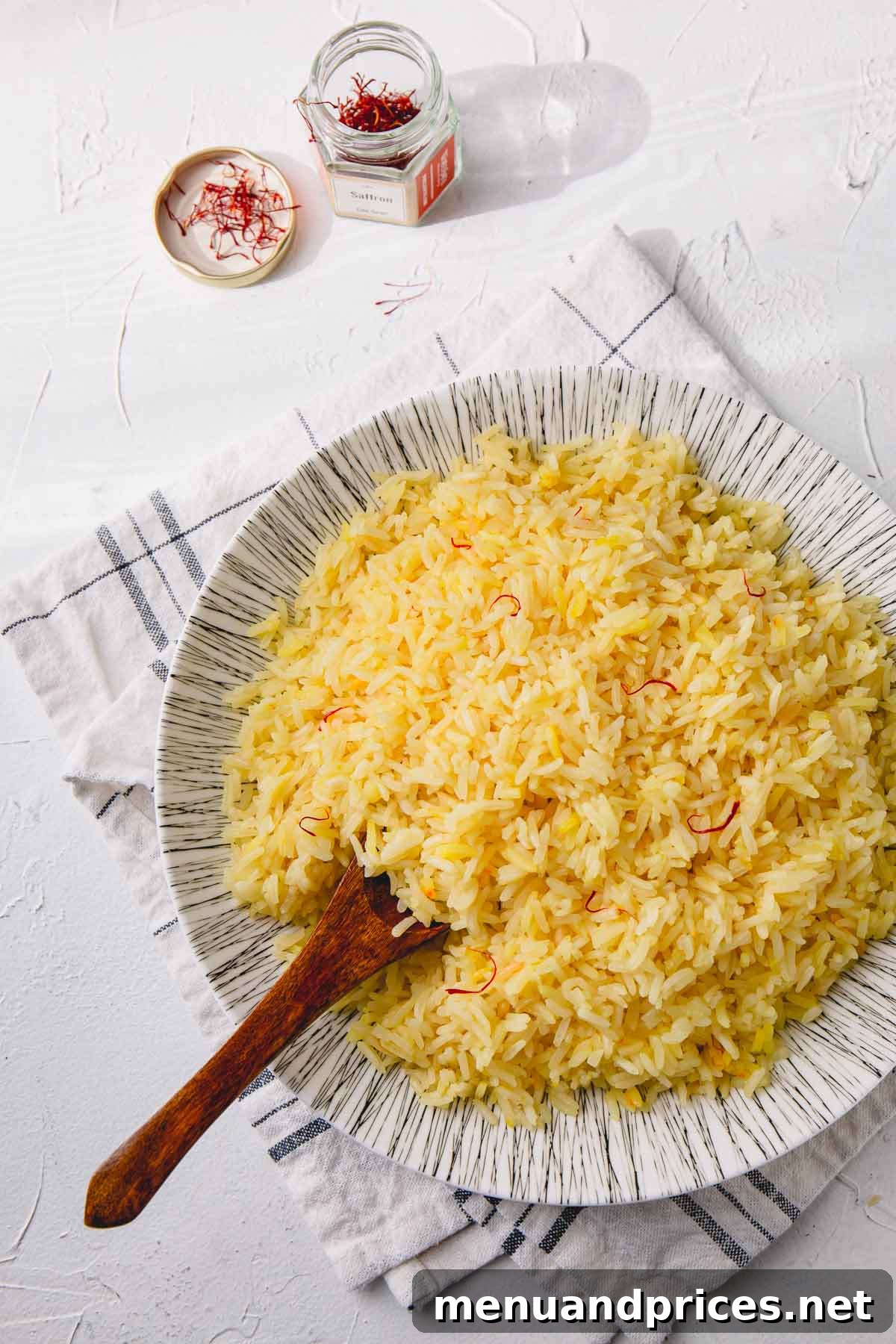
Why This Saffron Rice Recipe Will Become Your New Favorite
Rice is a cornerstone in countless households worldwide, including ours. It’s an incredibly versatile grain, pairing seamlessly with an array of main courses – be it succulent chicken, delicate seafood, robust beef, or a rich curry. Yet, even the most beloved staples can sometimes feel a bit uninspired. If you find yourself yearning for something beyond the usual plain white rice, especially for those moments that call for a touch of elegance, then this radiant saffron rice is your answer.
A mere pinch of the world’s most precious spice, saffron, has the power to transmute humble rice into a truly remarkable dish. It bestows a gorgeous golden hue, an enchanting floral aroma, and a subtly sweet, earthy flavor that elevates the entire dining experience. While it pairs beautifully with almost anything, I particularly enjoy serving this luxurious saffron rice with seafood dishes, such as pan-fried steelhead trout.
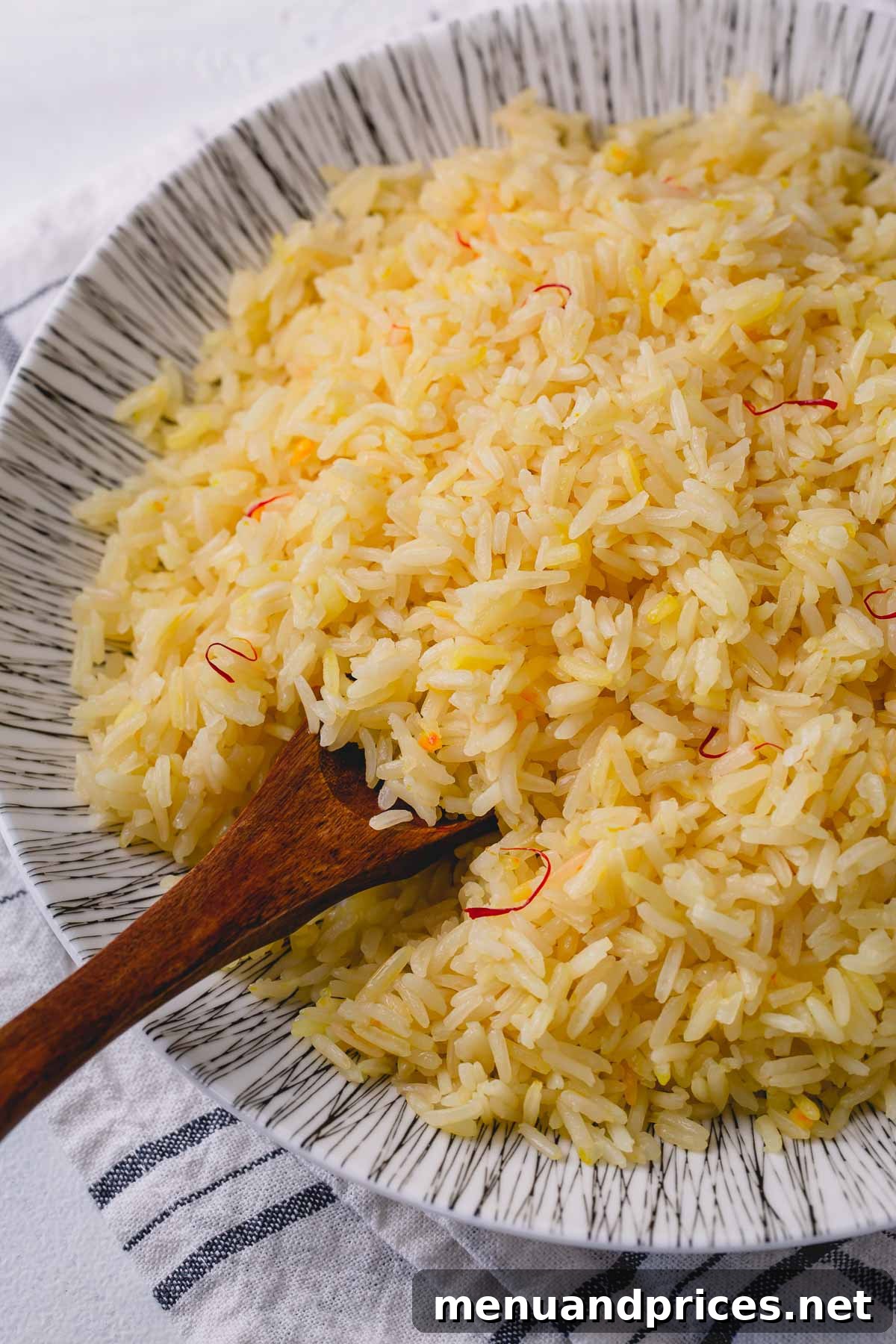
Beyond its captivating appearance and rich flavor, the texture of this rice is simply unparalleled. We’re talking about rice so light and fluffy, each grain distinct and perfectly cooked. The best part? You don’t need an expensive rice cooker to achieve this perfection. I’ve spent years perfecting stovetop rice, and I’m excited to share my tried-and-true techniques with you. Forget burnt or mushy rice; with these tips, you’ll master fluffy saffron rice every single time.
The Allure of Saffron: More Than Just a Spice
Saffron, derived from the stigma of the Crocus sativus flower, is celebrated globally for its distinctive flavor, vibrant color, and captivating aroma. Often referred to as “red gold,” it’s the most expensive spice by weight, owing to its labor-intensive harvesting process. Each crocus flower produces only three stigmas, which must be painstakingly hand-picked. This precious spice not only adds a luxurious touch to dishes but also boasts a history rich in cultural significance and traditional medicinal uses.
Choosing Quality Saffron Threads
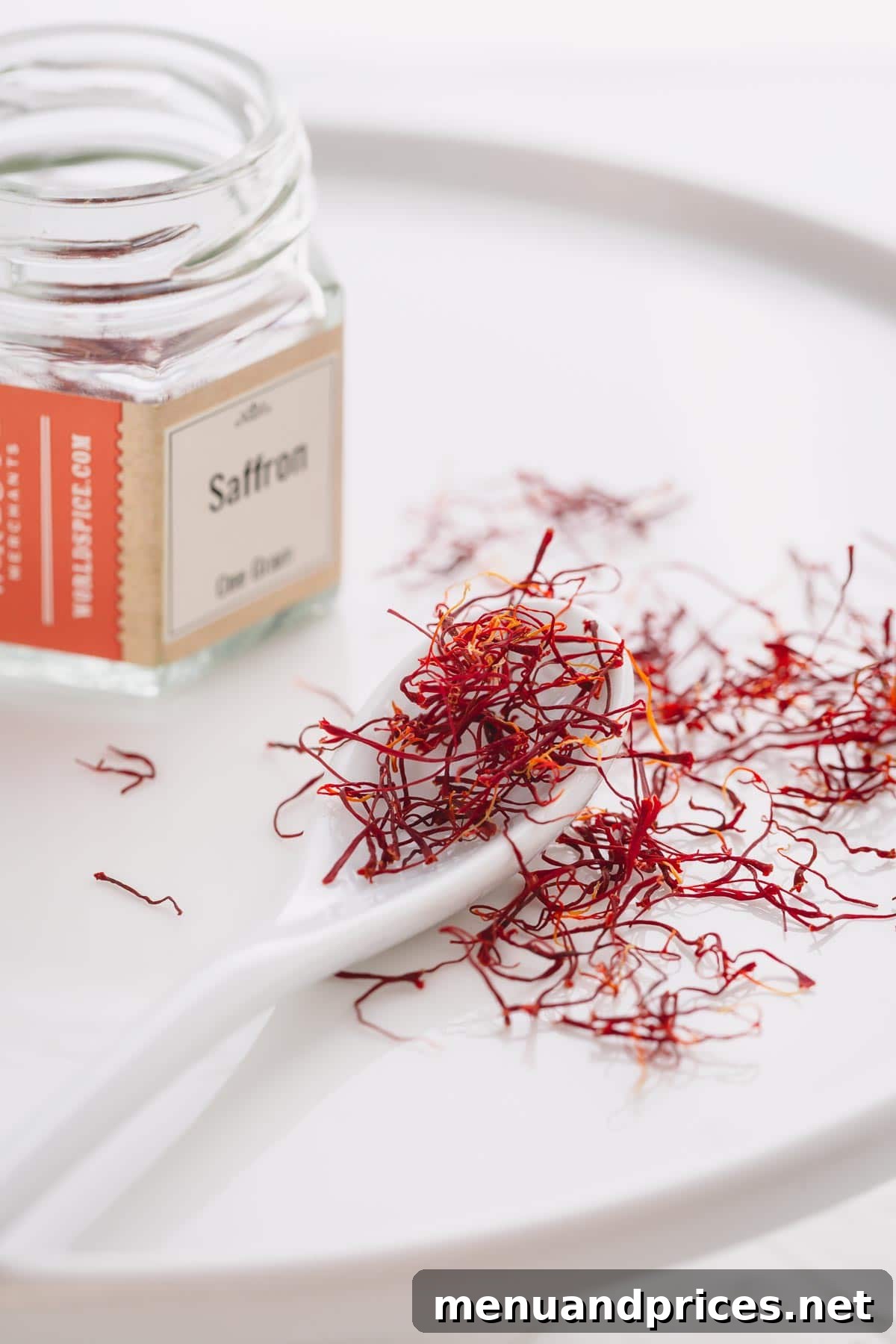
The secret to truly magnificent saffron rice lies in the quality of your saffron. While various types of saffron exist, such as Spanish, Indian, and Afghan, their origin is less important than their inherent quality. Look for threads that are a deep, uniform crimson red, with minimal yellow styles (the part of the stigma that attaches to the flower). Yellow styles contribute no flavor or color, only dead weight.
When purchasing, prioritize whole threads over saffron powder. Powdered saffron can be easily adulterated, making it difficult to ascertain its purity and potency. High-quality saffron will deliver an intense aroma and a rich, golden color to your dishes. Brands like premium Afghan or Spanish saffron often represent the highest grades available. Investing in good quality saffron ensures your rice will be as flavorful and visually stunning as possible.
The Art of Blooming Saffron: Unlocking Its Full Potential
Before incorporating saffron into your dish, a crucial step is “blooming” or steeping the threads. This process involves soaking the saffron in a small amount of hot liquid (like boiling water or warm milk) for at least 10-15 minutes. Blooming allows the saffron threads to fully release their volatile compounds, extracting their profound sweet floral aroma and their characteristic vibrant golden-orange color. Skipping this step can result in a less potent flavor and a paler hue in your finished rice.
Unlocking the Secret to Perfectly Fluffy Saffron Rice Every Time
Achieving perfectly fluffy, separate grains of rice is an art, but one that is easily mastered with a few key techniques. Here are the secrets to creating rice that’s never sticky, never mushy, and always delightful:
1. Rinse Your Rice Thoroughly
This is arguably the most critical step for fluffy rice, yet it’s often overlooked. Rinsing basmati rice under cold running water removes excess starch from the surface of the grains. This starch, if left unrinsed, can cause the rice to clump together and become sticky during cooking. Continue rinsing until the water runs clear – this usually takes about 1-2 minutes. This simple act makes a huge difference in the final texture.
2. Precision in Liquid Measurement
The ratio of rice to liquid is paramount. Too much water will result in mushy, overcooked rice, while too little will leave you with hard, undercooked, or even burnt grains. For basmati rice, a general rule is about 1.5 cups of liquid for every 1 cup of rice. My mother always taught me a helpful trick: the liquid should come up about 1 inch above the rice level in the pot, roughly the width of two fingers. This traditional method often yields fantastic results, but for precise consistency, stick to the 1.5:1 ratio for this recipe.
3. The Power of a Tight Lid and Gentle Simmer
Once you’ve added the liquid, the cooking process relies on steaming. Bring the mixture to a brisk boil over medium-high heat, then immediately reduce the heat to the absolute lowest setting. Cover the pot with a tight-fitting lid – and here’s the golden rule: resist the urge to peek! Opening the lid releases the steam crucial for cooking the rice evenly and maintaining the correct temperature. Let the rice cook undisturbed for at least 15 minutes. This low and slow method allows the rice to absorb the liquid gradually and steam to perfection.
4. The Gentle Fluffing Technique
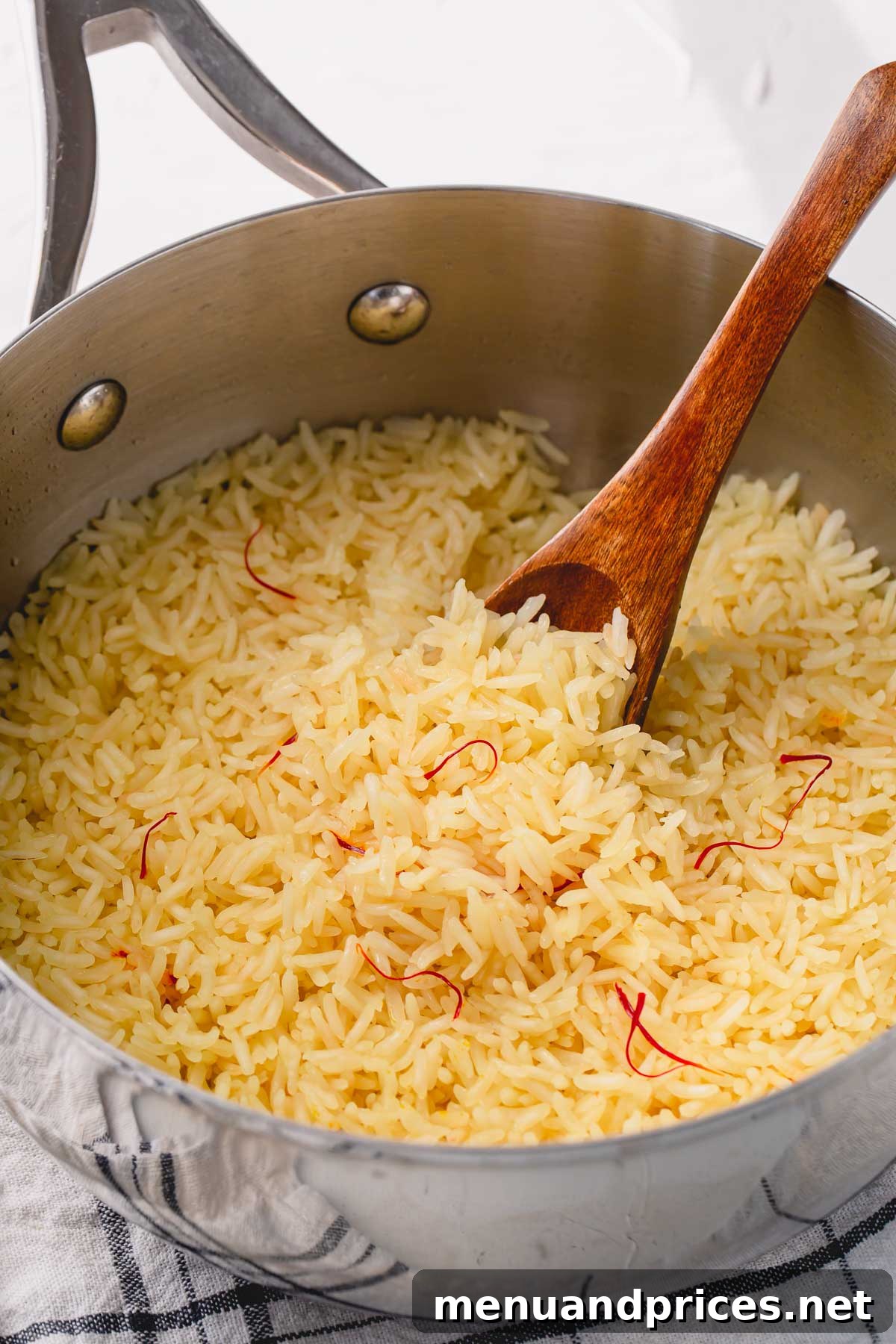
Once the cooking time is complete and all the liquid has been absorbed, turn off the heat but keep the lid on for another 5-10 minutes. This resting period allows the steam to redistribute and the rice to finish cooking without drying out. After resting, gently fluff the rice with a wooden spoon or fork. Avoid stirring vigorously, as this can break the delicate grains. The goal is to separate the individual grains, revealing their beautiful fluffy texture.
Step-by-Step: Crafting Your Flavor-Packed Saffron Rice
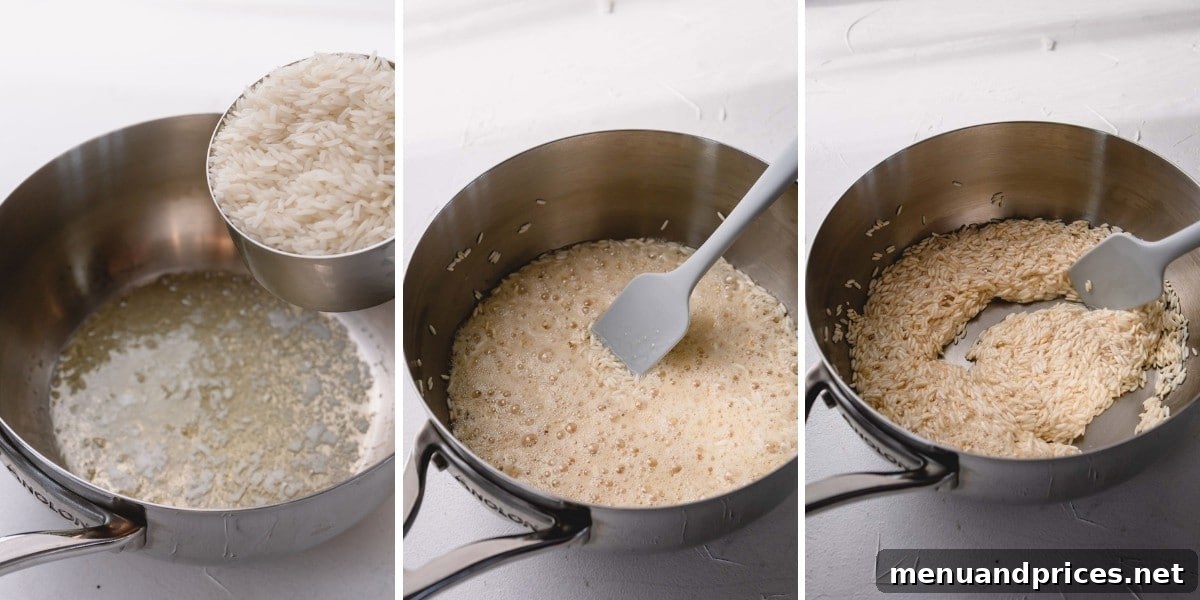
Beyond the saffron, this recipe builds layers of flavor to create a truly unforgettable side dish. We start by toasting the rice in melted butter, a technique that imparts a nutty aroma and a richer depth to each grain before the cooking even begins.
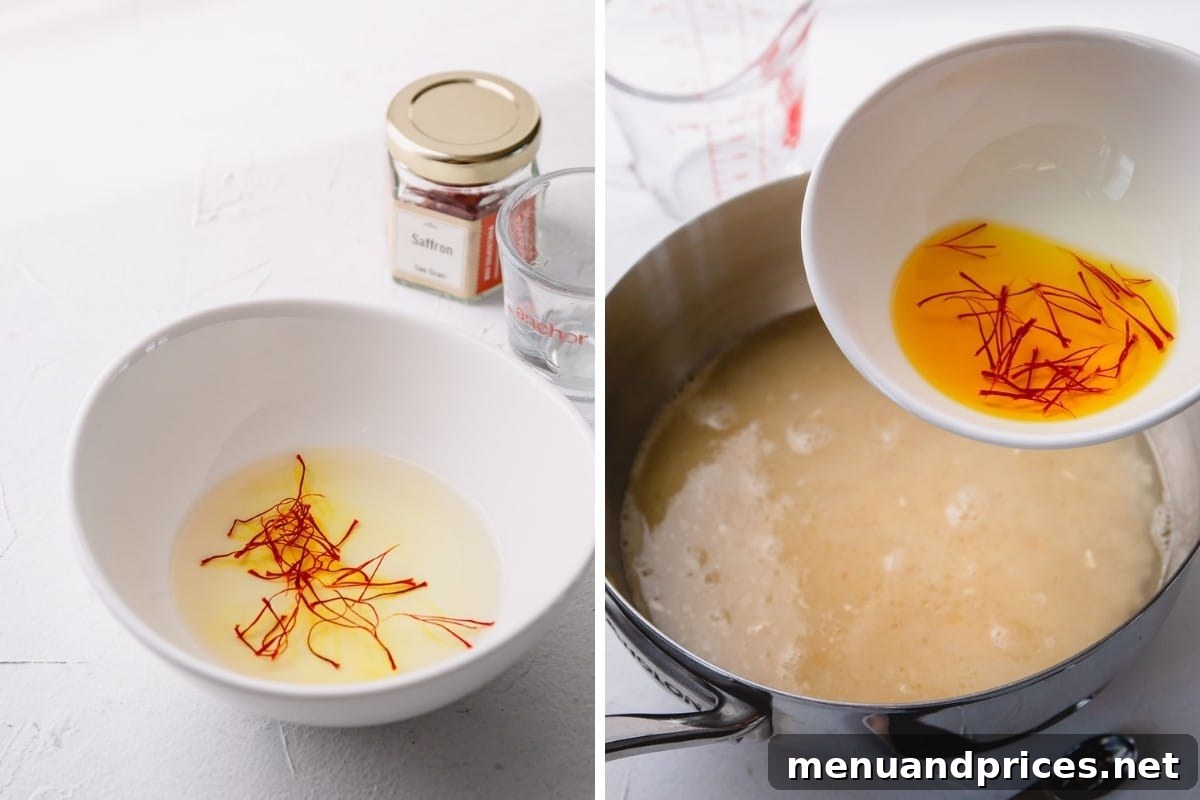
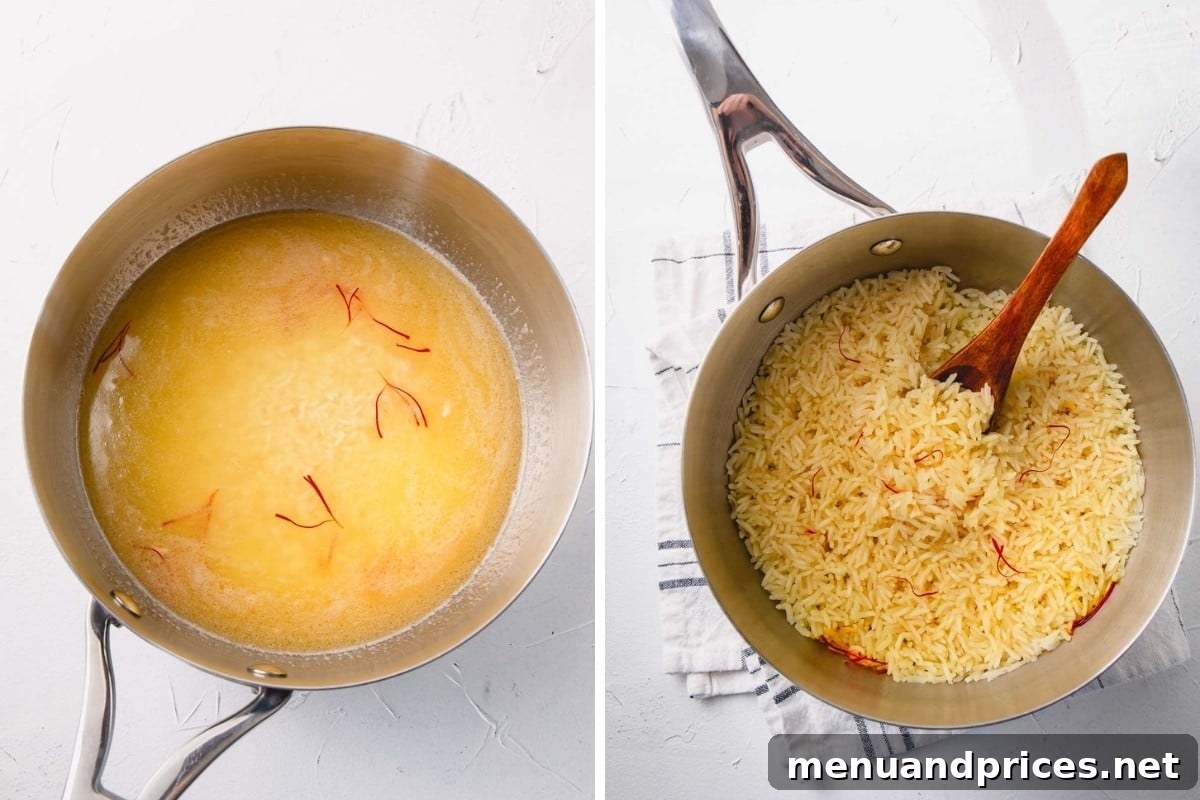
Once the butter is deliciously absorbed, we introduce another dimension of flavor by adding a savory stock (chicken or vegetable) along with the beautifully bloomed saffron. This infusion ensures every spoonful of rice is packed with aroma and taste, culminating in a dish that will effortlessly complement and enhance any meal you serve it with.
Recipe Card: Fluffy Saffron Rice
Saffron Rice
Incredibly fluffy and aromatic saffron rice is a perfect compliment to any dish. Here you’ll find lots of tips on making perfectly fluffy saffron rice every time.
Ingredients
- 1/8 teaspoon saffron threads (Note 1)
- 2 tablespoons unsalted butter
- 1 cup (185g) basmati rice (Note 2)
- 1 ½ cups (360ml) low sodium chicken stock or vegetable stock
- ½ teaspoon coarse kosher salt
Instructions
- To bloom saffron, put saffron threads in a small bowl. Add 2 tablespoons of boiling water and let it bloom for 10 minutes.
- Meanwhile, melt butter in a medium saucepan over medium-high heat. (TIP: Ensure your saucepan has a tight-fitting lid. A 2.5qt saucepan works well.)
- Add the rinsed basmati rice and cook for 3-5 minutes, stirring constantly, until lightly toasted.
- Add the stock, salt, and the bloomed saffron along with its water to the saucepan.
- Cover the saucepan and bring the mixture to a rolling boil.
- Immediately reduce heat to low and continue to cook until all the liquid is absorbed and the rice is fully cooked, about 15 minutes. (NOTE: Do not open the lid while the rice is cooking to retain steam.)
- Remove from heat and let rest, covered, for another 5 minutes. Carefully fluff the cooked rice with a wooden spoon or fork, and then serve immediately.
Tips & Notes
Note 1: High-quality saffron threads have a deep red color without many yellow styles. Consider Afghan saffron or Spanish saffron for best results. Saffron powder is not recommended due to inconsistent quality.
Note 2: If basmati rice is unavailable, you can substitute jasmine rice in a pinch!
Nutrition Information (per serving)
Calories: 251kcal
Carbohydrates: 40g
Protein: 6g
Fat: 7g
Sugar: 1g
Sodium: 422mg
Saffron Rice Pairings: What to Serve With It
The beauty of saffron rice lies in its versatility. Its delicate flavor profile and stunning appearance make it a superb accompaniment to a wide range of cuisines and dishes:
- Seafood: The floral notes of saffron beautifully complement the subtle sweetness of fish and shellfish. Think grilled salmon, baked cod, seared scallops, or a vibrant shrimp curry.
- Poultry: From roasted chicken to a rich chicken tagine, saffron rice adds an elegant touch that elevates the meal.
- Beef and Lamb: Serve it alongside braised lamb shanks, grilled steaks, or savory kebabs for a hearty and flavorful combination.
- Vegetarian Dishes: Pair it with roasted vegetables, lentil stews, chickpea curries, or a simple grilled halloumi for a complete and satisfying meat-free meal.
- Mediterranean and Middle Eastern Cuisine: Saffron rice is a natural fit for dishes like keema, kofta, or various stews, enhancing their authentic flavors.
Customizing Your Saffron Rice
Can I Make This Recipe Vegetarian or Vegan?
Absolutely! Making this recipe vegetarian is incredibly simple: just replace the chicken stock with an equal amount of good quality vegetable stock. To make it entirely vegan, use vegetable stock and substitute the unsalted butter with a plant-based butter alternative or a neutral oil like olive oil or coconut oil. The saffron’s magic will shine through regardless.
Is There an Alternative for Basmati Rice?
Basmati rice is highly recommended for its long grains and fluffy texture, which are ideal for this dish. However, if you’re in a pinch, jasmine rice makes a good substitute. Like basmati, jasmine rice is an aromatic long-grain variety that cooks up light and separate. Avoid short-grain or medium-grain rice varieties, as they tend to be stickier and might not achieve the desired fluffy texture.
How to Store and Reheat Leftover Saffron Rice
Leftover saffron rice is a delicious bonus! To ensure it stays fresh and safe to eat, follow these storage guidelines:
- Refrigeration: Allow the rice to cool completely within one hour of cooking. Transfer it to an airtight container and store it in the refrigerator for up to 3-4 days.
- Freezing: For longer storage, saffron rice freezes beautifully. Once cooled, transfer the rice to freezer bags (flatten them for easier stacking) or airtight freezer-safe containers. It can be stored in the freezer for up to 1-2 months. Thaw overnight in the refrigerator before reheating.
- Reheating: For best results, reheat saffron rice in the microwave or on the stovetop. When reheating, it’s common for rice to become slightly drier. To restore its moisture and fluffiness, add a small splash (1-2 tablespoons per cup of rice) of water or stock before heating. Cover it loosely and heat until thoroughly warm.
Frequently Asked Questions (FAQ) About Saffron Rice
Why is my saffron rice mushy?
Mushy rice is usually a result of too much liquid, cooking at too high a heat, or lifting the lid too often during the cooking process. Ensure you use the correct liquid-to-rice ratio, maintain a low simmer after boiling, and resist the urge to peek!
Can I use saffron powder instead of threads?
While technically possible, saffron powder is not recommended. It’s often of lower quality, can be easily adulterated, and may not deliver the same vibrant color or complex aroma as high-quality threads. Threads allow for better control over the blooming process and a superior end result.
Do I need to wash basmati rice before cooking?
Yes, absolutely! Rinsing basmati rice thoroughly under cold water until the water runs clear is a crucial step to remove excess surface starch. This prevents the grains from sticking together and ensures a fluffy, separate texture.
How do I know if my saffron is good quality?
High-quality saffron threads are deep red, without much yellow or orange, and have a strong, sweet, hay-like aroma. When bloomed, they should release a vibrant golden-yellow color. If the color is dull or the aroma faint, it might be lower quality or old.
Can I add other spices to saffron rice?
While saffron is the star, you can certainly add other complementary spices for a more complex flavor profile. A pinch of cardamom, a few cloves, or a bay leaf can be added to the cooking liquid. Just be careful not to overpower the delicate saffron flavor.
Conclusion: Elevate Your Culinary Experience with Saffron Rice
Saffron rice is more than just a side dish; it’s an experience. The delicate aroma, the rich, golden hue, and the perfectly fluffy texture combine to create a dish that feels both comforting and luxurious. By following these simple yet essential tips – from selecting premium saffron and blooming it correctly to mastering the art of stovetop rice – you can effortlessly create a culinary masterpiece in your own kitchen.
Say goodbye to bland, ordinary rice and hello to a dish that will impress your family and guests, adding a touch of sophistication to any meal. Embrace the magic of saffron, and let this aromatic rice become a cherished staple in your cooking repertoire. Happy cooking!
You may also like:
Pan-Fried Steelhead Trout