
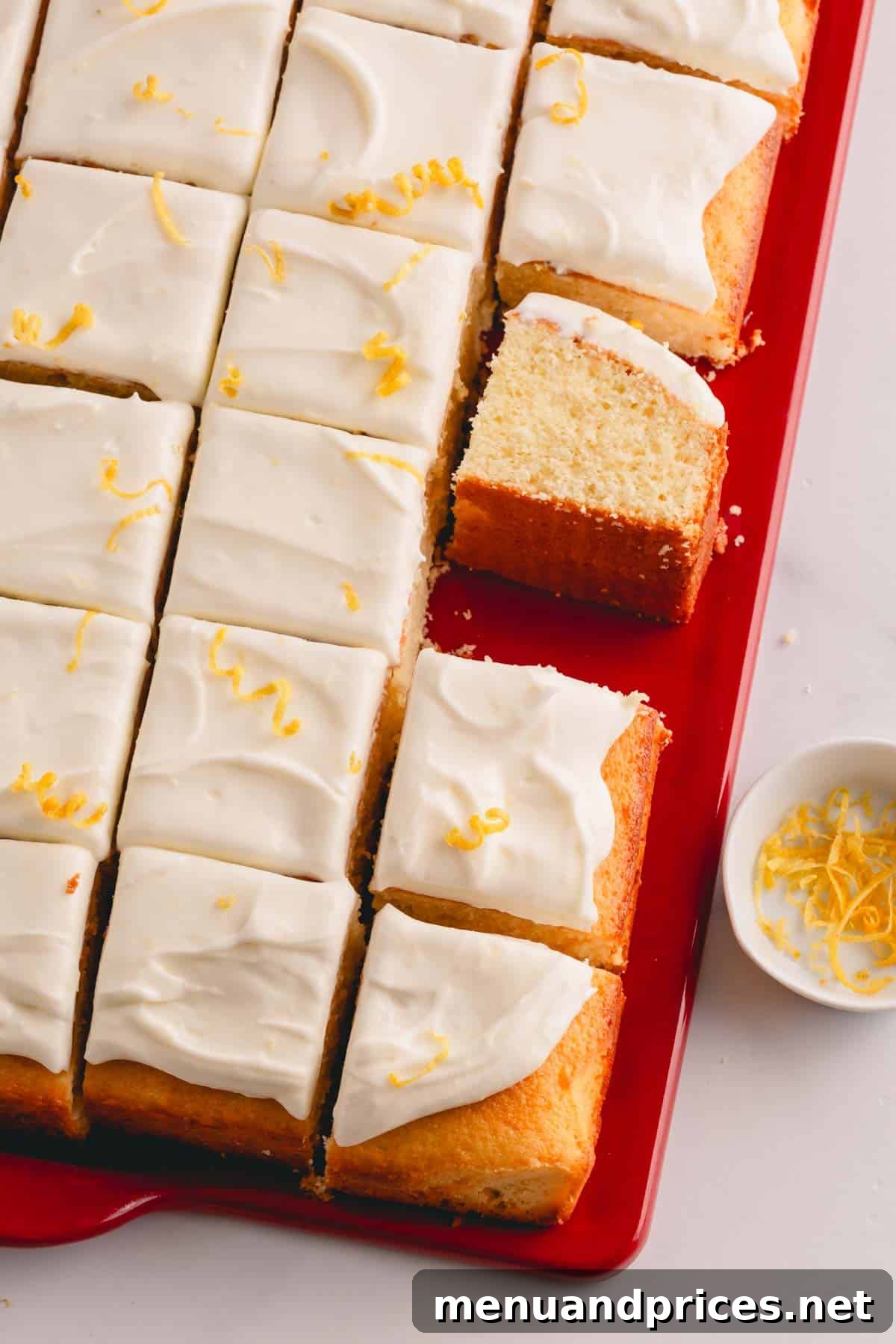
Prepare to fall in love with the ultimate lemon sheet cake, a truly exquisite dessert that promises to become your go-to recipe for any occasion. This isn’t just any lemon cake; it’s a lemon lover’s dream, meticulously crafted to deliver a perfectly moist and tender crumb infused with bright, zesty citrus notes. Each slice is crowned with a luscious lemon cream cheese frosting, striking an impeccable balance between sweet and tangy. Bursting with vibrant flavor and irresistible freshness, this lemon sheet cake is the quintessential springtime dessert, effortlessly brightening up your table and delighting every palate.

Pin this delicious recipe now to easily find it later
Pin It
Why You’ll Adore This Lemon Sheet Cake Recipe
There are countless reasons why this particular lemon sheet cake stands out, making it a beloved favorite for home bakers and dessert enthusiasts alike. From its delightful texture to its vibrant flavor profile and impressive serving capacity, it truly offers everything you could want in a celebratory dessert. I personally find myself reaching for this recipe again and again, especially when I crave the harmonious blend of bright citrus and the creamy, subtle tang of homemade lemon cream cheese frosting. It’s a match made in dessert heaven that consistently earns rave reviews.
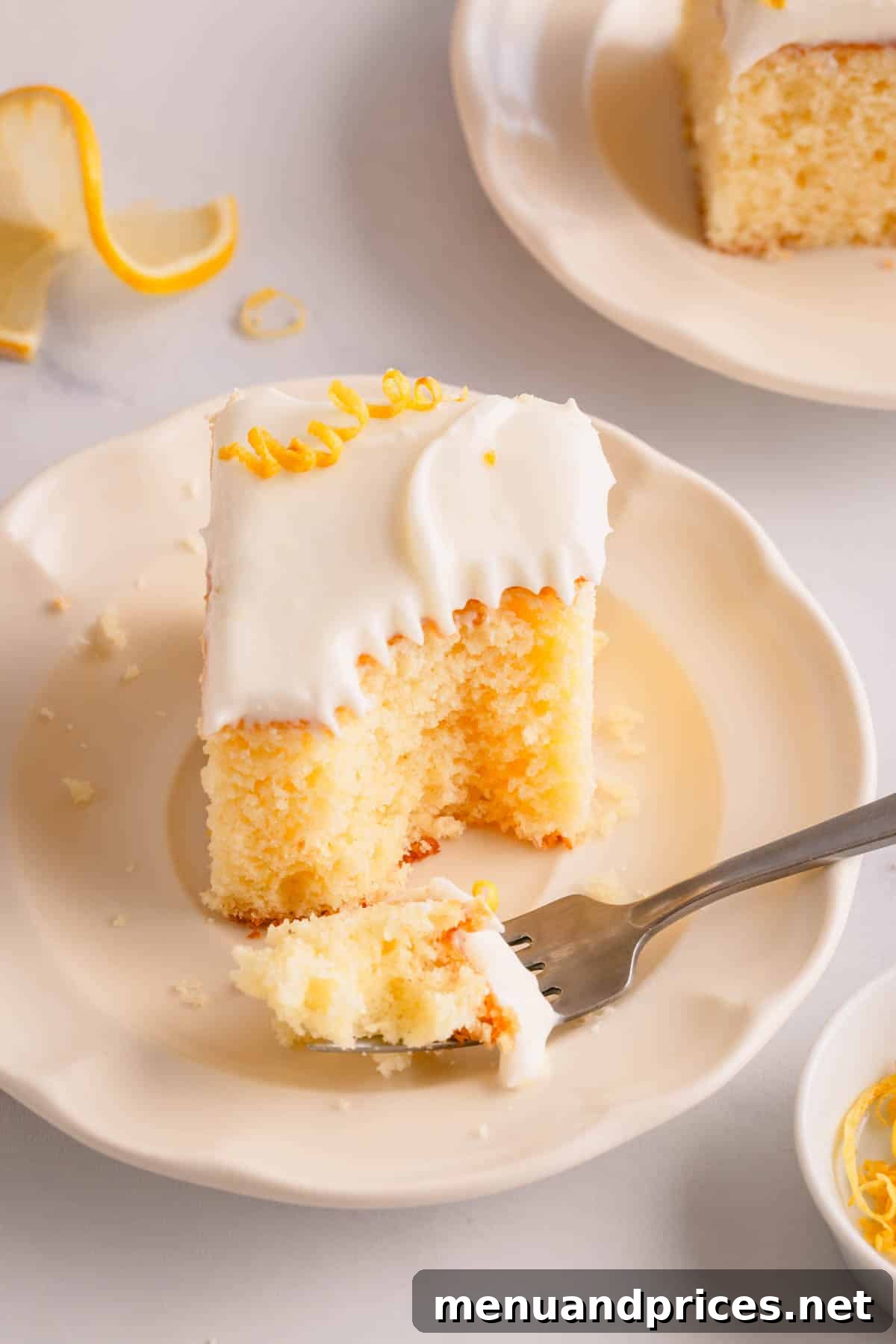
- Irresistible Texture – This sheet cake is celebrated for its incredibly moist and tender crumb, a result of carefully balanced ingredients and precise baking techniques. It’s so soft, it practically melts in your mouth. The super smooth, velvety lemon cream cheese frosting provides a perfect contrast, adding a luxurious creaminess that enhances every bite without being overly heavy.
- Explosive Flavor – Experience a burst of bright, authentic lemon flavor that permeates every layer of this dessert. Fresh lemon juice and zest are generously infused into both the cake batter and the frosting, ensuring a rich, profound citrus taste that is both sweet and wonderfully refreshing. It’s a vibrant flavor experience that is never artificial, offering a true taste of sunshine.
- Perfect for a Crowd – Planning a party, family reunion, or a large gathering? This lemon sheet cake recipe is your ultimate solution. It’s designed to yield an impressive 24 servings, making it incredibly efficient and cost-effective for feeding a large group without compromising on quality or flavor. It’s the ideal centerpiece for any festive table, promising wide smiles all around.
- Effortless Elegance – Despite its sophisticated taste and appearance, this sheet cake is surprisingly straightforward to prepare. Baking in a single sheet pan simplifies the process, making it less intimidating than traditional layer cakes. The ease of preparation, combined with its stunning visual appeal (especially when garnished with fresh lemon!), makes it a truly elegant yet accessible dessert.
This delightful lemon sheet cake recipe has become my absolute go-to for a myriad of celebratory occasions. It’s an indispensable part of our Easter celebrations, bringing a light and festive touch to the spring holiday table. Beyond that, its refreshing qualities make it an ideal choice for warm-weather festivities such as lively cookouts, elegant bridal showers, joyous baby showers, and even casual backyard barbecues. Its versatility and universal appeal ensure it’s always a hit, no matter the event.
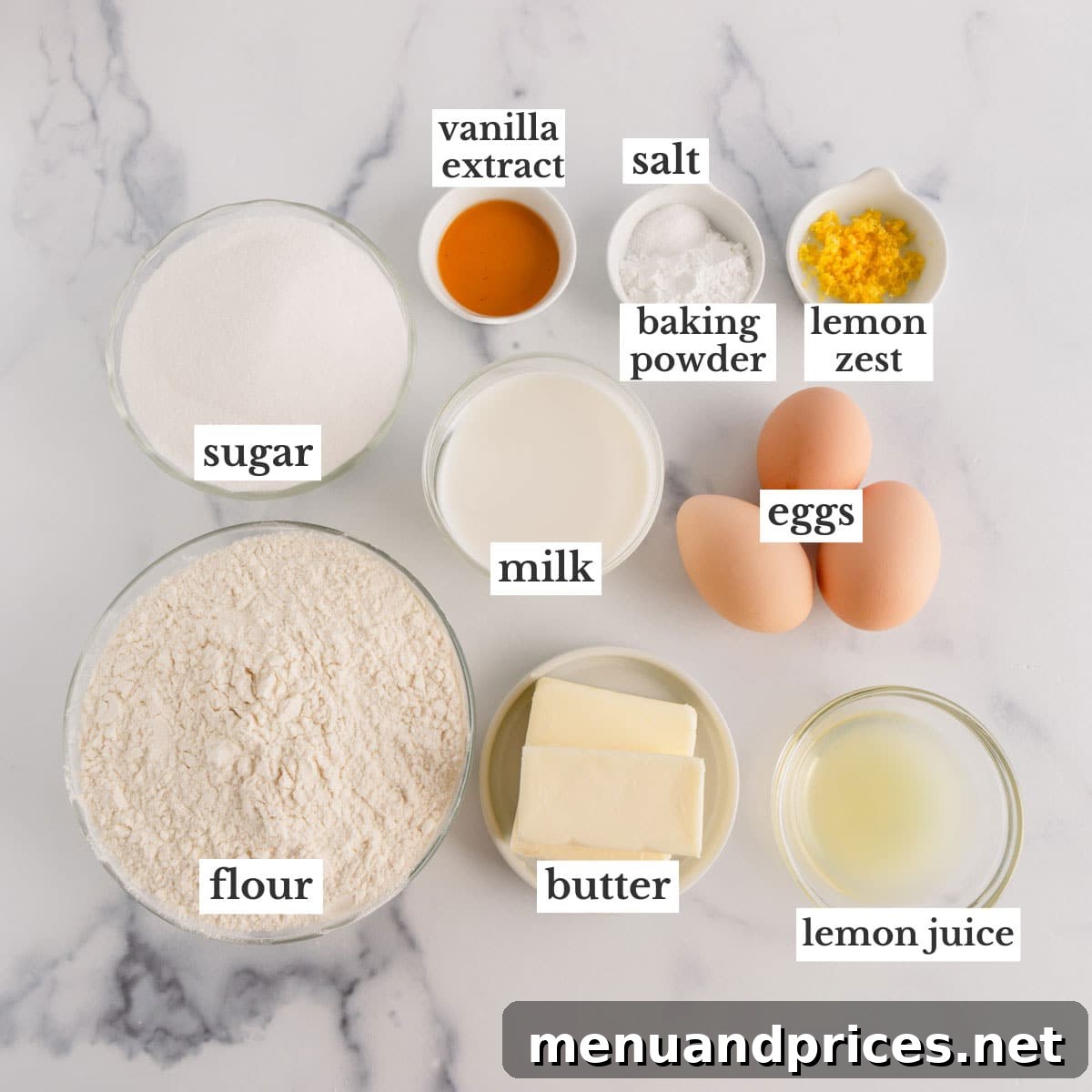
Essential Ingredients for Your Lemon Sheet Cake
Creating a truly exceptional lemon sheet cake starts with understanding the role of each ingredient. Quality ingredients, prepared correctly, are the foundation of a flavorful and perfectly textured cake. Here’s a detailed look at what you’ll need for both the cake and the frosting, along with important tips for each.
For the Moist Lemon Cake
- All-Purpose Flour – As the primary structural component of our cake, the type and measurement of flour are crucial. For the most consistently accurate and reliable baking results, I highly recommend weighing your flour using a digital kitchen scale. This eliminates common measurement errors that can lead to dense or dry cakes. If a scale isn’t available, the spoon and level method is the next best option to avoid over-packing your flour.
- Baking Powder – This potent leavening agent is key to achieving the cake’s signature light, airy, and fluffy texture. It reacts with moisture and heat to create gas bubbles, giving the cake its beautiful rise. Always ensure your baking powder is fresh; an expired product will result in a flat, dense cake that fails to rise properly.
- Table Salt – Don’t underestimate the power of a simple ingredient like table salt! While it might seem small, it plays a vital role in balancing and enhancing the sweetness of the sugar and intensifying the bright flavors of the lemon, preventing the cake from tasting bland or one-dimensional.
- Unsalted Butter – Butter is essential for imparting a rich, luxurious flavor and contributing to the cake’s wonderfully tender crumb. Using unsalted butter allows you to control the exact amount of salt in the recipe, ensuring perfect flavor balance. Make sure it’s at room temperature for optimal creaming.
- Granulated Sugar – Beyond just sweetness, granulated sugar contributes significantly to the cake’s light and fluffy texture by aerating with the butter during the creaming process. It also helps to keep the cake moist and tender by attracting and retaining moisture.
- Large Eggs – Eggs are multitasking heroes in baking. They add essential moisture, richness, and structure to the cake, helping to bind the ingredients together and provide stability as the cake bakes and rises. Like butter, using room temperature eggs is vital for creating a smooth, emulsified batter.
- Fresh Lemon Juice and Zest – This is where the magic happens for that unmistakable bright, tangy lemon flavor! Always use fresh lemons for the most vibrant taste. When zesting, be meticulous: only grate the bright yellow outer layer of the peel. Avoid the white pith directly underneath, as it contains a bitter compound that can detract from your cake’s deliciousness.
- Milk – Milk serves to hydrate the dry ingredients, ensuring a smooth, cohesive batter and preventing the cake from becoming dry or crumbly. For the richest taste and most luxurious texture, whole milk is recommended. However, 2% milk will also work effectively, yielding excellent results.
The Secret to Success: Room Temperature Ingredients
This seemingly small detail makes a monumental difference in the outcome of your cake. Prior to embarking on your baking adventure, ensure that all refrigerated ingredients, such as butter, eggs, and milk, are brought to true room temperature. This allows them to emulsify effortlessly and combine smoothly with other ingredients, creating a homogeneous batter. Cold ingredients can cause the batter to curdle or become lumpy, leading to overmixing and a dense, dry cake. Plan ahead by taking them out of the fridge at least 30-60 minutes before you start.
For the Zesty Lemon Cream Cheese Frosting
- Cream Cheese – The foundation of our tangy, rich frosting is full-fat cream cheese. Opt for the brick-style cream cheese, which provides the necessary firmness and body for a thick, pipeable frosting. Avoid spreadable cream cheese from a tub, as its higher water content will result in a runny frosting that lacks the desired consistency. Ensure it’s softened to room temperature for smooth mixing.
- Unsalted Butter – Adding unsalted butter to the cream cheese creates an incredibly smooth, luscious, and stable frosting. It contributes to the rich flavor and desirable texture. If you only have salted butter on hand, simply omit the small amount of additional salt called for in the frosting recipe to avoid an overly salty taste.
- Powdered Sugar – Also known as confectioners’ sugar or icing sugar, this finely milled sweetener dissolves beautifully into the frosting, creating an impeccably smooth, lump-free consistency. This recipe is designed to use a balanced amount of sugar, ensuring your frosting is perfectly sweet without being cloying, allowing the bright lemon flavor to truly shine.
- Fresh Lemon Juice and Zest – To ensure the frosting perfectly complements the lemon cake, we incorporate both fresh lemon juice and lemon zest. This dual approach delivers a vibrant, unmistakable lemon flavor that ties the entire dessert together, providing that essential tangy zing.
For a Beautiful Garnish
- Lemon Slices or Peel – While technically optional, a garnish of fresh lemon slices or elegant lemon peel curls elevates your sheet cake from homemade to bakery-worthy. It adds a final visual flourish and reinforces the refreshing lemon theme, making the dessert even more appealing with minimal extra effort. Consider candied lemon slices for an extra special touch!
How to Create Your Zesty Lemon Sheet Cake with Cream Cheese Frosting
Let’s dive into the baking process! Follow these detailed steps to ensure your lemon sheet cake turns out perfectly moist, flavorful, and beautifully frosted. Precision and attention to detail at each stage will guarantee a show-stopping dessert.
Before you begin mixing, take a moment to prepare your workspace: Preheat your oven to 350°F (175°C). Then, line a standard 9×13-inch baking sheet with parchment paper, leaving an overhang on the sides. This simple step will make removing the cooled cake incredibly easy and mess-free.
1. Master the Lemon Cake Batter
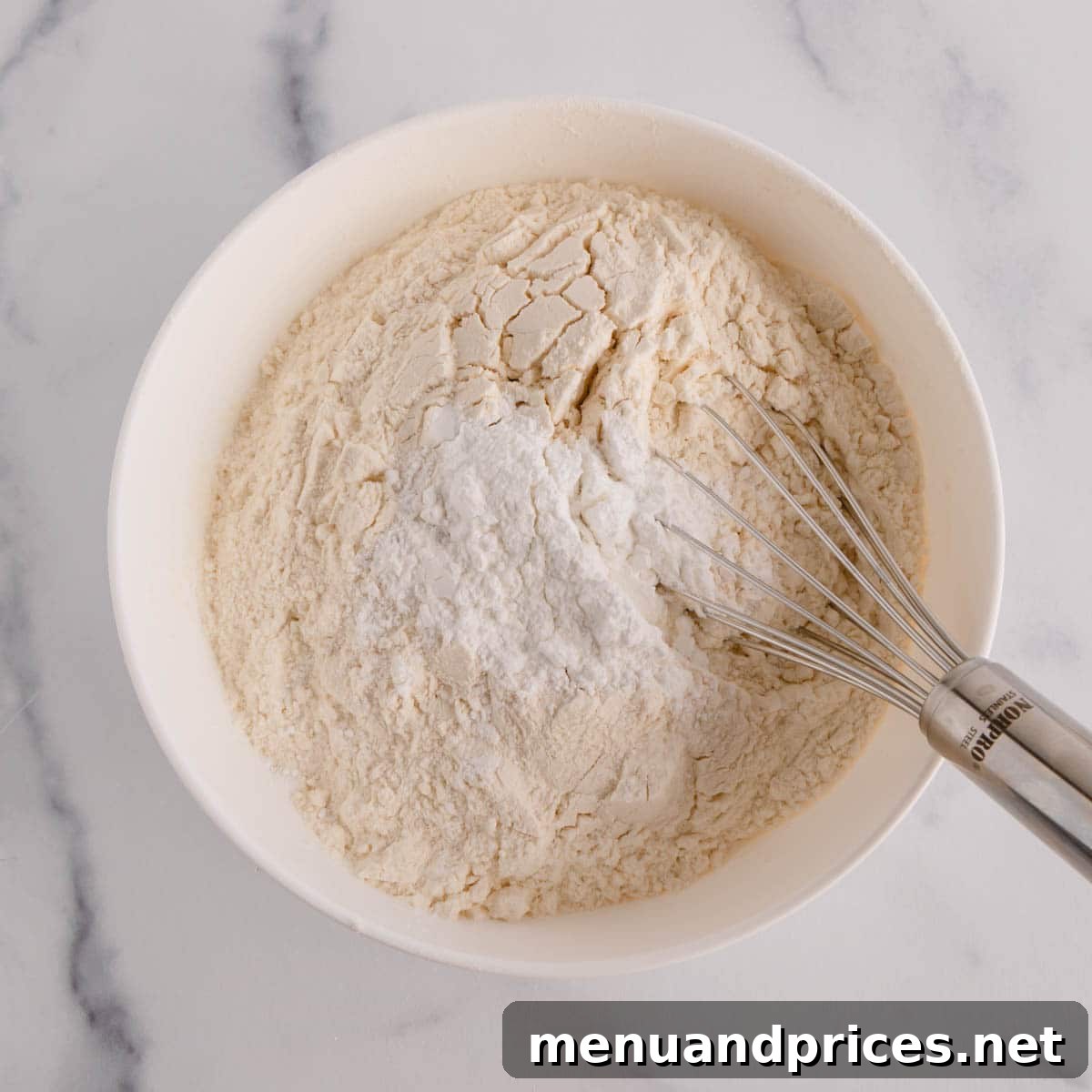
- Combine Dry Ingredients: In a medium-sized mixing bowl, meticulously whisk together the all-purpose flour, baking powder, and table salt. Whisking ensures these ingredients are thoroughly combined and evenly distributed, which is crucial for uniform leavening and flavor throughout the cake. Set this bowl aside for later use.
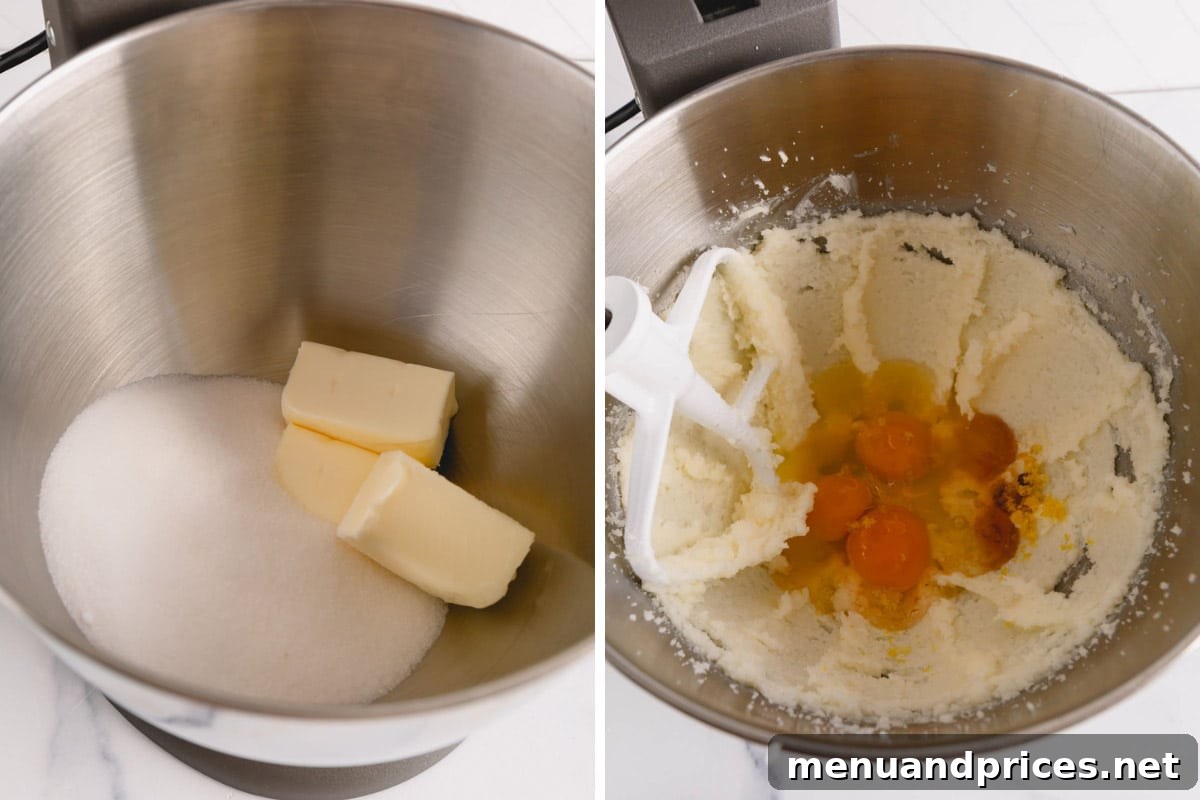
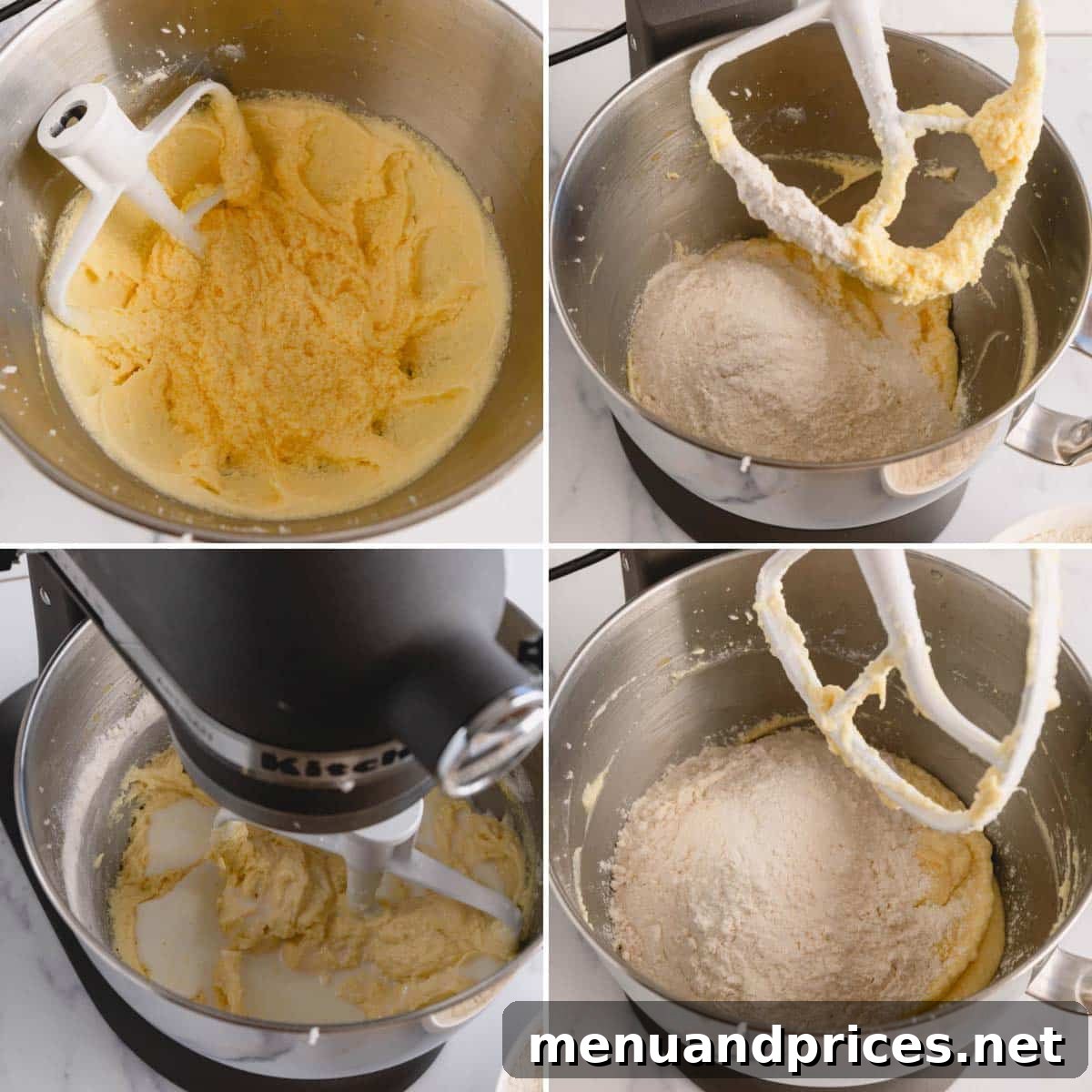
- Cream Butter and Sugar: In the bowl of a stand mixer fitted with the paddle attachment (or using a large bowl with an electric hand mixer), add the softened unsalted butter and granulated sugar. Beat them together on medium-high speed for approximately 3 minutes. The goal is to achieve a light, fluffy, and pale mixture. This creaming process incorporates air into the butter and sugar, which is fundamental for creating a tender and airy cake texture.
- Incorporate Wet Ingredients: Next, add the large eggs, pure vanilla extract, fresh lemon juice, and finely grated lemon zest to the creamed butter and sugar mixture. Continue to beat on medium-high speed for another 2 minutes. The mixture should become noticeably lighter in color and even more voluminous and fluffy. This step ensures all the wet ingredients are thoroughly combined and properly emulsified.
The Importance of Scraping the Bowl
During the beating process, it’s essential to pause halfway through and use a rubber spatula to thoroughly scrape down the sides and bottom of your mixing bowl. Ingredients, especially butter and sugar, have a tendency to cling to the edges and remain unmixed. Scraping ensures that all components are fully incorporated into the batter, preventing pockets of unmixed ingredients and guaranteeing a uniformly textured and flavored cake.
- Alternate Dry and Wet: Gently add half of the whisked flour mixture to the wet ingredients in the stand mixer. Mix on low speed, just until the flour is barely combined and no dry streaks remain. It’s crucial not to overmix at this stage to prevent developing the gluten too much, which can lead to a tough cake.
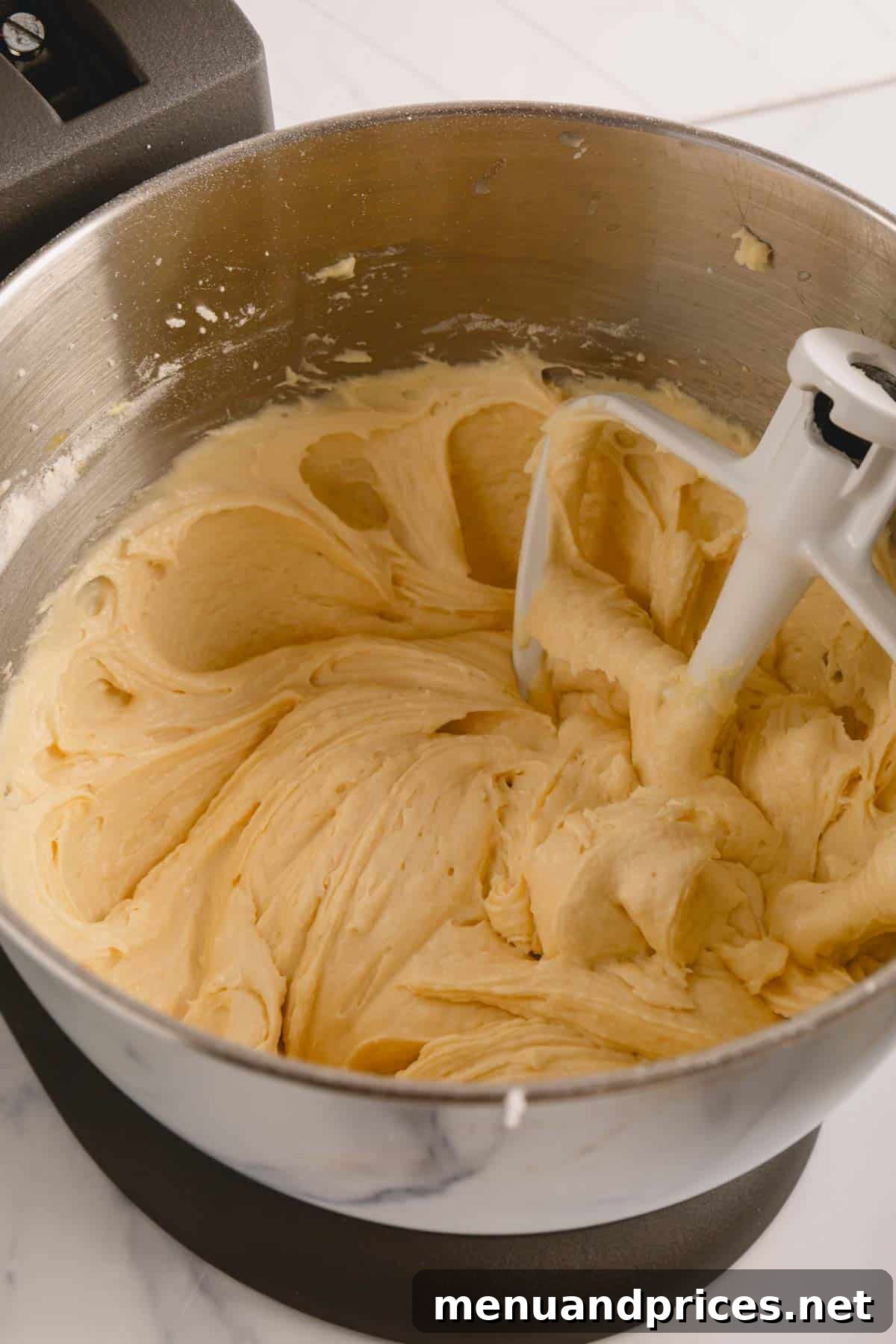
- Finish Mixing: Immediately after incorporating the first half of the flour, stir in the milk. Once the milk is mostly integrated, add the remaining half of the flour mixture. Mix on low speed until the last bit of flour is just incorporated into the batter. For a final touch, increase the mixer speed to high for a quick 30 seconds. This brief high-speed mix helps to emulsify the batter and create a fine crumb. However, be incredibly careful not to overmix the batter at any point after adding flour, as this is the primary cause of dense, dry cakes.
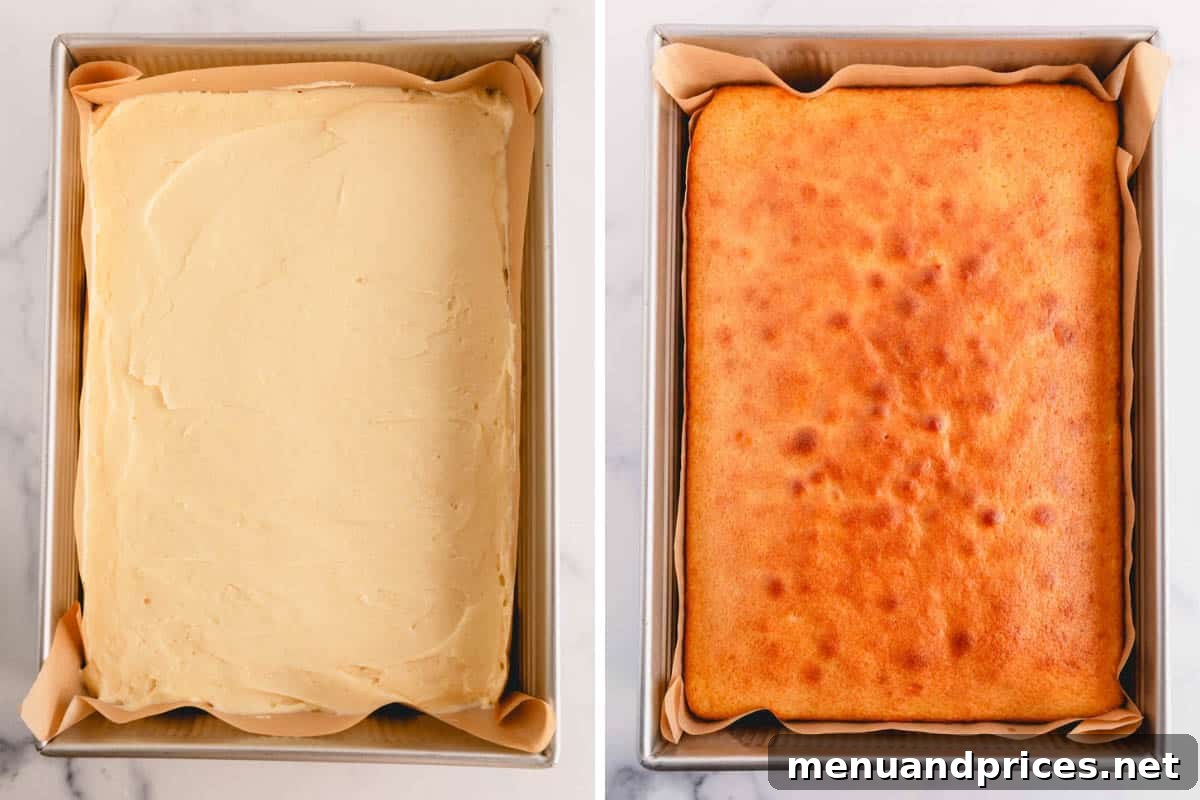
- Bake to Perfection: Carefully pour the prepared cake batter into your parchment-lined 9×13-inch baking sheet. Use an offset spatula or the back of a spoon to gently spread the batter out evenly across the pan, ensuring a consistent thickness for even baking. Bake in the preheated oven for 30-35 minutes. To test for doneness, insert a toothpick into the center of the cake; it should come out clean or with a few moist crumbs attached. Avoid overbaking, as this can dry out the cake.
- Cool Completely: Once baked, remove the cake from the oven and allow it to cool completely in the pan on a wire rack. This cooling period is absolutely critical. Attempting to frost a warm cake will result in the frosting melting and sliding right off, creating a messy situation. Patience here will be rewarded with a beautifully frosted cake.
2. Craft the Silky Lemon Cream Cheese Frosting
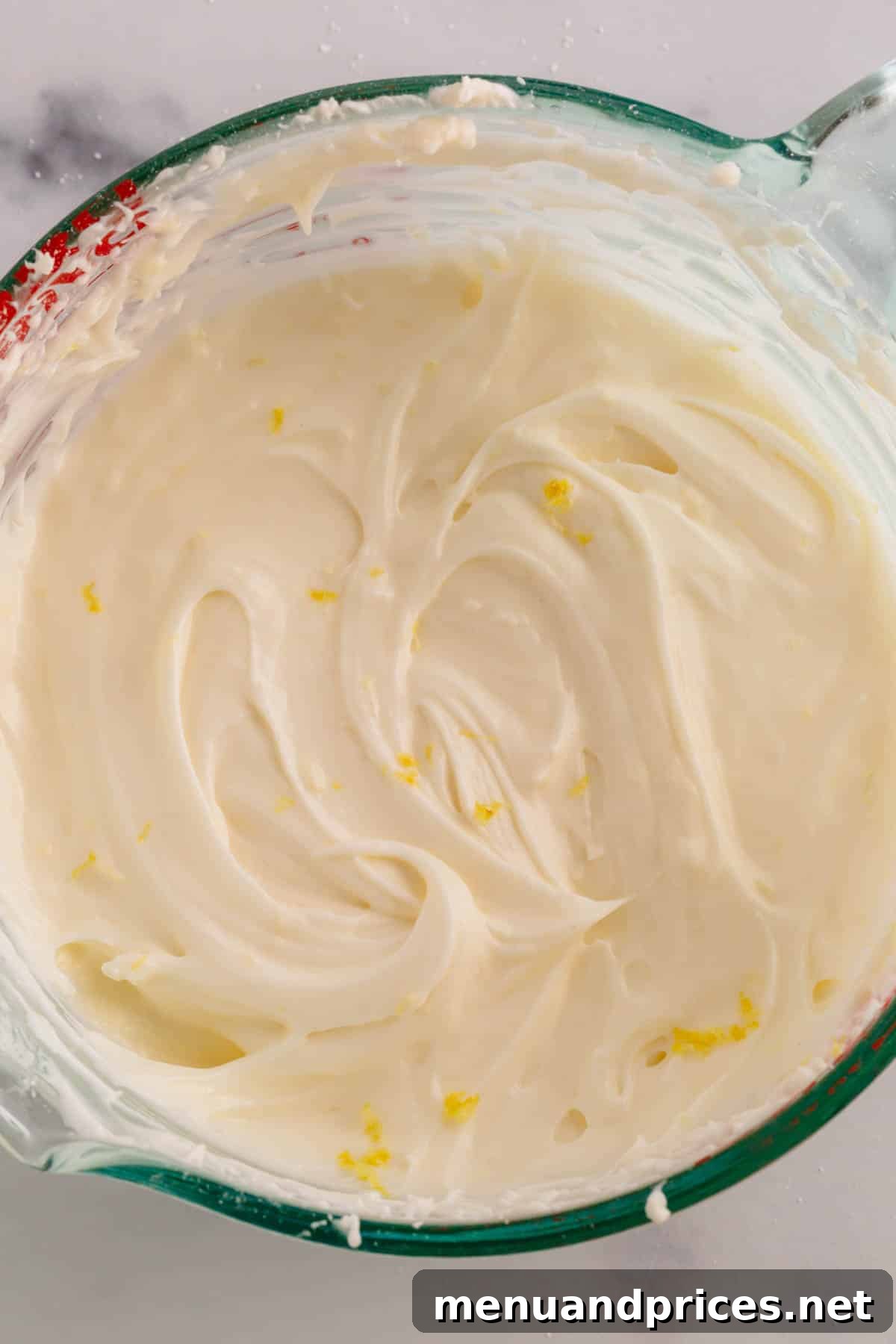
- Whip Cream Cheese and Butter: In a clean mixing bowl, using an electric hand mixer (or your stand mixer with a paddle attachment), combine the softened cream cheese and unsalted butter. Beat on medium-high speed for about 1 minute, until the mixture is light, fluffy, and perfectly smooth. Ensure there are no lumps of cream cheese remaining.
- Add Powdered Sugar: Gradually add the powdered sugar to the cream cheese and butter mixture. Start by beating on low speed for a minute to prevent a cloud of sugar from enveloping your kitchen. Once the sugar is mostly incorporated, increase the speed to medium-high and continue to beat for another 3 minutes. The frosting should transform into a wonderfully smooth, airy, and fluffy consistency.
- Infuse with Lemon: Finally, stir in the fresh lemon juice, lemon zest, and a pinch of salt. Whip the frosting again on medium speed for about 30 seconds, just until all the new ingredients are fully incorporated and the vibrant lemon flavor is evenly distributed. This ensures a beautifully balanced taste.
3. Assemble Your Masterpiece
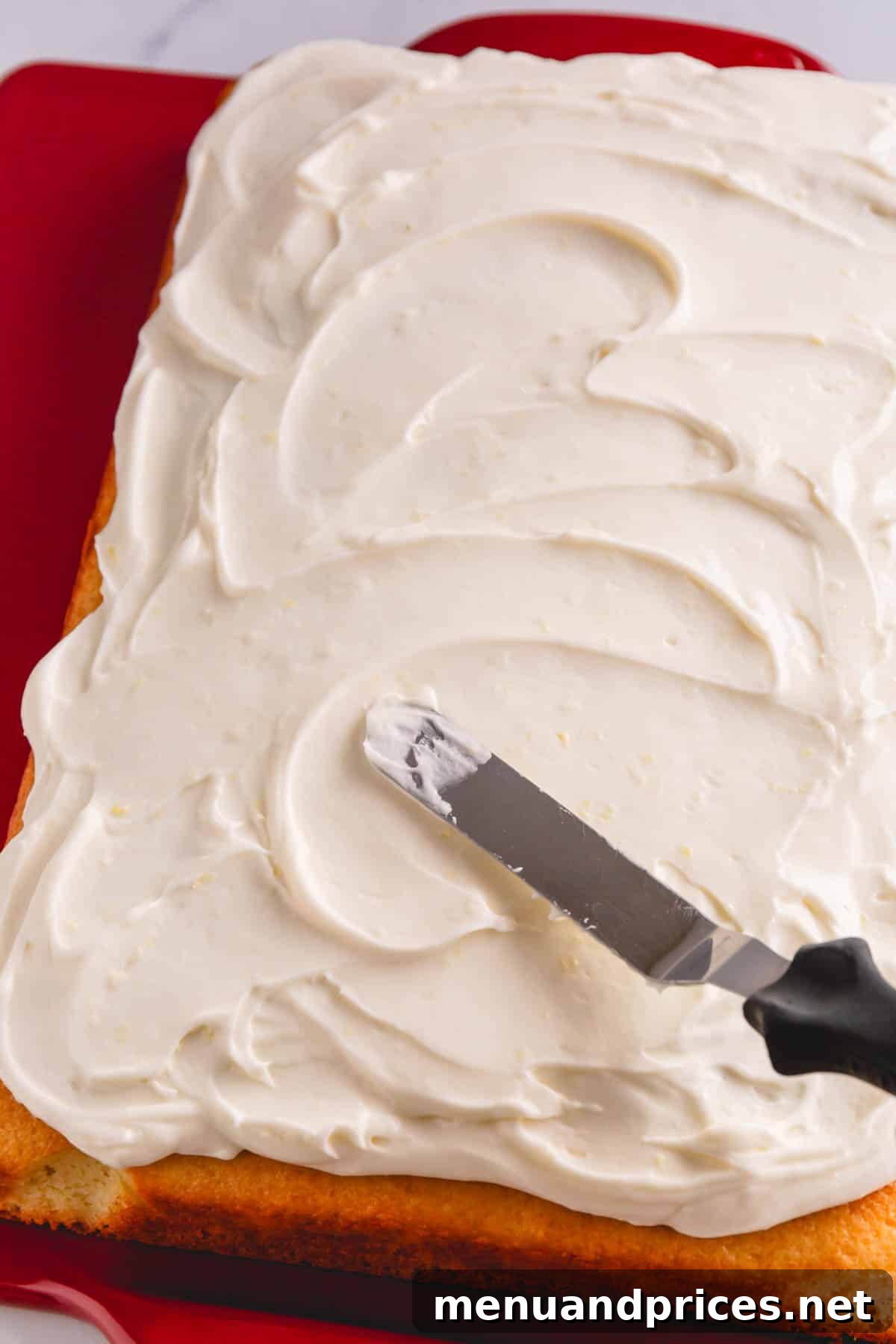
- Frost the Cake: Once your lemon sheet cake has completely cooled (and we mean *completely*!), use an offset spatula to generously spread the silky lemon cream cheese frosting evenly over the entire surface of the cake. Aim for a smooth, inviting layer that covers every inch.
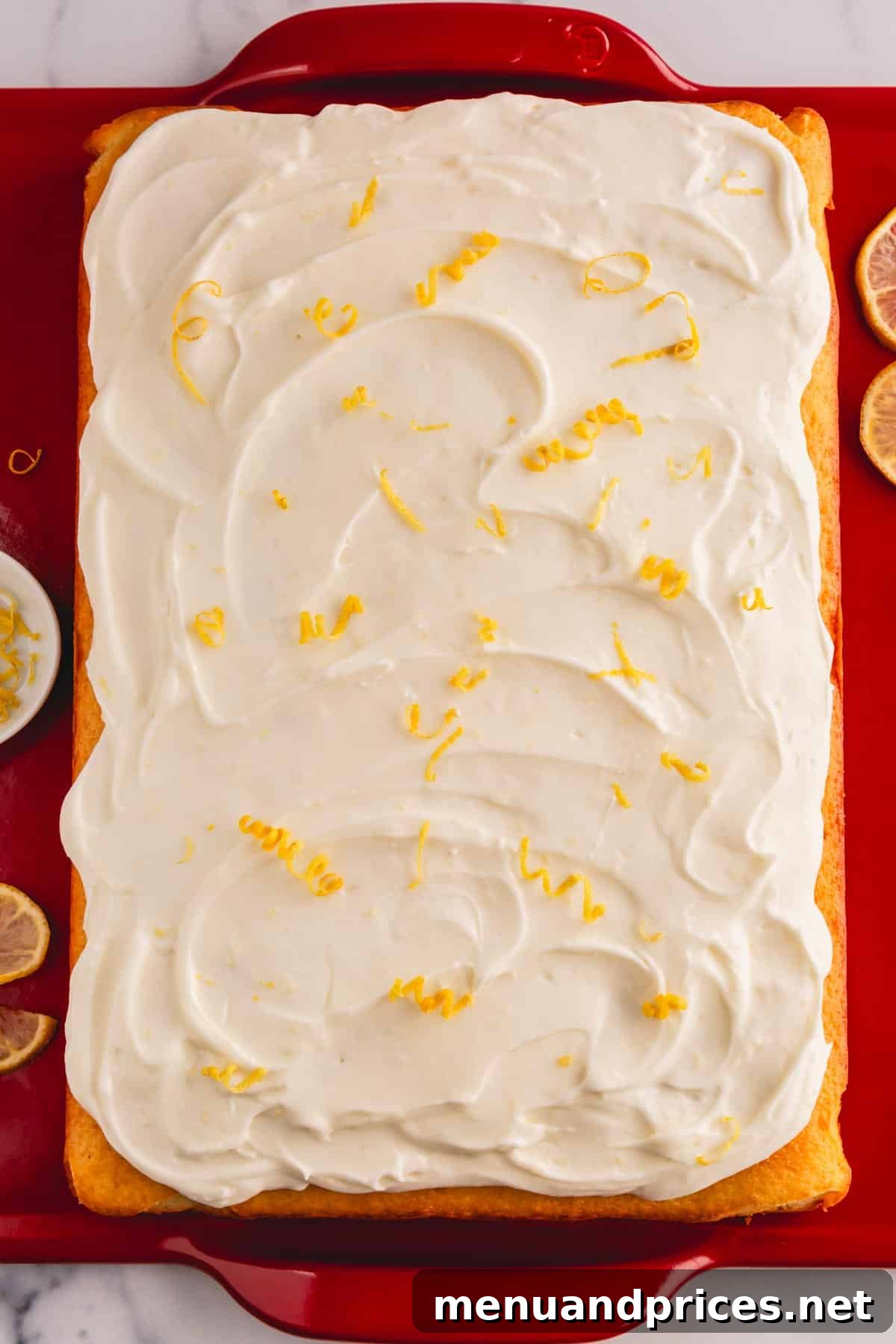
- Garnish and Serve: For that extra touch of elegance and a burst of fresh aroma, garnish your frosted lemon sheet cake with a few artfully placed fresh lemon slices, delicate lemon peel curls, or a sprinkle of extra lemon zest. Slice into generous squares and serve your magnificent, homemade lemon sheet cake. Enjoy every refreshing bite!
Expert Tips for a Flawless Lemon Sheet Cake
Achieving baking perfection often comes down to a few key techniques and considerations. Whether you’re a novice or an experienced baker, these tips will help ensure your lemon sheet cake is nothing short of spectacular. If you’re new to making frosting from scratch, I highly recommend reviewing my detailed notes on how to make cream cheese frosting for an in-depth guide before you start.
- Embrace Room Temperature Ingredients: This golden rule of baking cannot be overstated. Cold ingredients, especially butter and eggs, do not emulsify properly with other ingredients, leading to a lumpy, inconsistent batter or frosting. Allowing them to warm up for at least 30-60 minutes before mixing ensures they combine smoothly and evenly, creating a perfectly homogenous mixture for both your tender cake and your silky frosting.
- Patience is Key: Cool Your Cake Completely: Resist the temptation to frost a warm cake! If the cake is even slightly warm, the cream cheese frosting will melt and slide right off, creating a sticky, unsightly mess. Ensure your cake is completely cool to the touch – preferably chilled for a bit – before you even think about reaching for that spatula. This step guarantees a beautiful, stable frosting application.
- Precision Zesting: Avoid the Bitter Pith: Lemon zest is the secret to infusing intense, aromatic lemon flavor into your cake. However, it’s crucial to only grate the bright yellow outer layer of the lemon peel. The white layer directly beneath, known as the pith, is incredibly bitter and can impart an unpleasant, harsh taste to your dessert. Use a microplane or fine grater and stop as soon as you see any white.
- Do Not Overmix the Cake Batter: Once you add the flour to your wet ingredients, mix only until just combined. Overmixing develops the gluten in the flour excessively, resulting in a tough, chewy, and dense cake rather than the desired light and tender crumb. A few lumps are perfectly acceptable; it’s better to slightly undermix than to overmix.
- Quality Fresh Lemons: The flavor of your cake hinges on the quality of your lemons. Choose bright yellow, firm lemons that feel heavy for their size, indicating juiciness. Organic lemons are often preferred if you’re using a lot of zest.
- Measure Flour Accurately: As mentioned earlier, weighing your flour is the most accurate method. If using cups, ensure you fluff the flour with a fork, spoon it into your measuring cup, and then level it off with a straight edge. Never scoop directly from the bag, as this compacts the flour and results in too much being added.
Smart Make-Ahead Strategies
Planning ahead can significantly reduce stress on the day of your event, allowing you to enjoy the celebration and your delicious dessert even more. This lemon sheet cake is wonderfully forgiving and perfect for preparing in stages.
- Prepare the Lemon Cream Cheese Frosting in Advance: You can easily whip up the entire batch of lemon cream cheese frosting up to 3 days before you plan to assemble your cake. Simply transfer the prepared frosting to an airtight container and store it securely in the refrigerator. When you’re ready to use it, remove the frosting from the fridge and let it sit on the counter for at least 30 minutes to soften slightly. Then, give it a good stir with a spoon or re-whip it briefly with an electric mixer until it’s smooth and spreadable again.
- Lemon Sheet Cake is Freezer-Friendly: For ultimate convenience, the baked lemon sheet cake itself is an excellent candidate for freezing. After baking, allow the cake to cool completely in the pan. Once thoroughly cooled, you can wrap it tightly in plastic wrap, then an additional layer of aluminum foil, and freeze it for up to 3 months. When you’re ready to serve, simply thaw the cake on the counter at room temperature for several hours. Once thawed, you can frost and garnish it as desired, and it will taste just as fresh as the day it was baked!
Optimal Storing Tips for Freshness
Proper storage is essential to maintain the freshness, flavor, and texture of your lemon sheet cake, especially since it features a cream cheese-based frosting.
- Refrigeration is Key: Because the frosting is made with cream cheese, it is perishable and requires refrigeration. Always store your frosted lemon sheet cake in the refrigerator to prevent spoilage and keep the frosting firm.
- Airtight Container: To protect the cake from drying out and absorbing other odors from your refrigerator, store it in an airtight container. This helps maintain its moist texture and vibrant flavor for longer. It will keep well in the refrigerator for up to 3 days.
- Freezing Leftover Slices: If you have leftover cake and want to enjoy it even longer, individual slices can be frozen! Place slices in a single layer on a sheet pan and freeze for at least 2 hours, or until solid. Once frozen, transfer the solid slices to a freezer-safe airtight container or heavy-duty freezer bag, separating layers with parchment paper if stacking. This method prevents freezer burn and allows you to grab a single serving whenever a craving strikes. Frozen cake can be stored for up to 3 months. To enjoy, simply thaw a slice at room temperature for about an hour or gently warm it slightly for a truly comforting treat.
Frequently Asked Questions About Lemon Sheet Cake
A sheet cake, also commonly referred to as a slab cake, is a type of cake that is baked in a large, flat, rectangular pan, typically in sizes like 9×13 inches or even larger half-sheet pans. Unlike traditional round layer cakes, sheet cakes are designed for easy baking and serving to a crowd. They are often less fussy to frost and transport, making them a popular choice for gatherings, potlucks, and casual celebrations.
If you’re a true lemon enthusiast and desire an even bolder citrus punch, there are a few ways to enhance the flavor. You can experiment by adding a bit more fresh lemon juice or lemon zest to both the cake batter and the frosting, adjusting to your personal preference. For an extra layer of flavor, consider brushing the cooled cake with a simple lemon syrup (made from lemon juice and sugar) before frosting. However, proceed with caution and add gradually, as too much lemon juice can make the cake overly tart or affect the batter’s consistency.
If your lemon cake emerges from the oven looking excessively browned, it’s most likely due to either overcooking or the oven temperature being too high. Baking cakes at too high a temperature can cause the exterior to brown rapidly before the interior is fully cooked. Overcooking, even at the correct temperature, will also lead to excessive browning and a dry cake. To prevent this, always ensure your oven thermometer is accurate, and keep a close eye on your cake. Begin checking for doneness a few minutes before the recipe’s minimum bake time, and remove it from the oven as soon as a toothpick inserted into the center comes out clean.
While this recipe is developed for traditional ingredients, you can often adapt it. For a gluten-free version, substitute the all-purpose flour with a 1:1 gluten-free baking flour blend that contains xanthan gum. For dairy-free, use plant-based butter (sticks, not tubs), a dairy-free milk alternative (like almond or oat milk), and a dairy-free cream cheese alternative for the frosting. Results may vary slightly in texture and flavor, so some experimentation might be needed.
Explore More Zesty Lemon Delights
If you’re as passionate about lemon desserts as we are, you’ll love these other fantastic recipes that celebrate the bright and tangy flavor of citrus. Expand your baking repertoire with these irresistible treats!
- Fluffy Lemon Cupcakes
- Delightful Lemon Poppy Seed Muffins
- Elegant Lemon Layer Cake with Lemon Curd
- Exquisite Lemon Macarons

Lemon Sheet Cake
Comment
Print Recipe
Ingredients
For the Lemon Cake:
-
3 cups (375 g) all-purpose flour -
3 teaspoons baking powder -
½ teaspoon table salt -
1 ½ sticks (170 g) unsalted butter at room temperature -
1 ½ cups (300 g) granulated sugar -
3 large eggs at room temperature -
1 teaspoon pure vanilla extract -
3 tablespoons fresh lemon juice -
Zest of 1 lemon -
¾ cup (180 ml) milk at room temperature
For the Lemon Cream Cheese Frosting:
-
8 ounces (225 g) cream cheese at room temperature (brick-style) -
¼ cup (55 g) unsalted butter at room temperature -
2 cups (260 g) powdered sugar -
1 tablespoon fresh lemon juice -
zest of 1 lemon -
⅛ teaspoon kosher salt
For Garnish (Optional):
-
Lemon slices or elegant lemon peel curls
Equipment
-
1 (9×13 inch) Baking sheet
-
1 Stand mixer fitted with a paddle attachment (or large mixing bowl)
-
1 Electric hand mixer (for frosting, or stand mixer)
-
Mixing bowls
-
Whisk
-
Rubber spatula
-
Parchment paper
Instructions
To Make the Lemon Cake:
-
Preheat your oven to 350°F (175°C). Prepare a 9×13-inch baking sheet by lining it with parchment paper, allowing some overhang on the longer sides to create “handles” for easy removal later.
-
In a medium bowl, combine your dry ingredients: the all-purpose flour, baking powder, and table salt. Whisk them together thoroughly for about 30 seconds to ensure they are evenly distributed, which is crucial for the cake’s rise and texture. Set this mixture aside.3 cups all-purpose flour, 3 teaspoons baking powder, ½ teaspoon table salt
-
In a large mixing bowl, preferably with a stand mixer fitted with a paddle attachment, beat the room temperature unsalted butter and granulated sugar on medium-high speed. Continue beating for about 3 minutes, or until the mixture becomes visibly light, pale, and fluffy. This step is vital for incorporating air into the batter, contributing to a tender cake.1 ½ sticks unsalted butter, 1 ½ cups granulated sugar
-
To the creamed butter and sugar, add the room temperature large eggs one at a time, followed by the pure vanilla extract, fresh lemon juice, and finely grated lemon zest. Beat the mixture again on medium-high speed for another 2 minutes. The batter should look further emulsified, light, and wonderfully fluffy. Remember to scrape down the sides of the bowl with a rubber spatula halfway through this step to ensure all ingredients are fully incorporated.3 large eggs, 1 teaspoon pure vanilla extract, 3 tablespoons fresh lemon juice, Zest of 1 lemon
-
With the mixer on low speed, add half of your reserved flour mixture to the wet ingredients. Mix gently, just until the flour is barely combined and no dry pockets are visible. This minimizes gluten development.
-
Next, gently stir in the room temperature milk. Once partially combined, add the remaining half of the flour mixture. Mix on low speed until the last traces of flour have disappeared. Immediately after, increase the mixer speed to high for a quick 30 seconds to ensure a smooth, emulsified batter. Crucially, do not overmix the batter once the flour has been added, as this can result in a dense and tough cake.¾ cup milk
-
Carefully pour the finished cake batter into your prepared 9×13-inch baking pan. Use an offset spatula or the back of a spoon to spread the batter out evenly, ensuring a consistent layer for uniform baking.
-
Bake the cake in the preheated oven for 30-35 minutes. To check for doneness, insert a clean wooden toothpick into the center of the cake. It should come out clean or with only a few moist crumbs attached. Avoid overbaking, which can lead to a dry cake.
-
Once baked, remove the cake from the oven and place it on a wire rack. Allow the cake to cool completely in the pan before attempting to frost it. This step is essential to prevent the frosting from melting.
To Make the Lemon Cream Cheese Frosting:
-
Using an electric hand mixer (or your stand mixer with a paddle attachment), combine the softened full-fat cream cheese and unsalted butter in a medium bowl. Beat them together on medium-high speed until the mixture is light, smooth, and fluffy, which should take approximately 1 minute. Ensure there are no lumps of cream cheese remaining.8 ounces cream cheese, ¼ cup unsalted butter
-
Gradually add the powdered sugar to the cream cheese mixture. Start beating on low speed for about a minute until the sugar is mostly incorporated, preventing a sugary cloud. Then, increase the speed to medium-high and continue to beat for approximately 3 minutes, or until the frosting is wonderfully smooth, airy, and fluffy.2 cups powdered sugar
-
Finally, stir in the fresh lemon juice, lemon zest, and kosher salt. Whip the frosting again on medium speed for about 30 seconds, just until all the ingredients are fully combined and the vibrant lemon flavor is evenly distributed throughout. This creates a perfectly balanced and tangy-sweet frosting.1 tablespoon fresh lemon juice, zest of 1 lemon, ⅛ teaspoon kosher salt
To Assemble Your Lemon Sheet Cake:
-
Once your lemon sheet cake is completely cooled, generously spread the prepared lemon cream cheese frosting evenly over the entire surface. Use an offset spatula to create a smooth, inviting layer. Garnish with fresh lemon slices or elegant lemon peel curls for a beautiful presentation. Slice and enjoy this refreshing and crowd-pleasing dessert!Lemon slices
⭐️ Did you create this amazing recipe?
Please share your experience by leaving a review and let us know how much you loved it!
Nutrition Information