
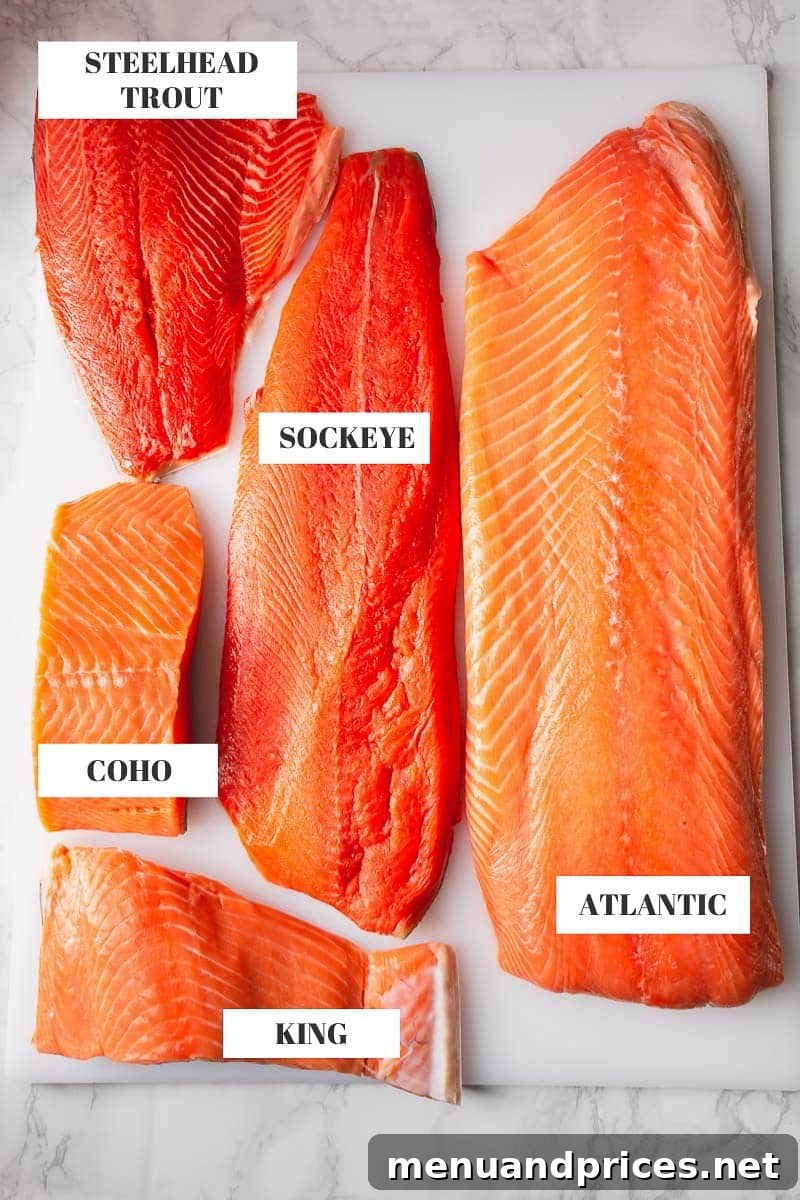
Stepping into the world of salmon can be an exciting, yet sometimes confusing, culinary journey. With labels like King, Coho, Sockeye, and Atlantic often gracing the seafood counter, it’s natural to wonder: what exactly sets these varieties apart? Is “salmon” just “salmon,” or are there distinct differences worth exploring? Let’s dive deep into all things salmon, unraveling the mysteries of these magnificent fish and helping you discover which variety truly earns its place on your plate.
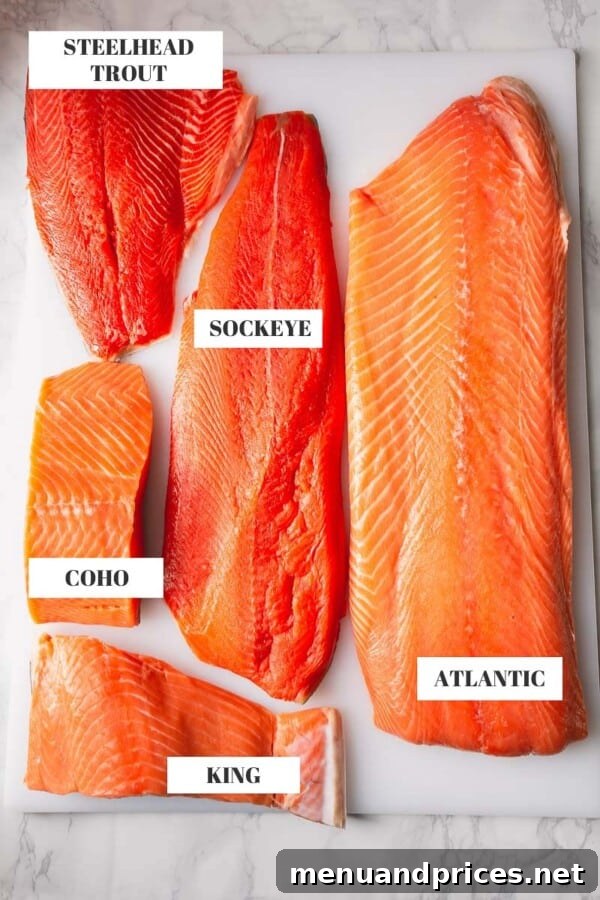
Not long ago, I shared the common misconception that all salmon was essentially the same. Oh, how delightfully wrong I was! My perception completely shifted after a delightful experience with a seafood subscription box, which introduced me to several distinct salmon varieties. The revelation came from a side-by-side taste test, and the difference was truly a game-changer. I discovered that I had typically been buying Atlantic salmon, a farmed variety, which, to my surprise, offered the least flavor. The true awakening came with my first taste of wild King salmon – it was an unparalleled experience, leaving me feeling as though I had missed out on years of incredible culinary potential.
This journey of discovery spurred a deeper exploration into the world of salmon, leading to a much richer understanding of their unique characteristics. This guide is designed to share that knowledge, helping you navigate the options and choose the perfect salmon for your next meal.
Wild vs. Farmed Salmon: Understanding the Core Differences
Before we delve into specific varieties, it’s essential to understand the fundamental distinction between wild-caught and farmed salmon. This difference impacts everything from nutrition and flavor to environmental considerations and cost.
Wild-Caught Salmon: Nature’s Bounty
Most wild salmon varieties are Pacific salmon, meticulously caught in their natural habitats – the vast oceans, pristine lakes, and flowing rivers. These fish thrive on a diverse, natural diet of smaller fish, krill, and other marine organisms, which significantly contributes to their superior nutritional profile. Wild-caught salmon is renowned for its higher levels of Omega-3 fatty acids (EPA and DHA), crucial for heart and brain health, as well as a richer concentration of essential vitamins and minerals like Vitamin D, B12, and selenium.
Their active lives in the open water result in leaner, firmer flesh and a more vibrant color, naturally derived from their diet. This natural lifestyle also contributes to a distinct, complex flavor that many connoisseurs prefer. It’s important to note that all salmon caught in Alaska is wild salmon, as Alaska maintains a strict ban on fish farming to protect its pristine aquatic ecosystems and wild populations. This commitment ensures that any salmon bearing the “Alaskan” label is guaranteed to be wild-caught and sustainably sourced.
Farmed Salmon: Controlled Environment, Consistent Supply
In contrast, farmed salmon are raised in controlled environments, typically in ocean net pens or land-based tanks. They are fed a formulated diet designed to promote rapid growth and achieve a desired size. While farming practices have improved significantly over the years, the controlled diet often leads to different fat profiles and nutrient compositions compared to their wild counterparts. Farmed salmon tend to have a higher overall fat content, often with a different balance of Omega-3s and Omega-6s, and a lighter, sometimes more uniform, flesh color. This lighter color is often due to the absence of the natural astaxanthin found in the wild salmon’s diet (astaxanthin is a powerful antioxidant, also responsible for salmon’s vibrant hue), and sometimes synthetic astaxanthin is added to their feed.
One of the primary advantages of farmed salmon is its consistent availability and often lower price point, making it more accessible to a broader market. However, the flavor profile tends to be milder and less complex, with a softer texture compared to wild varieties. Notably, all Atlantic salmon available on the market today is farmed salmon, as wild Atlantic salmon populations are now critically low and protected, making them extremely rare to find commercially.
From my personal experience, the difference in taste is profound; wild-caught salmon offers a depth of flavor and texture that is truly unparalleled. While farmed salmon provides a good source of protein and Omega-3s, the culinary experience of wild salmon, with its distinct varieties, is unmatched.
Exploring the Magnificent Wild Salmon Varieties
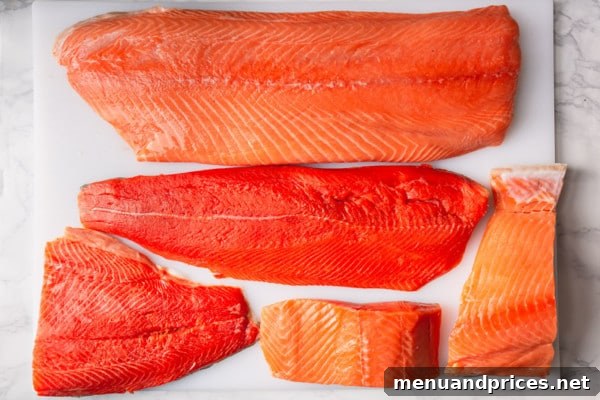
The Pacific Ocean is home to five main species of wild salmon, each with its own unique characteristics, flavor profile, and culinary applications. Understanding these distinctions will empower you to choose the perfect fish for any dish.
-
King Salmon (Chinook)
Often hailed as the “king” of salmon, Chinook salmon is renowned for its incredibly rich, buttery flavor and velvety texture. It boasts the highest fat content and, consequently, the most abundant Omega-3 fatty acids among all salmon species, making it exceptionally moist and flavorful. King salmon are also the largest species, with an average weight of about 40 lbs, though some can exceed 100 lbs, yielding thick, luxurious fillets. Their impressive size and relatively scarce availability contribute to their higher price point, making them a true culinary splurge. Perfect for grilling, roasting, or pan-searing, King salmon requires minimal seasoning to shine, allowing its natural richness to take center stage. Its firm flesh holds up beautifully to various cooking methods.
-
Coho Salmon (Silver Salmon)
Coho salmon, also known as Silver salmon, offers a delightful balance with its delicate texture and subtle, mild flavor. It has a moderate fat content, making it less rich than King salmon but still providing a healthy dose of Omega-3 fatty acids. Its beautiful orange-red flesh is firm yet flaky when cooked, making it a versatile choice for a wide range of recipes. Coho is an excellent option for those who enjoy a less intense “salmon-y” taste. It performs wonderfully in dishes where you want the salmon to complement other flavors, such as in lighter preparations, baking, or poaching. Its appealing color and texture also make it a favorite for cedar plank grilling.
-
Sockeye Salmon (Red Salmon)
Distinctly characterized by its vibrant, deep red flesh, Sockeye salmon earns its “Red” nickname honestly. Sockeye are leaner than King and Coho salmon, resulting in a lower fat content and a firmer texture. What truly sets Sockeye apart is its robust, pronounced “salmon-y” flavor – often described as the most intensely flavored of all wild salmon, in the best possible way! This strong flavor is attributed to its unique diet of zooplankton and crustaceans. Interestingly, there is virtually no farmed version of Sockeye salmon due to their highly specialized diet and migratory patterns, making all Sockeye truly wild. More affordable than King and Coho, Sockeye’s distinctive taste and firm texture make it a highly popular choice among salmon aficionados, perfect for grilling, smoking, or any preparation where its bold flavor can be appreciated.
-
Pink Salmon (Humpback Salmon)
Pink salmon, or Humpback salmon, is the smallest and most abundant of the Pacific salmon species. Characterized by its pale pink flesh and mild taste, it also has the lowest fat content. Due to its delicate flavor and softer texture, Pink salmon is most commonly processed into canned salmon, which is a fantastic source of Omega-3s and protein for everyday meals like salmon salads, patties, or casseroles. However, it is also available fresh or frozen, offering an economical option for those seeking a light, delicate fish. When cooked fresh, it’s best suited for methods that prevent drying out, such as poaching or gentle baking, and pairs well with bright, fresh sauces.
-
Chum Salmon (Dog Salmon)
Chum salmon, sometimes called Dog salmon due to its distinctive dog-like teeth developed during spawning, is another small, low-fat species. Its flesh is lighter in color, ranging from pale orange to pink, and has a mild, almost delicate flavor. While the fillets are suitable for grilling, baking, or smoking, Chum salmon is most prized for its large, bright orange roe, known as ikura. These beautiful, bursting pearls are a delicacy in Japanese cuisine, especially for sushi. If you’ve enjoyed ikura sushi, you’ve tasted one of the most celebrated parts of the Chum salmon. It’s an excellent, sustainable, and often overlooked option for those looking for a lean protein source that’s also budget-friendly.
Atlantic Salmon: Exclusively Farmed
While historically a wild species, nearly all Atlantic salmon available in markets today is farmed. Wild Atlantic salmon populations faced significant declines due to overfishing and habitat loss, leading to strict conservation efforts. As a result, the commercial harvesting of wild Atlantic salmon is extremely limited, making it a rare find. The farmed Atlantic salmon typically available is known for its milder flavor, consistent texture, and relatively high-fat content, which makes it very versatile for various cooking methods. It’s often the most widely available and affordable option, providing a reliable source of Omega-3s and protein for many households.
What is Steelhead Trout? A Close Relative Worth Knowing
Before concluding our exploration of salmon, it’s worth introducing a species that often appears alongside salmon at the seafood counter and shares many similarities: Steelhead Trout.
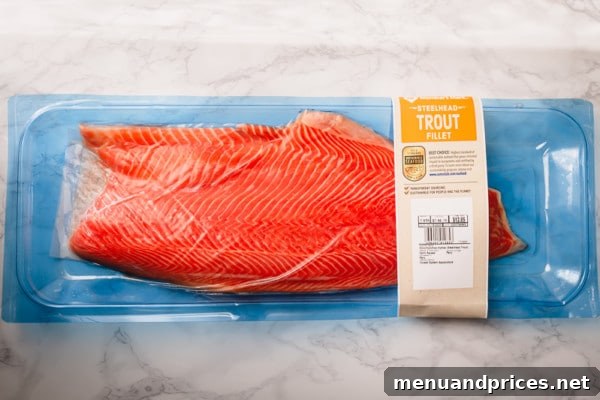
Steelhead trout are an anadromous form of rainbow trout. While rainbow trout typically spend their entire lives in freshwater, steelhead trout exhibit migratory behavior similar to Pacific salmon, traveling from freshwater rivers to the ocean and then returning to spawn. This ocean migration contributes to their larger size and distinct flavor profile compared to their freshwater counterparts.
In terms of culinary characteristics, steelhead trout shares many qualities with salmon. Its flesh is a beautiful orange-red, similar to Coho or Sockeye, though often a touch lighter. Steelhead is typically a bit less fatty than most salmon varieties, giving it a milder, delicate flavor and a slightly less rich texture. It offers a wonderful balance between the robust flavor of salmon and the mildness of freshwater trout, making it a highly versatile and delicious option. Furthermore, steelhead trout is often more affordable than premium salmon varieties, making it an excellent choice for those seeking a high-quality, nutritious fish without the higher price tag. It cooks beautifully whether grilled, baked, or pan-fried, much like salmon, and absorbs marinades and seasonings wonderfully.
Choosing Your Perfect Salmon: Tips for the Discerning Cook
With such a fantastic array of choices, how do you decide which salmon is right for you? Consider these factors:
- Flavor Preference: If you love a rich, buttery taste, go for King. For a robust “salmon-y” flavor, Sockeye is your best bet. If you prefer something milder, Coho or Steelhead trout are excellent choices. Pink and Chum offer the lightest flavors.
- Texture: King and Coho offer a flakier, tender texture, while Sockeye is notably firmer. Pink and Chum are softer.
- Budget: King salmon is typically the most expensive, followed by Coho. Sockeye offers a great balance of flavor and value, while Pink and Chum are the most economical. Farmed Atlantic salmon provides consistent quality at a moderate price.
- Cooking Method: Higher fat salmon (King, Coho, Atlantic) are more forgiving and excellent for grilling or high-heat cooking. Leaner salmon (Sockeye, Pink, Chum, Steelhead) benefit from gentler cooking methods like baking, poaching, or steaming to retain moisture.
- Nutritional Goals: All salmon varieties are excellent sources of protein and Omega-3s. King salmon boasts the highest fat-soluble nutrients, while Sockeye provides a powerful punch of astaxanthin.
Ultimately, the best way to discover your favorite salmon is to try them all! Each variety offers a unique sensory experience, enriching your culinary repertoire and deepening your appreciation for this incredible superfood. So next time you’re at the seafood counter, don’t just grab “salmon”—choose an adventure!