
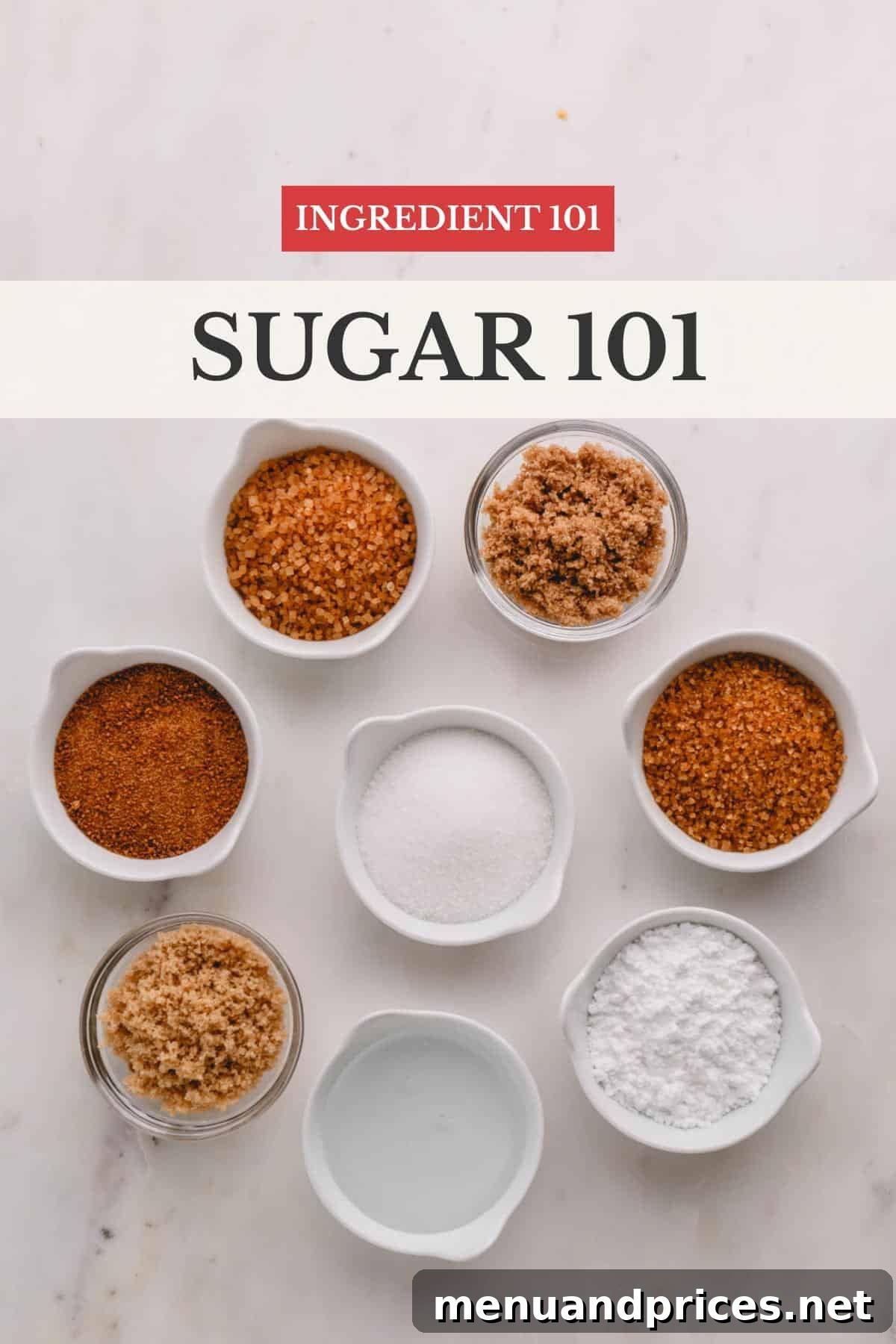
Sugar 101: Your Essential Guide to Different Sugar Types and Their Uses
Unlock the secrets of sugar with this comprehensive guide to different types, their unique properties, and how to best utilize them in your culinary adventures. From the common granulated sugar to specialized brown sugars and versatile liquid sweeteners, we’re covering everything you need to know to achieve perfect results every time.
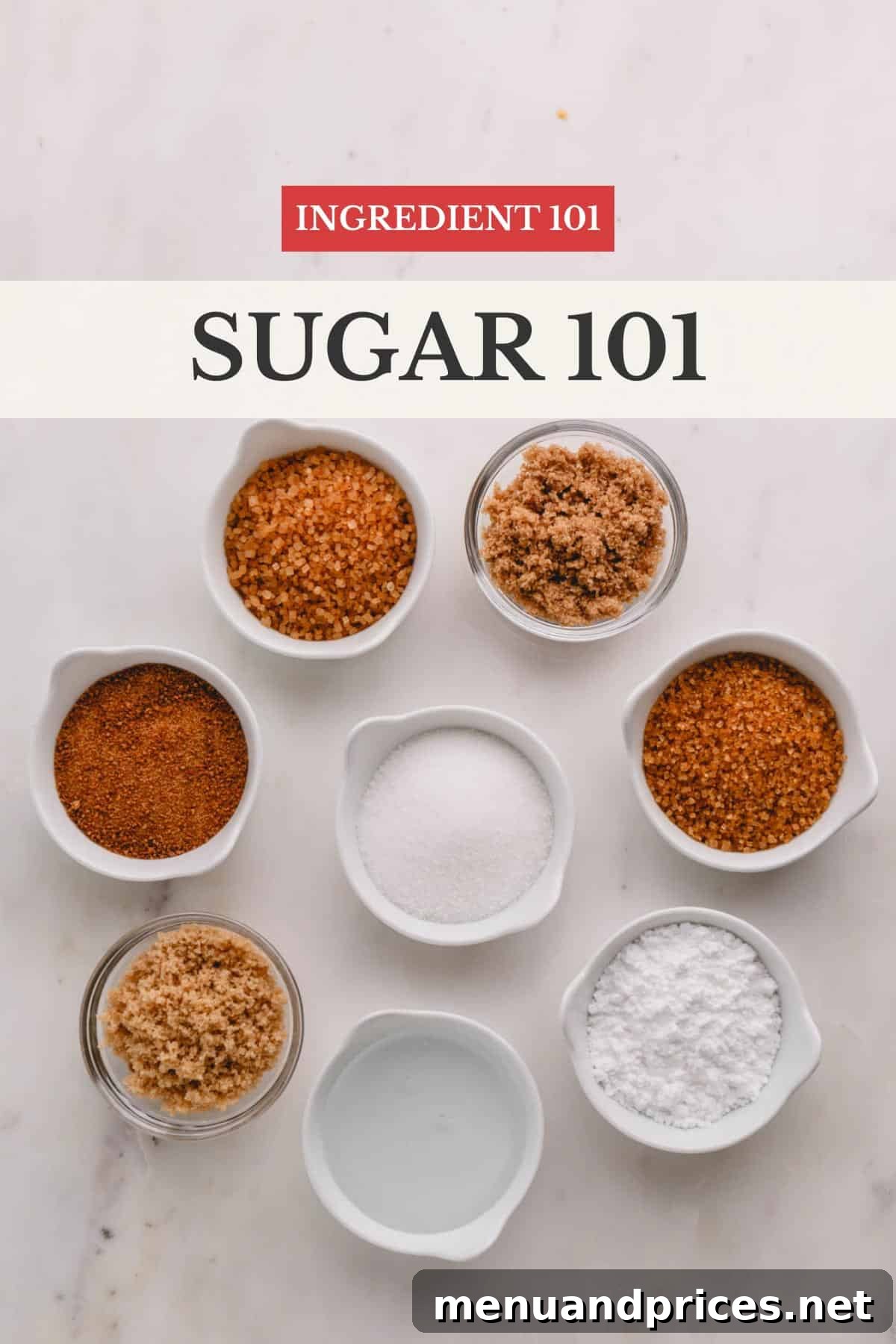
Pin this guide for future reference!
Pin It
The culinary world, especially baking, is incredibly diverse, offering an array of ingredients that seem similar but serve distinct purposes. Sugar is a prime example. Beyond basic sweetness, different types of sugar – from the fine crystals of caster sugar to the rich, moist texture of muscovado – each bring unique characteristics that can profoundly influence the outcome of your dishes.
In baking, sugar is far more than just a sweetener. It’s a foundational ingredient that plays multiple critical roles: it tenderizes baked goods by inhibiting excessive gluten formation, ensuring a delicate crumb; it locks in moisture, keeping your creations fresh and succulent; and it aids in leavening by trapping air during the creaming process, contributing to a light and airy texture. Furthermore, sugar is essential for achieving that appealing golden-brown crust through caramelization, stabilizes delicate structures like meringues, and acts as vital nourishment for yeast in bread-making. Understanding these nuances empowers you to select the perfect sugar for every recipe, enhancing both the flavor and overall presentation of your culinary masterpieces.
Why Understanding Sugar Types is Crucial for Culinary Success
Sugar is often considered a simple staple, yet its varying forms possess distinct properties that significantly impact the taste, texture, and appearance of your final product. Simply swapping one sugar for another in a recipe can lead to unexpected and often undesirable results, as different sugars interact uniquely with other ingredients.
Consider the stark difference between white granulated sugar and brown sugar. Granulated sugar, with its fine, dry crystals, contributes to crisp textures and a clean, unadulterated sweetness. Brown sugar, on the other hand, contains molasses, which imparts both essential moisture and a distinct caramel or toffee flavor. This higher moisture content results in softer, chewier baked goods, making it an ideal choice for certain cookies or fudgy brownies. However, using brown sugar in a delicate vanilla cake or intricate chocolate macaron might introduce too much moisture and an overpowering flavor, fundamentally altering the intended light texture and subtle taste. Therefore, recognizing these subtle yet profound differences is key to mastering your recipes and consistently achieving delicious outcomes.
Don’t let the sheer variety intimidate you! This guide is meticulously designed to demystify the world of sugar, providing you with all the specifics needed to confidently choose the right type for any recipe, ensuring perfectly sweet and expertly textured results every single time.
Exploring 13 Essential Types of Sugar and Their Applications
Now that we’ve established the fundamental importance of sugar in cooking and baking, let’s delve into the individual characteristics of the most common sugar varieties. Understanding each type will empower you to make informed decisions, transforming your recipes from merely good to truly extraordinary.
White Sugars: The Versatile Staples
1. Granulated Sugar (Table Sugar)
Granulated sugar, commonly referred to as “sugar” or “table sugar,” is arguably the most ubiquitous sweetener in kitchens worldwide. Produced through a refining process that removes all molasses from either sugar cane or sugar beets, it results in pure, crystalline sucrose. Its neutral flavor and medium-sized crystals make it incredibly versatile, acting as the foundation for countless recipes. These consistent crystals are perfect for dissolving evenly into batters and doughs, providing reliable sweetness without imparting any additional color or altering the primary flavor profile of your dishes. It is the unchallenged go-to choice for a vast array of recipes due to its reliability, consistent performance, and widespread availability.
BEST USES: Granulated sugar is ideal for almost any recipe that calls for sugar, especially for classic cakes, crispy or chewy cookies, delicate macarons, flaky pastries, and comforting pies. Its optimal crystal size ensures smooth incorporation into batters, guaranteeing a perfectly sweetened, non-gritty texture in your finished culinary creations.
2. Caster Sugar (Superfine or Baker’s Sugar)
Caster sugar, also widely known as superfine or baker’s sugar, is a more finely ground version of standard granulated sugar, though it’s not quite as powdery as confectioners’ sugar. Its significantly smaller crystal size allows it to dissolve much more rapidly and seamlessly than regular granulated sugar, making it an excellent choice for recipes where a perfectly smooth texture and quick incorporation are paramount. This characteristic prevents any trace of graininess and ensures a delicate, luxurious mouthfeel, particularly in light, aerated preparations and delicate desserts.
BEST USES: Caster sugar truly shines in delicate recipes such as airy meringues, cloud-like soufflés, smooth custards, and fluffy mousses, where its rapid dissolution helps create stable foams and exquisitely smooth textures. It’s also perfectly suited for sweetening liquids like warming hot chocolate, refreshing daiquiris, and various cocktails, dissolving effortlessly to provide instant sweetness without any gritty residue. If you find yourself without caster sugar, you can easily create your own by pulsing regular granulated sugar in a food processor for just a few seconds until it reaches a finer consistency.
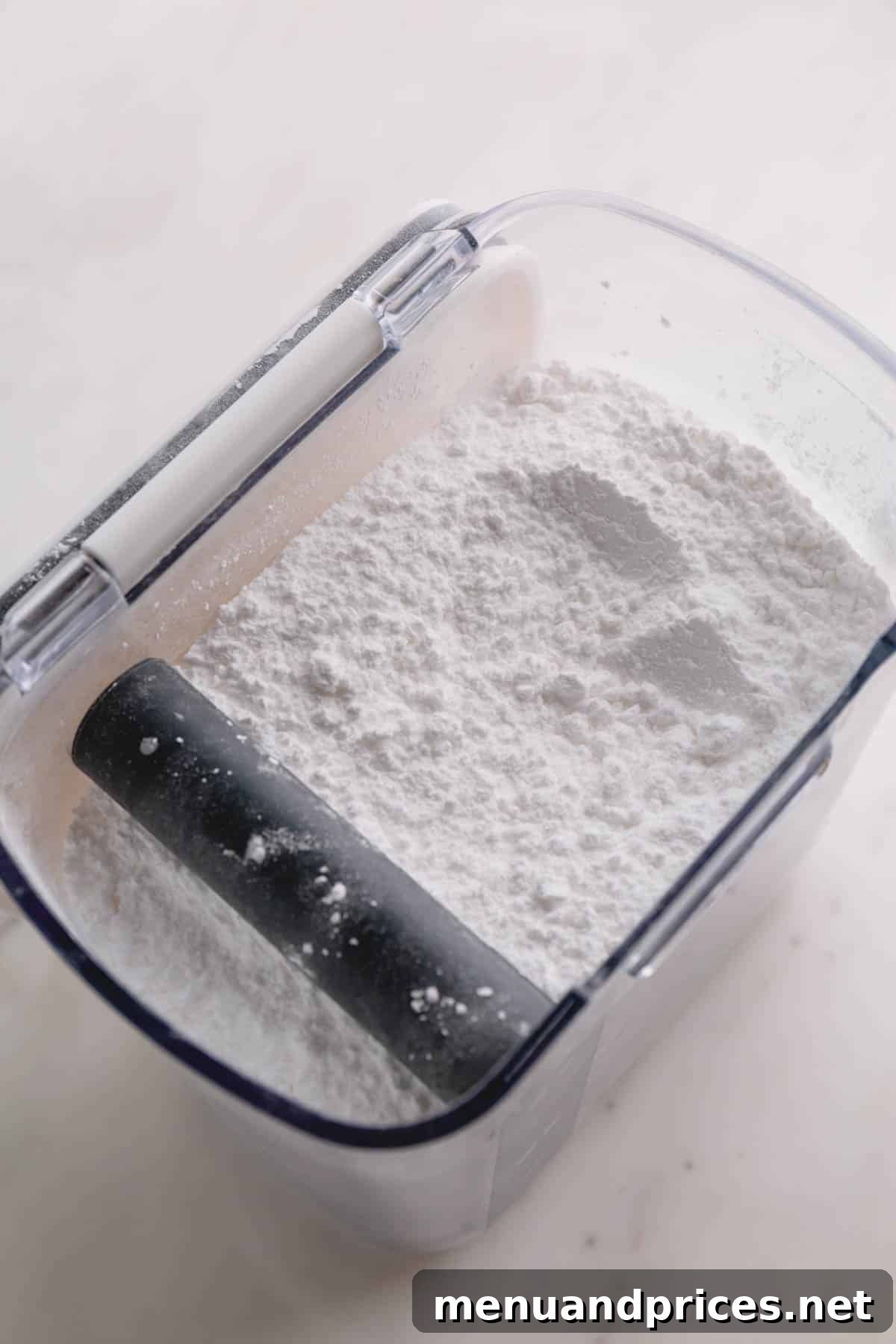
3. Powdered Sugar (Confectioners’ Sugar or Icing Sugar)
Powdered sugar, also universally known as confectioners’ sugar or icing sugar, is white granulated sugar that has been mechanically ground into an incredibly fine, soft powder. To prevent caking and clumping, which would otherwise be an issue with such a fine texture, commercial powdered sugars typically contain a small amount of cornstarch, usually around 3-5%. This combination of ultra-fine texture and anti-caking agent makes it an indispensable ingredient for achieving smooth, velvety frostings and elegant decorative finishes.
BEST USES: Powdered sugar is the absolute essential ingredient for creating impeccably smooth royal icing, rich and fluffy buttercreams, and delicate glazes. Its unique ability to dissolve almost instantly and create a silky-smooth consistency makes it perfect for these applications. It’s also widely employed for dusting baked goods like airy doughnuts, fudgy brownies, and elegant pastries, adding a beautiful, delicate finish and a subtle touch of sweetness that enhances their overall appeal.
4. Sanding Sugar (Coarse Sugar)
Sanding sugar is a distinct type of coarse, decorative sugar used primarily to add visual appeal and a delightful crunch to baked goods. Its crystals are significantly larger and notably more reflective than regular granulated sugar, giving a sparkling, glossy finish reminiscent of frost or freshly fallen snow. What truly sets sanding sugar apart is its remarkable resistance to melting at typical baking temperatures. This crucial property allows it to retain its crystalline structure, vibrant color, and satisfying crunchy texture even after being baked, unlike finer sugars that would simply dissolve. It’s readily available in a wide spectrum of colors, making it an incredibly popular choice for adding a festive and celebratory touch to desserts for any occasion.
BEST USES: Sanding sugar is perfect for decorating cookies, muffins, scones, and pastries before baking. It imparts a professional, appealing sparkle and a satisfying textural contrast, making your homemade treats look and feel more special, especially during holidays or for special events where presentation is key.
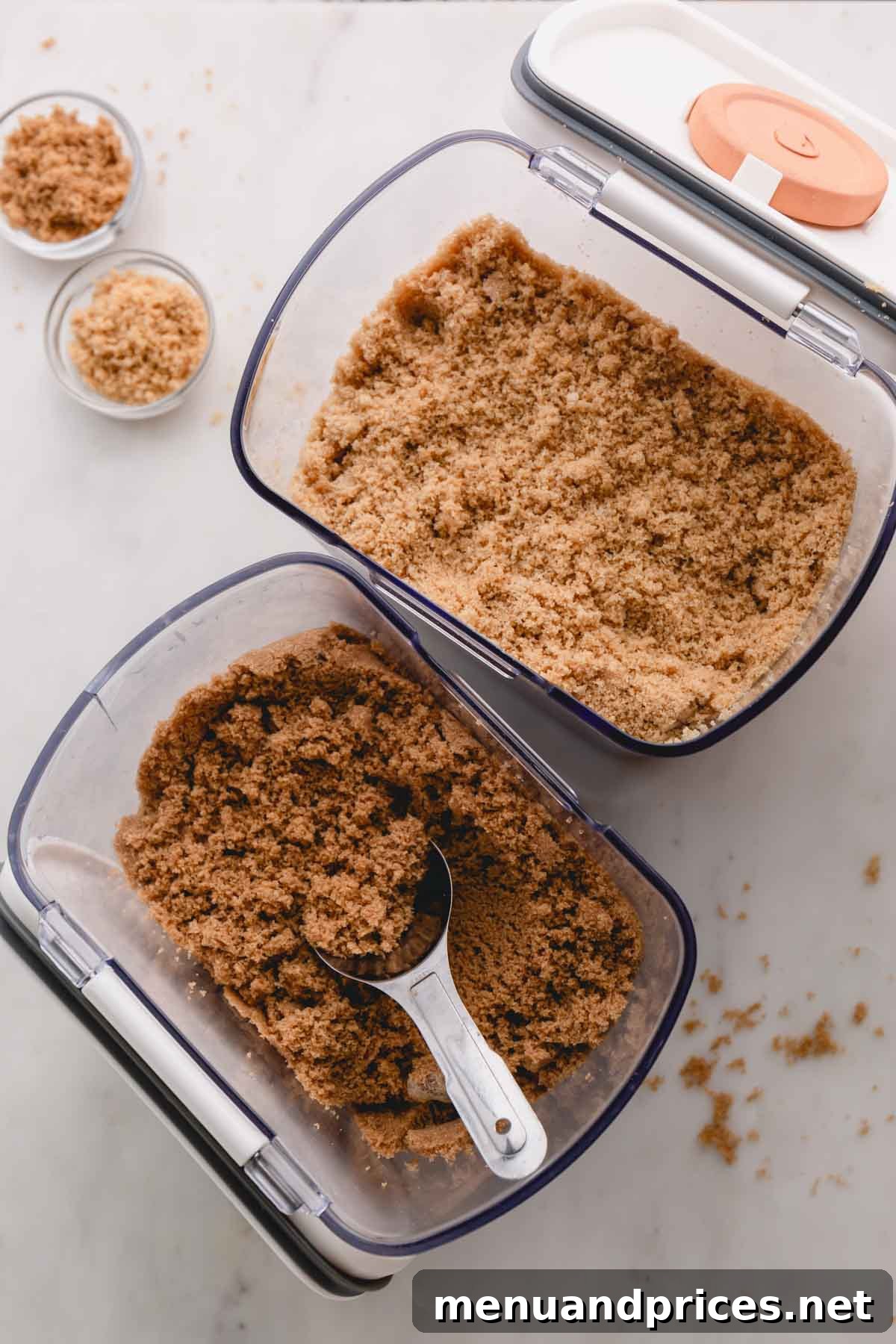
Brown Sugars: Richness and Moisture
5. Light Brown Sugar
Light brown sugar is a soft, moist sugar characterized by its delightful light caramel hue and a subtle, mellow toffee-like flavor. This distinct color and taste come directly from its molasses content, which typically constitutes about 3% of its total weight. The presence of molasses also gives light brown sugar its characteristic stickiness and hygroscopic (moisture-retaining) properties. This makes it an invaluable ingredient for achieving tender, wonderfully chewy textures in baked goods and adding a nuanced depth of flavor to various sauces, glazes, and marinades.
BEST USES: Light brown sugar is a foundational staple for sweetening deliciously chewy cookies, exquisitely moist brownies, and tender cakes. It imparts a gentle caramel note that beautifully complements a wide range of flavors, making it incredibly versatile. It’s particularly excellent for recipes like my no-spread sugar cookies, where its inherent moisture contributes to a desirable soft interior and helps prevent excessive spreading during baking, ensuring perfectly shaped, consistently delicious results.
6. Dark Brown Sugar
Dark brown sugar is readily distinguished by its notably deeper color and more pronounced flavor compared to its lighter counterpart, owing to a significantly higher molasses content—typically ranging from 6-7%. This elevated percentage of molasses not only darkens its appearance but also intensifies its caramel and toffee notes, imparting a richer, more robust, and complex taste profile. Its moist, dense, and distinctly sticky texture provides superior moisture retention in baked goods, consistently resulting in an even softer, chewier, and more decadent product.
BEST USES: Dark brown sugar is ideally suited for recipes that truly benefit from a deeper, more assertive flavor and increased moisture. It’s a fantastic choice for hearty and richly flavored dishes like traditional gingerbread, classic baked beans, bold barbecue sauces, and indulgent fruitcakes. While light and dark brown sugars are often interchangeable, using dark brown sugar will always lend a more profound flavor and an enhanced moistness, making it the preferred option when a bolder and richer impact is desired in your culinary creations.
7. Muscovado Sugar (Barbados Sugar)
Muscovado sugar stands out as a minimally processed, unrefined sugar that retains a significant amount of its natural molasses content directly from the cane sugar juice. This minimal processing results in a sugar with a much stronger, more complex flavor profile than standard brown sugars, often described as having deep, evocative notes of rich toffee, burnt caramel, and even a subtle liquorice or smoky undertone. It boasts an incredibly moist, distinctly sticky, and somewhat clumpy texture due to its inherently high molasses content. Muscovado is available in both light and dark varieties, with dark muscovado having an even higher molasses concentration and a more intense, almost pungent flavor.
BEST USES: Muscovado sugar is an excellent substitute for light or dark brown sugar, used on a one-to-one basis, particularly when you desire a deeper, more sophisticated, and nuanced flavor in your baked goods. It’s superb in rich desserts, complex marinades, vibrant glazes, and savory dishes where its robust, unique character can truly shine. Its distinctive complexity makes it a cherished favorite for artisanal baking and gourmet cooking, elevating dishes to a new level.
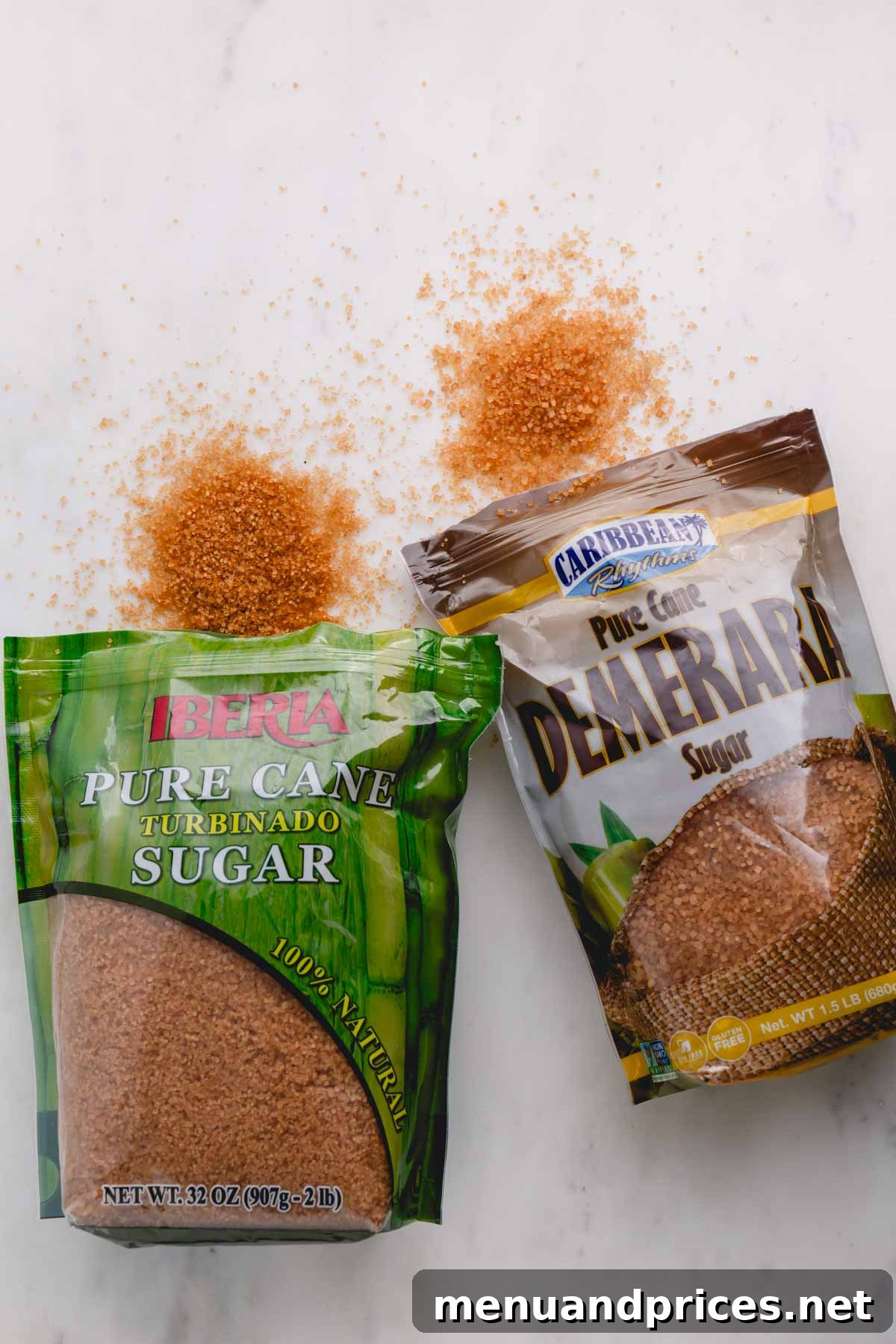
8. Turbinado Sugar (Sugar in the Raw)
Turbinado sugar is a partially refined cane sugar, immediately recognizable by its large, sparkling golden-brown crystals. It’s often marketed as “Sugar in the Raw” due to its minimal processing, which allows it to retain some of its natural molasses, imparting a subtle yet pleasant caramel flavor. Unlike more refined white sugars, turbinado sugar possesses a coarse, distinctively crunchy texture. While it provides a lovely sweetness, its substantial crystal size means it doesn’t dissolve easily or blend smoothly into fine batters or delicate doughs, rendering it generally unsuitable for applications requiring a uniform, silky texture.
BEST USES: Turbinado sugar truly excels as a decorative and finishing sugar. Its sturdy crystals and appealing sheen make it perfect for sprinkling generously over muffins, cookies, fruit tarts, and scones before baking, adding a delightful crunch and a luxurious sparkle. It’s also an excellent choice for sweetening hot beverages like coffee and tea, where its slow dissolution and subtle molasses notes can be savored and appreciated.
9. Demerara Sugar
Demerara sugar is very similar to turbinado sugar in its coarse texture and golden appearance, but it typically features slightly larger, drier crystals and a lighter, more translucent golden color. It is also a minimally processed cane sugar that retains a small amount of natural molasses, lending it a mild, buttery caramel flavor that is subtly nuanced. Its distinct crunch and inherent visual appeal make it a premium choice for specific culinary applications where both texture and presentation are paramount.
BEST USES: Demerara sugar is best utilized as a luxurious finishing sugar or for elegant decorative purposes, much like its close relative, turbinado. It adds a wonderful textural contrast and a gentle sweetness when sprinkled over oatmeal, creamy yogurt, vibrant fruit crumbles, or the tops of gourmet baked goods like shortbread, pies, and crème brûlée just before serving or after a quick bake. Its robust crystals do not readily dissolve, making it perfect for adding a satisfying, lingering crunch.
10. Coconut Sugar
Coconut sugar is a natural sweetener derived directly from the sap of the coconut palm tree. It’s widely recognized as a more natural and significantly less processed alternative to many traditional sugars, often undergoing minimal refinement. This gentle processing method allows it to retain more of its inherent minerals and vitamins, giving it a slightly higher nutritional profile compared to highly refined white sugars. Its flavor is pleasantly reminiscent of caramel or brown sugar, often with a subtle earthy or nutty undertone that adds complexity.
BEST USES: Coconut sugar can be directly substituted for white or brown sugar in recipes on a convenient one-to-one basis, making it a versatile and popular choice for those seeking healthier baking alternatives. However, be mindful that while it performs quite similarly in terms of sweetness and moisture (especially when compared to brown sugar), its natural dark color can cause your finished product to appear slightly darker than if white sugar were used. It works wonderfully in a wide range of cookies, muffins, and various desserts where its unique flavor profile can contribute a pleasant and intriguing depth.
Liquid Sugars: Syrups for Texture and Shine
11. Corn Syrup
Corn syrup is a widely utilized liquid sweetener derived from cornstarch through an enzymatic process. It plays a crucial dual role in both commercial food production and home baking, functioning not only as a sweetener but also as a critical stabilizer and texture enhancer. Its primary benefits include effectively preventing sugar crystallization, adding desirable body, and enhancing the moistness of various foods. It helps to keep candies smooth and delightfully chewable, prevents homemade ice cream from becoming grainy or icy, and adds a beautiful, glossy sheen to glazes and sauces. Available in both light and dark varieties (the latter often containing refiners’ syrup for a darker color and richer flavor), light corn syrup is generally preferred for its neutral taste that won’t overpower other ingredients.
BEST USES: Corn syrup is incredibly versatile and can often be used interchangeably with other liquid sweeteners like honey, maple syrup, or agave nectar, depending on the desired flavor profile. It is an indispensable ingredient in candy making, particularly for recipes like smooth caramel, chewy taffy, and my renowned microwave peanut brittle recipe, where it ensures a perfectly smooth, non-crystallized texture and adds essential chewiness. It also significantly contributes to the moistness of many baked goods and serves as an excellent thickening agent in various sauces and dressings.
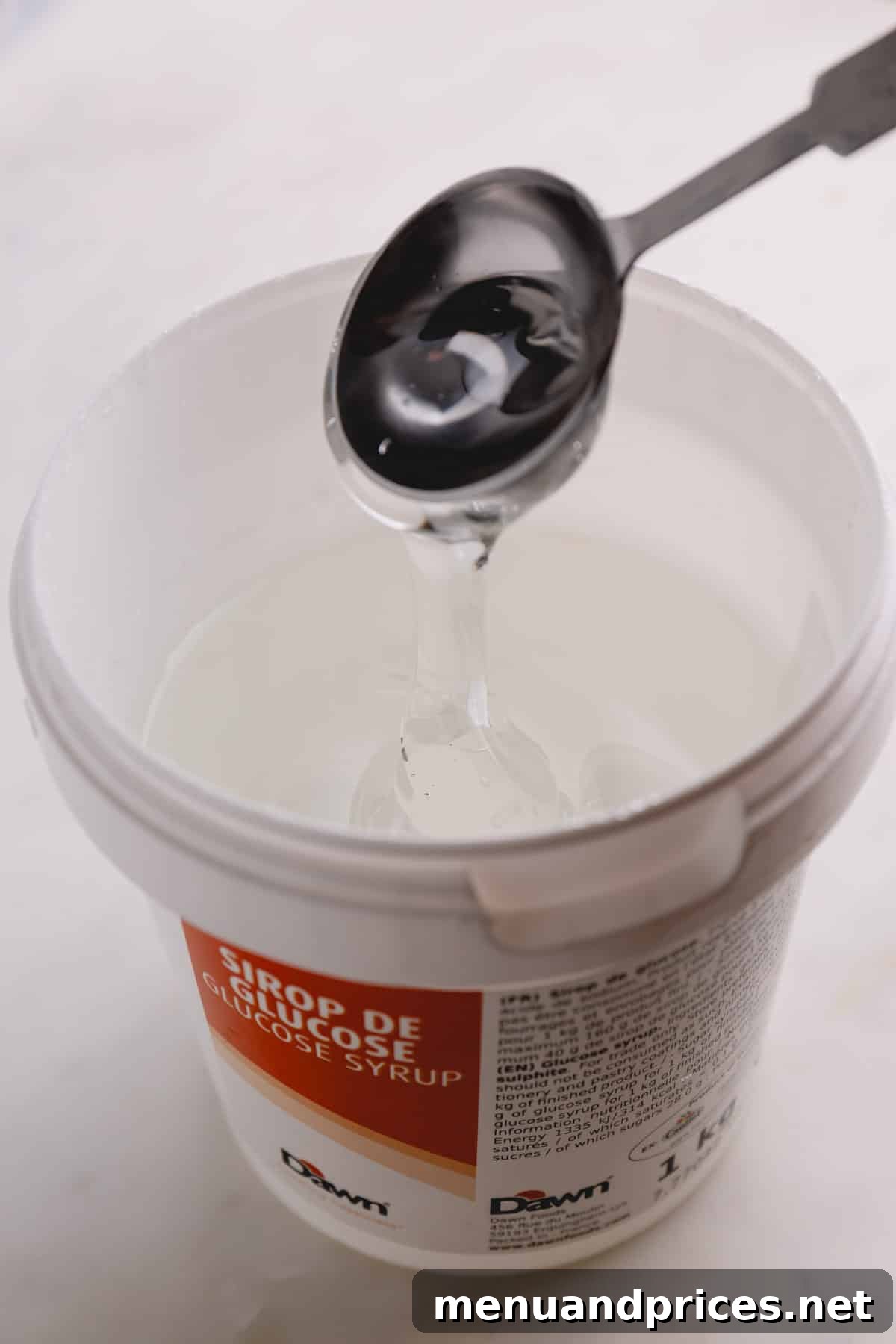
12. Glucose Syrup
Glucose syrup is another clear, viscous liquid sweetener that, while similar to corn syrup, typically has a slightly lower sweetness level compared to sucrose (table sugar). Its most valuable property lies in its exceptional anti-crystallizing capabilities and its profound ability to significantly improve the texture and mouthfeel of numerous confectionery products and frozen desserts. Glucose syrup works by actively interfering with the formation of large sugar crystals, thereby ensuring a smoother, more desirable, and luxurious consistency in a wide range of culinary applications.
BEST USES: Glucose syrup is truly a secret weapon for professional bakers and confectioners alike. It is widely used in ice creams and sorbets to maintain a perfectly scoopable, pliable texture and to meticulously prevent the formation of unwelcome icy crystals, ensuring a consistently luxurious mouthfeel. When expertly incorporated into chocolate ganache, it plays a vital role in keeping the ganache wonderfully soft, elastic, and beautifully glossy, preventing it from seizing or becoming overly firm. It’s also crucial in certain candies, fondants, and chewy confections for its superior texture-modifying properties.
13. Invert Sugar (Trimoline)
Invert sugar, often known by its commercial name Trimoline, is a thick, clear liquid sweetener produced through the hydrolysis of sucrose (common table sugar) into its simpler component sugars: glucose and fructose. This enzymatic or acidic process results in a syrup that is actually sweeter than regular sucrose, which means you can often use less of it to achieve the same desired level of sweetness, making it economical in professional settings. Its primary benefit, however, comes from its remarkable hygroscopic properties (meaning it attracts and retains moisture) and its powerful anti-crystallization capabilities, similar to glucose syrup but often more potent due to the presence of fructose.
BEST USES: Invert sugar is highly prized in the realm of fine confectionery, artisanal baking, and premium ice cream making. It is particularly effective at retaining moisture in baked goods, which significantly extends their shelf life and keeps them wonderfully tender and fresh for a longer duration. In candy making, it is indispensable for preventing sugar from recrystallizing, ensuring impeccably smooth fudges, creamy caramels, and delicate fondants. When skillfully used in ganache and ice creams, it contributes to an exceptionally smooth texture and excellent scoopability, solidifying its reputation as a favorite among pastry chefs for its superior and consistent performance.
Expert Tips for Choosing the Right Sugar
- Granulated sugar is your all-purpose hero for most baked goods such as classic cakes, ethereal meringues, fruit-filled pies, and everyday cookies because its fine crystals dissolve effectively and provide a clean, unadulterated sweetness. While you can sometimes substitute brown sugar, be prepared for a slightly darker color and a noticeably chewier, moister texture in the final product.
- For deliciously moist and chewy results, always reach for brown sugar, whether light or dark. Its inherent molasses content provides crucial extra moisture, making it perfectly suited for items like fudgy brownies, soft-baked cookies, and delectable dessert bars where a rich, pliable texture is highly desired.
- Exercise extreme caution when substituting dry sugar for liquid sugar, or vice-versa. These distinct types of sugars behave very differently in recipes, profoundly affecting not just the sweetness level but also the crucial moisture content and structural integrity of your baked goods. Unless a recipe provides explicit, detailed conversion instructions, it’s generally best to avoid such substitutions to prevent undesirable and often disappointing outcomes.
- If a recipe simply calls for “sugar,” you can safely assume it refers to white granulated sugar. This is the universal standard default unless specific instructions for another type of sugar are clearly provided.
- For those exploring healthier alternatives, some natural sugars like monk fruit sweetener can often be used as a direct 1:1 substitute for granulated sugar, offering similar sweetness without the added calories, making it a popular choice.
- However, other alternative sweeteners such as stevia, allulose, and erythritol vary significantly in their sweetness levels and functional properties. They typically do not work as a straightforward 1:1 swap for white or brown sugar. Always make sure to check the product packaging for specific substitution ratios and detailed guidance, as their impact on texture and browning can also differ considerably.
- Liquid sweeteners, including honey, pure maple syrup, agave nectar, and corn syrup, are generally more interchangeable with each other. If a recipe calls for honey, you can often use maple syrup, agave, or light corn syrup in its place on a convenient 1:1 basis, keeping in mind that each will impart its own unique flavor profile to your dish.
Frequently Asked Questions About Sugar
Most dry and liquid sugars, with the notable exception of maple syrup once opened, should be stored in a cool, dark place within an airtight container. This crucial step prevents undesirable moisture absorption (for dry sugars, leading to clumping) or evaporation (for liquid sugars, causing them to thicken), and effectively keeps out pests. If the original packaging isn’t perfectly resealable, it’s highly recommended to transfer the sugar to a dedicated, airtight storage container. Opened maple syrup, however, must always be promptly stored in the refrigerator to prevent mold growth and to meticulously maintain its premium quality and flavor.
The undisputed key to keeping brown sugar soft, moist, and pliable is actively preventing moisture loss. Storing it in an absolutely airtight container is the first and most crucial step. For long-term freshness and optimal texture, a terracotta brown sugar saver is highly effective: simply soak it in water for about 15-20 minutes, pat it thoroughly dry, and then place it directly into your brown sugar bag or container. Re-soak every few months as needed to maintain its efficacy. Alternatively, a slice of fresh white bread or a couple of apple slices can be placed in the container for a day or two; the sugar will absorb moisture from them, but remember to replace them regularly to avoid mold formation.
Don’t despair if your brown sugar has unfortunately solidified into a hard block! There are several highly effective and easy methods to bring it back to its soft, crumbly, and perfectly usable state. You can find detailed instructions and quick fixes, including efficient microwave techniques and gentle oven methods, in my comprehensive dedicated guide on how to soften brown sugar. These practical tips will help you rescue your sugar and get back to baking your favorite recipes in no time at all.
Enhance Your Culinary Skills with More Helpful Kitchen Guides:
- How To Brown Butter: A Flavor-Enhancing Technique for Richer Dishes
- Mastering Flour Measurement for Consistently Perfect Baking Results
- Expert Tips and Tricks for Separating Egg Whites Easily and Efficiently
- How To Make Simple Buttermilk Substitutes at Home in Minutes