
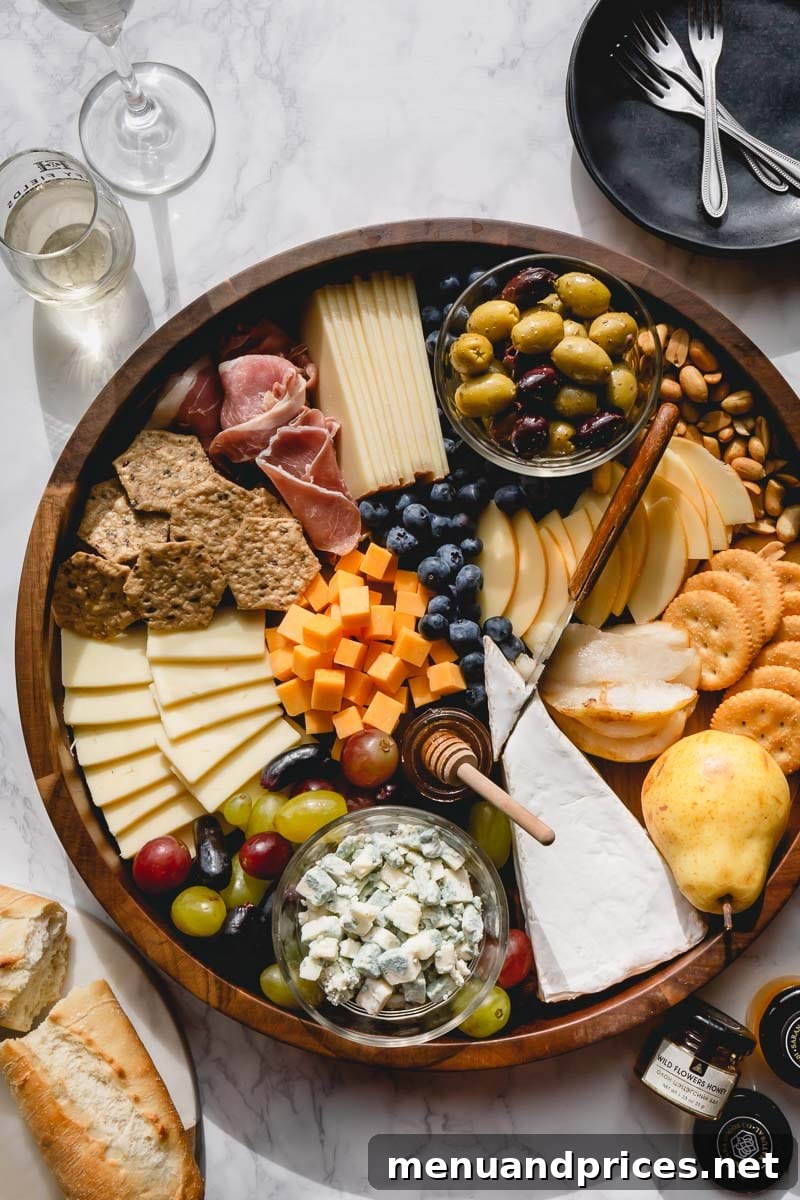
Welcome your guests with an extraordinary spread that speaks volumes of your hospitality – an epic charcuterie and cheese board! Far from being complicated, crafting a stunning platter is achievable for anyone, regardless of their culinary prowess. This ultimate guide will walk you through six simple yet impactful tips to create a visually appealing and tantalizing assortment of flavors, guaranteed to delight your guests and set the perfect mood for a memorable gathering.
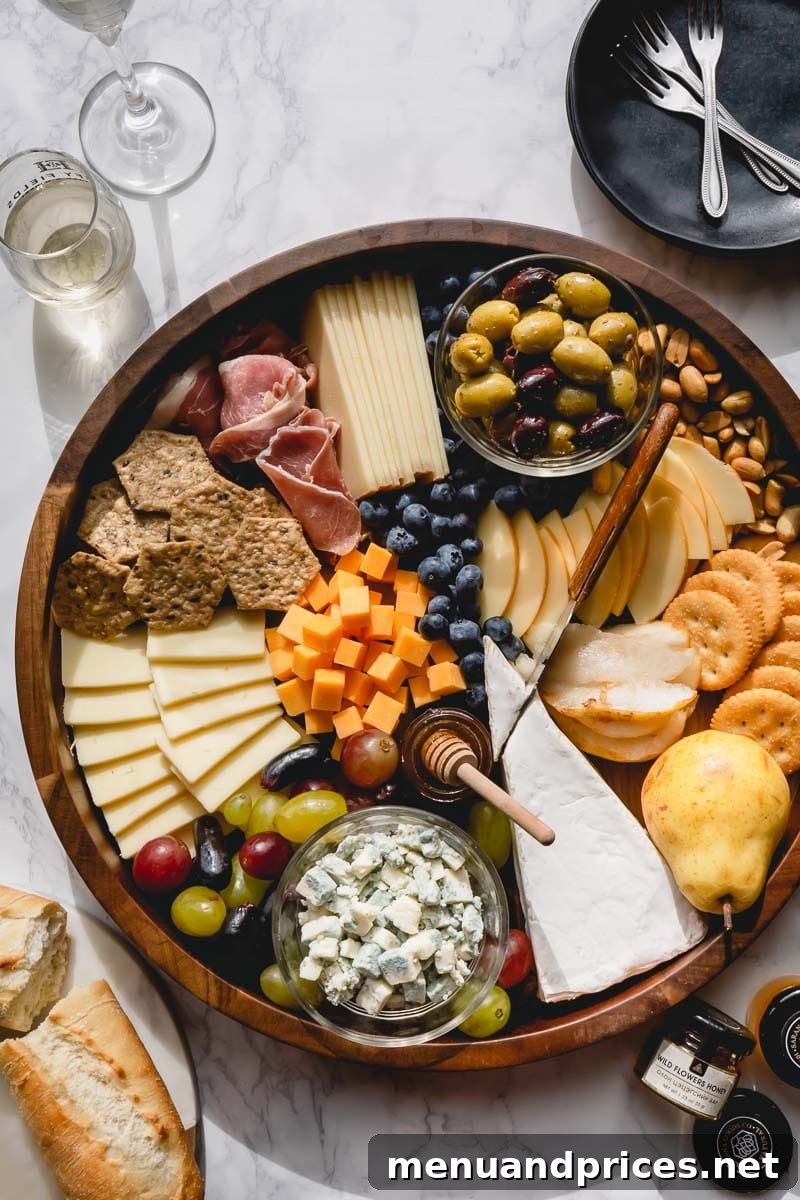
There’s simply no better way to greet friends and family than with a vibrant platter of carefully selected charcuterie and cheeses, paired with a refreshing drink. It’s an instant mood-setter, transforming any casual get-together into an elegant affair. Whether it’s a casual evening, a holiday celebration, or a sophisticated dinner party, a well-curated charcuterie board is the ultimate expression of effortless entertaining.
Tip #1 – Curate a Diverse Selection of Cheeses
The foundation of any great cheese board is, naturally, the cheese itself. The classic rule of thumb for an appealing and balanced board is to offer a variety of textures and flavor profiles. Aim for a combination that excites the palate and offers something for everyone. This typically includes cheeses that are soft, hard, aged, and blue. For an even more comprehensive selection, consider adding a fresh cheese as well.
Here’s a deeper dive into each type with more examples to inspire your next selection:
- Soft Cheeses: These are often creamy, spreadable, and delightful. Examples include Brie (buttery and mild), Camembert (earthy and mushroomy), fresh Goat Cheese (Chèvre) (tangy and bright), Ricotta (sweet and delicate), or even a creamy Feta (salty and crumbly). Soft cheeses provide a smooth contrast to harder varieties.
- Hard Cheeses: Known for their firm texture and often nutty, savory notes. Popular choices include Parmigiano Reggiano (salty, umami-rich, crumbly), Gruyère (nutty, earthy, slightly sweet), Asiago (sharp, tangy, and firm), or Manchego (sheep’s milk cheese with a distinct grassy, nutty flavor). These cheeses are excellent for slicing or breaking into chunks.
- Aged Cheeses: These cheeses have developed complex, deep flavors over time. Think of a sharp Aged Cheddar (intense, pungent), Aged Havarti (buttery, nutty with crystalized texture), a robust Goat Gouda (sweet, caramel notes), or the rich, fruit-and-nut profile of Comte. The longer aging process often results in a more pronounced aroma and a unique, crumbly texture.
- Blue Cheeses: These are distinctive for their blue or green mold veins, offering a pungent, tangy, and often spicy flavor. Favorites include Stilton (creamy, rich, and mellow), Gorgonzola (ranging from creamy and mild to firm and sharp), or Danish Blue (a milder, creamier blue). If you’re new to blue cheeses or catering to varied tastes, look for options with fewer veins and a softer, creamier texture for a gentler introduction.
Pro Tip for Cheese Selection
Always include at least one universally loved and recognizable cheese, such as a sharp cheddar or a creamy brie. This ensures comfort for all guests while encouraging them to explore new flavors.
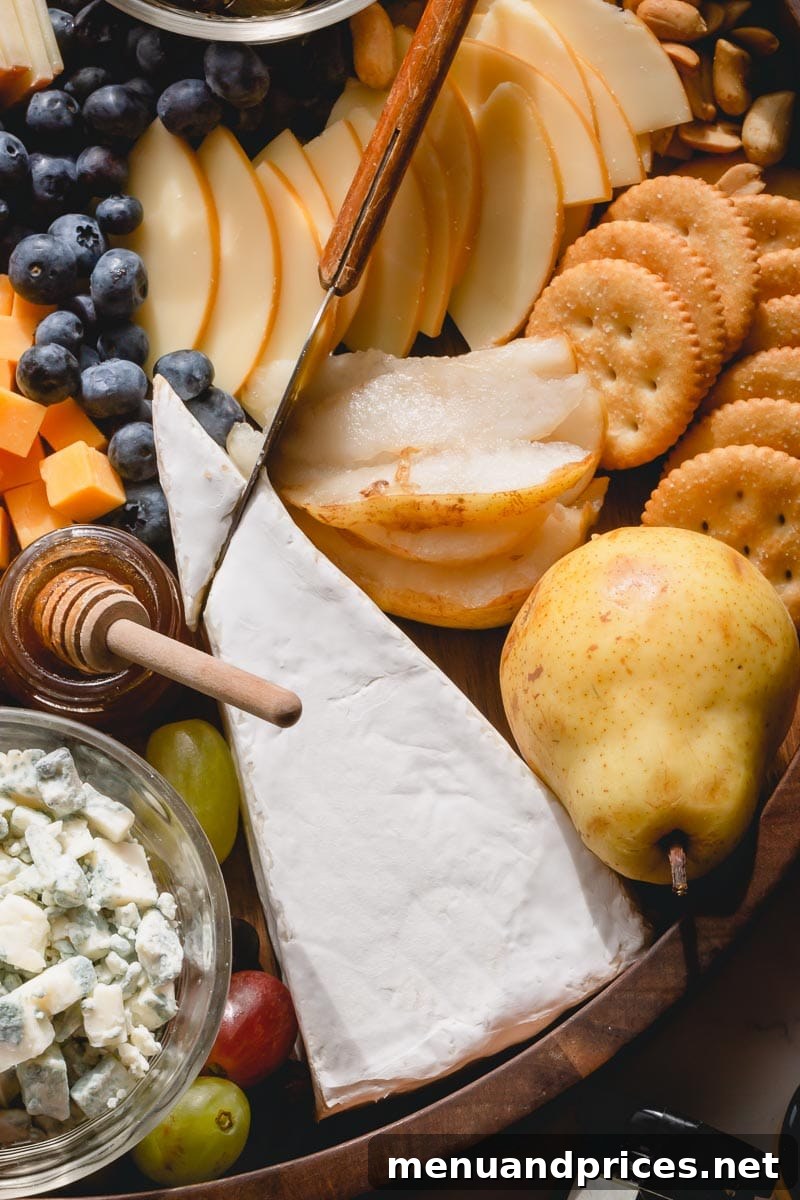
Tip #2 – Strategically Arrange Your Cheeses
The order in which you arrange your cheeses can significantly impact your guests’ tasting experience. A mindful layout guides them through a journey of flavors. A common and effective method is to arrange cheeses from mildest to strongest. You can do this from left to right, or in a clockwise pattern around your board.
This systematic approach allows the palate to adjust gradually, preventing stronger cheeses from overpowering the subtle nuances of milder ones. Don’t forget to label each cheese! Small tags or flags with names are incredibly helpful, especially for those with dietary preferences or guests eager to learn about what they’re tasting.
To further enhance the experience and maintain the integrity of each cheese’s unique flavor, provide a separate cheese knife or spreader for each variety. This simple step prevents the mixing of flavors and aromas, ensuring that every bite is as intended.
Placement Tip for Strong Cheeses
For particularly pungent cheeses, like very strong blues or washed-rind varieties, consider placing them on a separate mini-board or in a distinct corner of your main board. This isolates their strong aromas and flavors, preventing them from permeating and overwhelming other, more delicate cheeses.

Tip #3 – Incorporate an Exciting Array of Charcuterie Meats
Now, let’s get to the ‘meat’ of the post – charcuterie! (Pun absolutely intended.) The term “charcuterie” (pronounced shar-koo-tu-ree) refers to a branch of cooking focused on preparing meat products, primarily from pork, such as bacon, ham, sausages, terrines, galantines, pâtés, and confit. On a board, it typically means a selection of cured and prepared meats that add savory depth, rich texture, and visual appeal.
A well-rounded charcuterie board is incomplete without a thoughtful selection of meats. These cured delights offer a fantastic counterpoint to the cheeses, providing salty, savory, and sometimes spicy notes. Examples of charcuterie to consider:
- Prosciutto: A delicate, thinly sliced, salt-cured ham with a sweet and savory flavor. It’s fantastic draped elegantly on the board.
- Salami: Available in countless varieties, from mild to spicy, such as Genoa, Sopressata, or Calabrese. White wine salami is particularly popular for its balanced flavor.
- Capicola (Coppa): A dry-cured pork shoulder, known for its marbled texture and rich, spiced flavor.
- Chorizo: A Spanish or Portuguese fermented, cured, and smoked sausage, often spicy with paprika notes.
- Pâté or Terrine: A rich, spreadable mixture of ground meat (often liver) that offers a luxurious, creamy texture.
- Mortadella: A large Italian sausage or cold cut made of finely pulverized heat-cured pork, often containing pistachios or peppercorns.
I personally adore the combination of a savory white wine salami and delicate prosciutto for their contrasting yet complementary qualities. Aim for variety in flavor, texture, and how the meats are presented (folded, rolled, or fanned out).
Moderation with Smoked Meats
Smoked meats, while delicious, tend to have a very strong, pervasive flavor. To avoid overwhelming your other carefully chosen cheeses and meats, it’s best to stick to just one or two smoked options. This ensures a balanced flavor profile across your entire board.
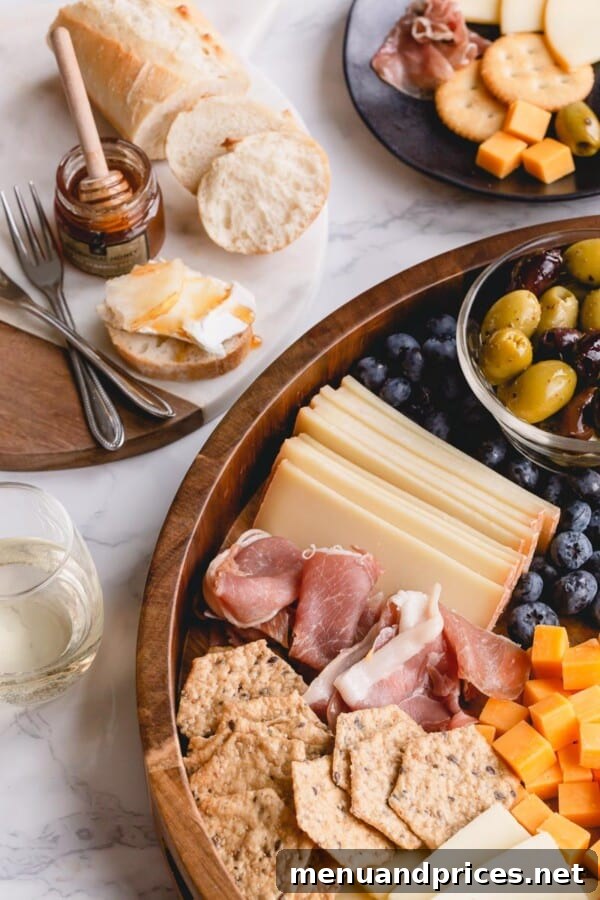
Tip #4 – Plan for Ample Servings
One of the most common dilemmas when preparing a charcuterie board is determining how much to serve. The general rule of thumb depends on whether your board is the main attraction or merely an appetizer. Typically, if you’re serving the platter as a light meal or the primary source of food for your gathering, plan for approximately 3-4 ounces (about 85-115 grams) of cheese and 3-4 ounces of meat per person. This allows for generous portions and a satisfying meal.
However, if your charcuterie board is intended as an appetizer course, meant to whet appetites before a larger meal, you can comfortably reduce the quantities. About 2 ounces (approximately 55-60 grams) of each cheese and meat per person should suffice. Remember to also account for the volume of accompaniments like crackers, fruits, and nuts, which contribute to the overall satiety.
Serving Large Crowds
When hosting a significant number of guests, it’s often advised to offer at least five different types of cheeses. This variety caters to more diverse palates and ensures there’s enough selection for everyone to enjoy without running out quickly. Consider making multiple smaller boards rather than one giant one for easier access.
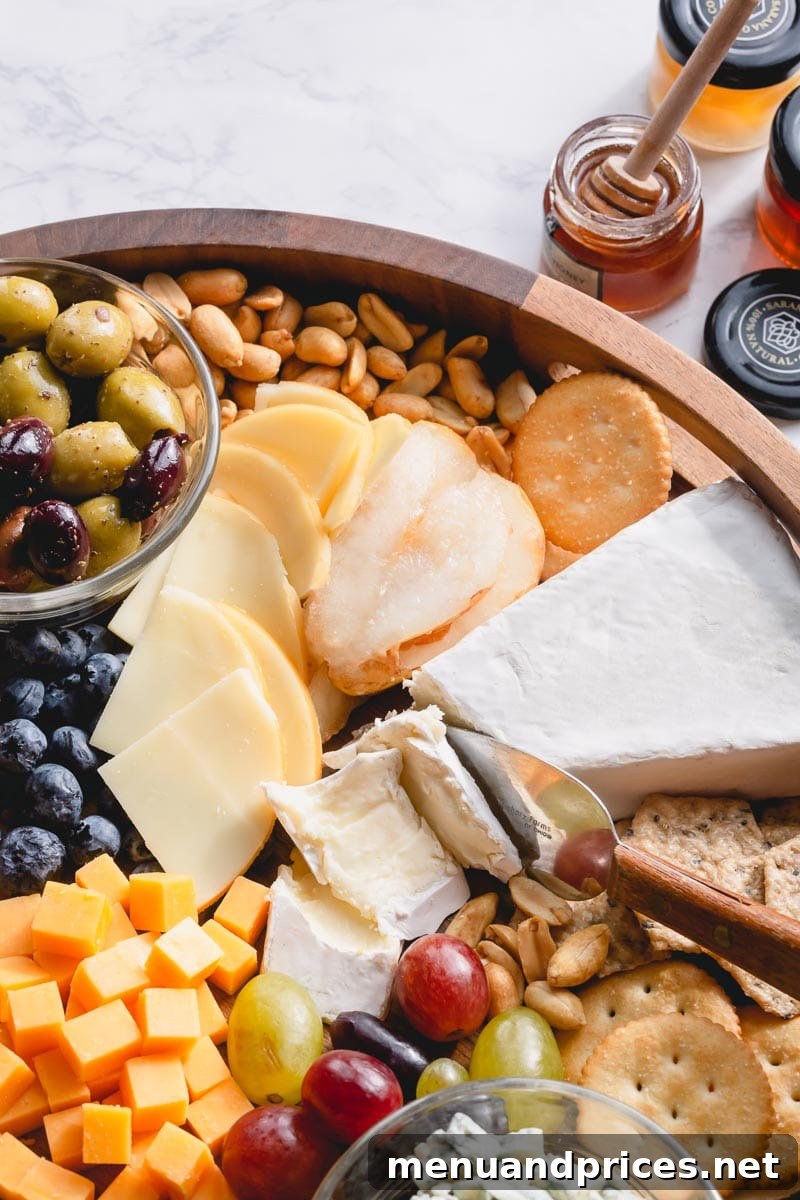
Tip #5 – Optimize Flavor by Bringing Cheeses to Room Temperature
This tip might seem minor, but it’s a game-changer for unlocking the full flavor potential of your cheeses. About an hour before you plan to serve your charcuterie board, take the cheeses out of the refrigerator. Unwrap them from their packaging (though you can keep them on their individual wraps or a dedicated piece of parchment paper on the board) and allow them to breathe and come to room temperature.
Why is this so important? Cold temperatures dull the flavor and harden the texture of most cheeses. Just like a fine wine, cheese needs to “open up.” As cheese warms, its fats soften, allowing its complex aromatic compounds to release and its true, nuanced flavors to shine. A cold cheese can taste bland and waxy, while the same cheese at room temperature will be incredibly flavorful, creamy, and aromatic. This simple step elevates the entire cheese-tasting experience, making each bite significantly more enjoyable for your guests.
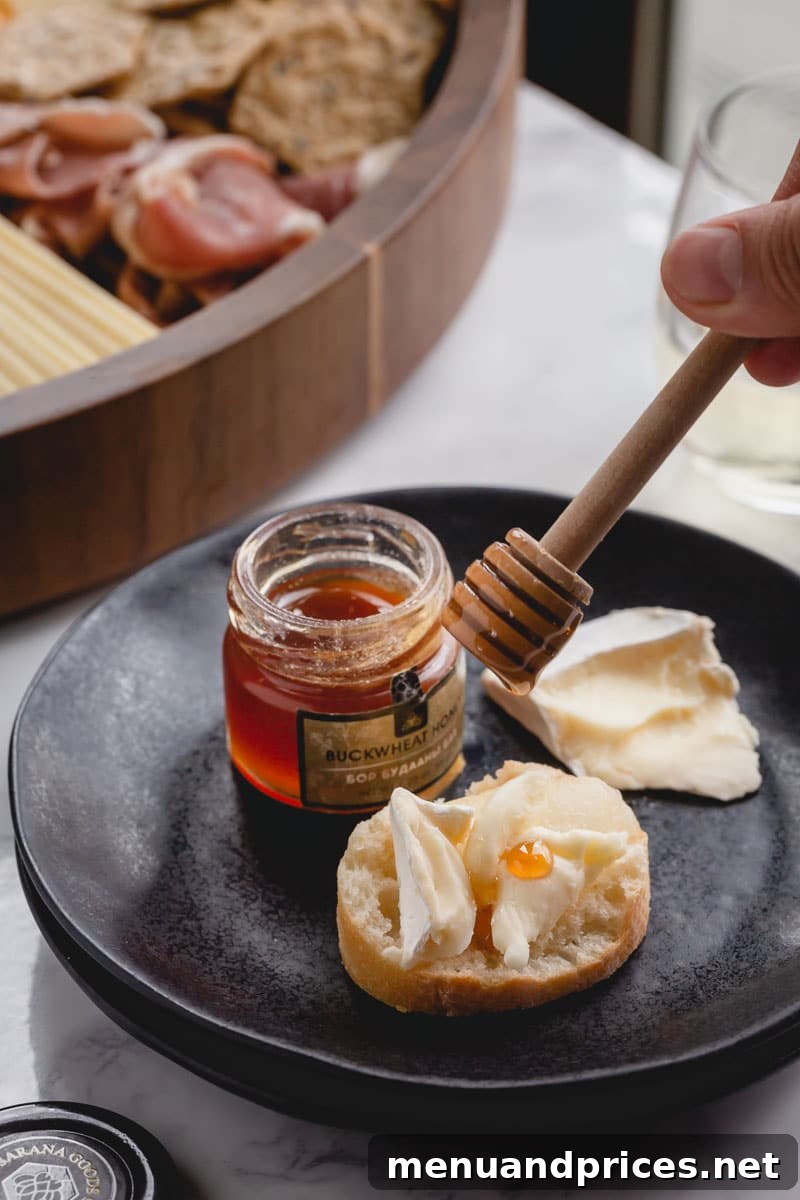
Tip #6 – Elevate with Thoughtful Accompaniments
No charcuterie and cheese board is complete without a variety of accompaniments. These thoughtful additions are more than just fillers; they are essential components that add texture, provide flavor contrast, and introduce complementary notes that transform each bite into a fantastic culinary experience. They also add vibrant colors and visual interest, making your board truly Instagram-worthy.
Consider these main categories of accompaniments to perfectly complement your cheeses and meats:
- Carbohydrates & Breads: These serve as the perfect vehicle for cheeses and meats.
- Crackers: Offer a variety of textures – crisp water crackers, buttery crackers, artisanal flatbreads, or seed crackers.
- Baguette: Freshly sliced or lightly toasted baguette offers a soft yet sturdy base.
- Bread Sticks: A fun, crunchy option.
- Savory Pastries: Consider homemade savory cheese puffs or gougères for an extra special touch.
- Sweets & Spreads: These balance the savory and salty elements, offering a delightful counterpoint.
- Seasonal Fruits: Grapes, figs, apple slices, pear slices, berries (blueberries, raspberries), pomegranate seeds, or dried apricots add natural sweetness and vibrant color.
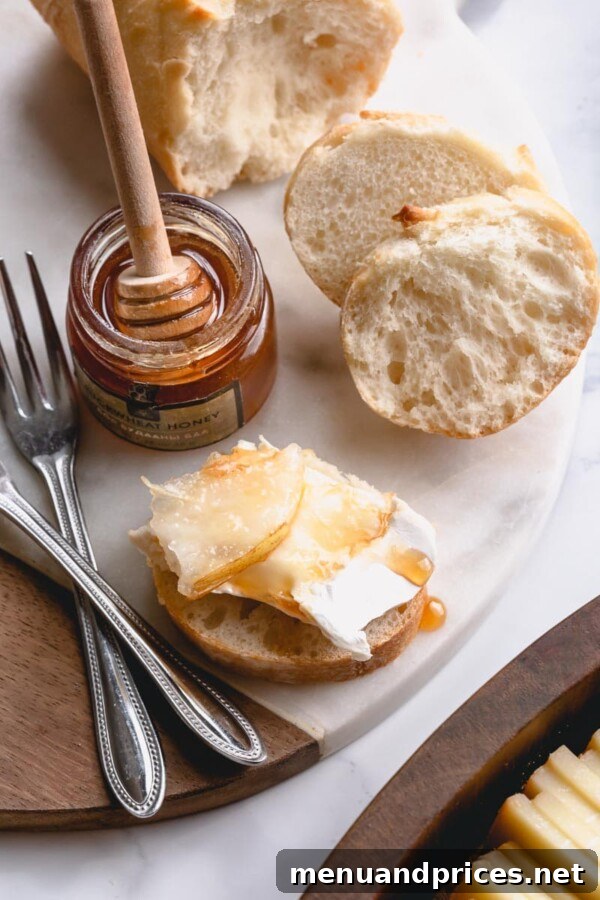
- Honey: A drizzle of honey complements almost any cheese, especially blues and goat cheese.
- Fruit Preserves & Jams: Fig jam, apricot preserves, or raspberry jam create a delicious sweet and tangy pairing.
- Chutneys: Apple chutney or onion jam can add a complex, savory-sweet element.
- Savory & Tangy Elements: These items cut through richness and cleanse the palate.
- Olives: A mix of green and black olives adds briny, salty notes.
- Pickles & Cornichons: Their sharp acidity provides a refreshing contrast.
- Artichoke Hearts: Marinated artichoke hearts offer a tender, tangy bite.
- Mustards: A dollop of Dijon or whole-grain mustard can elevate the charcuterie.
- Nuts & Crunch: Essential for adding textural complexity and nutty flavors.
- Assorted Nuts: Almonds, cashews, pistachios, and walnuts are excellent salty additions.
- Candied Pecans: Offer a delightful sweet and crunchy element that pairs wonderfully with many cheeses.
The Ultimate Secret
And finally, the most important tip of all: there is no single “right” or “wrong” way to construct a charcuterie and cheese board. The beauty lies in experimentation, personal preference, and creative expression. Embrace the process, have fun with your selections and arrangements, and most importantly, enjoy the delicious results with your loved ones!

Charcuterie and Cheese Board
Shinee Davaakhuu
30 mins
8 servings
Ingredients
- A variety of cheeses, such as sharp cheddar, Le Gruyère, brie, smoked gouda, and blue cheese (at room temperature)
- A variety of cured meats, like salami and prosciutto
- A variety of crackers
- French baguette, sliced
- Fresh seasonal fruits, such as pear, blueberries, grapes (washed)
- A variety of nuts
- Olives
Instructions
-
Choose a large platter or cutting board that provides ample space for all your ingredients.
-
Slice the cheeses. This preparatory step can be done a day in advance; simply store the sliced cheeses in an airtight container in the refrigerator until ready to serve.
-
Begin arranging the cheeses on the platter first, placing them strategically from mild to strong. Then, add your selection of cured meats around or between the cheeses.
-
Place some of the accompaniments, such as olives or fruit preserves, into small bowls. Arrange these small bowls on the platter next, creating anchor points and height.
-
Finally, arrange the crackers and then artfully fill in any remaining gaps on the board with the rest of your items, like nuts, fresh fruits, and other small bites. This creates a lush, abundant look.
Appetizer
American

Did you make this?
Share your thoughts in the comments below.