
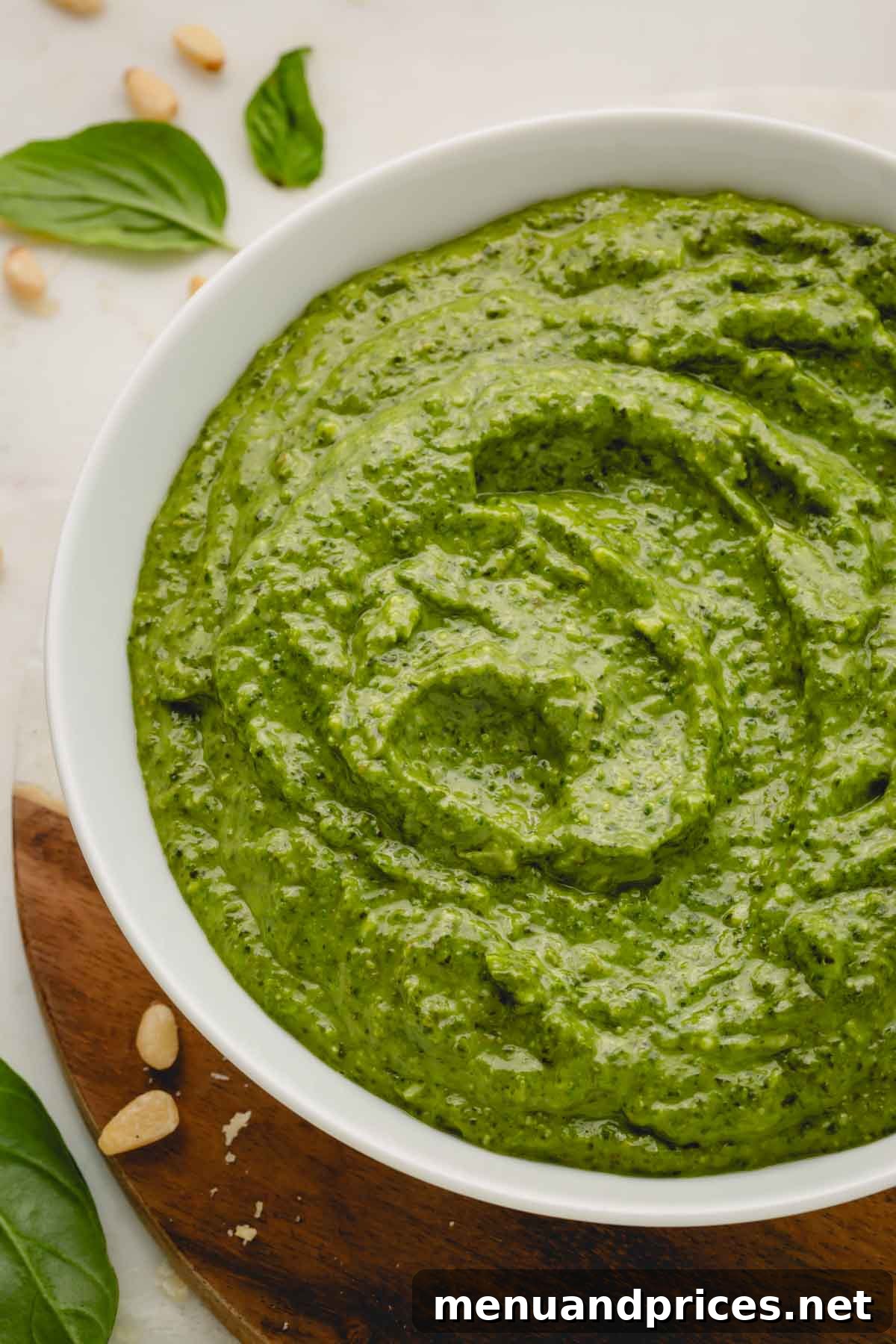
Master the Art of Homemade Basil Pesto: A Large Batch Recipe for Every Kitchen
Imagine a vibrant, herbaceous sauce that instantly brightens any dish, infusing it with fresh, savory goodness. This is the magic of homemade basil pesto, and with our large batch recipe, you’ll have an abundant supply of this culinary delight right at your fingertips. Far superior to anything you’ll find pre-packaged at the grocery store, this recipe utilizes just six core ingredients to create over five cups of incredibly flavorful pesto. It’s not just a recipe; it’s an invitation to elevate your everyday meals with unparalleled freshness and taste. Get ready to transform your kitchen into an Italian trattoria!
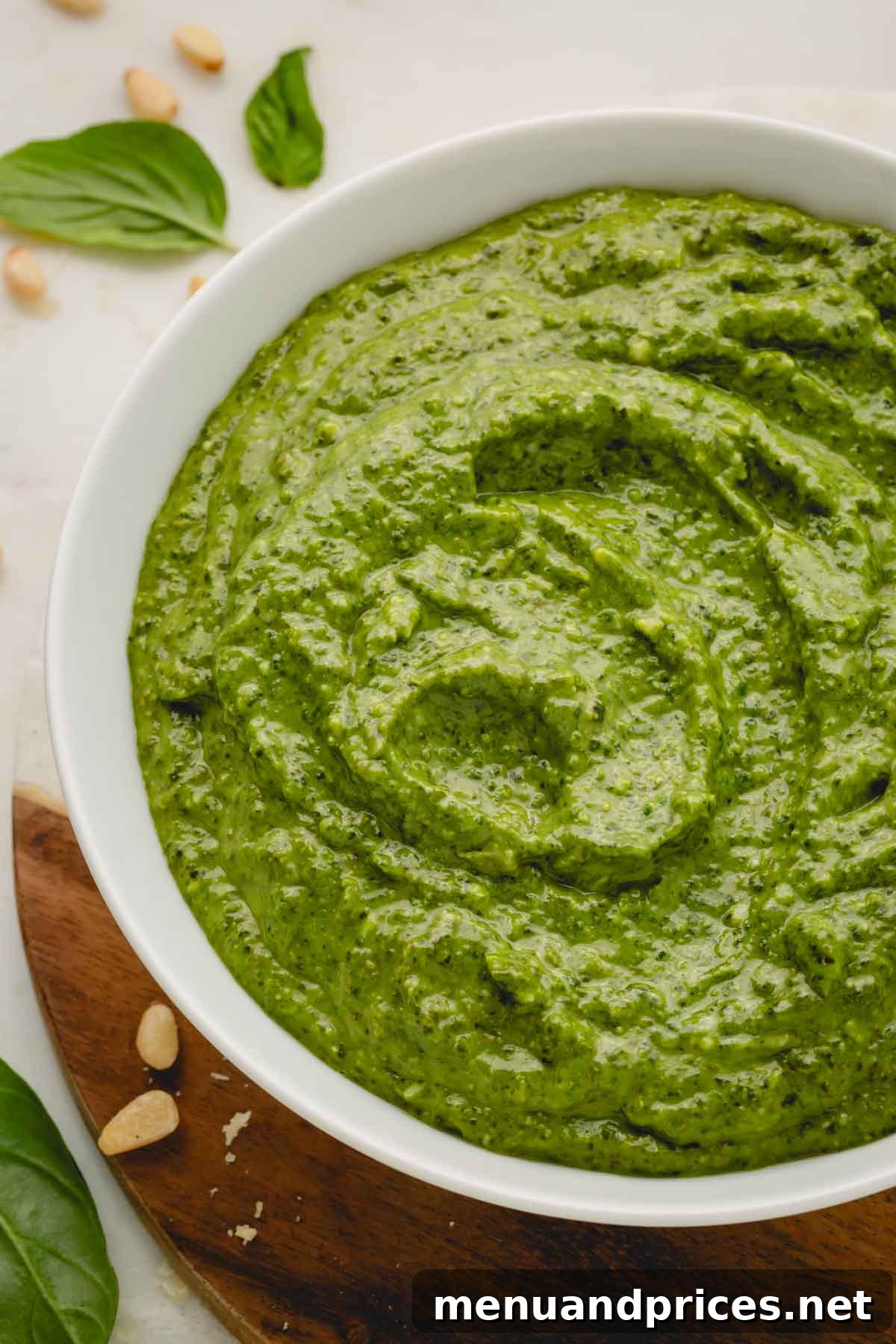
“When in doubt, add some pesto” has become a guiding principle in my culinary world. Fortunately, my husband cultivates an impressive amount of basil each summer, providing the perfect bounty for creating this exquisite homemade basil pesto. This recipe ensures that you’re never far from adding a touch of gourmet flavor to your favorite dishes.
Why You’ll Fall in Love with This Large Batch Pesto Recipe
There are countless reasons why this particular basil pesto recipe will become a staple in your kitchen. It’s designed for efficiency, flavor, and sheer abundance, ensuring you always have a taste of summer on hand.
- Effortlessly Simple Ingredients: You might be surprised to learn that such a sophisticated flavor profile can be achieved with a mere six pantry-friendly ingredients. We focus on quality over quantity, letting each component shine through to create a harmonious blend. No obscure items, just pure, fresh goodness.
- Incredibly Quick and Easy Preparation: Forget about complex cooking techniques or lengthy preparation times. This recipe requires absolutely no cooking and can be ready from start to finish in just about 15 minutes of active prep time. It’s perfect for busy weeknights or when you need a burst of flavor in a hurry. You’ll be amazed at how quickly you can whip up this homemade condiment.
- Generous Large Batch Yield: As an avid pesto enthusiast, I often find that small, store-bought jars simply don’t suffice. This recipe, however, delivers a generous yield of up to 5½ cups, which is approximately 1.3 liters! This means you can indulge freely, pouring it over pasta, layering it in sandwiches, spreading it on toast, or dolloping it onto grilled proteins without a second thought. It’s pesto paradise in a jar (or several!).
- Superior Homemade Flavor: Once you experience the vibrant, aromatic taste of homemade basil pesto, you’ll understand why it’s a game-changer. The freshness of the basil, the subtle nuttiness of toasted pine nuts, the pungent kick of fresh garlic, and the savory depth of real Parmigiano-Reggiano combine to create a flavor that store-bought versions simply cannot replicate.
- Perfect for Meal Prepping and Freezing: The large yield makes this recipe ideal for meal prepping. You can enjoy some immediately and freeze the rest for future use, ensuring you have a stash of delicious, homemade pesto ready to go whenever inspiration strikes.
Once you master the art of making your own basil pesto, the thought of returning to store-bought options will become a distant memory. This versatile sauce is perfect with a myriad of dishes, including pesto salmon, pesto mozzarella chicken meatballs, pesto artichoke dip, and of course, classic basil pesto pasta. Its adaptability knows no bounds!
Pin this now to find it later
Pin It
Key Ingredient Notes for the Best Homemade Pesto
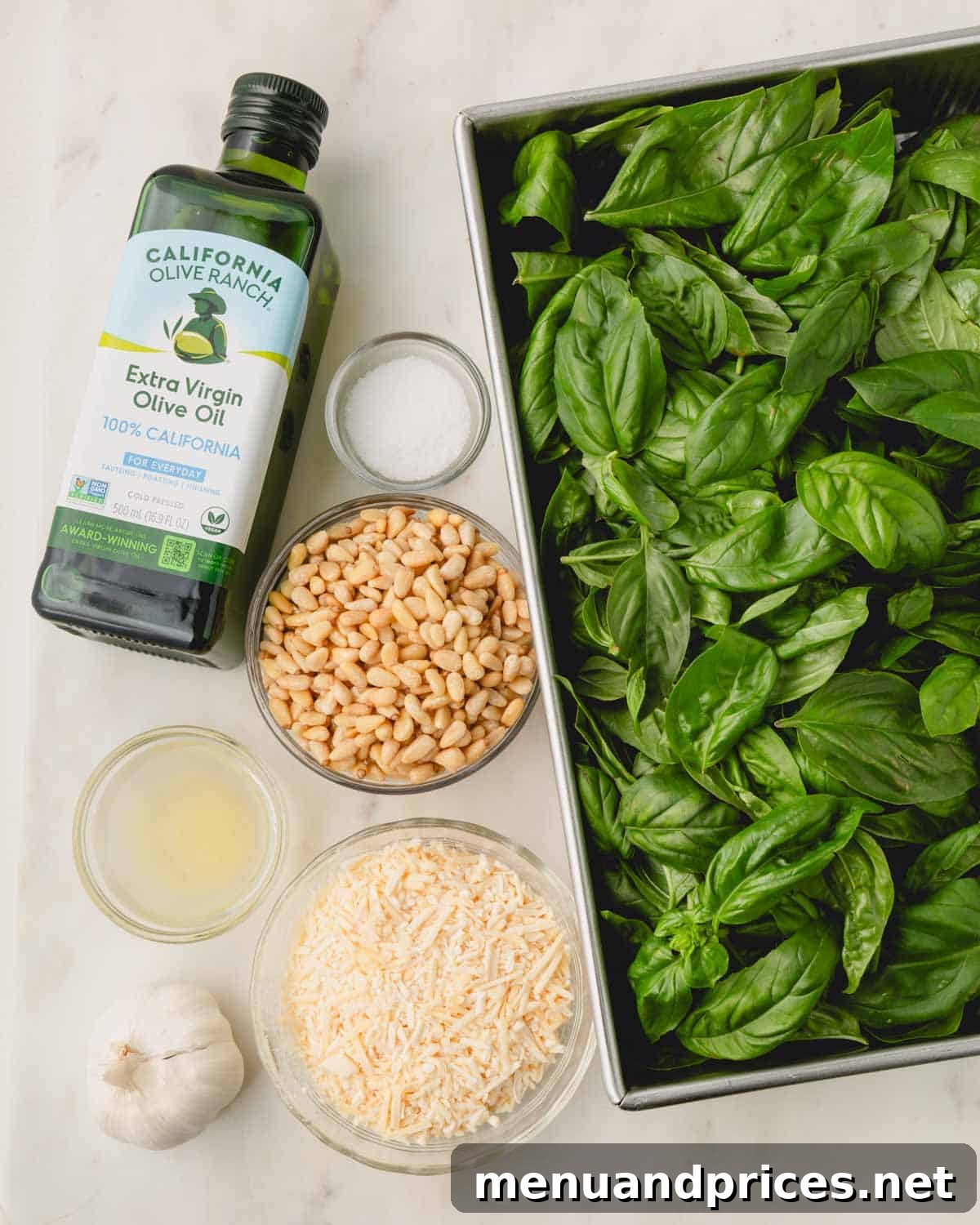
The secret to an exceptional basil pesto lies in the quality of its components. Here’s a closer look at the essential ingredients and tips for selecting them:
- Fresh Basil Leaves: The star of our show! For the most intensely flavorful pesto, always opt for the freshest basil you can get your hands on. If you’re lucky enough to grow it in your garden, that’s ideal. When purchasing from a grocery store, look for vibrant, bright green leaves free from wilting, dark spots, or yellowing. Healthy basil means a superior pesto.
- Pine Nuts: These delicate, buttery nuts are a traditional and indispensable ingredient in classic pesto. They contribute a subtle, complex nutty flavor and a creamy texture when blended. However, if pine nuts are unavailable, too costly, or if you have allergy concerns, sunflower seeds, pumpkin seeds, or even walnuts can serve as suitable alternatives, each offering a slightly different but delicious character to your pesto.
- Garlic: Fresh garlic cloves are crucial for that characteristic pungent, aromatic kick. While pre-minced garlic is convenient, a head of fresh garlic guarantees the best flavor profile. You’ll need at least 15 cloves for this large batch, but if you’re a true garlic aficionado like me, don’t hesitate to add a few more to enhance its bold presence.
- Extra Virgin Olive Oil: More than just a liquid, olive oil is a cornerstone of pesto, transforming the ingredients into a smooth, emulsified sauce. It imparts a rich, sometimes slightly peppery, flavor and provides a boost of healthy monounsaturated fats. Choose a high-quality extra virgin olive oil for the best results, as its flavor significantly impacts the final taste of your pesto.
- Parmigiano-Reggiano Cheese: This isn’t just any Parmesan; Parmigiano-Reggiano is the authentic Italian hard cheese renowned for its granular texture and rich, nutty, umami flavor. It’s typically found in the specialty cheese section of well-stocked grocery stores. If genuine Parmigiano-Reggiano isn’t accessible, a good quality regular Parmesan cheese will still yield delicious results. For optimal taste and texture, always buy a block of cheese and grate it fresh yourself, avoiding pre-grated options that often contain anti-caking agents and lack true flavor.
- Fresh Lemon Juice: A squeeze of fresh lemon juice is the bright secret ingredient that balances the richness of the oil and cheese. Its acidity cuts through the heaviness, adding a zesty, well-rounded finish that elevates all the other flavors. Always use freshly squeezed lemon juice for the most vibrant taste – bottled lemon juice simply won’t compare.
How to Craft Your Own Big Batch Basil Pesto: Step-by-Step
Creating this incredible pesto is surprisingly straightforward. Follow these steps for a perfect, creamy consistency and vibrant flavor:
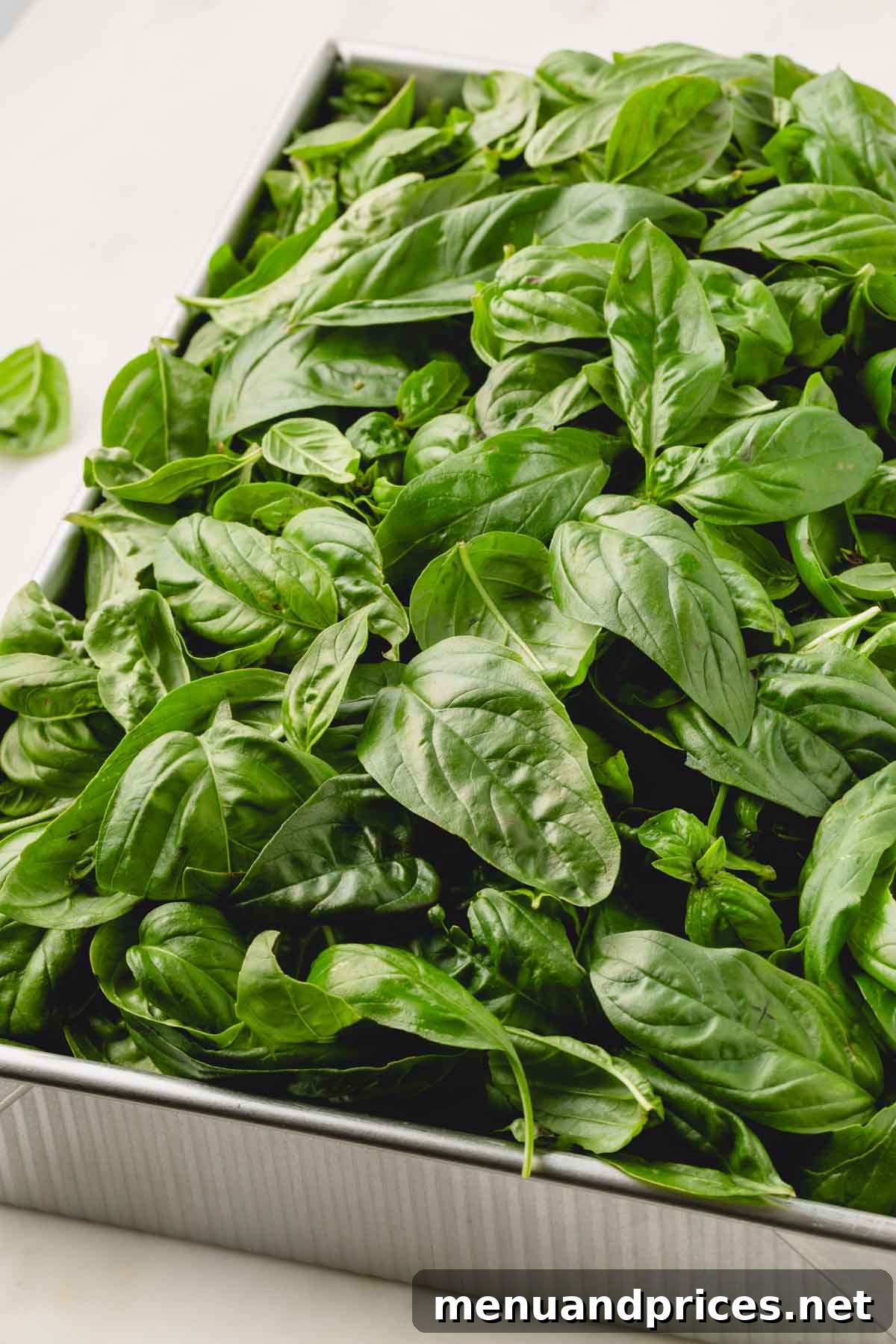
- Prepare the Basil Leaves: Begin by thoroughly washing your fresh basil leaves to remove any dirt or debris. It’s crucial that they are completely dry before proceeding, as any excess water can dilute the pesto’s flavor and affect its texture. Spread the dried basil leaves in a single layer on a baking sheet. Place the baking sheet in the freezer for 1-2 hours, or until the leaves are completely frozen solid. This unique technique is a game-changer for achieving an ultra-creamy pesto!
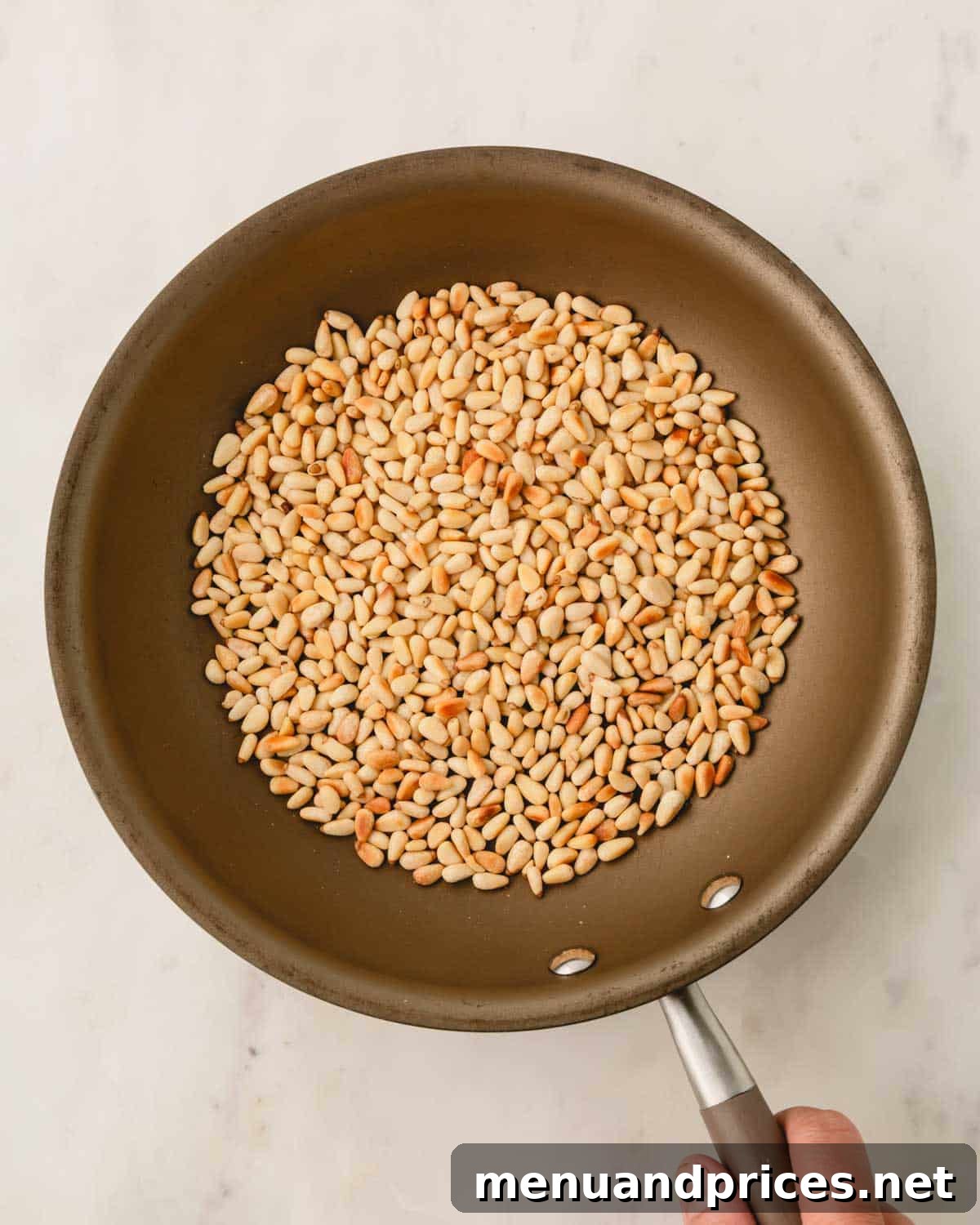
- Toast the Pine Nuts: In a dry medium skillet, gently toast the pine nuts over medium heat. Stir them frequently to ensure even browning. Pine nuts can go from perfectly golden to burnt in a flash, so keep a vigilant eye on them. As soon as they become fragrant and acquire a light golden hue, immediately remove them from the heat and transfer them to a plate to cool. This toasting step brings out their natural oils and deepens their nutty flavor, adding another layer of complexity to your pesto.
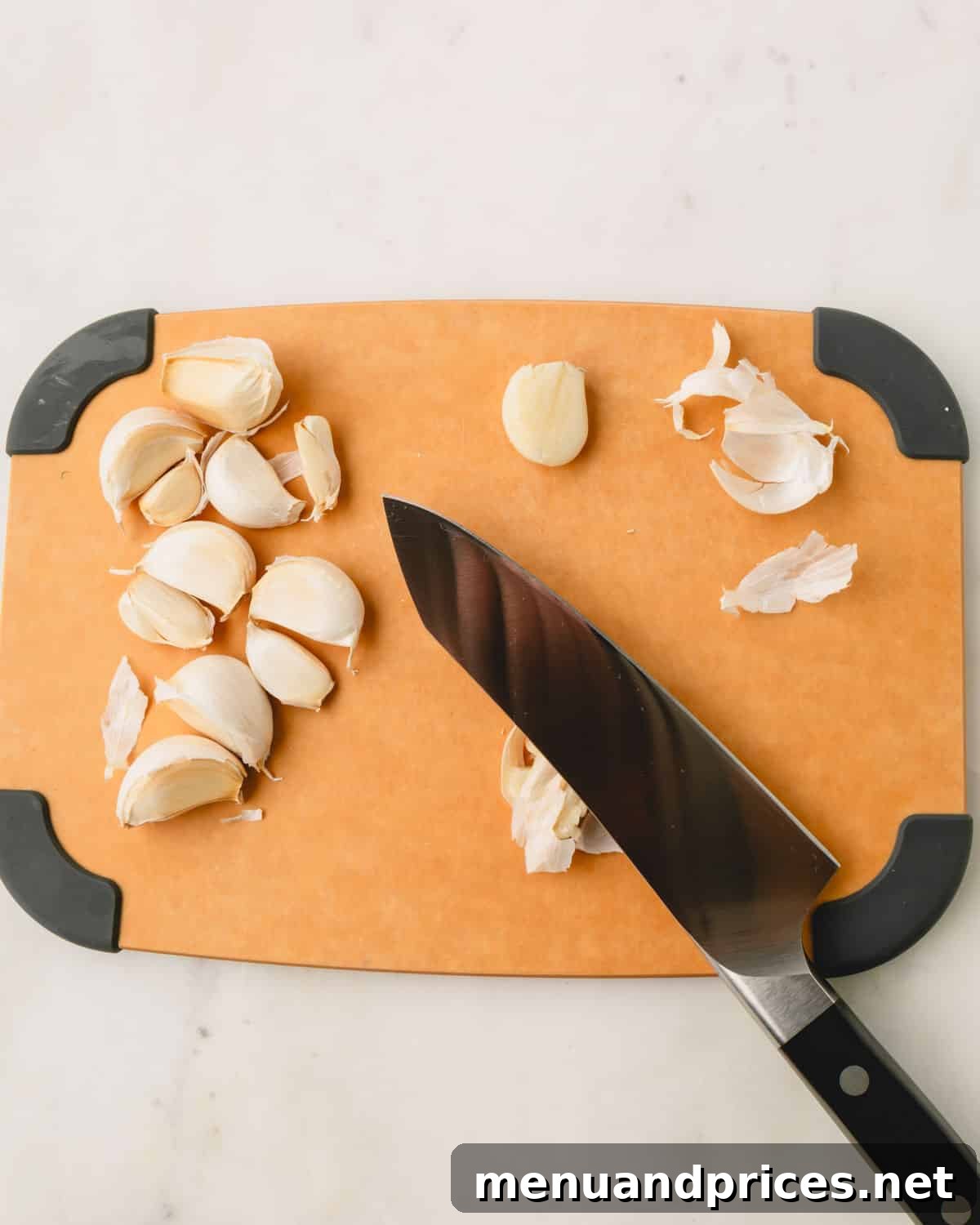
- Prepare the Garlic: For easy peeling and optimal blending, take each garlic clove and place it on a cutting board. Smash it firmly with the flat side of a chef’s knife. The skin will loosen, making it simple to peel away. The slight bruising also helps release the garlic’s potent oils, enhancing its flavor in the pesto.
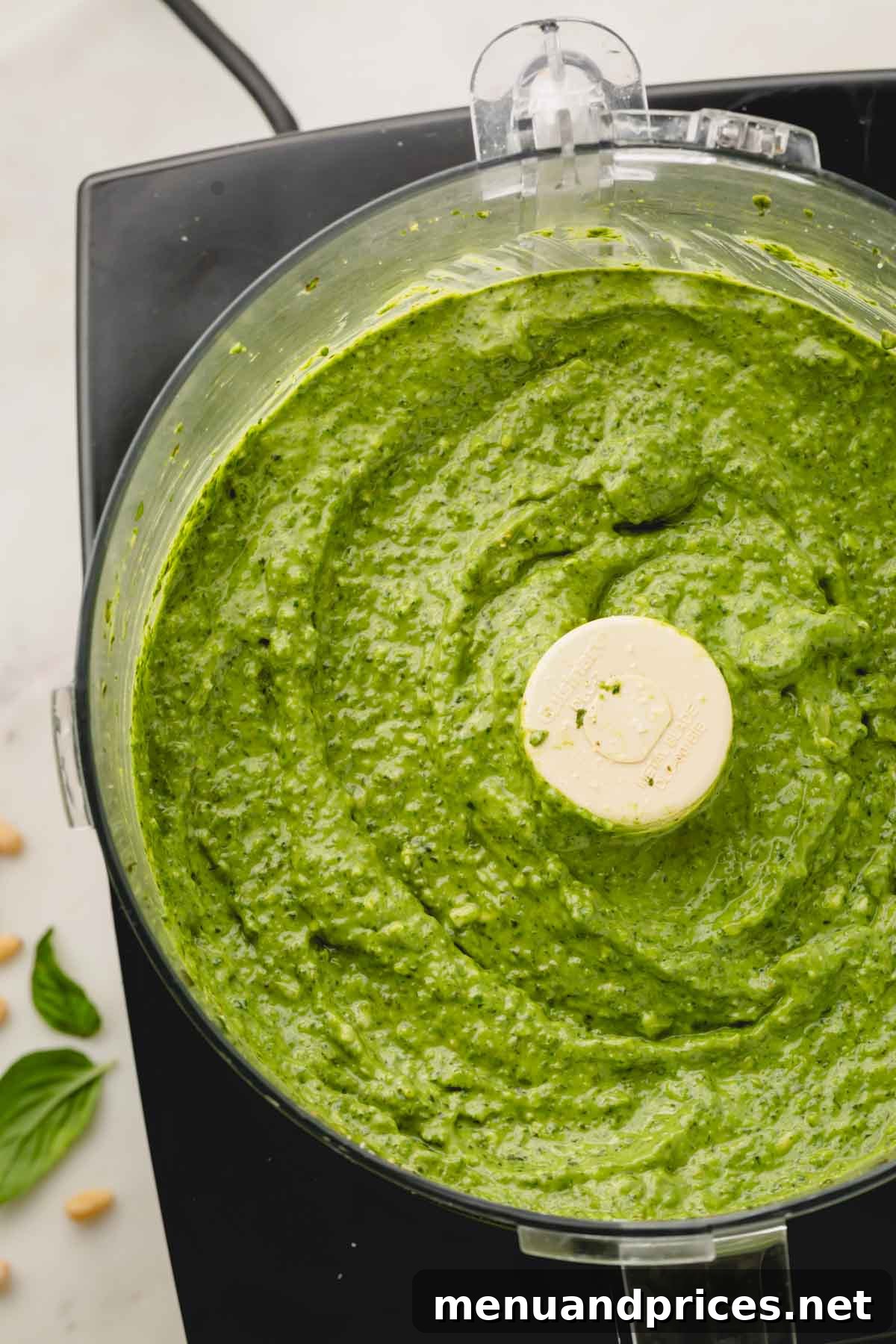
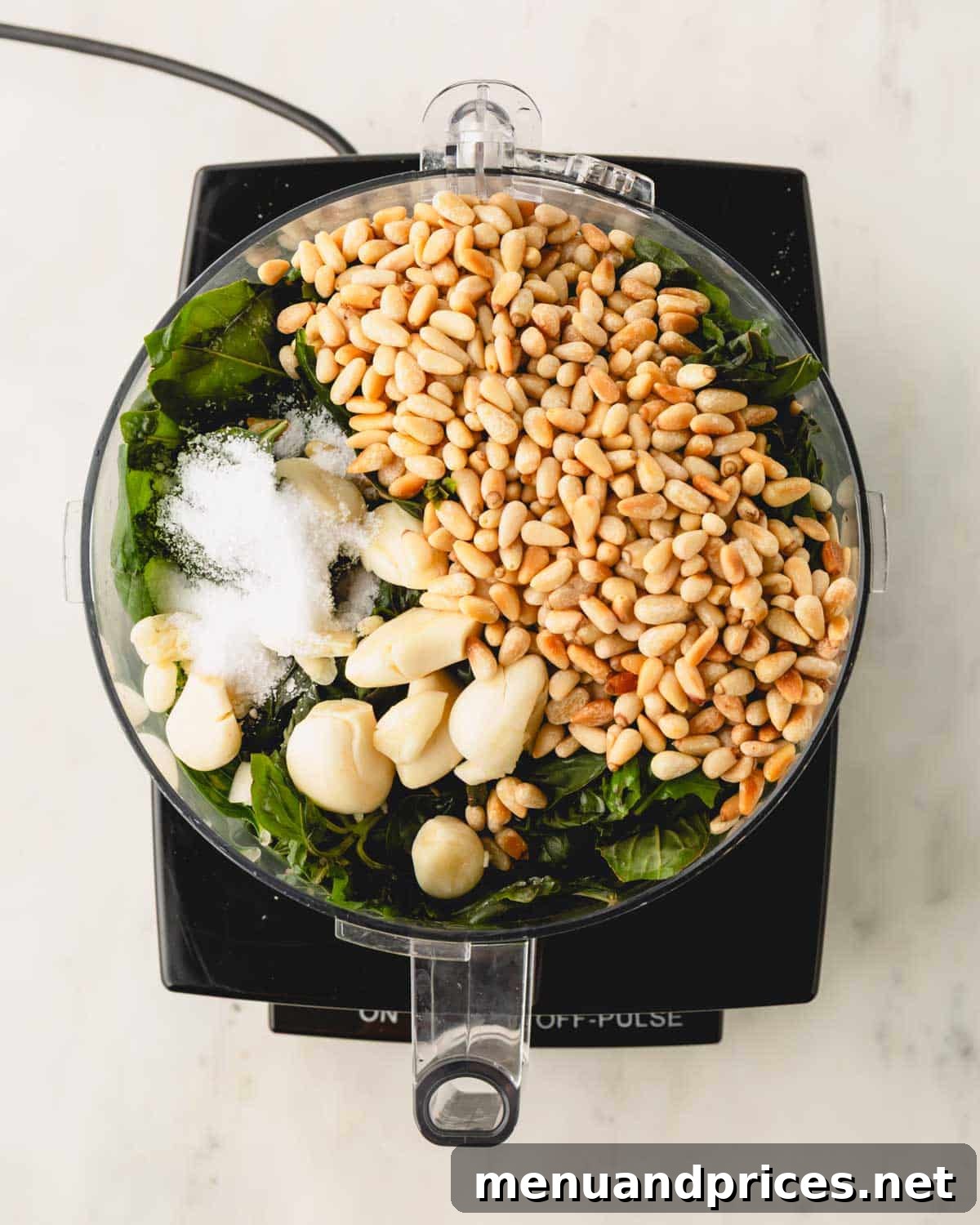
- Combine Dry Ingredients: Into a large food processor (a 14-cup capacity is ideal for this big batch), add the frozen basil leaves, toasted pine nuts, peeled garlic cloves, and kosher salt. For easier blending and to help the blades catch all the ingredients evenly, I recommend placing the garlic and pine nuts at the bottom of the food processor bowl first, then layering the frozen basil on top.
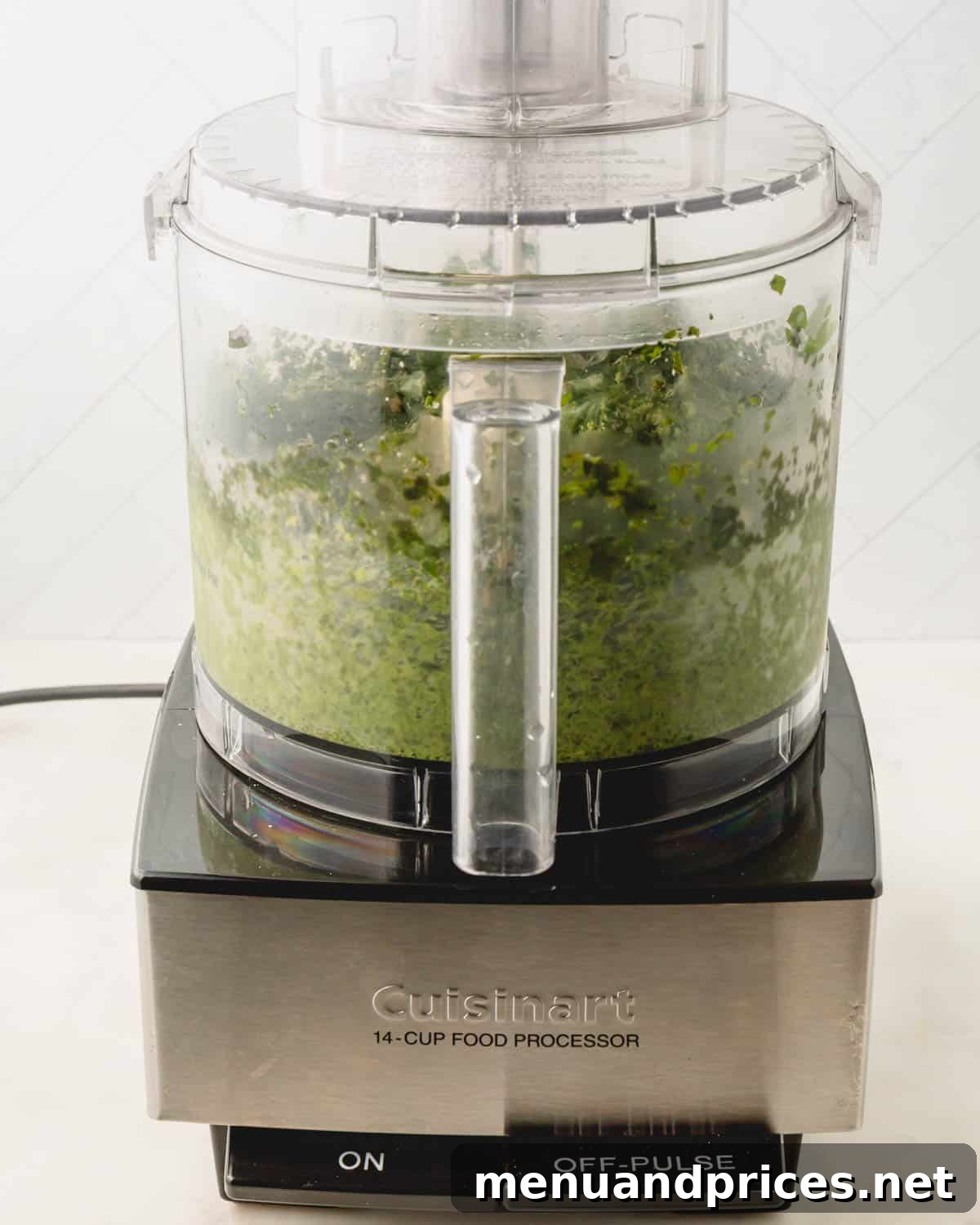
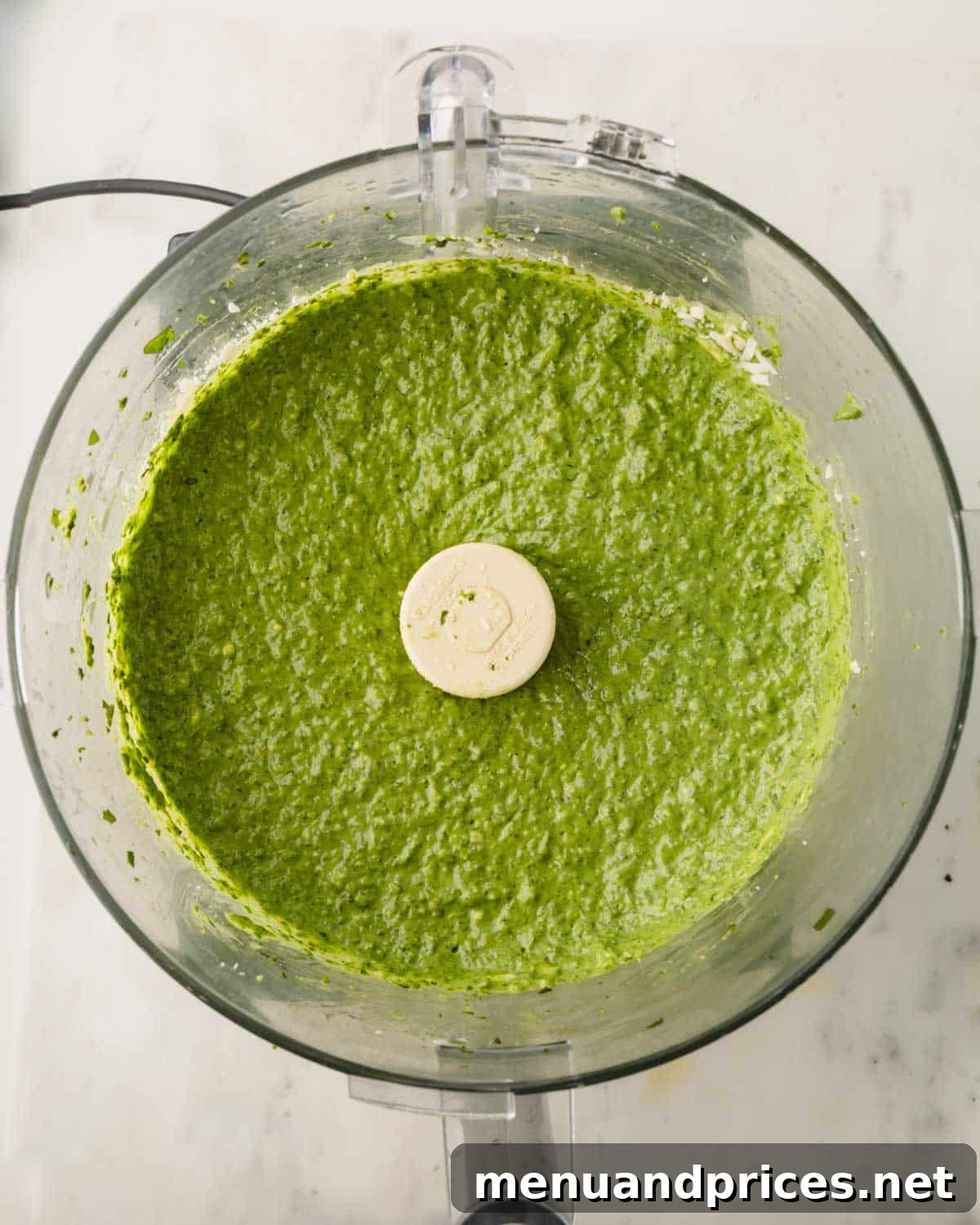
- Process to a Smooth Paste: Secure the lid and process the mixture until it forms a relatively smooth, vibrant green paste. Scrape down the sides of the bowl as needed to ensure all ingredients are incorporated. This initial blend thoroughly breaks down the solids before the oil is introduced.
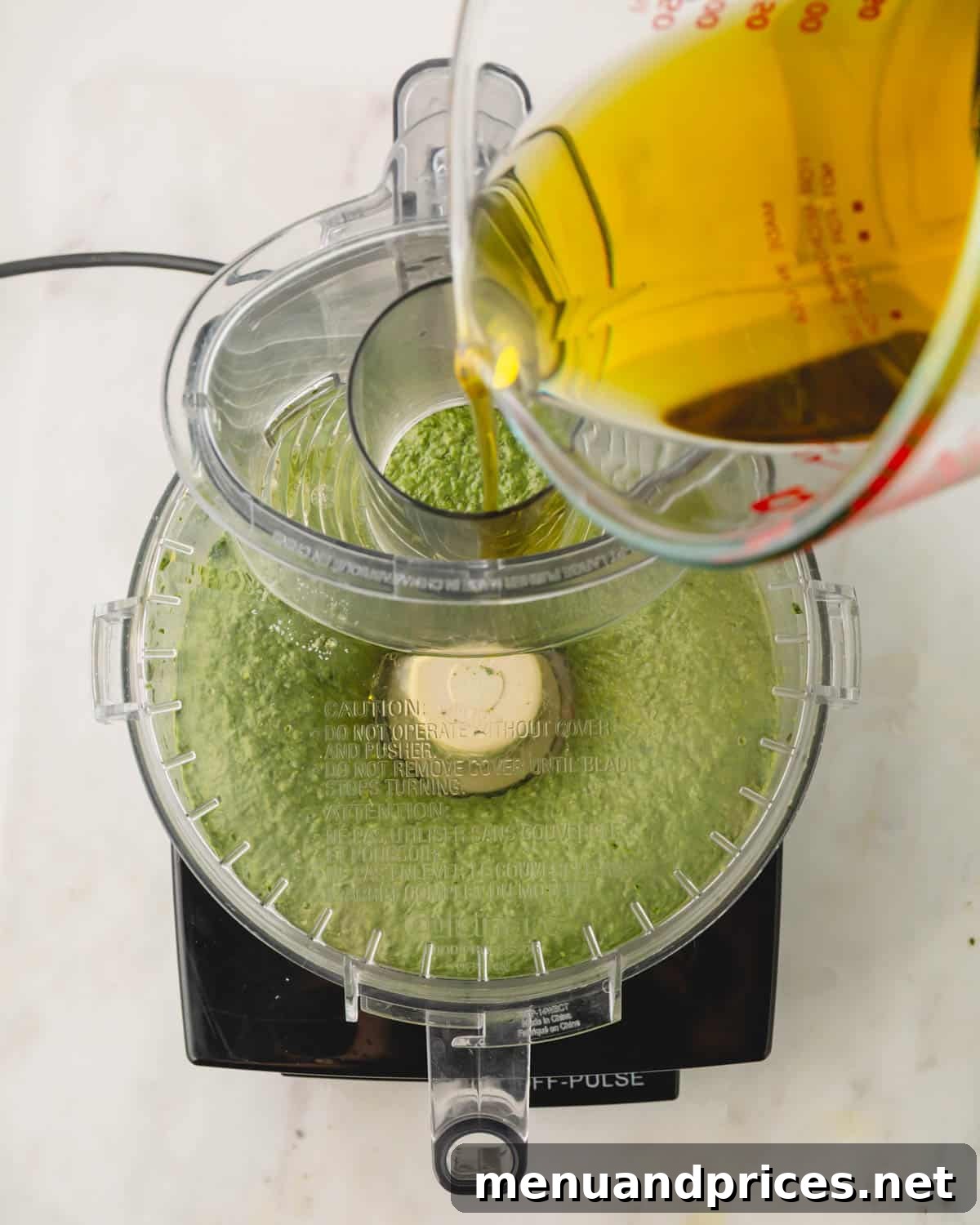
- Emulsify with Olive Oil: With the food processor still running, slowly and steadily drizzle in the extra virgin olive oil through the feed tube. This gradual addition is essential for creating a smooth, emulsified sauce rather than a broken or oily one. The oil will gradually bind with the basil and other ingredients, transforming the paste into a rich, flowing pesto.
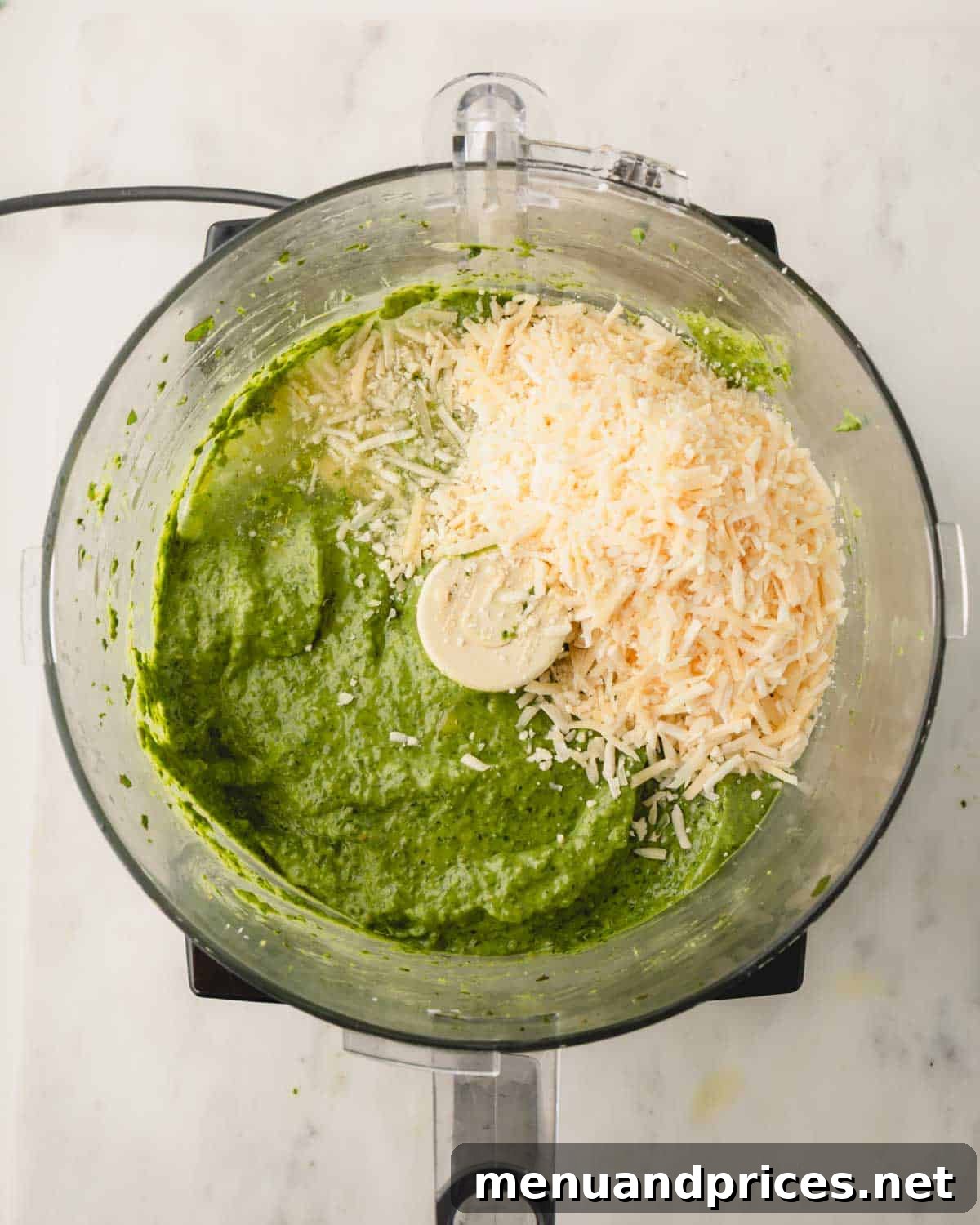
- Add Cheese and Lemon Juice: Finally, add the freshly grated Parmigiano-Reggiano cheese and the fresh lemon juice to the food processor.
- Final Blend: Process for another 30 seconds or just until all the ingredients are fully combined and the pesto reaches your desired consistency. Avoid over-processing at this stage, as it can cause the pesto to oxidize and lose its vibrant green color or become bitter. Taste and adjust seasoning if necessary.
The Secret to Creamy Pesto Sauce: Freezing Basil
This ingenious technique for freezing basil leaves before processing is a game-changer for achieving an incredibly creamy and velvety smooth pesto sauce. As I learned from Serious Eats, when basil leaves freeze, ice crystals form within their plant cells. These crystals then rupture the cell walls, much like the traditional action of a mortar and pestle. This cellular breakdown allows the basil to blend far more easily and completely with the olive oil and cheese, stabilizing the emulsion. The result? A pesto that is noticeably less grainy and possesses an exquisitely smooth, luxurious texture. Attempting to blend fresh basil directly in a food processor often yields a chunkier, less vibrant, and potentially less flavorful sauce.
Prep Ahead of Time Tip
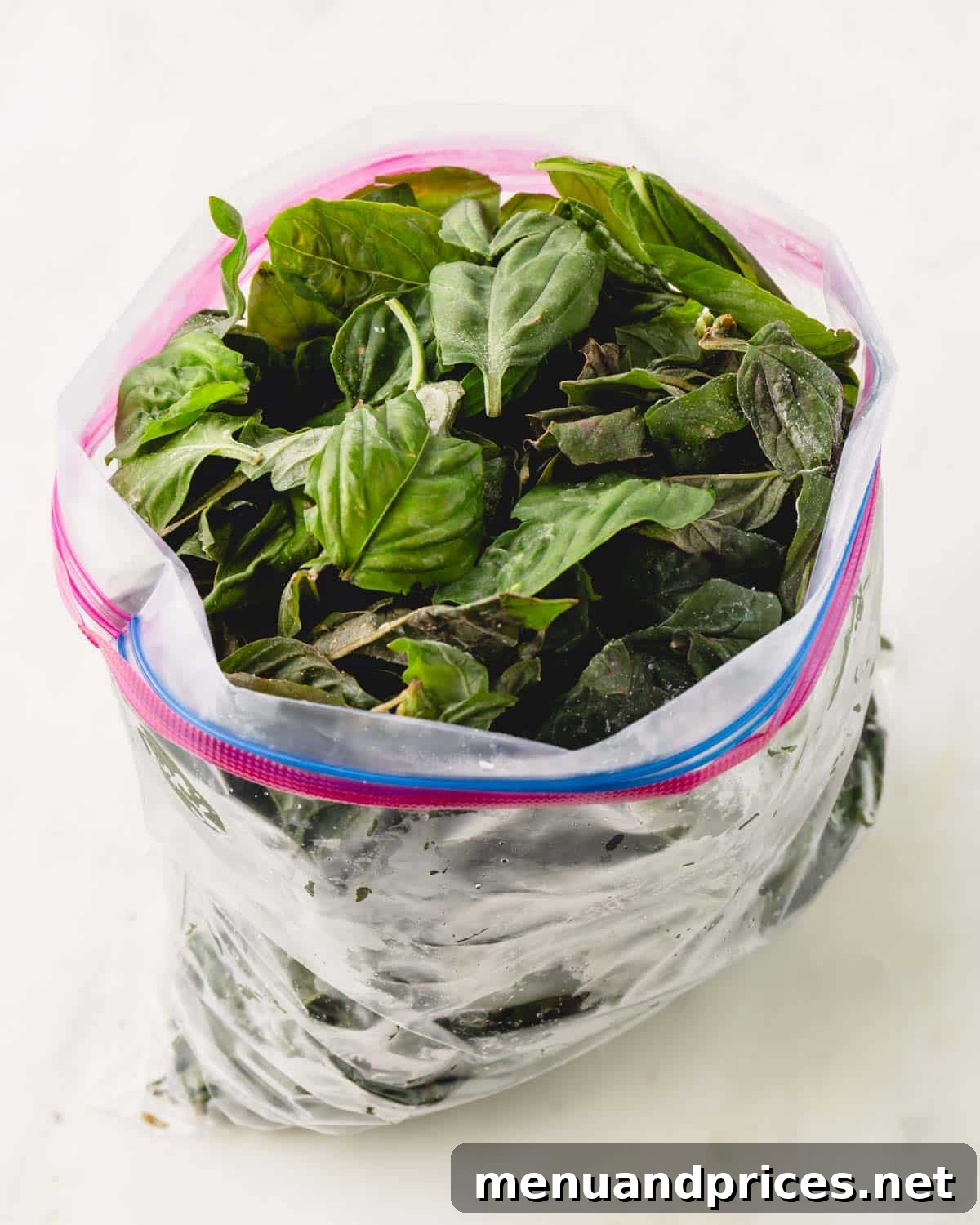
To streamline your pesto-making process, you can freeze the basil leaves well in advance. After washing and thoroughly drying them, store the frozen leaves in a freezer-safe bag for up to 3 months. This way, your basil will be perfectly prepared and ready whenever you decide to whip up a fresh batch of homemade pesto.
Endless Culinary Possibilities: Ways to Use Basil Pesto
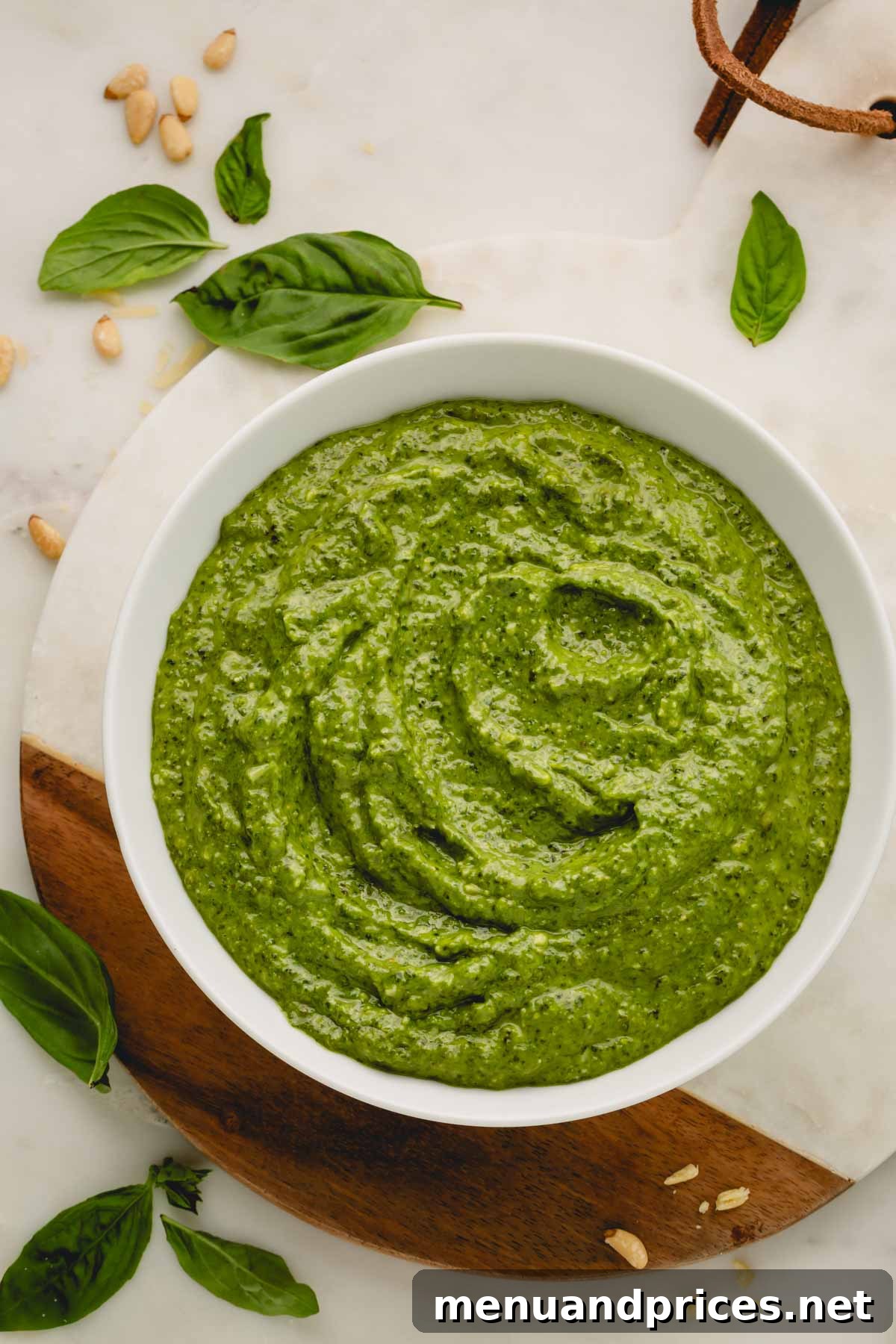
In my humble opinion, this versatile basil pesto recipe pairs beautifully with almost anything! It’s truly a universal flavor enhancer, an ideal addition to pasta dishes, enriching sauces, elevating sandwiches, creating delectable dips, and so much more. Its bright, herbaceous profile can transform even the simplest ingredients into a gourmet experience.
If you’re seeking specific inspiration, some of my personal favorite dishes that benefit immensely from a generous dollop of this homemade pesto include my flavorful pesto baked salmon and the comforting pesto ricotta stuffed pasta shells. These recipes truly highlight the fresh, savory notes of the pesto.
Beyond main courses, I frequently incorporate pesto into appetizers and lighter meals. It’s a fantastic spread for a cheesy roasted tomato pizza, adds a burst of flavor to stuffed chicken roll-ups, and makes an exquisite dipping sauce for artichoke pizza or crusty bread. Don’t be afraid to experiment: try mixing it into scrambled eggs, stirring it into soups, or using it as a vibrant marinade for chicken or vegetables. The possibilities are genuinely endless!
Here are even more creative ways to enjoy your homemade basil pesto:
- Pesto Eggs: Fry your eggs in a dollop of pesto for an elevated breakfast.
- Pesto Vinaigrette: Whisk pesto with a little extra olive oil, vinegar, and a touch of honey for a unique salad dressing.
- Compound Butter: Mix softened butter with pesto and chill for a flavorful spread on bread or melted over steaks.
- Potato Salad Twist: Replace some of the mayonnaise in your potato salad with pesto for a fresh, herbaceous kick.
- Grilled Cheese Upgrade: Spread a thin layer of pesto inside your grilled cheese sandwich for an extra dimension of flavor.
- Veggie Roasting: Toss roasted vegetables like zucchini, bell peppers, or asparagus with pesto after they come out of the oven.
- Burger or Sandwich Spread: Use it as a gourmet condiment instead of mayonnaise or mustard.
- Soup Topper: Swirl a spoonful into hot tomato soup or minestrone for added depth.
- Stuffed Mushrooms: Combine pesto with breadcrumbs and cheese to fill mushroom caps before baking.
- Marinade: A quick and easy marinade for shrimp, chicken, or fish before grilling or baking.
Expert Tips for Pesto Perfection
Achieving the perfect basil pesto is simple when you follow a few key guidelines. These tips will help you consistently produce a delicious, vibrant, and perfectly textured sauce:
- Utilize a Large Food Processor: For this generous “big batch” recipe, a powerful food processor with ample capacity is indispensable. I highly recommend using a 14-cup Cuisinart food processor or a similar large model. This ensures all ingredients can be processed smoothly and efficiently without overcrowding the bowl, leading to a consistent and creamy pesto.
- Always Toast Pine Nuts for Enhanced Flavor: While it might seem like an extra step, toasting the pine nuts makes a remarkable difference. The gentle heat coaxes out their rich, earthy oils, intensifying their flavor profile without overpowering the delicate basil. I assure you, this small effort is entirely worth it. Although walnuts can be substituted, offering a slightly more robust flavor, I believe the nuanced taste of pine nuts justifies the splurge for authentic pesto.
- Customize Garlic Levels to Your Preference: As a dedicated garlic enthusiast, my recipe calls for a substantial amount to give the pesto a bold kick. However, personal preference varies. If you prefer a milder garlic presence, feel free to halve the amount. Alternatively, for those who find raw garlic too potent, you can toast the unpeeled garlic cloves in a dry skillet for about 5 minutes over medium heat before peeling. This mellows their intensity significantly, offering a softer, more roasted garlic note to your pesto.
- Invest in Quality Parmesan Cheese: The type of cheese you use profoundly impacts the pesto’s overall flavor. For the most authentic and delicious result, it’s paramount to use high-quality Parmigiano-Reggiano. Avoid the pre-grated varieties that come in a green container; these often contain anti-caking agents and lack the complex, savory depth of freshly grated cheese. Purchasing a block and grating it yourself ensures superior taste and texture. If Parmigiano-Reggiano is unavailable, Pecorino Romano or even a good quality domestic Parmesan can be used, though they will impart a slightly sharper or saltier flavor.
- Drizzle Olive Oil Slowly for Optimal Emulsification: This is a critical step for achieving that silky-smooth, perfectly emulsified pesto. While the food processor is running, add the olive oil in a slow, continuous stream. This gradual incorporation allows the oil to blend seamlessly with the other ingredients, creating a stable emulsion. Rushing this step can result in a “broken” pesto where the oil separates from the solids, leading to a less creamy and cohesive sauce.
- Taste and Adjust Seasoning: Always taste your pesto before declaring it finished. Adjust the salt and lemon juice as needed. A little more salt can bring out the flavors, and an extra squeeze of lemon can add brightness and balance.
Storing Your Homemade Basil Pesto for Longevity
One of the greatest advantages of making a large batch of basil pesto is its excellent keeping qualities, especially when properly stored. This recipe is perfectly designed for meal preparation and long-term storage:
- Refrigeration: Once prepared, transfer your fresh pesto into an airtight container. To prevent oxidation and maintain its vibrant green color, you can pour a thin layer of olive oil over the surface before sealing the container. This creates a barrier against air. Store the pesto in the refrigerator for up to 1 week. If you notice any browning on the surface, simply skim it off; the pesto underneath should still be fresh and delicious.
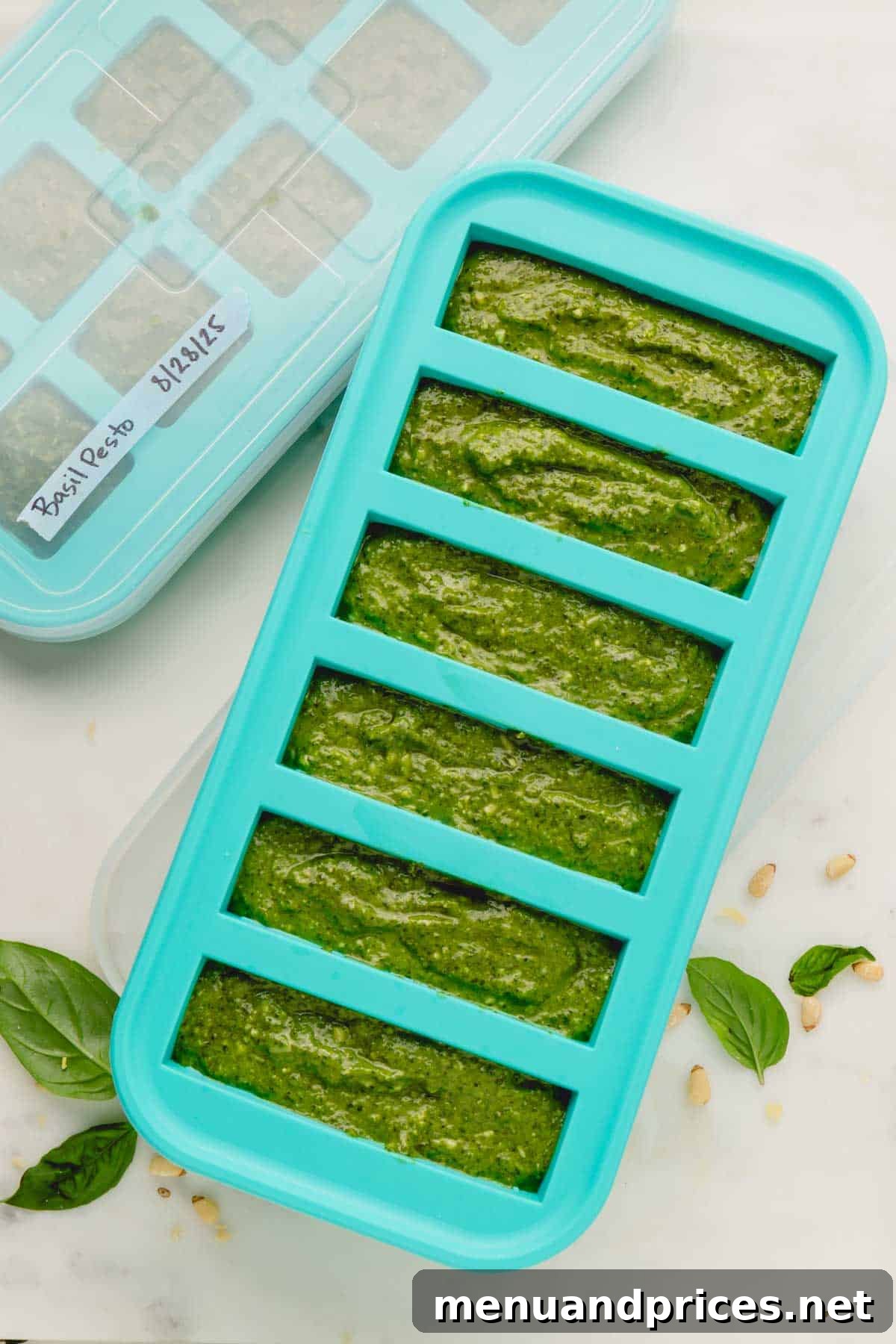
- Freezing for Extended Freshness: For longer storage, freezing is your best friend. This allows you to enjoy the taste of summer basil all year round. Divide the pesto into individual portions using an ice cube tray or a silicone baby food mold. These smaller portions are ideal for thawing only what you need, preventing waste. Once the pesto blocks are completely frozen solid (typically a few hours), pop them out of the molds and transfer them to a heavy-duty ziplock freezer bag or an airtight freezer-safe container. Frozen pesto will maintain its quality and flavor for up to 6 months.
- Thawing Instructions: When you’re ready to use your frozen pesto, simply remove the desired number of blocks from the freezer and allow them to thaw in the refrigerator overnight or at room temperature for a few hours. Stir gently before serving. You’ll find it tastes as fresh and delicious as the day you made it!
Frequently Asked Questions About Basil Pesto
The ultimate secret to crafting the best pesto lies in a harmonious blend of high-quality ingredients and mindful preparation. Start with tender, bright green basil leaves, premium extra virgin olive oil, and freshly grated Parmigiano-Reggiano. The balance of savory, nutty, herbaceous, and bright flavors is key. Additionally, avoid over-processing the ingredients; blend just enough to combine everything into a smooth sauce. This prevents the pesto from oxidizing and turning brown or developing a bitter taste, ensuring it remains vibrantly green and bursting with flavor.
Several common pitfalls can affect the quality of your homemade pesto. These include using basil leaves that are still damp (which dilutes flavor and texture), over-processing the ingredients (leading to bitterness and color loss), using stale or untasted nuts (which can impart an off-flavor), and neglecting to season adequately with salt. Another mistake is using pre-grated cheese, which often contains anti-caking agents and lacks the authentic flavor of freshly grated Parmesan.
Absolutely! Transforming this basil pesto recipe into a delicious vegan version is simple. The primary modification involves substituting the Parmigiano-Reggiano cheese. You can achieve a wonderful nutty, cheesy flavor by using nutritional yeast as an alternative, or opt for one of the many excellent store-bought vegan Parmesan alternatives available today. The rest of the ingredients – basil, pine nuts, garlic, olive oil, and lemon juice – are naturally plant-based, making it an easy and satisfying switch for a completely dairy-free, plant-based pesto.
Yes, while pine nuts are traditional, you can certainly experiment with other nuts. Walnuts offer a more robust, earthy flavor that can be quite delicious. Cashews provide a creamier texture and a milder taste. Almonds, especially blanched ones, can also work, giving a slightly different nuance. Sunflower or pumpkin seeds are great options for nut allergies. Remember to toast any alternative nuts or seeds to enhance their flavor before blending.
Pesto primarily turns brown due to oxidation when the basil is exposed to air. Over-processing the basil can also contribute to this, as the friction and heat can cause the leaves to bruise and release enzymes that lead to browning. To minimize this, freeze your basil beforehand (as per our recipe), avoid over-blending, and ensure that your finished pesto is covered with a thin layer of olive oil or tightly sealed in an airtight container during storage. The lemon juice in the recipe also helps to maintain its vibrant green hue.
More Delicious Homemade Sauces to Explore
If you’ve enjoyed crafting this basil pesto, you’ll love expanding your repertoire with other homemade sauces that bring fresh flavors to your table. Here are some fantastic recipes to try:
- Garlic Scapes Pesto: A unique twist on traditional pesto, perfect for garlic lovers and seasonal produce.
- Hot Honey Sauce: A sweet and spicy condiment that adds a kick to everything from pizza to fried chicken.
- Honey Teriyaki Sauce: A versatile, savory-sweet sauce ideal for marinades, stir-fries, and glazes.
- Classic Homemade BBQ Sauce: Rich, smoky, and perfectly balanced, this BBQ sauce is a must-have for grilling season.
Big Batch Basil Pesto
By Shinee Davaakhuu
Stock your freezer with this incredible big batch basil pesto, made from scratch. This classic pesto recipe requires only 6 fresh ingredients and yields enough for more than 8 delicious meals! Enjoy the vibrant taste of homemade all year round.
Ingredients
- 10 cups (300 g) packed fresh basil leaves
- 1 cup (140 g) pine nuts
- 1 head of garlic (about 15 garlic cloves)
- 2 teaspoons kosher salt
- 2 cups (480 ml) extra virgin olive oil
- 1 cup (320 g) grated Parmigiano-Reggiano cheese
- ¼ cup (60 ml) fresh lemon juice
Instructions
- Prepare Basil: Wash and thoroughly dry the basil leaves. Arrange them on a baking sheet and freeze for about 2 hours, or until completely solid. (You can prepare this step well in advance; once frozen, transfer the basil leaves to a gallon-size freezer bag for later use.)
- Toast Pine Nuts: In a medium skillet, toast the pine nuts over medium heat for approximately 5 minutes, stirring frequently until they are fragrant and lightly golden brown. Be very careful not to burn them. Remove from heat and set aside to cool slightly.
- Peel Garlic: Peel the garlic cloves by gently smashing them with the flat side of a knife.
- Combine in Food Processor: In a large (14-cup capacity recommended) food processor, place the frozen basil leaves, cooled toasted pine nuts, peeled garlic, and kosher salt.
- Process until Smooth: Process the ingredients until they form a smooth paste, scraping down the sides of the bowl as needed to ensure everything is well combined.
- Drizzle in Olive Oil: With the food processor still running, slowly drizzle in the extra virgin olive oil through the feed tube. Continue processing until the mixture is well emulsified and creamy.
- Add Cheese and Lemon: Add the freshly grated Parmigiano-Reggiano cheese and the fresh lemon juice to the food processor.
- Final Blend: Process for another 30 seconds, or just until all ingredients are fully combined and the pesto reaches your desired smooth consistency. Taste and adjust seasoning as necessary.
Tips & Notes
- Creamiest Pesto Secret: Freezing basil leaves before blending is the key to achieving an exceptionally creamy pesto sauce.
- Serving Suggestion: As a general guideline, use about ½ cup of this homemade pesto sauce per 1 pound (approximately 450g) of cooked pasta.
- Storing Fresh Pesto: Fresh pesto should be transferred to an airtight container and refrigerated for up to 1 week. To prevent browning, you can pour a thin layer of olive oil over the surface before sealing.
- How to Freeze Pesto:
- Option 1 (Freezer Bag Method): Pour the prepared pesto into a freezer bag, press out all the air, and flatten it. This flat shape allows for easy breaking off of smaller portions and defrosts quickly.
- Option 2 (Pesto Cubes): Divide the pesto into an ice cube tray or silicone freezer molds. Once completely frozen, transfer the individual pesto cubes into a large freezer bag to store. Frozen pesto is good for up to 6 months.
Nutrition Information (Approximate per 40g serving)
- Calories: 153 kcal
- Carbohydrates: 1 g
- Protein: 2 g
- Fat: 16 g
- Sugar: 0.2 g
- Sodium: 185 mg
Did you make this recipe?
We’d love to hear your feedback! Please share your thoughts and experience.
This post was originally published on September 15, 2016, and has been updated for clarity, comprehensiveness, and enhanced culinary guidance.