Easy Pavlova Recipe: Your Guide to a Flawless Meringue Masterpiece
This easy Pavlova recipe is your ultimate guide to creating a truly impressive dessert, perfect for beginners and seasoned bakers alike! Equipped with time-tested tips and tricks, you’ll be able to craft a magnificent Pavlova right in your own kitchen, dazzling guests with its delicate beauty and exquisite taste.
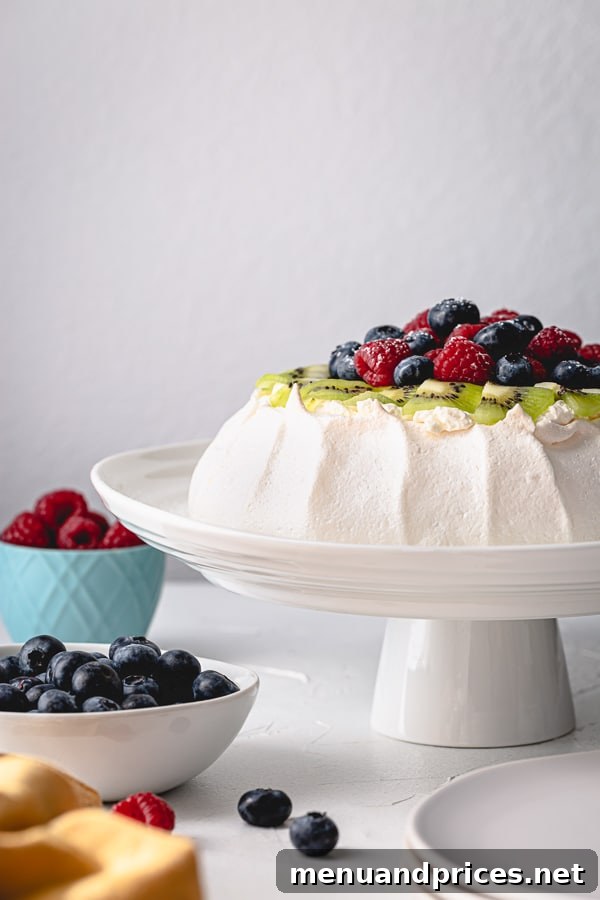
The Pavlova is a quintessential meringue-based cake, renowned for its wonderfully light, airy, and utterly delicate texture. Topped with luscious whipped cream and an assortment of vibrant fresh fruits, it’s a dessert that never fails to impress and delight.
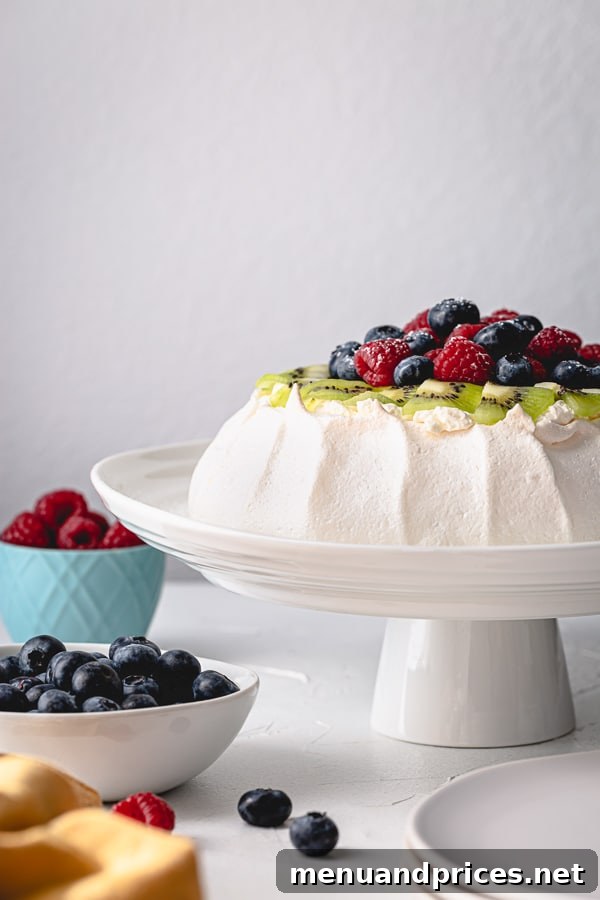
My journey with Pavlova began back in 2013 when I first baked one for Mother’s Day, intending it for my now mother-in-law. It was an instant success, a truly big hit that left everyone wanting more. I was so captivated by its charm that I had to bake another one for myself that very same night! Since then, Pavlova has held a special place in my heart and remains one of my all-time favorite desserts.
Over the years, I’ve made countless Pavlovas, experimenting with various flavors and forms, including delightful mini Pavlovas and a rich chocolate Pavlova. Through these experiences, I’ve gathered a wealth of invaluable tips and tricks, refining my technique to consistently achieve a perfect cake. And now, I’m thrilled to share all my secrets with you!
If you’re searching for an easy Pavlova recipe that guarantees a beautiful and delicious result every single time, you’ve landed in precisely the right place!
What is Pavlova Cake? A Culinary Delight with a Storied Past
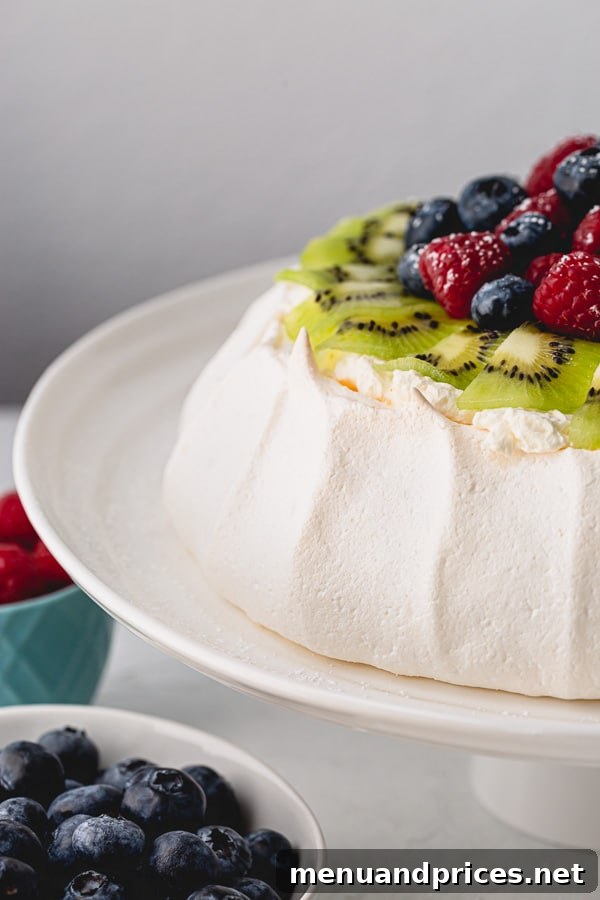
Pavlova is an exquisite meringue-based dessert, traditionally adorned with a generous dollop of whipped cream and an array of fresh, seasonal fruits. This iconic cake is famously named after the legendary Russian ballerina, Anna Pavlova. While its namesake is clear, the exact origin of this elegant dessert has sparked a passionate and ongoing debate between Australia and New Zealand, with both countries laying claim to its invention.
Regardless of its precise birthplace, the Pavlova cake itself is effortlessly stunning, much like the ballerina it honors. Its ethereal appearance and delightful taste make it a timeless classic dessert that consistently charms and impresses any dinner guest. It embodies a perfect balance of lightness, sweetness, and a delightful textural contrast.
Why You’ll Adore This Easy Pavlova Recipe: The Magic of Textures and Flavors
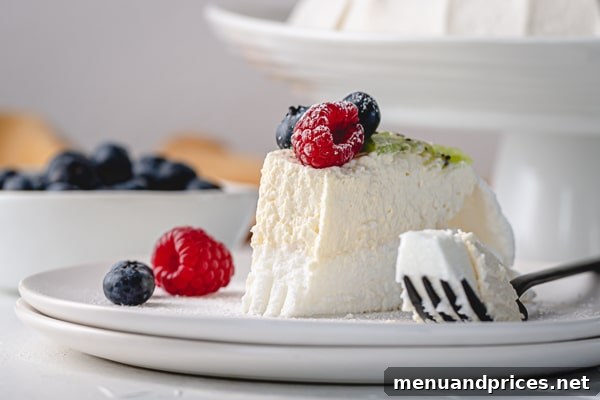
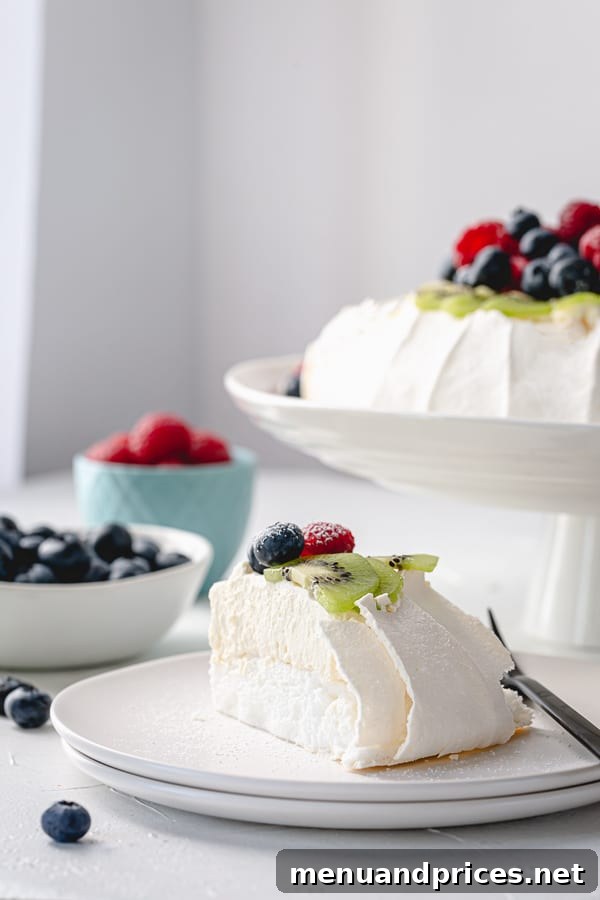
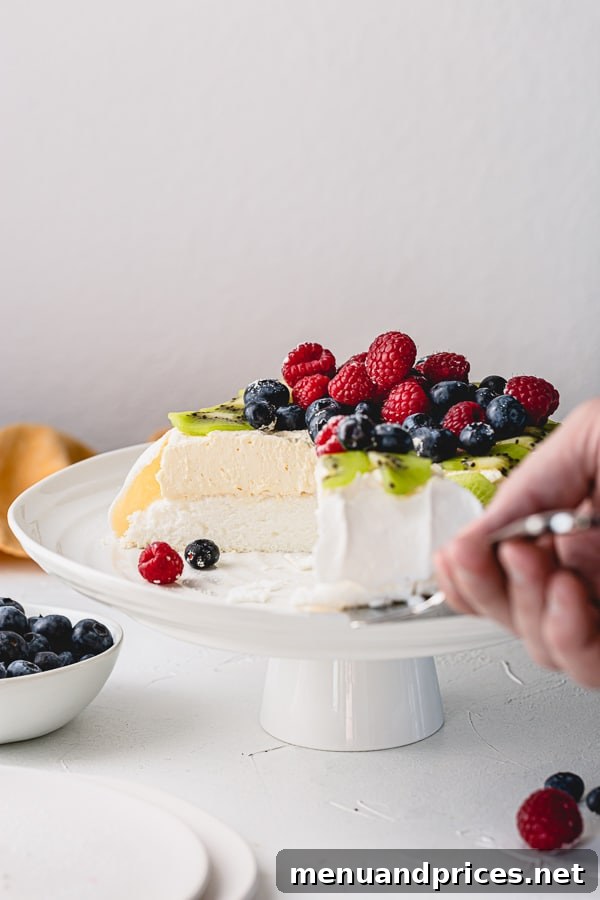
A classic Pavlova is all about a masterful contrast of textures and flavors. It boasts a delicately crisp shell on the outside, which gives way to a soft, chewy, and wonderfully marshmallow-like interior. This recipe aims to highlight and perfect this incredible textural play, creating a dessert that is both sweet and refreshingly balanced.
- Balanced Sweetness: To expertly balance the inherent sweetness of the meringue, our recipe features whipped cream infused with lemon curd, or any preferred citrus curd. This bright, tangy addition cuts through the sweetness beautifully, creating a harmonious flavor profile that is truly irresistible.
- Dynamic Flavor and Texture: An assortment of fresh, vibrant fruits is not just for decoration; it introduces a crucial texture and flavor contrast. The juicy, often tart, fruits perfectly complement the soft and fluffy meringue, adding a burst of freshness and a delightful chewiness to every bite. This combination elevates the Pavlova from a simple meringue to a complex and satisfying dessert experience.
Essential Ingredients for Your Perfect Pavlova Cake
The good news is that you don’t need an extensive list of ingredients to create a magnificent Pavlova. However, precision and quality are key for certain components. Let’s delve into the details of what you’ll need and why each ingredient plays a crucial role:
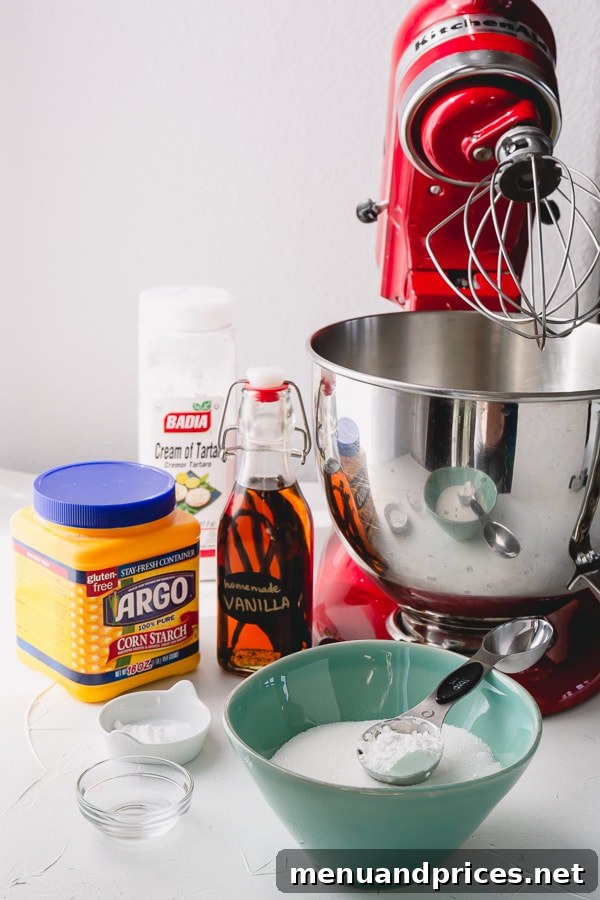
- Egg Whites: These are the backbone of your meringue. It is absolutely critical to carefully separate the egg whites from the yolks. Even the tiniest speck of egg yolk (which contains fat) can prevent your egg whites from whipping into the necessary fluffy, white meringue with hard, stable peaks. For best results, use room temperature egg whites, as they whip up with more volume and speed.
- Sugar (Superfine/Caster Sugar Recommended): Sugar is not just for sweetness; it’s an essential structural component of the Pavlova. It stabilizes the whipped egg whites, creating a strong and resilient meringue. Reducing the amount of sugar can significantly compromise the final structure and texture. Always use superfine sugar, also known as caster sugar, as its finer granules dissolve much more easily and completely into the egg whites, preventing a gritty texture.
- Cornstarch: This secret ingredient is what transforms the center of your Pavlova into that signature fluffy-soft, wonderfully marshmallowy consistency. It helps to keep the interior tender while the exterior bakes to a crisp shell.
- Cream of Tartar: Cream of tartar is a dry acid that plays a vital role in stabilizing the meringue. It helps the egg whites achieve maximum volume and maintain their structure, preventing them from collapsing. It’s all about ensuring that beautiful, tall, and stable meringue!
- White Vinegar: While technically optional, I highly recommend adding a touch of white vinegar (or white wine vinegar). Like cream of tartar, vinegar is an acid that contributes to the stability and crispness of the meringue. Don’t worry, you absolutely won’t taste the vinegar in the final product; its role is purely scientific. I often use both cream of tartar and white vinegar for optimal results.
- Vanilla Extract: This ingredient is purely for flavor, adding a lovely aromatic depth to your Pavlova. While not essential for structure, a good quality pure vanilla extract (like a homemade vanilla extract) enhances the overall dessert experience.
PRO TIP: While it’s easier to separate cold eggs (the yolks are firmer), room temperature egg whites whip significantly better and faster, yielding a higher volume. Plan ahead by separating your eggs while cold, then let the whites sit at room temperature for 30 minutes to an hour before whipping.
How to Master This Easy Pavlova Recipe: Step-by-Step Perfection
Making Pavlova is surprisingly straightforward and mostly hands-off. The meringue base, in fact, is best made (and highly recommended) a day or two in advance. However, it is crucial to assemble the cake with its creamy toppings and fresh fruits right before serving. This timing is key because the crisp meringue shell is quite sensitive to humidity. If you frost the cake too early or refrigerate it with the whipped cream, the delicate crisp texture will soften and become compromised.
Crafting Your Pavlova Batter: The Foundation of Fluffiness
Follow these simple steps to create the perfect meringue batter:
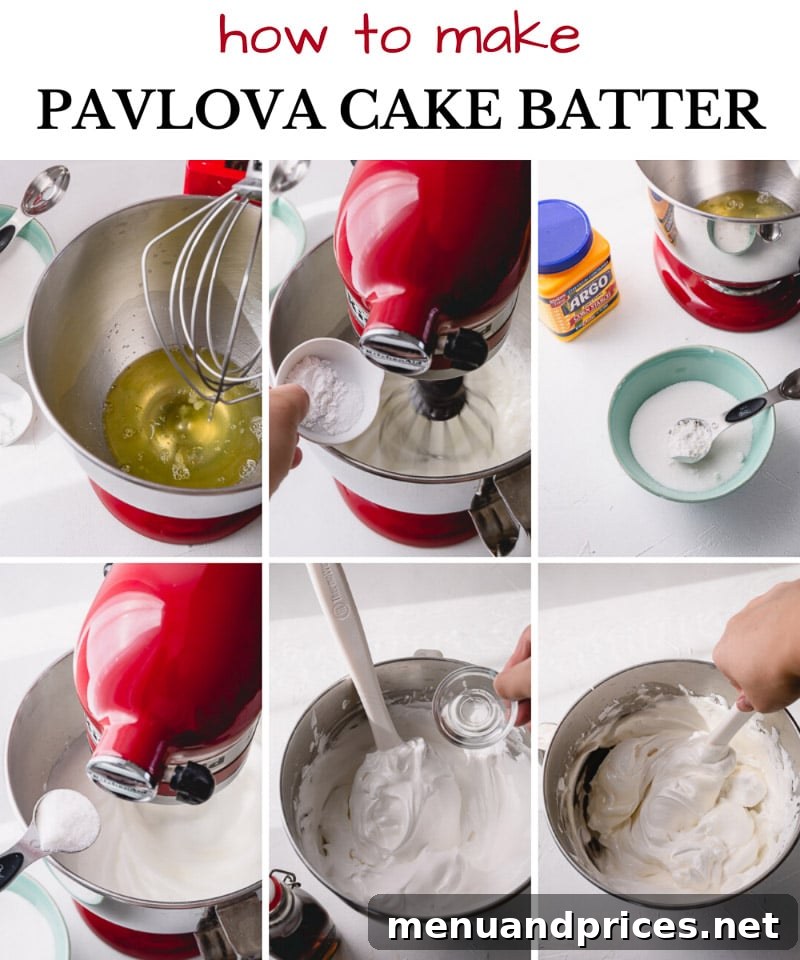
- Prepare Ingredients: First, ensure your egg whites are at room temperature and your mixing bowl and whisk are impeccably clean and grease-free. In a separate small bowl, whisk together your superfine sugar and cornstarch. This pre-mix ensures even distribution and prevents lumps.
- Whip Egg Whites: In a large mixing bowl (preferably stand mixer with a whisk attachment or a handheld electric mixer), begin to beat the egg whites on medium speed until they become foamy and bubbly.
- Add Stabilizers: Once foamy, add the cream of tartar and a pinch of salt. Continue to beat on medium speed. These acidic components help stabilize the egg whites, allowing them to hold more air and create a stronger meringue.
- Gradually Add Sugar: With the mixer still running on medium speed, slowly add the sugar/cornstarch mixture, one tablespoon at a time. This gradual addition is vital, allowing the sugar granules to fully dissolve into the egg whites after each addition. Rushing this step can lead to a grainy meringue. Continue beating until the meringue reaches a soft peak stage – when you lift the whisk, the peaks will hold their shape but gently curl over.
- Incorporate Flavor: Once you reach soft peaks, gently fold in the white vinegar and vanilla extract using a spatula. Be careful not to deflate the meringue.
That’s it! Your perfect, glossy, and stable meringue batter is ready, super easy to make and the foundation for your stunning dessert.
Shaping Your Pavlova Cake: Unleash Your Creativity
Now that your beautiful meringue batter is ready, it’s time for the most fun and creative step: shaping your Pavlova. Don’t be afraid to get a little artistic here!
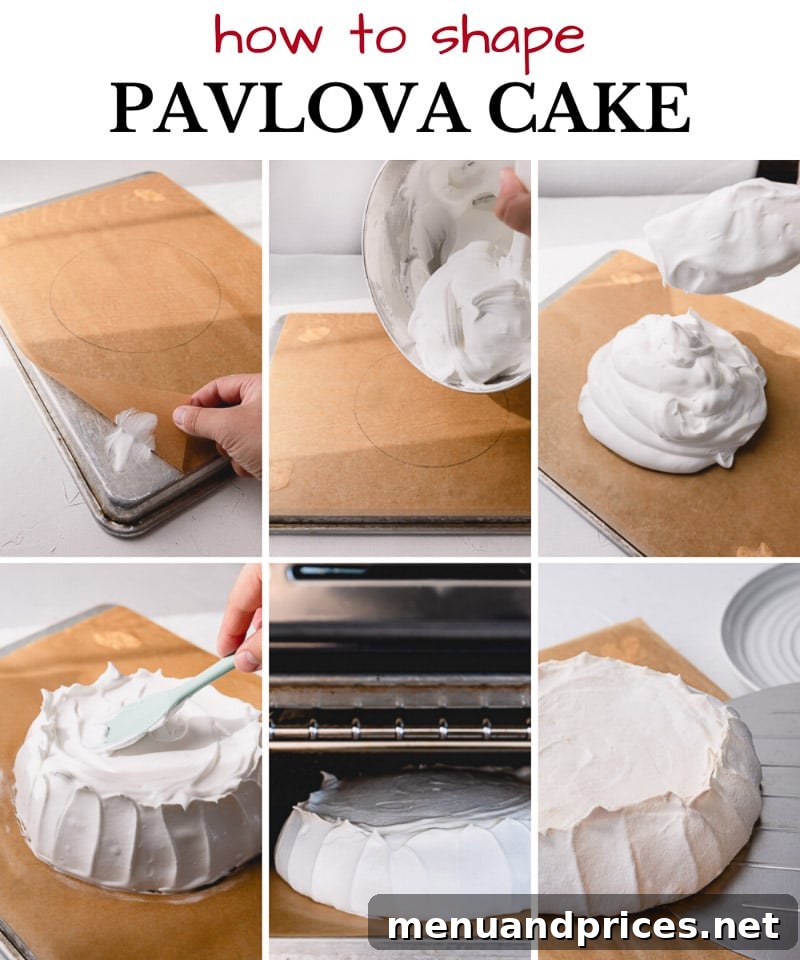
- Prepare Baking Surface: On a piece of parchment paper, draw an 8-inch circle using a pencil or a round object as a guide. Then, flip the parchment paper over so the ink side is facing down – this prevents any pencil lead from touching your meringue. Place this prepared parchment paper on a baking sheet, ideally one that’s been flipped upside down. (This “upside down baking sheet” trick helps immensely with transferring the baked Pavlova later.)
- Spoon and Shape: Carefully pour or spoon the meringue batter onto the center of the prepared parchment paper, ensuring it stays within the drawn circle.
- Create a Nest: Using a silicone spatula or the back of a spoon, gently shape the meringue. Aim to create a shallow “crate” or “nest” on top, with slightly higher sides and a depressed center. This intentional hollow is where you will later fill with your delicious whipped cream and fresh fruits. You can create decorative swirls or ridges on the sides for added visual appeal.
- Bake and Cool: Bake the Pavlova in a preheated oven at a low temperature. Once baked for the specified time, turn off the oven completely. Crucially, leave the Pavlova inside the oven with the door slightly ajar (you can wedge a wooden spoon in the door) to cool down slowly. This slow cooling process is vital for preventing cracks and ensuring a perfectly crisp exterior.
SMART TIP: Turning the baking sheet upside down before placing the parchment paper allows for easier sliding and transferring of the delicate baked Pavlova base later, significantly reducing the risk of cracking.
Assembling Your Pavlova Cake: The Grand Finale
For the absolute best texture and presentation, it is always recommended to assemble your Pavlova cake right before serving. This ensures the meringue stays wonderfully crisp.
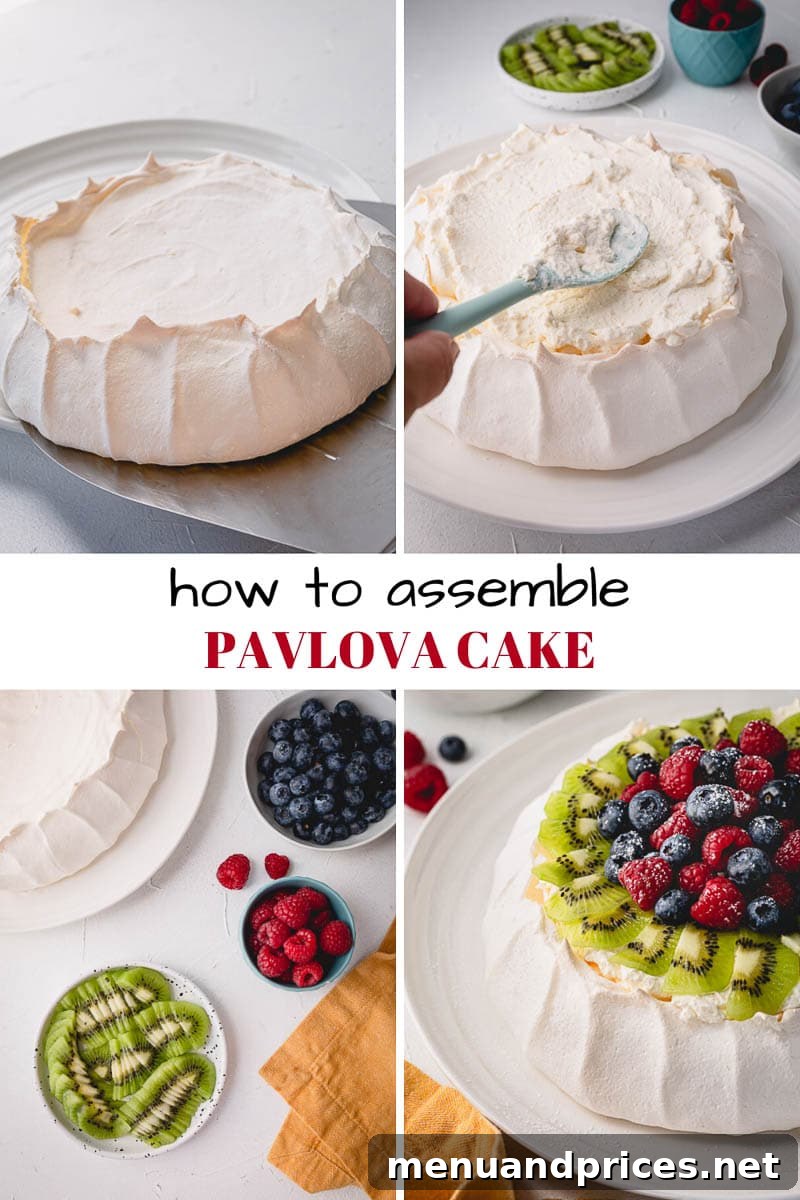
- Transfer the Meringue: Once fully cooled, carefully transfer the meringue cake onto your chosen serving platter. A flat serving platter is ideal for this delicate transfer.
- Whip the Cream: In a clean, chilled mixing bowl, whip cold heavy whipping cream with a touch of sugar and a spoonful of lemon curd (or plain vanilla extract) until soft peaks form. Be careful not to over-whip, or it will become grainy.
- Prepare Fruits: Select a vibrant assortment of fresh fruits. Aim for a mix of sweet and tart varieties to provide a balanced flavor profile. Wash, pat dry, and slice or chop them as needed. Berries, kiwi, mango, and passion fruit are excellent choices.
- Decorate: Gently spread the whipped cream over the hollowed center of the Pavlova base. Then, artfully arrange your prepared fresh fruits on top of the cream. Serve immediately and enjoy the applause!
Creative Pavlova Topping Ideas to Elevate Your Dessert
While classic whipped cream and fresh fruits are undeniably delicious, Pavlova is a fantastic canvas for culinary creativity. Here are some inspiring ideas to take your toppings to the next level:
- Fruity Sauces: For an extra layer of flavor and moisture, drizzle a vibrant raspberry sauce, strawberry coulis, or passion fruit puree over the whipped cream and fruits.
- Decadent Chocolate: A rich chocolate ganache is a divine addition, especially if you love a touch of indulgence. You can also sprinkle chocolate shavings for texture and visual appeal.
- Tangy Curds: Beyond lemon curd, explore other citrus curds like lime or orange curd for a zesty kick that beautifully cuts through the sweetness of the meringue.
- Thoughtful Fruit Pairings: Combine the tartness of fruits like kiwi, passion fruit, blood oranges, or rhubarb with the sweetness of mango, strawberries, blueberries, cherries, or peaches. This creates a more complex and satisfying flavor experience.
- Garnishes for Panache: Finish your Pavlova with elegant touches such as delicate chocolate shavings, aromatic citrus zest (lemon, lime, or orange), or fresh herbs like mint or basil leaves. These not only add flavor but also make for a truly pretty and sophisticated presentation.
- Nutty Crunch: A sprinkle of toasted nuts like pistachios, almonds, or pecans can add a wonderful contrasting crunch.
4 Expert Tips for a Consistently Perfect Pavlova Cake
Achieving a perfect Pavlova isn’t difficult when you know the secrets. Here are my top four tips to ensure your meringue comes out beautifully every time:
- Immaculate Equipment: Always use a perfectly clean, grease-free mixing bowl and whisk. Even the smallest amount of grease or fat (from residual oil or a tiny bit of egg yolk) will prevent the egg whites from whipping up properly, resulting in a flat or unstable meringue.
- Room Temperature Egg Whites: For maximum volume and quicker whipping, ensure your egg whites are at room temperature. Cold egg whites are more difficult to whip and won’t incorporate as much air, leading to a denser meringue.
- Slow and Gentle Cooling: To prevent your Pavlova cake from cracking, it is absolutely essential to cool it slowly. After baking, turn off the oven and leave the meringue inside with the oven door slightly ajar for at least 2 hours, or even preferably overnight. Rapid temperature changes are the primary cause of cracks.
- Choose a Flat Serving Platter: When it’s time to transfer your baked Pavlova shell, opt for a completely flat serving platter. This makes it significantly easier to gently slide the delicate meringue base from the parchment paper without risking cracks or breakage.
Pavlova FAQ & Troubleshooting: Solving Common Meringue Mysteries
Why did my Pavlova cake crack?
Pavlova cake primarily cracks when it cools too rapidly. The sudden change in temperature causes the delicate meringue structure to contract too quickly, leading to fissures. To avoid this, always follow the slow cooling method: turn off the oven after baking and leave the Pavlova inside with the door ajar until it’s completely cool, ideally for several hours or even overnight.
Why did my Pavlova cake collapse?
Pavlova can collapse if its fragile shell cracks excessively or if the internal structure isn’t strong enough. While minor cracks are natural for this delicate dessert, widespread cracking or an improperly formed base can lead to a full collapse:
- Insufficient Well: When shaping your Pavlova, it’s important to create a distinct, shallow well in the center with slightly higher sides. This creates a sturdy ‘nest’ for your whipped cream and toppings. Without this supportive well, the sides of the delicate shell are more prone to collapsing under the weight of the toppings, especially if minor cracks appear.
- Overloading the Edges: Avoid piling too much topping, particularly heavy fruits, around the very edges of the Pavlova. Concentrating weight on the delicate perimeter can cause it to give way.
- Under-baking or Over-whipping: An under-baked meringue won’t have the necessary internal strength, while over-whipping the egg whites can sometimes make the meringue too brittle.
Can I make Pavlova a day before?
- Yes, absolutely! It’s actually highly recommended and ideal to make the Pavlova base (the baked meringue shell) a day or two in advance. This allows it plenty of time to cool slowly and completely dry out, ensuring that perfectly crisp exterior. Just remember to store the naked shell properly.
Can you leave Pavlova in the oven overnight?
- Yes, leaving the Pavlova shell in the turned-off oven overnight is an excellent storage method. The oven provides a cool, dry, and protected environment, which is perfect for maintaining the meringue’s crispness and preventing it from absorbing moisture from the air. I frequently bake my Pavlova in the evening and leave it in the oven until I’m ready to frost and decorate it the next day.
What vinegar do you use for Pavlova?
- Any type of light-colored vinegar will work well for Pavlova, as its role is primarily acidic stabilization, not flavor. Common choices include white distilled vinegar, white wine vinegar, or even fresh lemon juice. While highly recommended for stability and crispness, if you happen to be completely out of any acidic agent, you may omit it altogether, though your meringue might be slightly less stable.
Storing Your Pavlova: Keeping it Crisp and Fresh
- Naked Pavlova Shell: Store an unadorned (naked) Pavlova shell in a cool, dry place – like your turned-off oven – for up to 2 days. Ensure it’s not exposed to humidity, as this will make it sticky.
It is always best practice to frost and decorate your Pavlova right before serving, or at most, a few hours prior. The delicate crisp shell will begin to absorb moisture from the whipped cream and fruits over time.
If you have leftover assembled Pavlova cake, refrigerate it immediately. However, be aware that the crisp shell will gradually lose its delicate texture and become softer, stickier, and slightly gummy within 24 hours. Enjoy leftovers quickly!
- Freezing: Pavlova cake does not freeze well. The freezing and thawing process will completely ruin its unique crisp-then-marshmallowy texture, turning it into a soggy mess.
Easy Pavlova Recipe Details
Easy Pavlova Recipe
By Shinee Davaakhuu
This easy Pavlova recipe is perfect for beginners! Equipped with my time-tested tips and tricks, you too can make an impressive Pavlova right in your kitchen.
Prep: 20 mins | Cook: 1 hr 30 mins | Total: 1 hr 50 mins
Servings: 8 servings
Pin Recipe |
Comment |
Print Recipe
Ingredients
For the Pavlova Base:
- 1 ¼ cups (250 g) superfine sugar (Note 1)
- 2 tablespoons cornstarch
- 6 large egg whites, at room temperature
- ½ teaspoon cream of tartar
- ¼ teaspoon coarse kosher salt
- ½ teaspoon pure vanilla extract
- 1 teaspoon white distilled vinegar or white wine vinegar, optional
For the Whipped Cream:
- 1 cup (240 ml) heavy cream, chilled
- 2 tablespoons (30 g) granulated sugar
- ½ teaspoon pure vanilla extract
For the Topping:
- Assortment of sweet and tart fruits (e.g., mixed berries, kiwi, mango, passion fruit)
Instructions
- Prepare for Baking: Draw an 8-inch circle on a piece of parchment paper. Flip the parchment paper so the ink side is down, and place it on a baking sheet (preferably turned upside down for easier transfer later).
- Preheat Oven: Preheat your oven to 250°F (120°C).
- Prepare Sugar Mixture: In a small bowl, whisk together the superfine sugar and cornstarch. Set aside.
- Whip Egg Whites: In a large, impeccably clean mixing bowl with a whisk attachment (or using a handheld electric mixer), beat the room temperature egg whites on medium speed until they become foamy.
- Add Stabilizers: Stir in the cream of tartar and salt, then continue to beat on medium speed.
- Gradually Add Sugar: Slowly add the sugar/cornstarch mixture, one tablespoon at a time, while the mixer is still running on medium speed. Continue to beat the egg whites until hard, glossy peaks form. The mixture should be smooth and shiny, and the sugar should be fully dissolved (test a small amount between your fingers to check for grittiness).
- Fold in Flavor: Add the vanilla extract and white vinegar (if using), and gently fold them into the meringue using a spatula, being careful not to deflate the mixture.
- Shape the Cake: Transfer the meringue batter onto the prepared parchment paper, within the drawn circle. Using a spatula, smooth the meringue and create a shallow well or crater on top, building up the sides slightly. This will hold your toppings.
- Bake and Cool: Bake the Pavlova for 90 minutes. After baking, turn off the oven completely. Leave the cake inside the oven with the door slightly ajar for at least 2 hours, or preferably overnight, to cool slowly and completely dry out.
- Make Whipped Cream: When you are ready to assemble, beat the chilled heavy cream with sugar and vanilla extract on medium speed until it’s nice and thick, forming soft peaks. Be careful not to over-whip, as it can quickly turn into butter.
- Assemble the Cake: Gently run a long offset spatula or thin knife along the bottom of the cooled Pavlova cake to ensure it’s separated from the parchment paper. Using a large cake lifter or two spatulas, carefully transfer the meringue base to a flat serving platter.
- Decorate and Serve: Spread the prepared whipped cream filling over the top of the Pavlova base, filling the well. Arrange your fresh fruits attractively on top of the cream. Serve immediately for the best texture.
⭐️ Did you make this recipe?
Please leave a review and let us know how you liked it!
Tips & Notes
Nutrition Information (per serving)