
Essential Buttermilk Substitutes: Your Guide to Homemade Alternatives
Never run out of buttermilk again! Discover two incredibly quick and easy ways to create a perfect buttermilk substitute using minimal ingredients. This comprehensive guide will teach you not only how to make these kitchen staples but also the best uses for each method, ensuring your recipes turn out perfectly every time.
What Exactly is Buttermilk?
Buttermilk is a fascinating dairy product with a rich history and a distinctive tangy flavor. Traditionally, buttermilk was the liquid left behind after churning butter from cultured cream. This residual liquid was naturally thick and slightly sour due to lactic acid bacteria that fermented the milk sugars.
Today, the buttermilk you find in most grocery stores is typically “cultured buttermilk.” This modern version is made by adding specific lactic acid bacteria cultures to pasteurized low-fat or skim milk. These bacteria consume the lactose (milk sugar), producing lactic acid, which increases the acidity of the milk. This process not only thickens the milk and gives it its characteristic tart taste but also makes it an invaluable ingredient in various culinary applications.
The acidic nature of buttermilk reacts with leavening agents like baking soda, creating carbon dioxide bubbles that result in light, fluffy, and tender baked goods. This is why it’s a cornerstone ingredient in beloved recipes such as red velvet cupcakes, buttermilk pancakes, biscuits, and cornbread. Beyond baking, buttermilk is also prized for its ability to tenderize meats when used as a marinade, thanks to its mild acidity, which helps break down tough protein fibers without drying out the meat.
Why You Might Need a Buttermilk Substitute
While buttermilk is a staple for many avid bakers, it can be a “foreign ingredient” for others or simply one you don’t always keep on hand. You might find yourself mid-recipe, only to realize you’ve run out, or perhaps your local store doesn’t carry it. Buying a whole carton for just a cup can also feel wasteful if you don’t use it frequently.
This is where homemade buttermilk substitutes become kitchen heroes. They offer a convenient, cost-effective, and surprisingly effective solution, ensuring you never have to abandon a recipe due to a missing ingredient. With just a couple of common kitchen items, you can create a functional alternative that mimics the acidity and texture of real buttermilk, allowing you to proceed with your culinary creations without a hitch.
How to Make Homemade Buttermilk Substitute
Don’t fret when your recipe calls for buttermilk and you don’t have it! There are several simple yet effective ways to make a buttermilk substitute right in your kitchen. Here, we’ll cover two primary methods that cater to different recipe needs, ensuring you achieve the best results whether you’re baking a cake or frying chicken.
Method 1: The Classic Milk + Acid Combination
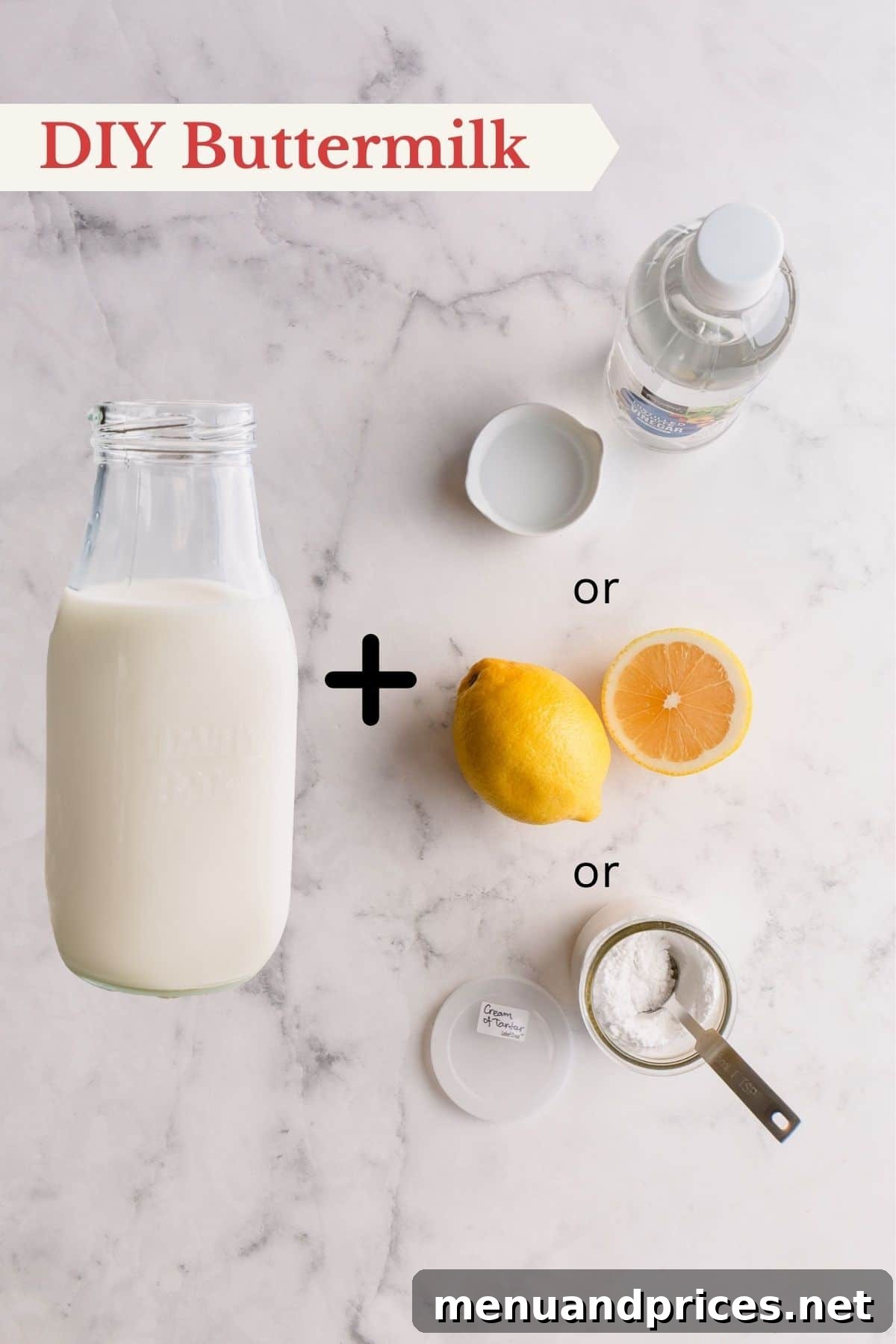
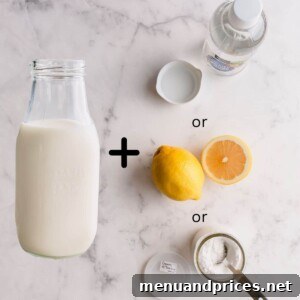
This is by far the most common and versatile buttermilk substitute, working wonderfully for a wide range of baking recipes. The principle is simple: add an acid to milk, which causes it to curdle and thicken, mimicking the consistency and acidity of true buttermilk.
- Simply combine your chosen liquid acid with milk and let the mixture sit for about 5-10 minutes. During this time, the milk will visibly curdle and thicken slightly. This curdled milk is now ready to be used in place of buttermilk in your recipe.
Ingredients & Ratios for 1 Cup Buttermilk Substitute:
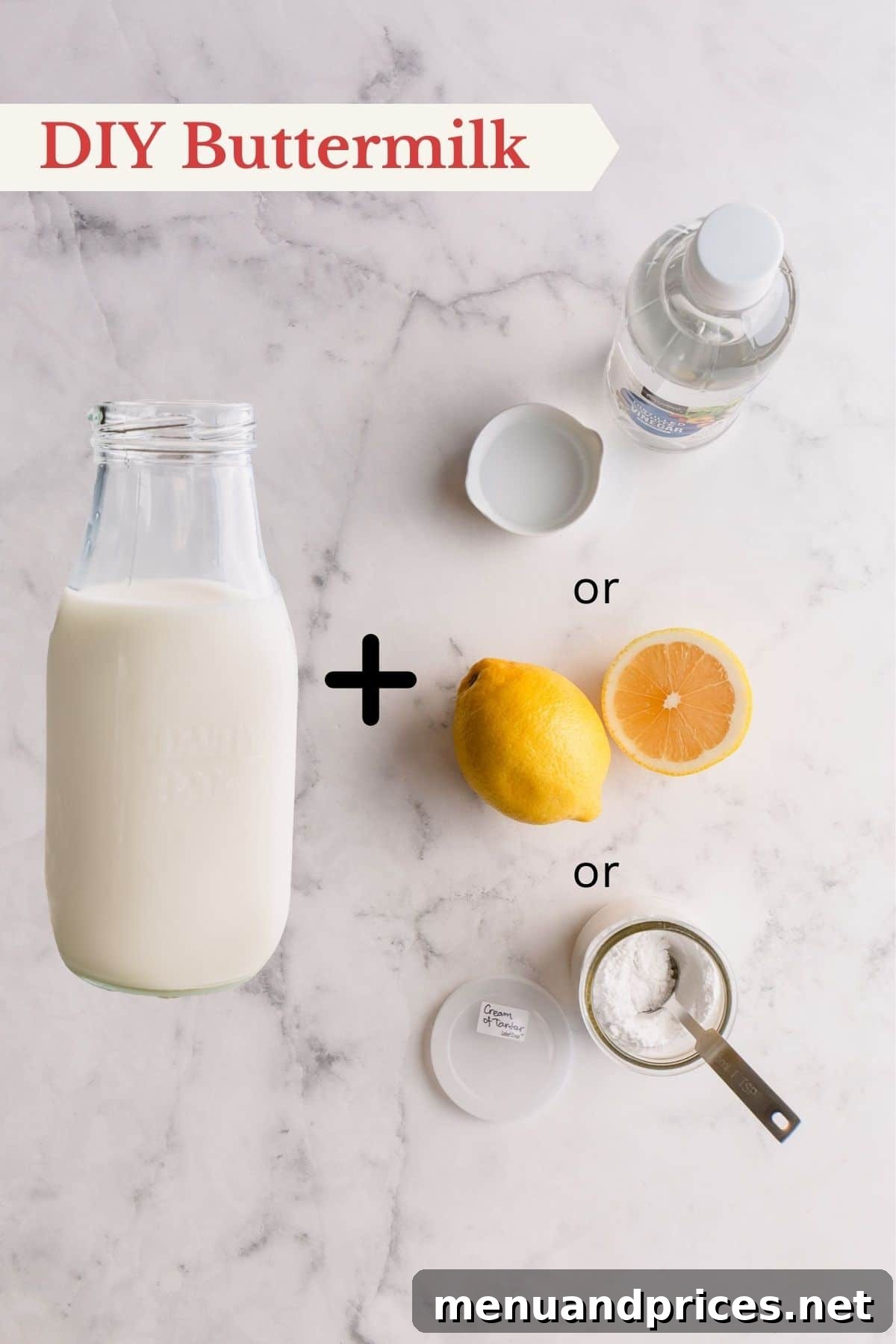
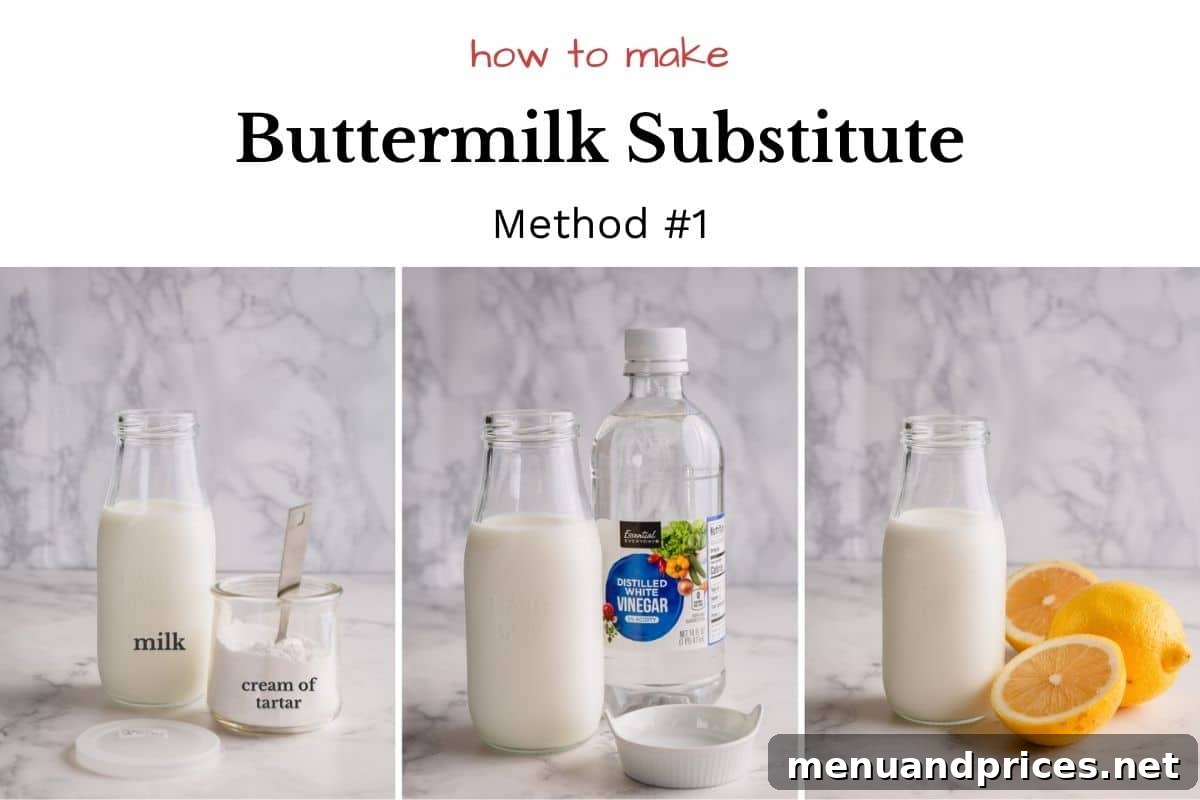
- 1 cup milk + 1 tablespoon liquid acid (such as distilled white vinegar or fresh lemon juice)
- Alternatively: 1 cup milk + 2 teaspoons cream of tartar (mix thoroughly until dissolved; no waiting required)
This method is ideal for…
Buttermilk Substitute Method #1 excels in recipes where the acidity is key for leavening and tenderness, such as cakes, muffins, quick breads, and especially red velvet cakes and cupcakes. The thinner consistency works well within existing batter recipes without significantly altering the liquid balance. However, for fluffier applications like buttermilk pancakes, its thinner texture might not always be ideal.
Method 2: Using Thick Dairy Products for a Creamier Substitute
This method is fantastic when you need a buttermilk substitute with a richer, thicker consistency, providing a delightful tang and extra moisture to your dishes. It’s particularly my favorite for recipes where a denser, fluffier texture is desired.
- Whisk together sour cream or plain yogurt with a small amount of milk or water until the mixture is smooth and resembles the pourable consistency of buttermilk.
Ingredients & Ratios for 1 Cup Buttermilk Substitute:
- ¾ cup sour cream or plain yogurt + ¼ cup milk or water
This method is ideal for…
Buttermilk Substitute Method #2 works perfectly for recipes like buttermilk pancakes, scones, or for creating a rich, flavorful breading for fried chicken (like these chicken fingers). The added thickness helps to create a more substantial batter or coating, contributing to a wonderfully tender and moist final product without making the batter too runny.
Expert Tips for Perfect Homemade Buttermilk
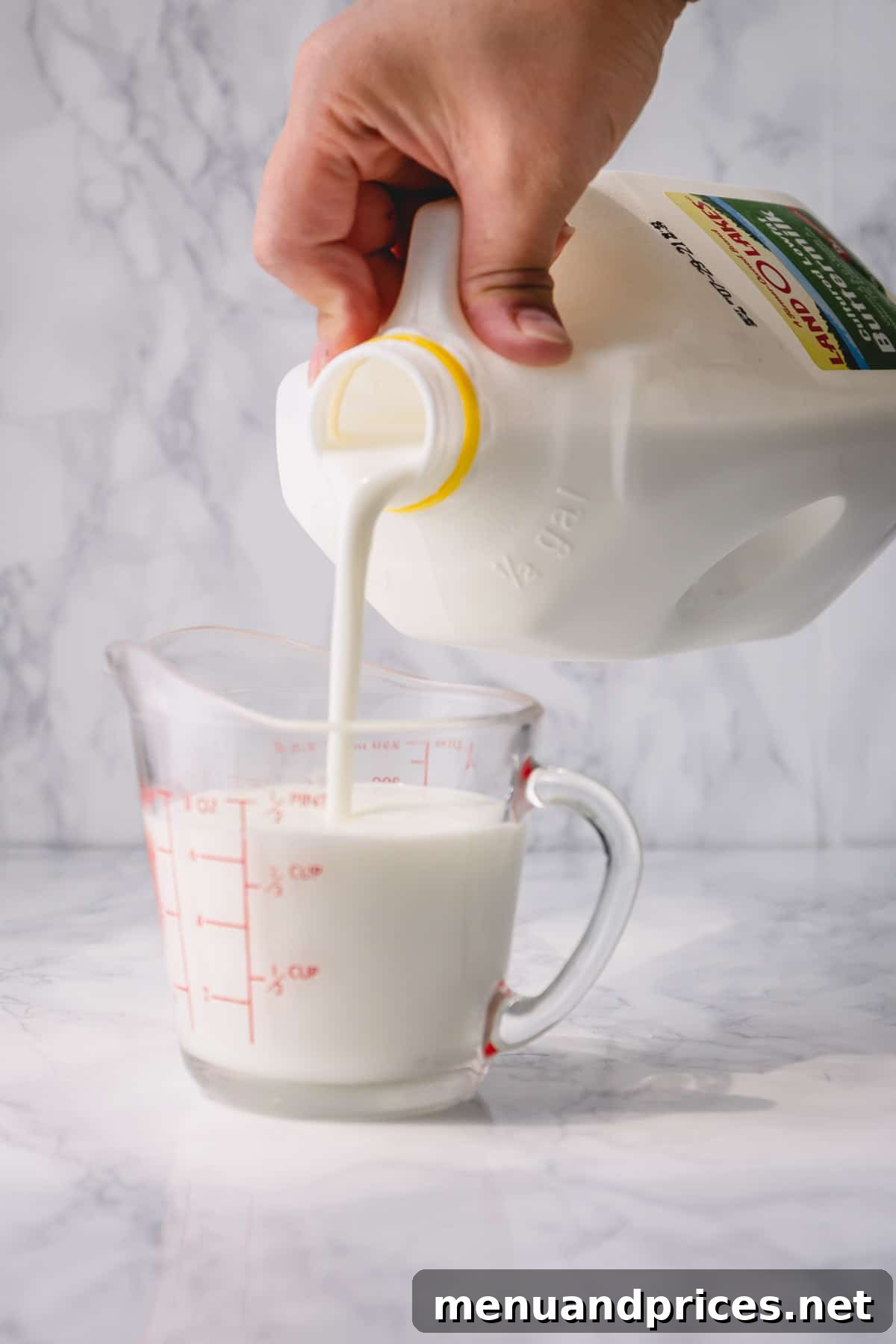
- Room Temperature Ingredients: For Method 1, using milk that is at room temperature will help the curdling process happen more efficiently and quickly. Cold milk can take longer to curdle effectively.
- Don’t Over-Curdle: While you want to see some curdling, don’t expect the milk to become as thick as yogurt. It should resemble a slightly thickened, slightly lumpy milk.
- Stir Well: Ensure the acid is thoroughly mixed into the milk to activate the curdling process evenly.
- Consistency is Key: For Method 2, adjust the amount of milk/water slightly if your sour cream or yogurt is exceptionally thick (like Greek yogurt) to achieve a pourable consistency similar to commercial buttermilk.
- Taste Test: A good buttermilk substitute should have a distinct tang. If it’s too bland, you might need a tiny bit more acid.
Storing Your Homemade Buttermilk Substitute
Homemade buttermilk substitute is best used fresh for optimal results. However, if you have leftovers or prepare it in advance, it can be stored. Transfer your buttermilk replacement into an airtight container and keep it in the refrigerator for up to 2 days. Beyond this period, its quality might decline, and it’s generally recommended to make a fresh batch for best culinary outcomes.
Can You Freeze Buttermilk? Absolutely!
Freezing buttermilk, whether homemade or store-bought, is an excellent way to extend its shelf life and always have it on hand for your baking needs. While ice cube trays work, they can sometimes be too small for typical recipe measurements. Here are some effective freezing methods:
- Silicone Molds: I highly recommend using 1/2-cup silicone molds. These are perfect for freezing buttermilk in pre-portioned amounts, making it incredibly convenient to thaw exactly what you need without waste.
- Freezer Bags: For larger quantities or custom measurements, pour the desired amount of buttermilk into freezer bags. Seal them, removing as much air as possible, then lay them flat on a baking sheet. Freeze until solid. Once frozen, you can stack these flat “buttermilk bricks” neatly in your freezer, saving valuable space.
To use frozen buttermilk, simply thaw it in the refrigerator overnight or gently in the microwave. It might appear slightly separated or lumpy after thawing, but a quick whisk will bring it back to a usable consistency. The texture and flavor for baking will remain largely unaffected.
Buttermilk FAQs:
Can I use regular milk instead of buttermilk?
While you can technically use regular milk, it won’t provide the same leavening power or tenderizing qualities that buttermilk does due to its lack of acidity. To effectively substitute, you need to “acidify” the milk. Simply combine one cup of milk with 1 tablespoon of vinegar or lemon juice and let it sit for 10 minutes before using. This creates a functional buttermilk replacement suitable for most recipes.
What is the difference between traditional and cultured buttermilk?
Traditional buttermilk is the byproduct liquid left after churning butter from cultured cream. It’s thinner and less acidic. Cultured buttermilk, the type commonly sold today, is made by adding lactic acid bacteria to low-fat milk, resulting in a thicker, tangier product specifically designed for culinary uses.
Can I use non-dairy milk to make buttermilk substitute?
Yes, absolutely! Most non-dairy milks, such as soy milk, almond milk, or oat milk, can be used with Method 1 (milk + acid). Soy milk often curdles the best and provides a good texture. Ensure you choose unsweetened and plain varieties to avoid unwanted flavors in your recipe.
Why is buttermilk so important in baking?
Buttermilk’s acidity plays a crucial role in baking. When combined with baking soda, it creates a chemical reaction that produces carbon dioxide gas, leading to a light, airy texture and helping baked goods rise. It also tenderizes gluten, resulting in a softer crumb, and adds a subtle tang that enhances flavor.
What happens if I forget to add buttermilk and just use regular milk?
If a recipe specifically calls for buttermilk and you substitute it with regular milk without adding an acid, your baked goods may not rise as expected, resulting in a dense, heavy texture. The flavor might also be lacking the characteristic tang and richness that buttermilk provides.
Buttermilk Replacement
Two quick and easy ways to make buttermilk substitute with just 2 ingredients or less!
Comment
Print Recipe
Ingredients
Method #1: Milk + Acid
- 1 cup milk (Note 1)
- 1 tablespoon distilled white vinegar, or lemon juice (Note 2)
Method #2: Sour Cream/Yogurt + Liquid
- ¾ cup sour cream, or plain yogurt (Note 3)
- ¼ cup milk, or water
Instructions
Method #1: Milk + Acid
- Stir in the vinegar or lemon juice into the milk. Let it sit for 5-10 minutes. The milk will begin to curdle and thicken slightly, indicating it’s ready to be used in your recipe.
Method #2: Sour Cream/Yogurt + Liquid
- Combine the sour cream or yogurt with milk or water in a bowl. Whisk until the mixture is smooth and has a pourable consistency. It’s now ready to be incorporated into your recipe.
Tips & Notes
Note 1: You can use any kind of milk here. Whole, 2%, skim, or even non-dairy options like soy milk work well for a dairy-free version.
Note 2: While distilled white vinegar provides the most neutral flavor, apple cider vinegar can also be used. Both fresh or bottled lemon juice work equally effectively.
Note 3: Any kind of plain yogurt can be used, including coconut yogurt for a dairy-free alternative. If using Greek yogurt, which is much thicker, reduce the amount to ½ cup and add ½ cup of milk or water to achieve the desired consistency.
Freezing Instruction: You can freeze buttermilk in ice cube trays for small portions. For larger, pre-measured amounts, use 1/2-cup silicone molds. Alternatively, pour the desired amount into freezer bags, lay them flat on a cooking sheet, and freeze until solid. This method allows for neat, space-saving storage.
Nutrition
Leave a rating and your feedback. Thank you!
Conclusion: Empower Your Baking with Homemade Buttermilk
Mastering these simple buttermilk substitutes means you’ll never again be caught off guard when a recipe calls for this incredible ingredient. Whether you opt for the classic milk and acid method for delicate cakes or the richer sour cream and liquid blend for fluffy pancakes, you’re now equipped to create delightful dishes with ease.
Homemade buttermilk alternatives are not just convenient; they’re a testament to resourceful cooking, ensuring that your culinary creativity is never limited by what’s in your fridge. Experiment with these methods, discover your preferred substitute for different recipes, and enjoy the tender textures and tangy flavors that buttermilk brings to your table.
Happy baking!