
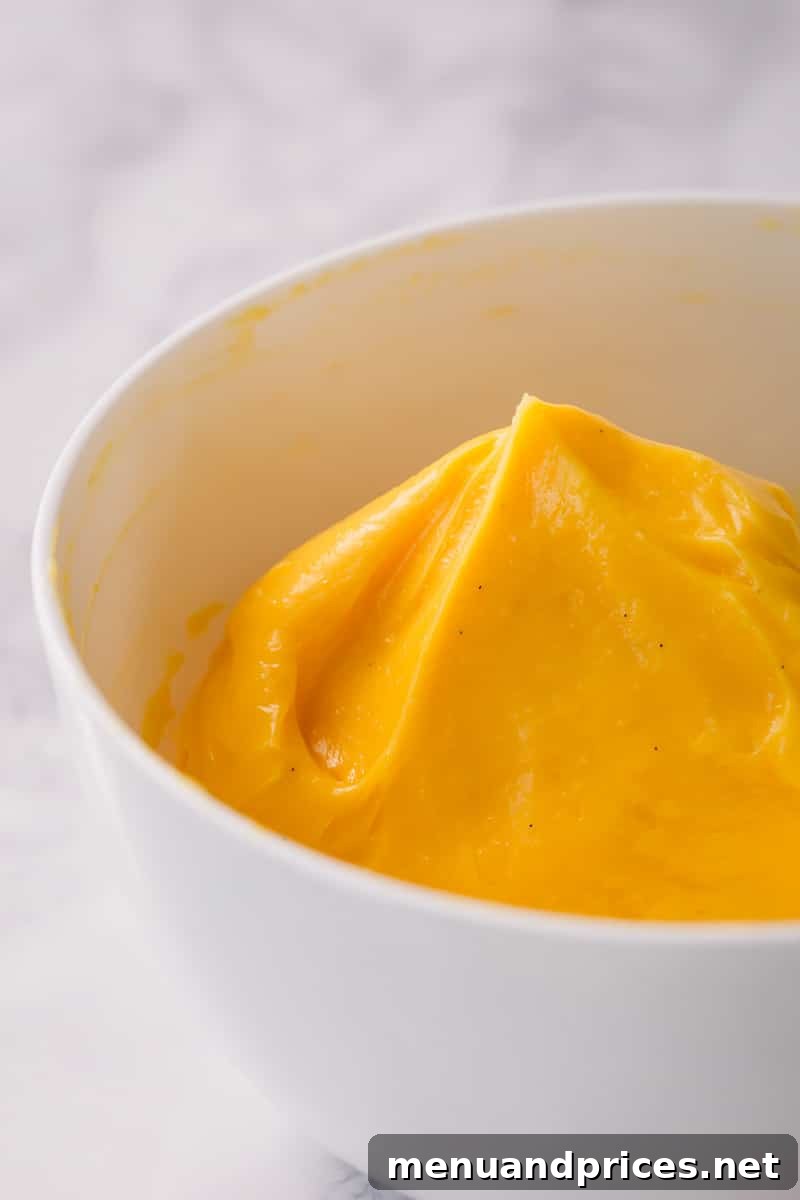
Prepare to be amazed by this effortlessly delicious French buttercream! It’s incredibly light, wonderfully creamy, and perfectly balanced in sweetness – truly a dream come true for any baker. Forget complicated sugar syrups or the need for a double boiler; I’m sharing my time-tested, super-simple method that guarantees spectacular results every single time.
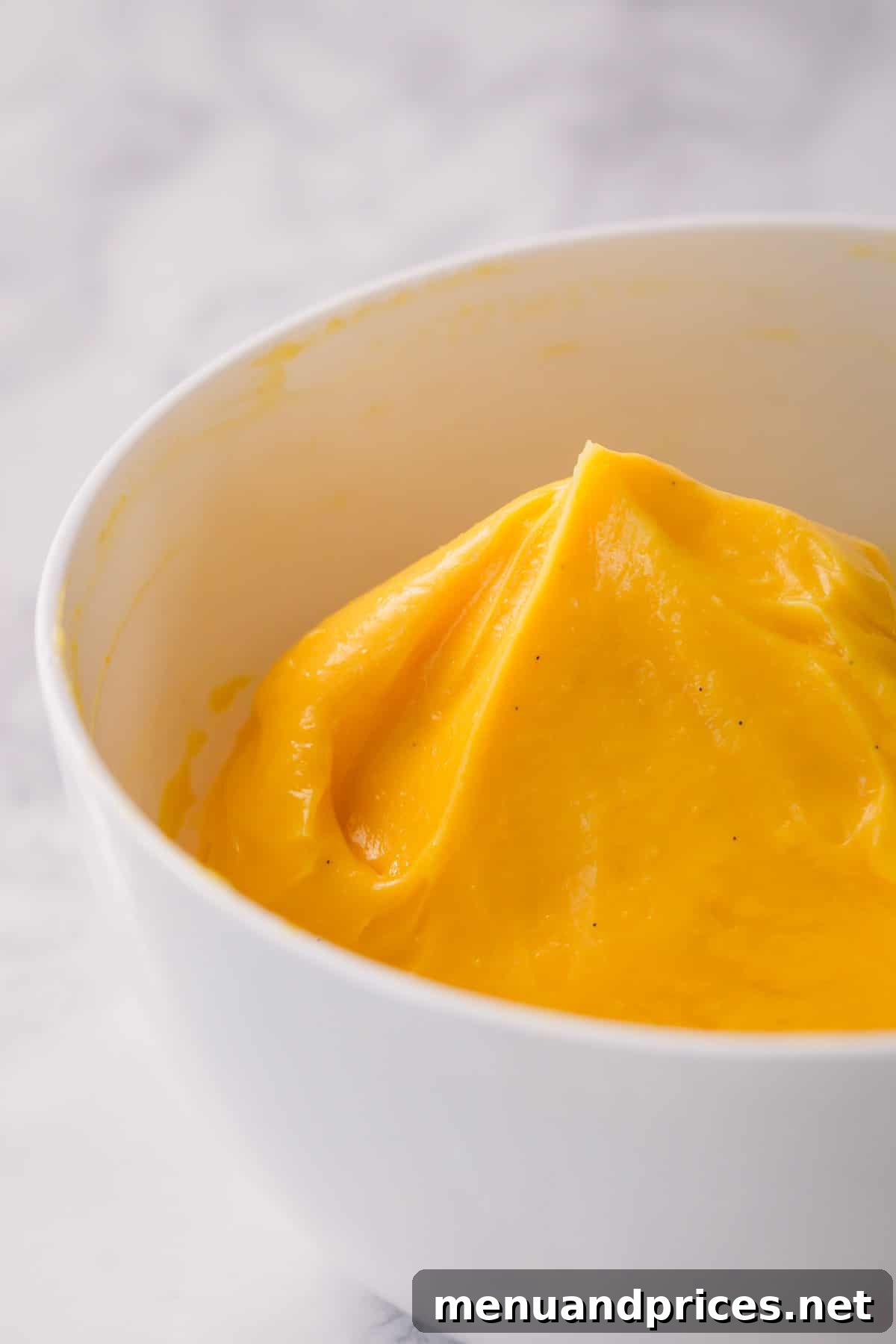
Easy French Buttercream: The Ultimate Guide
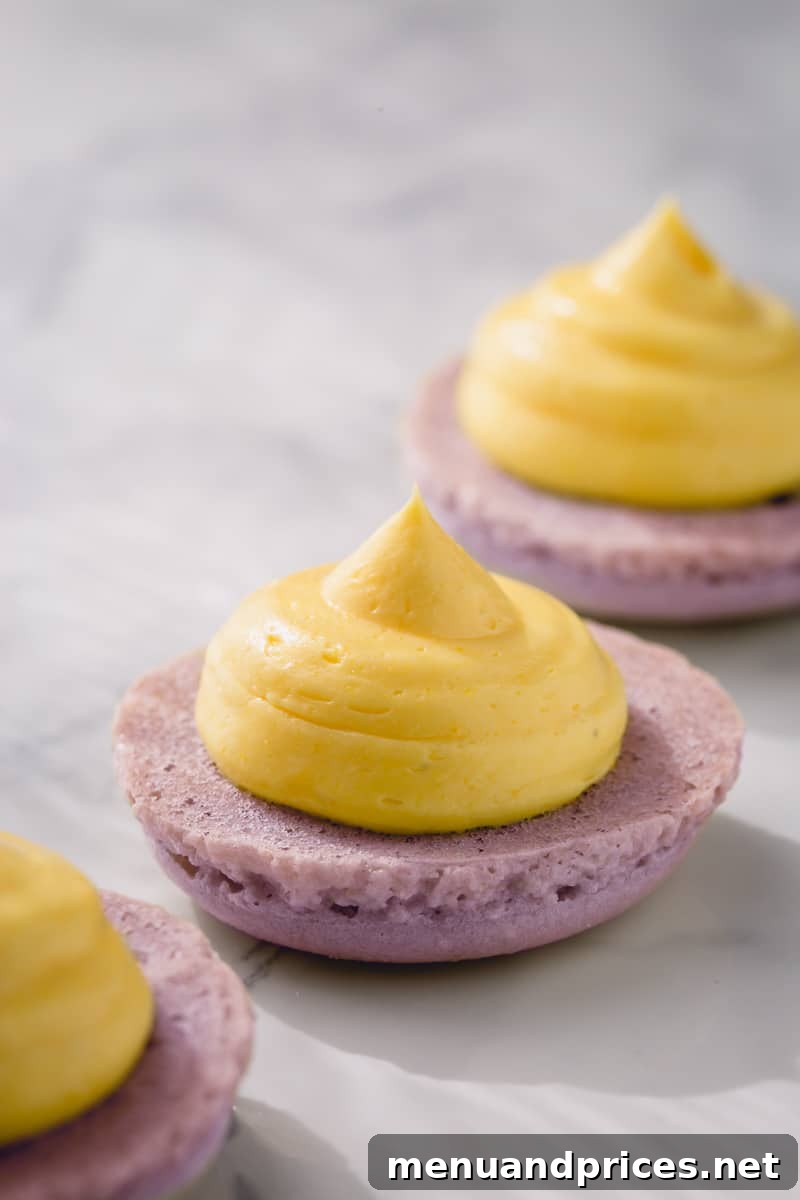
If you’re familiar with my recipes, you’ll know I have a deep-seated passion for macarons – and consequently, a keen eye for the perfect filling. This French buttercream stands out as an absolutely ideal companion for delicate macarons, offering a rich, melt-in-your-mouth texture that complements their crisp shells beautifully.
Today, I am thrilled to unveil a super simple, foolproof method for crafting French buttercream. You won’t need a candy thermometer, complex techniques, or any specialized equipment beyond your standard kitchen tools. This recipe simplifies classic French patisserie, making it accessible to home bakers of all skill levels.
What is French Buttercream?
French buttercream is a luxurious, light, and exquisitely creamy frosting distinguished by its base of cooked egg yolks. Unlike other buttercreams that rely on egg whites or powdered sugar, French buttercream harnesses the rich emulsifying properties of egg yolks to create a silky, custard-like texture.
Traditionally, French buttercream is prepared by heating a sugar syrup to a specific temperature (the “softball stage”), then slowly drizzling it into rapidly whipped egg yolks. This cooking process gently denatures the egg yolks, making them safe to consume while simultaneously thickening and enriching the mixture. Once the egg yolk mixture is pale and voluminous, softened butter is gradually incorporated until the buttercream transforms into its signature ultra-light and airy consistency.
However, many home bakers find the traditional method daunting due to the precision required with hot sugar syrup and candy thermometers. That’s why I’m presenting a wonderfully simplified French buttercream method today. It bypasses the need for a candy thermometer and complicated sugar syrup, yet still yields an utterly amazing, incredibly stable, and divinely flavorful result!
Italian, Swiss, and French Buttercream: A Comparison
The world of buttercreams offers a delightful array of textures and flavors, primarily categorized by how the eggs are prepared. Understanding the differences can help you choose the perfect frosting for your baking projects:
- Italian Buttercream: This is a meringue-based buttercream, celebrated for its exceptional stability and smooth texture. It’s made by pouring a hot sugar syrup into stiffly whipped egg whites (meringue), which cooks the egg whites and creates a stable base. Once cooled, softened butter is gradually beaten in. Italian buttercream is often preferred for intricate piping and in warmer climates due to its robust structure.
- Swiss Buttercream: Also a meringue-based buttercream, Swiss meringue buttercream is known for being slightly less sweet and incredibly silky. Unlike its Italian counterpart, the egg whites and sugar are gently heated together over a double boiler until the sugar dissolves and the mixture reaches a safe temperature. This warm mixture is then whipped into a glossy, firm meringue before softened butter is incorporated. It’s wonderfully light and holds its shape well.
- French Buttercream: As we’re focusing on today, French buttercream stands apart as an egg-yolk-based buttercream. This foundation gives it a distinctly richer, more custard-like taste and a wonderfully smooth, melt-away texture. Its reliance on egg yolks naturally imparts a pale yellow hue. In my kitchen, thanks to the incredibly fresh, rich farm eggs from my mother-in-law, my French buttercream often boasts a vibrant, beautiful yellow color that’s simply irresistible!
Simplified French Buttercream: Your Step-by-Step Guide
This particular recipe yields a smaller batch of buttercream, perfectly sized to fill one standard batch of macarons (approximately 24-25 filled cookies). If your baking ambitions are grander – perhaps frosting a multi-tiered cake or a dozen cupcakes – you can effortlessly double, triple, or even quadruple this recipe to suit your needs. Its adaptable nature makes it a versatile staple in any baker’s repertoire.
Because this recipe is designed for a smaller batch, I often find it incredibly convenient to use my immersion blender equipped with a whisk attachment. It makes quick work of whipping and mixing, ensuring a smooth, consistent buttercream without the need to haul out a large stand mixer. Of course, a standard electric hand mixer works just as beautifully!
1. Prepare the Egg Yolk Mixture
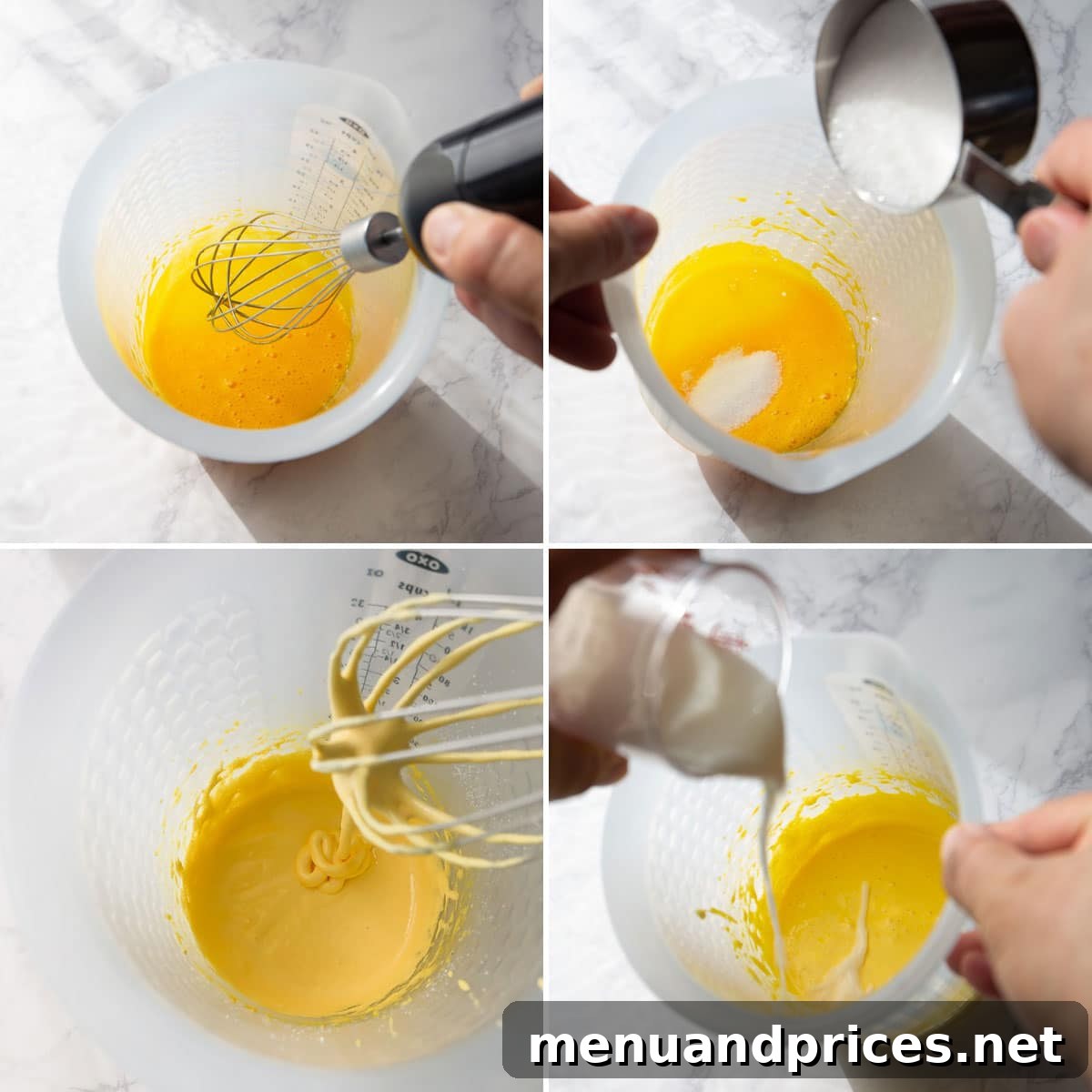
Begin by placing the egg yolks in a bowl. Using an electric hand mixer (or your immersion blender with a whisk attachment), lightly whisk the yolks for about 30 seconds until they are slightly broken up. Next, gradually add the granulated sugar. Continue to whisk the mixture diligently until it transforms into a thick, pale yellow, and noticeably voluminous consistency. At this point, most of the sugar should be visibly dissolved into the yolks. Finally, stir in the milk until well combined.
Pro Tip!
When whisking the egg yolks and sugar, especially with an electric mixer, it’s highly recommended to use a bowl with high sides. This simple trick prevents the mixture from splattering out, keeping your workspace clean and minimizing waste.
2. Gently Cook the Egg Yolk Mixture
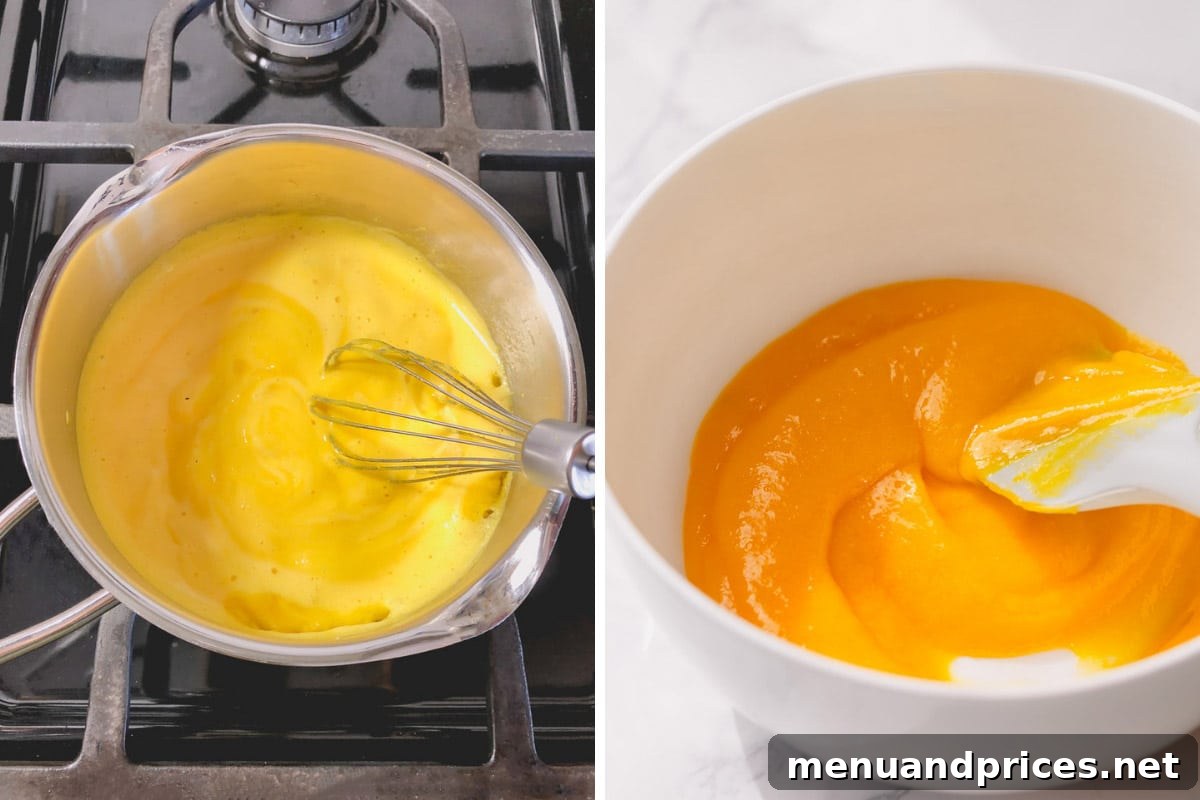
Carefully transfer the prepared egg yolk and sugar mixture into a small saucepan. Place the saucepan over very low heat, and stir frequently and continuously. The key here is gentle heat and constant motion to prevent the eggs from scrambling. Continue to cook the mixture for approximately 5 minutes, or until it visibly thickens to a consistency similar to a creamy pudding or a loose custard. This slow cooking process ensures the egg yolks are fully cooked and safe to consume.
Once thickened, immediately remove the saucepan from the heat and pour the warm mixture into a clean bowl. Allow it to cool completely to room temperature. This cooling step is absolutely crucial for the success of your buttercream; adding butter to a warm mixture will result in a soupy, separated frosting.
3. Incorporate the Softened Butter
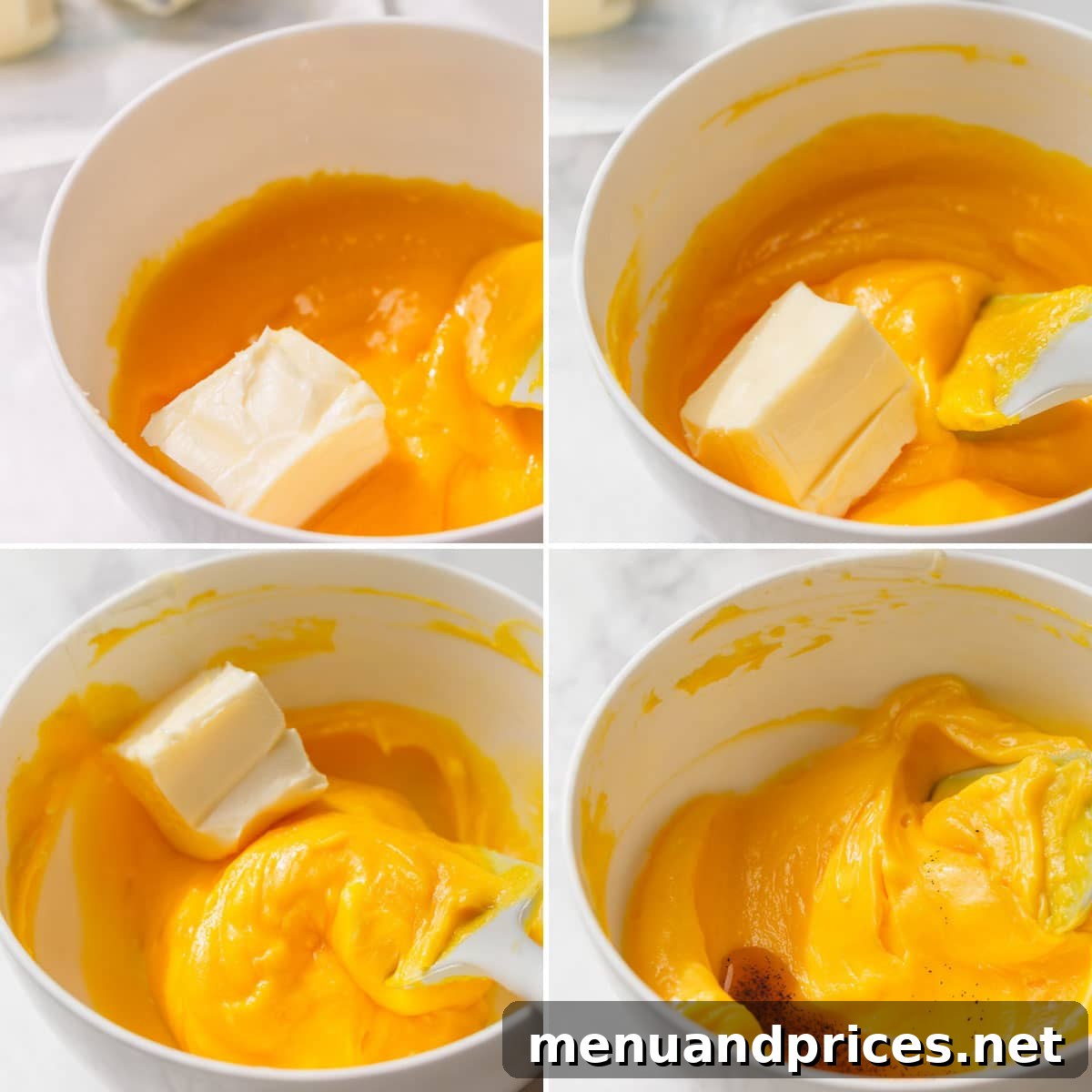
Once your cooked egg yolk mixture has reached room temperature, it’s time to introduce the butter. Ensure your unsalted butter is genuinely softened – it should yield slightly when pressed but not be melted or greasy. Add the butter in three separate batches, folding it into the egg yolk mixture. After each addition, mix thoroughly until the butter is fully incorporated and the mixture is smooth before adding the next batch. For this step, I find a sturdy silicone spatula to be incredibly effective for scraping the sides of the bowl and ensuring even mixing.
Finally, stir in the pure vanilla extract. Continue to mix gently until the buttercream is perfectly smooth and homogenous. You’ll notice it beginning to take on that distinct, luxurious buttercream texture.
4. To Whip or Not to Whip: Customizing Your French Buttercream Texture
The final texture of your French buttercream is entirely customizable, depending on its intended use. This choice allows you to adapt the recipe for various desserts:
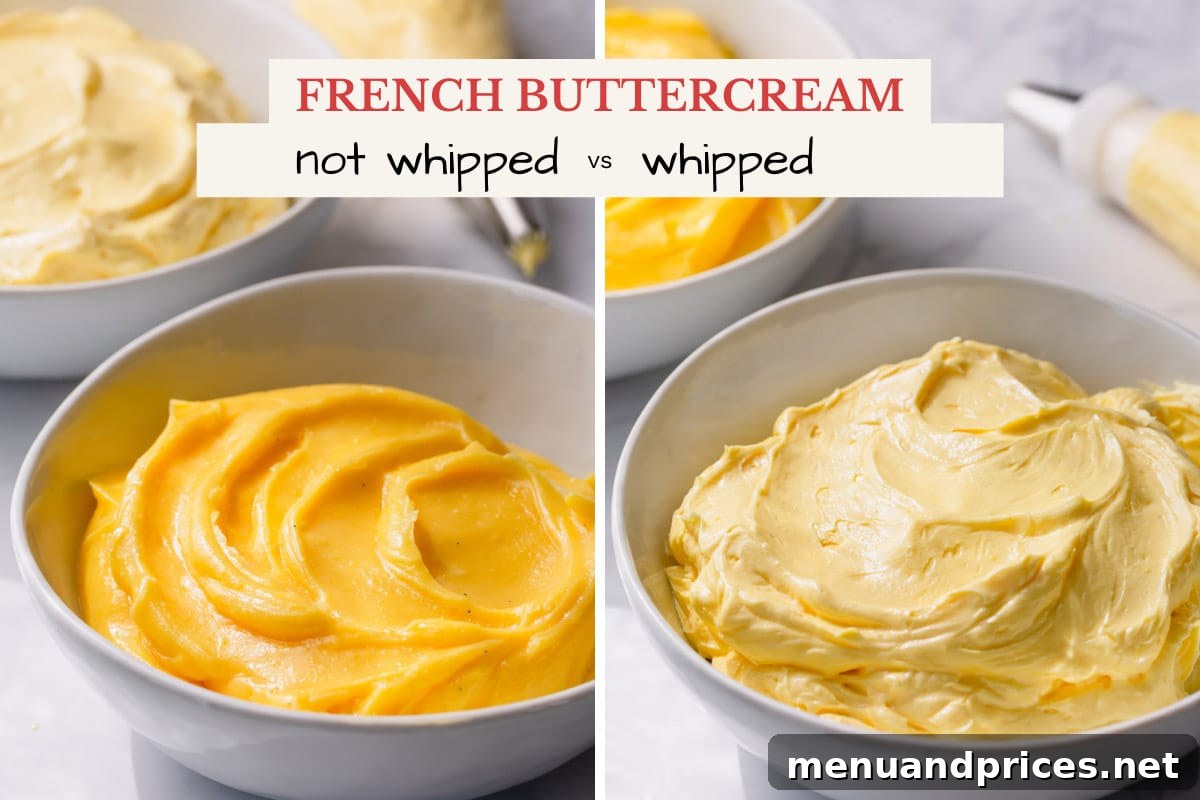
- For Macaron Fillings: When filling delicate macarons, I personally prefer the buttercream’s consistency before any extensive whipping. At this stage, it’s dense, rich, and provides a satisfying chew that pairs beautifully with the crispness of macaron shells, preventing the filling from squeezing out easily.
- For Cakes and Cupcakes: If you’re planning to frost cakes or pipe swirls onto cupcakes, you’ll likely desire a lighter, more airy texture. To achieve this, simply whip the buttercream with your electric mixer for a few extra minutes until it becomes noticeably fluffy and increased in volume. This creates a beautifully piped finish and a lighter mouthfeel perfect for larger desserts.
French Buttercream Troubleshooting: Common Issues & Quick Fixes
Even the most experienced bakers encounter challenges. Here are solutions to common French buttercream issues:
Why is my buttercream soupy or runny?
This is a very common issue and almost always points to temperature problems. Most likely, either your cooked egg yolk mixture was not adequately cooled to room temperature before you added the butter, or your softened butter was too warm or even slightly melted. French buttercream is an emulsion, and precise temperature control is key for it to set correctly.
To fix this issue: Don’t panic! Simply place the entire bowl of soupy buttercream into the refrigerator. Let it chill for 15-30 minutes, allowing the butter to firm up. After chilling, remove it from the fridge and stir it again vigorously with your electric mixer or spatula. As the butter hardens, the buttercream should thicken up and come together beautifully. If it’s still too soft, repeat the chilling process.
Why is my buttercream lumpy or hard to stir?
This usually indicates that your butter was not soft enough when you incorporated it, or the overall mixture is too cold. Cold butter won’t emulsify properly with the egg yolk mixture, leading to a lumpy, sometimes grainy texture.
To fix this issue: Let the mixture sit at room temperature for a while to allow the butter to soften further. Once it has warmed slightly, stir it again with your electric mixer or beat it by hand. If you’re in a hurry, you may carefully warm the bowl slightly over a double boiler or briefly microwave it (in very short 5-second bursts), stirring constantly. However, exercise extreme caution to avoid melting the butter too much, as this will lead to the soupy issue described above. The goal is just to gently warm and soften the butter enough for it to integrate smoothly.
Creative French Buttercream Flavor Variations
One of the joys of making this basic French buttercream is its incredible versatility. You can easily customize this foundational recipe with an array of flavorings and colorings to match any dessert theme or personal preference. Let your creativity shine!
- Rich Infusions: Just like popular American buttercream, you can effortlessly incorporate melted and cooled chocolate for a decadent chocolate buttercream, swirl in a luxurious caramel sauce, or blend in creamy peanut butter for a nutty twist. Ensure any additions are at room temperature to maintain the buttercream’s stability.
- Aromatic Extracts and Liquors: Experiment with different extracts beyond vanilla – almond, peppermint, lemon, or coffee extracts can completely transform the flavor profile. For an adult-friendly treat, a splash of your favorite liquor like rum, brandy, or a fruit liqueur can add sophisticated depth.
- Vibrant Colors: Don’t hesitate to use food coloring to create visually stunning buttercream. Gel food colorings are usually recommended as they provide intense color without adding excess liquid, which could alter the buttercream’s consistency.
- Fruit Purees: For a fresh, fruity flavor, carefully fold in a small amount of concentrated, cooled fruit puree (like raspberry or passion fruit) after the butter has been incorporated. Start with a tablespoon or two and add more to taste, ensuring it doesn’t thin the buttercream too much.
Storing French Buttercream: Freshness & Freezing Tips
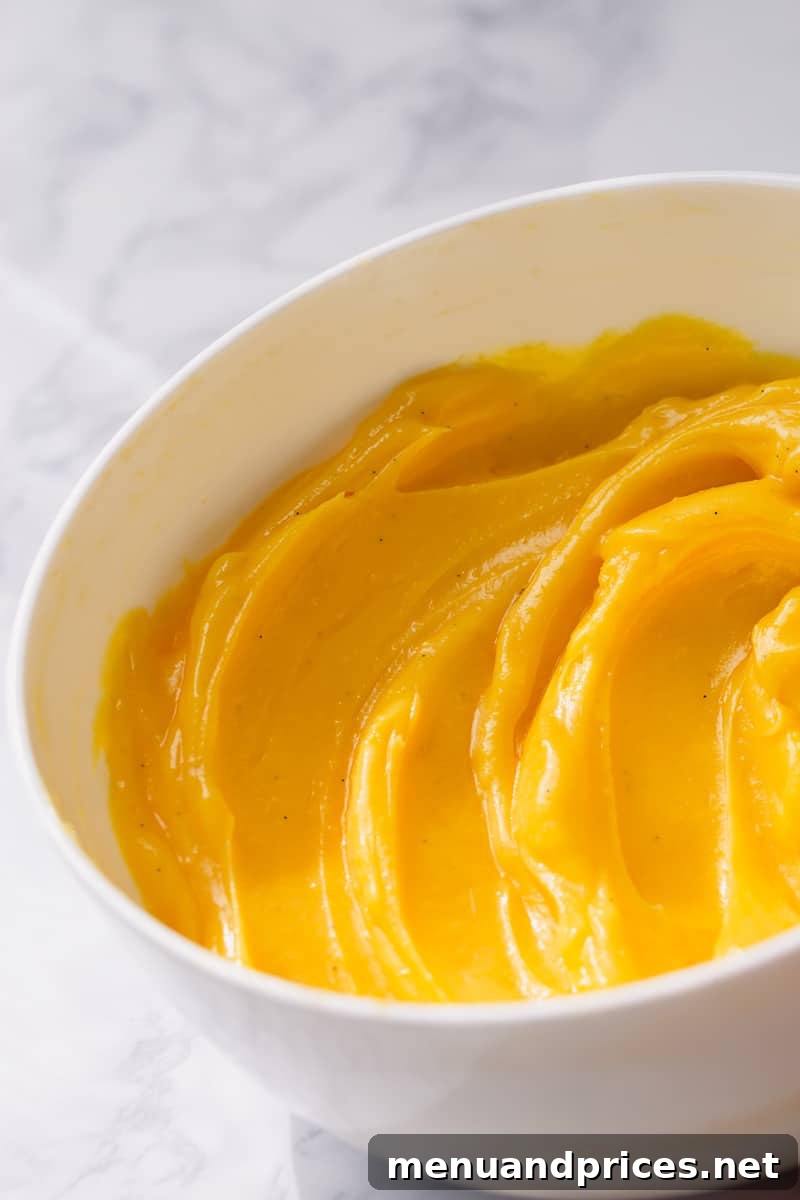
Proper storage is essential to maintain the freshness and quality of your homemade French buttercream:
Refrigeration: For short-term storage, transfer your French buttercream into an airtight container and place it in the refrigerator. It will stay fresh and delicious for up to 3 days. Before using, allow it to come to room temperature, then give it a quick whip with an electric mixer or spatula to restore its creamy texture.
Freezing: French buttercream freezes exceptionally well, making it perfect for preparing ahead or storing leftovers. Place it in a freezer-safe, airtight container and freeze for up to 3 months. To use, thaw the buttercream in the refrigerator overnight. Once thawed, bring it to room temperature on the counter. It might appear separated initially, but a vigorous whip with an electric mixer will bring it back to its original smooth, luxurious consistency.
Watch How to Make It: Video Demonstration
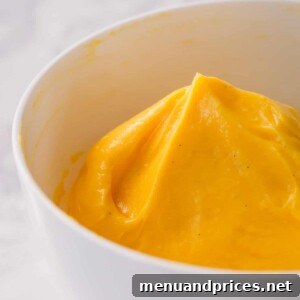
Easy French Buttercream Recipe
Shinee Davaakhuu
15 mins
25 servings
Print Recipe
Ingredients
- 2 large egg yolks
- ¼ cup (50g) granulated sugar
- 3 ½ tablespoons milk
- 1/2 cup (115g) unsalted butter, softened
- 1 teaspoon pure vanilla extract
Instructions
-
Using an electric hand mixer or immersion blender with a whisk attachment, whisk the egg yolks and sugar until the mixture is thick, pale, and most of the sugar is dissolved. Stir in the milk until combined. (TIP: Use a bowl with high sides to prevent splattering.)
-
Transfer the egg yolk mixture into a small saucepan. Heat over low heat, stirring frequently and continuously, until it thickens to a pudding-like consistency, about 5 minutes. Pour the mixture into a clean bowl and allow it to cool completely to room temperature.
-
Add the softened unsalted butter in three batches to the cooled egg yolk mixture, mixing well after each addition. A silicone spatula works great for this step.
-
Stir in the pure vanilla extract and continue to mix until the buttercream is smooth and uniform. For macaron fillings, this consistency is ideal.
-
Alternatively, if you prefer a lighter, fluffier frosting for cakes and cupcakes, whip the buttercream with an electric mixer for a few minutes until it becomes airy and increased in volume.
⭐️ Did you make this recipe?
Please leave a review and let us know how you liked it!
Video
Tips & Notes
Freezing Instructions: French buttercream freezes beautifully. Store it in an airtight container in the freezer for up to 3 months. When ready to use, thaw it in the refrigerator overnight, then bring it to room temperature. Whip it gently with an electric mixer if needed to restore its perfect consistency.
Nutrition (per serving)
47 kcal
2 g
1 g
4 g
2 g
34 mg
Dessert
French
Did you make this?
Leave a rating and your feedback. Thank you!