
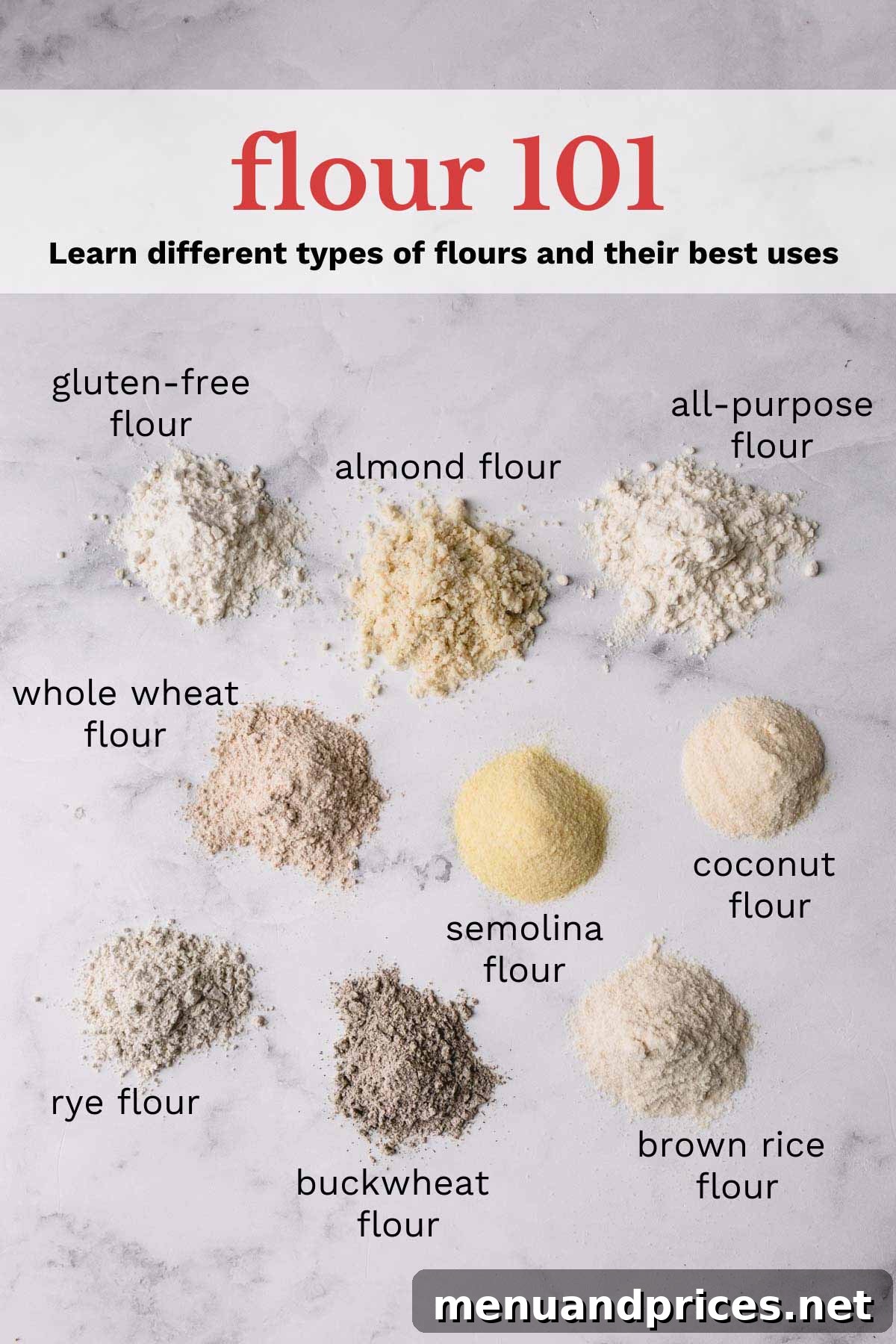
Embark on a culinary journey to master the world of flour with this ultimate guide. From common wheat flour varieties that form the backbone of countless recipes to unique alternative flours opening new doors for specialized diets, we’ll cover everything you need to know to elevate your baking and cooking skills!
What Exactly is Flour?
Flour, a cornerstone of global cuisine for millennia, is a finely ground powder derived from cereal grains, nuts, or other starchy plant materials. Its creation typically involves milling, a process that breaks down the raw ingredient into a fine or coarse powder. While wheat remains the most ubiquitous source globally, flour can be produced from a vast array of ingredients including oats, rye, barley, millet, corn, rice, and even legumes like chickpeas.
In contemporary cooking and baking, the definition has expanded to include flours made from nuts such as almonds and hazelnuts, and pseudo-grains like buckwheat and quinoa. This diverse range allows for incredible versatility in recipes, catering to various dietary needs, flavor preferences, and desired textures in baked goods.
The Crucial Role of Flour in Baking and Cooking
Understanding the unique properties of each type of flour is paramount for achieving successful culinary results. The primary factor influencing flour’s behavior in baking, particularly with wheat-based varieties, is its protein content. This percentage directly correlates with the amount of gluten that will develop when the flour is mixed with liquid and kneaded.
Gluten, a protein composite, is responsible for forming an elastic network that traps gases produced by leavening agents (like yeast or baking powder), allowing baked goods to rise and develop structure. A higher protein content means more gluten will form, resulting in a chewier, firmer texture, ideal for breads. Conversely, lower protein flours yield a more tender, delicate crumb, perfect for cakes and pastries.
Understanding Gluten Content
The more gluten present and developed in a recipe, the firmer, chewier, and more elastic the final baked product will be. This is why bread flours have high protein, while cake flours have low protein. The intricate balance of protein, starch, and other components in flour dictates its interaction with moisture, fats, and leavening agents, making the right choice of flour a foundational step for any recipe.
Beyond wheat, alternative flours like almond, coconut, and rice flour are indispensable for grain-free and gluten-free diets. However, these flours behave dramatically differently from wheat flour. They absorb moisture at varying rates, lack gluten, and often require binders or specific ratios to achieve desired textures. Selecting the appropriate flour is not just about dietary compliance; it’s about engineering the perfect texture, flavor, and rise for your culinary creations.
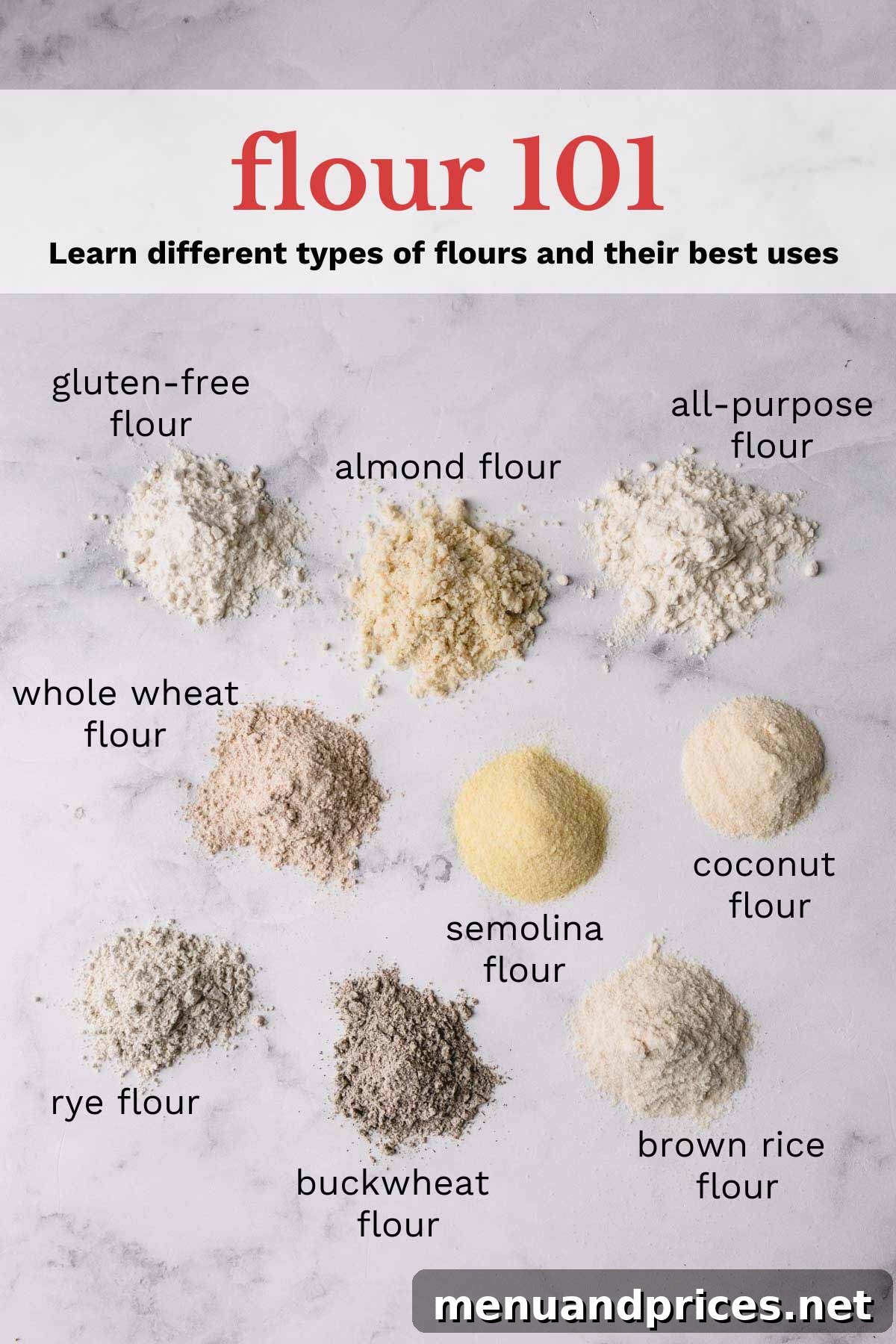
Explore the Diverse World of Flours: Varieties and Their Best Uses
To truly master baking, it’s essential to understand the characteristics and ideal applications for various flour types. Here’s a detailed look at some of the most commonly used flours, from versatile wheat options to popular gluten-free alternatives:
All-Purpose Flour (AP Flour)
All-purpose flour, often abbreviated as AP flour, is the most common and versatile wheat-based flour available. With a moderate protein content typically ranging from 10% to 12%, it strikes a balance that allows it to perform well in a wide array of recipes. Its medium protein level means it can develop enough gluten for some structure, as seen in crusty breads, yet remains tender enough for lighter baked goods such as delicate cakes and fluffy muffins.
True to its name, all-purpose flour was specifically developed to be a general-purpose flour, making it an excellent choice for home bakers who want one reliable flour for most needs. If a recipe doesn’t specify a particular type of flour, AP flour is almost always a safe and effective choice. It’s available bleached or unbleached; unbleached is generally preferred by experienced bakers for its slightly stronger gluten and natural color.
Protein content: 10-12%
Best in: Classic Linzer cookies, blueberry cheesecake muffins, apple coffee cake, soft sandwich breads, meat hand pies, cookies, pie crusts, and general thickening.
Bread Flour
Bread flour is a robust wheat flour specifically designed for yeast-leavened breads. It boasts a high protein content, typically ranging from 12% to 16%. This elevated protein level is key to developing a strong, elastic gluten network during kneading, which is crucial for bread’s structure. The strong gluten allows the dough to capture and hold more carbon dioxide gas produced by the yeast, resulting in a significant rise and an ultimately chewier crumb texture.
The high protein in bread flour provides the necessary strength and elasticity to produce well-structured loaves with a satisfying chew. It helps baked goods maintain their shape and prevents them from collapsing, making it the preferred choice for items that require a firm, airy, yet resilient interior. Using bread flour can significantly improve the volume, texture, and overall quality of your homemade bread.
Protein content: 12-16%
Best in: Artisan loaves, bagels, sandwich bread, homemade pretzels, pizza dough, and cinnamon rolls.
Whole-Wheat Flour
Whole-wheat flour is distinct from white flours because it is produced by grinding the entire wheat kernel – including the bran, germ, and endosperm. This minimal processing ensures that the flour retains all the beneficial nutrients, fiber, and healthy fats found in the whole grain. The presence of the bran and germ gives whole-wheat flour a darker color, a coarser texture, and a distinctive nutty, earthy flavor profile.
Due to its higher fiber content and the sharp edges of the bran, whole-wheat flour can inhibit gluten development, leading to denser baked goods. When substituting whole-wheat flour in recipes designed for white flour, it’s generally recommended to replace no more than 25-50% of the white flour to prevent the final product from becoming too dry or overly dense. For a lighter texture, you can also consider using “white whole wheat flour,” which is made from a lighter variety of wheat but still retains all the components of the whole grain.
Protein content: 11-15%
Best in: Hearty rolls, crackers, rustic muffins, wholesome sandwich bread, pancakes, and certain types of cookies.
Self-Rising Flour
Self-rising flour is a convenient pre-mixed flour that simplifies baking by combining plain (all-purpose) flour with a precise amount of leavening agent (baking powder) and a touch of salt. This blend is specifically formulated to eliminate the need for adding these ingredients separately, making it ideal for certain quick breads and pastries where a consistent rise is desired without extra measuring.
It is crucial to use self-rising flour only in recipes that explicitly call for it. Attempting to substitute it for all-purpose flour in a standard recipe (which typically includes its own leavening agents) can lead to an overabundance of baking powder. This can result in an overly rapid rise followed by a collapse, a dry or crumbly texture, and often an undesirable metallic or “aluminum” aftertaste. Always check your recipe carefully before reaching for self-rising flour.
Protein content: 8-9%
Best in: Fluffy biscuits, light pancakes, quick-breads, some Southern-style cakes, and scones.
Cake Flour
Cake flour is the connoisseur’s choice for delicate and tender baked goods. It is a low-protein wheat flour, typically containing only 7% to 9% protein, which minimizes gluten development. This characteristic is precisely what gives cakes, cupcakes, and pastries their famously soft, airy, and velvety texture. Cake flour is often finely milled and sometimes bleached, a process that further weakens its protein structure and makes it slightly more acidic, allowing it to absorb more liquid and sugar.
The reduced protein content in cake flour means less gluten is produced when mixed, preventing a tough or chewy texture. Instead, it promotes a delicate crumb that practically melts in your mouth. For the best results in truly fine baking, especially for items where a light, tender crumb is paramount, cake flour is an indispensable ingredient. If you don’t have cake flour, you can create a reasonable substitute by replacing 2 tablespoons of all-purpose flour with 2 tablespoons of cornstarch per cup of AP flour.
Protein content: 7-9%
Best in: Angel food cake, Chantilly cake, delicate cupcakes, sponges, and fine pastries.
Pastry Flour
Nestled between all-purpose flour and cake flour in terms of protein content (around 8-9%), pastry flour is another specialized wheat flour designed for tender results. Its slightly higher protein than cake flour allows for a bit more structure, while still yielding a delicate and flaky texture. Pastry flour is unbleached and produces a very tender crumb, making it ideal for applications where a light touch is needed without the extreme fragility of cake flour.
This flour is particularly excellent for recipes that require a balance between tenderness and a slight chew, ensuring the finished product isn’t too crumbly but also not overly dense. It’s less commonly found in standard grocery stores than AP or cake flour but is a gem for those serious about their pies and tarts. If unavailable, a 50/50 blend of all-purpose and cake flour can serve as a decent substitute.
Protein content: 8-9%
Best in: Pie crusts, tarts, cookies, scones, biscuits, and muffins where a tender, flaky crumb is desired.
Gluten-Free Flour Blends
Gluten-free flour isn’t a single ingredient but rather a carefully formulated blend of various flours, starches, and often a gum (like xanthan gum) engineered to mimic the properties of wheat-based all-purpose flour. Since individual gluten-free flours lack gluten – the protein that provides structure and elasticity – they are often combined to achieve a balanced texture and performance in baking.
The starches in these blends (such as tapioca starch, potato starch, or cornstarch) provide much-needed structure and lightness to baked goods, while ingredients like xanthan gum act as a binder, replacing gluten’s ability to hold ingredients together and preventing a crumbly texture. When baking gluten-free, it’s crucial to use a “1:1 all-purpose” gluten-free blend if you’re substituting it for regular flour in a recipe. These blends are specifically designed to be swapped in equal measure, simplifying gluten-free baking. Always check the ingredient list of your specific blend, as some already contain xanthan gum, while others may require you to add it separately.
Protein content: Varies significantly from brand to brand and blend composition.
Best in: A wide range of gluten-free baked goods including quick breads, cookies, cakes, muffins, brownies, and pancakes.
Rye Flour
Rye flour is milled from rye kernels and offers a distinct, robust, and nutty flavor that sets it apart from wheat flours. It is famously known as the key ingredient in pumpernickel and sourdough rye breads. Rye flour contains gluten, but it’s less elastic than wheat gluten, resulting in denser baked goods. The color of rye flour can vary significantly, ranging from light to dark, depending on how much of the bran and germ are included during milling.
Light rye flour, which has less bran, produces a milder flavor and lighter color, while dark rye flour, with more of the outer layers of the grain, imparts a stronger, more intense flavor and a darker hue. Due to its lower gluten elasticity, rye flour is often combined with stronger wheat flours (like bread flour or all-purpose flour) to improve the structure and rise of bread. Its unique flavor profile makes it a favorite for adding complexity to savory and rustic baked goods.
Protein content: 8-13%
Best in: Sourdough bread, dense rustic loaves, crackers, traditional pumpernickel bread, crispbreads, and some savory muffins.
Semolina Flour
Semolina is a coarse-grained flour derived from durum wheat, a particularly hard variety of wheat. Unlike softer wheat flours, durum wheat is known for its high protein content and strong gluten, which is essential for creating robust, firm pasta. Semolina has a distinctive golden color and a coarse, sandy texture, along with an earthy, slightly sweet flavor.
Its high protein and gluten content enable pasta to maintain its shape during cooking, preventing it from becoming mushy and ensuring a perfect al dente bite. While best known for pasta, semolina flour also contributes a unique texture and flavor to certain breads, giving them a crispy crust and a chewy interior. It can also be found in some dessert recipes, adding a pleasant grainy texture to cakes and cookies.
Protein content: Approximately 13%
Best in: Homemade pasta (especially ravioli and lasagna), firm bread, gnocchi, couscous, and some specialty cakes and desserts.
Buckwheat Flour
Despite its misleading name, buckwheat is not a type of wheat and is, in fact, naturally gluten-free. It’s a pseudo-grain, meaning it’s a seed used in the same way as grains. Buckwheat flour is milled from these seeds and possesses an intense, earthy, and somewhat robust flavor that can be quite assertive on its own. It’s often recognized for its darker color and slightly gritty texture.
Because of its strong flavor, buckwheat flour is frequently blended with milder flours (both gluten-containing and gluten-free) to balance the taste in recipes. It’s a popular choice in gluten-free baking due to its nutritional benefits and unique flavor profile. Its lack of gluten means it requires other ingredients or flour combinations to provide structure in baked goods.
Protein content: Approximately 5-8%
Best in: Hearty pancakes, blinis, soba noodles, muffins, gluten-free bread recipes (often in combination with other flours), and galettes.
Rice Flour
Rice flour is a versatile gluten-free flour made by finely grinding different varieties of raw rice. It is commonly available in both white rice flour (from polished rice) and brown rice flour (from whole grain rice). Both types are naturally gluten-free and react similarly in recipes, though brown rice flour offers a slightly nuttier flavor and more nutritional fiber.
Often used as a direct substitute for wheat flour in gluten-free baking, rice flour can be a bit tricky on its own as it tends to produce a somewhat gritty texture and crumbly results. For this reason, it is most effectively used in combination with other gluten-free flours and starches (like tapioca starch or potato starch) to achieve a more palatable texture and improved binding in baked goods. It’s a staple in many Asian cuisines for thickening sauces and making various sweets.
Protein content: Varies, typically 6-8%
Best in: Gluten-free muffins, cookies, pancakes, crackers, Asian noodles, tempura batter, and thickening sauces.
Almond Flour
Almond flour is a popular grain-free and gluten-free alternative made from blanched (skinless) almonds that have been finely ground into a powder. It’s renowned for its delicate, slightly sweet flavor and moist texture. Rich in healthy fats, protein, and vitamin E, almond flour is a favorite in paleo, keto, and gluten-free diets, offering a nutritious boost to baked goods.
Due to its high fat content, almond flour absorbs less moisture compared to grain-based flours. This characteristic often requires adjustments in liquid ratios in recipes. It also contributes a wonderful richness and tenderness to baked goods, making it less prone to drying out. Almond flour is famously one of the main ingredients for delicate French macarons, providing their signature crisp shell and chewy interior. It’s also excellent for enriching cakes and cookies with a lovely almond flavor.
Protein content: Approximately 20-22%
Best in: Lemon macarons, red velvet macarons, almond cookies, Almond Yogurt Cake, gluten-free pastries, quick breads, and crusts.
Coconut Flour
Coconut flour is a unique and highly absorbent grain-free and gluten-free flour made from the dried, defatted, and finely ground meat of coconuts. It has a distinct, sweet coconut flavor that will impart itself into your baked goods. Rich in fiber and protein, it’s a popular choice for paleo and ketogenic diets, but it behaves very differently from other flours.
Its exceptional absorbency is its most defining characteristic – coconut flour can absorb significantly more liquid than traditional wheat or even almond flours. This means only a small amount is typically needed in recipes, and it often requires a substantial increase in liquids and eggs to prevent dryness. Due to its intense flavor and high absorbency, it doesn’t usually perform well as a standalone flour. It’s best used in smaller quantities or paired with other grain-free flours or starches to achieve optimal texture and balance its strong flavor.
Protein content: Approximately 18-20%
Best in: Grain-free cookies, muffins, pancakes, dense quick breads, and as a thickener in sauces and smoothies.
Conclusion: Mastering Your Flour Choices for Perfect Baking
As we’ve explored, the type of flour you choose is far more than just a minor ingredient; it’s a fundamental component that dictates the texture, structure, flavor, and overall success of your culinary creations. From the robust gluten of bread flour creating chewy loaves to the delicate crumb achieved with cake flour, each variety brings its own unique set of properties to the table. Understanding these nuances—the protein content, moisture absorption, and flavor profile—empowers you to make informed decisions and transform your baking from good to exceptional.
Whether you’re crafting light pastries, hearty breads, or specialized gluten-free treats, knowing how each flour behaves is crucial. Don’t be afraid to experiment, but always start by respecting the specific demands of your recipe. With this comprehensive guide, you’re now equipped with the knowledge to confidently select the right flour, ensuring consistent and delicious results every time you step into the kitchen. Happy baking!
Flour FAQs: Your Baking Questions Answered
For the most accurate and consistent results, especially in sensitive recipes like French macarons or delicate cakes, weighing flour on a digital kitchen scale is highly recommended. This eliminates discrepancies that arise from varying packing methods when using volumetric cups, ensuring your flour measurements are exact and repeatable. While not strictly necessary for every casual recipe, adopting this practice leaves no room for error and significantly improves baking outcomes.
If you are new to baking or cooking, it is generally best to strictly follow the recipe as written to ensure great results. For those with more experience looking to experiment, begin with a conservative substitution of no more than 25-50 percent of the original flour to see how it alters the recipe. Remember that flours vary widely in protein content, moisture absorption, and gluten development, so significant substitutions often require adjustments in liquid, leavening, and other ingredients.
The world of flour is incredibly vast and continues to expand! While our guide covers the most common and widely used varieties, there are well over 30 distinct types of flour available on the market today, ranging from various wheat sub-types to a myriad of gluten-free options like chickpea, teff, oat, potato, and corn flours. This number constantly grows as new grains and processing methods are introduced.
Bleached flour is chemically treated (typically with chlorine gas or benzoyl peroxide) to whiten it and speed up its aging process, which also weakens its protein structure slightly. Unbleached flour is aged naturally, resulting in a slightly off-white color and a slightly stronger, more resilient gluten. For most home baking, the difference is minimal, but some bakers prefer unbleached for its natural qualities and slightly better gluten development, especially in bread.
Proper storage is essential to prevent flour from going rancid or attracting pests. Store most flours, especially whole grain and gluten-free varieties (which contain more oils), in an airtight container in a cool, dark, and dry place like a pantry. For extended freshness, particularly for whole wheat, nut flours, or if you live in a warm climate, consider storing flour in the refrigerator or freezer. This can significantly prolong its shelf life.