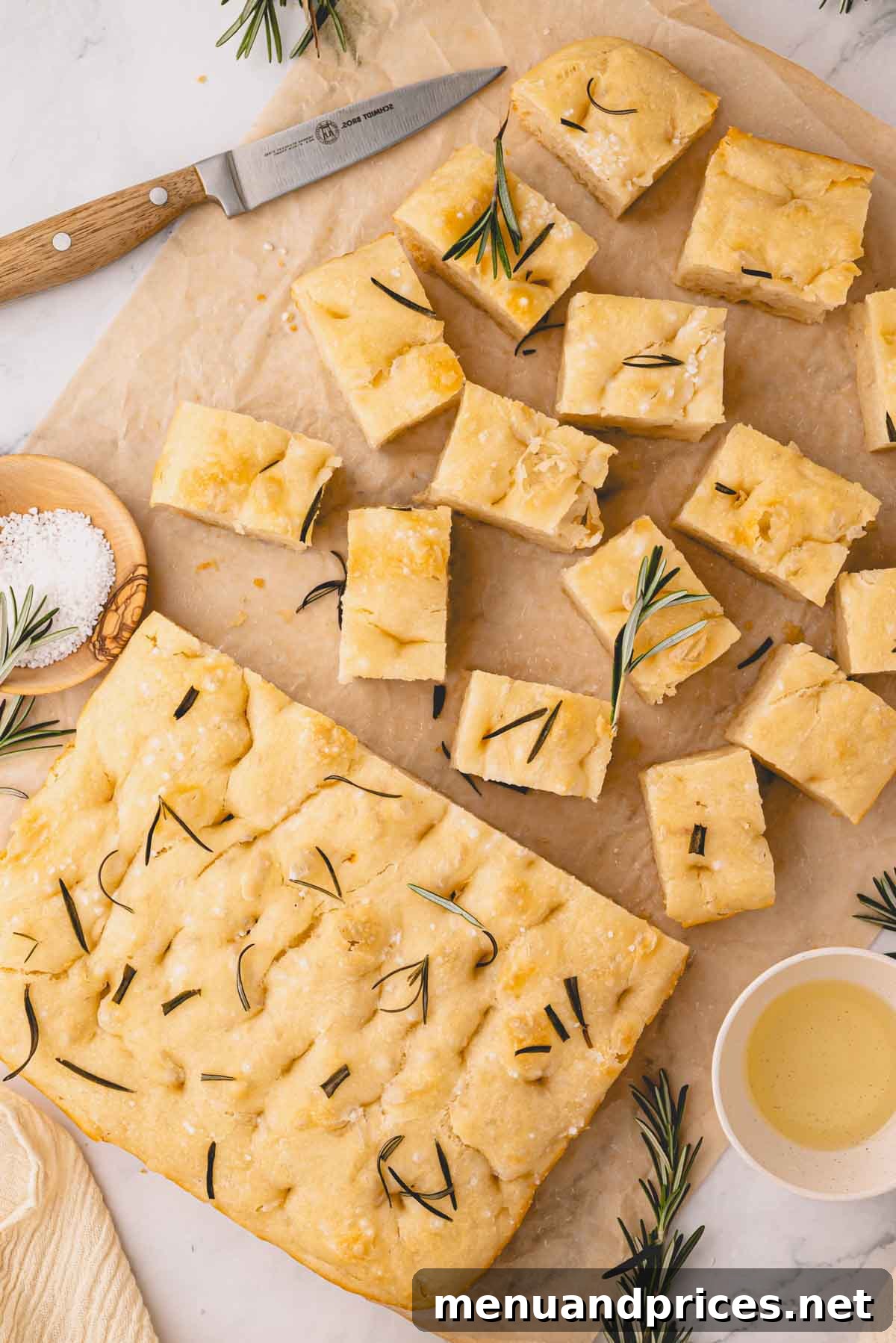
Unlock the secrets to baking the most exquisite **easy overnight focaccia bread recipe** that rivals your favorite Italian restaurants – and often, tastes even better! My simple, foolproof process guarantees a perfectly crisp crust, an incredibly airy, open crumb, and a delightful herbaceous flavor every single time. Get ready to impress yourself and your loved ones with this bakery-quality bread, made effortlessly in your home kitchen.
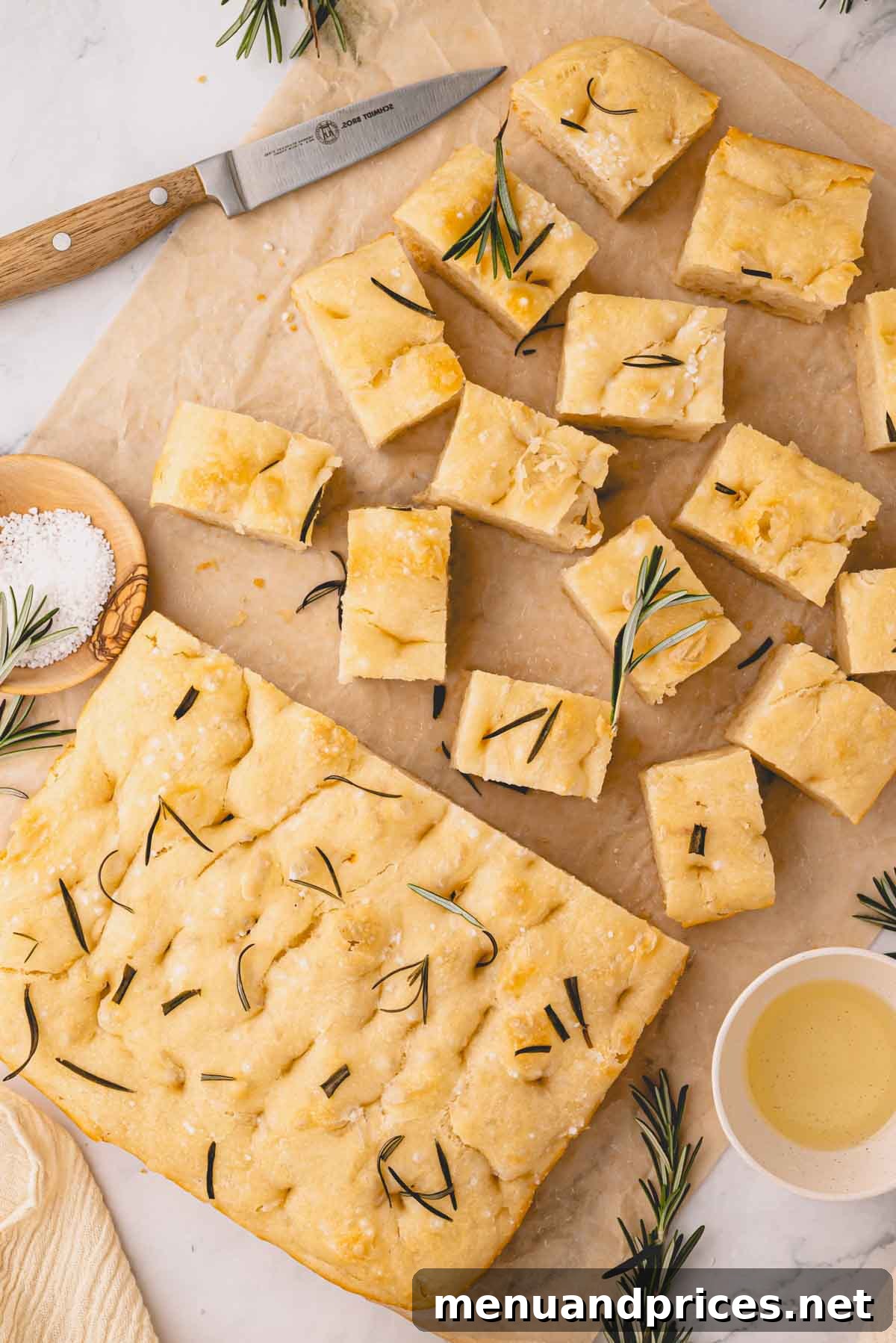
If you’re yet to experience the joy of freshly baked focaccia, you’ve been missing out on a culinary masterpiece! This Italian flatbread holds a special place in my heart, right alongside chocolate, as one of life’s true delights. Imagine a delightful fusion of homemade pizza dough and a thick, soft flatbread, often reminiscent of a luxurious garlic bread. Yet, focaccia is truly a unique creation, distinguished by its irresistible texture and versatile charm. And the best part? It’s surprisingly easy to make, especially with this overnight method that enhances flavor and simplifies your baking day.
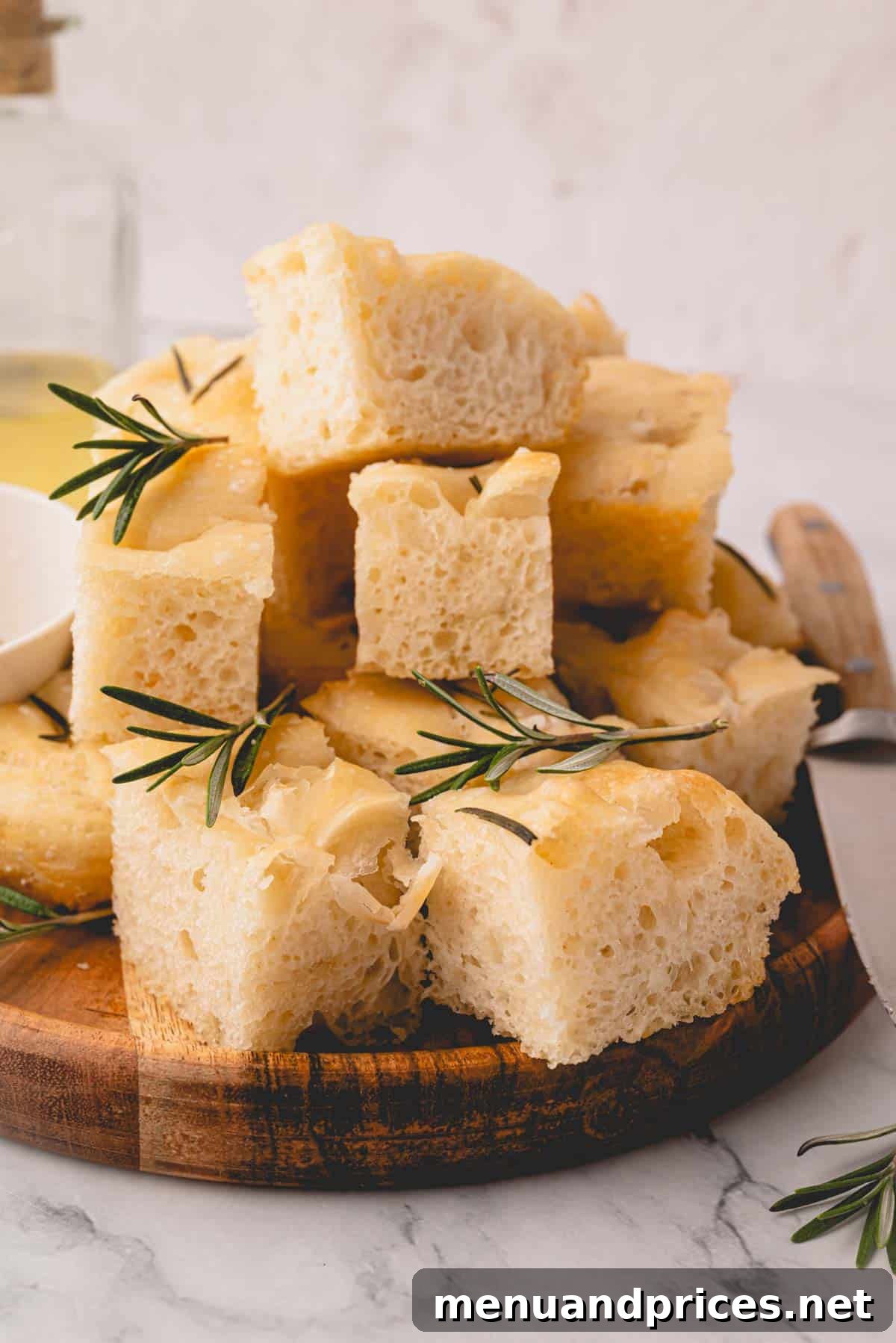
This recipe transforms humble ingredients into a spectacular bread that tastes like it came straight from a skilled Italian baker. The magic lies in the slow, cold fermentation, which develops incredible depth of flavor and creates those signature airy pockets within the dough. Whether you’re a seasoned baker or just starting your bread-making journey, this guide will lead you to perfect focaccia with minimal fuss.
Table of Contents: Your Guide to Perfect Focaccia
- Why You’ll Adore This Easy Focaccia Recipe
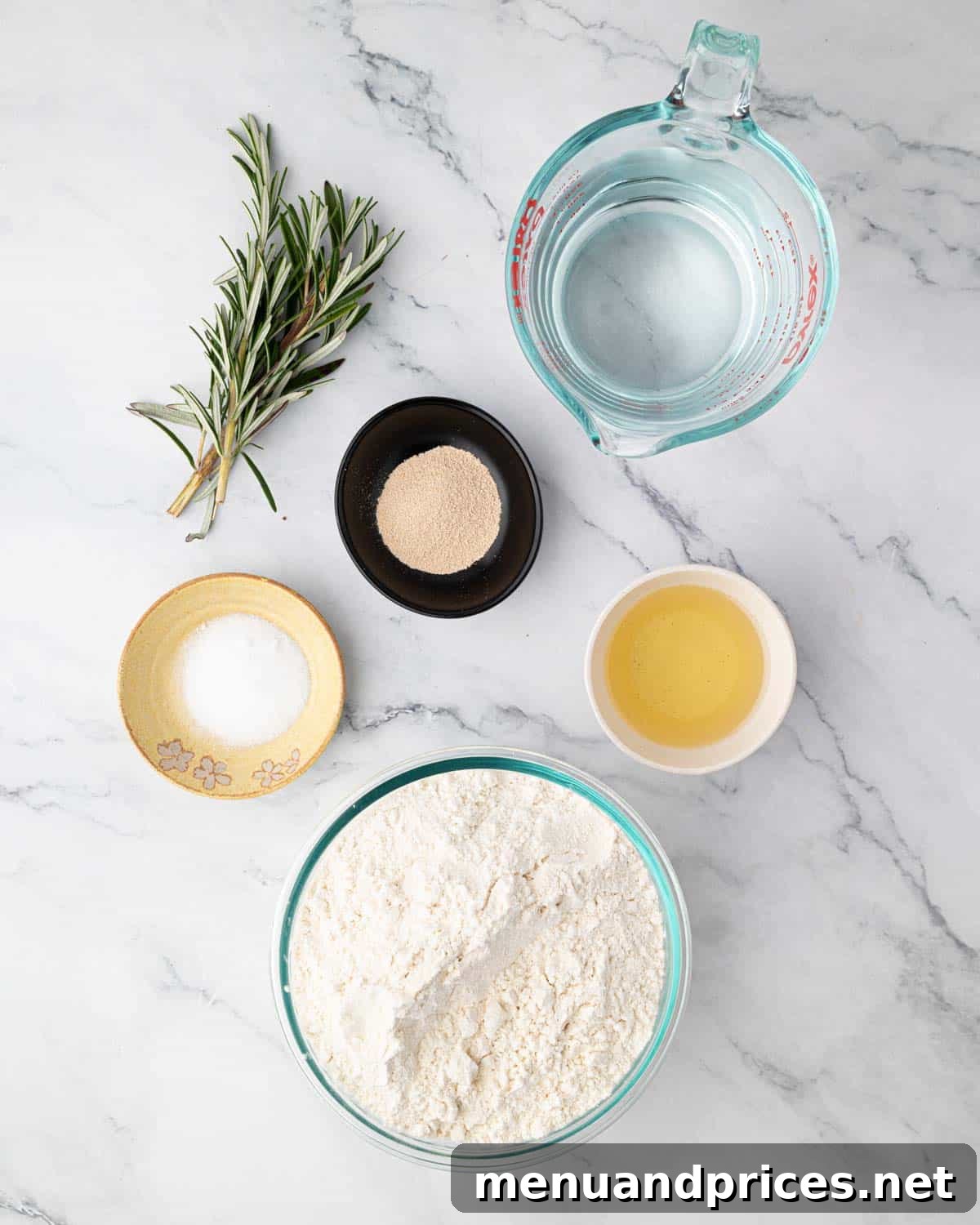
- Essential Ingredients for Flawless Focaccia
- Step-by-Step: Crafting Your Overnight Focaccia Bread
- Expert Tips for Focaccia Success
- Delicious Ways to Serve Your Focaccia
- Make-Ahead Mastery: Preparing Focaccia in Advance
- Storing Your Homemade Focaccia
- Focaccia FAQs: Your Questions Answered
- Explore More Easy Bread Recipes
- Easy Overnight Focaccia Bread Recipe Card
Why You’ll Adore This Easy Focaccia Recipe
This isn’t just another bread recipe; it’s an invitation to effortlessly create something truly special. Here’s why this overnight focaccia will become your go-to:
- Minimal & Accessible Ingredients: You only need 8 fundamental ingredients to create this simple focaccia bread recipe, and one of them is water! These common pantry staples come together to form a bread that is far greater than the sum of its parts. You won’t need to hunt for exotic items; everything is readily available, making this a stress-free baking project.
- Hands-Off Preparation for Maximum Flavor: While some bread recipes demand constant attention, this focaccia is incredibly forgiving and mostly hands-off. The bulk of the “prep time” involves allowing the dough to rest and proof overnight, which is essential for developing complex flavors and that signature airy texture. Your active involvement is limited to a few simple whisking, gentle folding, and satisfying dimpling steps – perfect for busy schedules!
- Incredibly Versatile & Customizable: This baked focaccia is a true chameleon in the kitchen. It’s utterly delicious on its own, showcasing its natural flavors. However, it also serves as a fantastic canvas for creativity. I love to experiment with various mix-ins and toppings, much like adding exciting elements to sourdough bread. From savory herbs and olives to sweet fruits and cheeses, the possibilities are endless for tailoring it to your taste.
As written, this recipe generously yields 12 servings, making it ideal for large family dinners, special gatherings, or simply enjoying throughout the week. It’s perfect as an impressive appetizer, a comforting side dish, or even the star of a gourmet sandwich.
Pin this now to find it later
Pin It
Essential Ingredients for Flawless Focaccia
The beauty of focaccia lies in its simple ingredient list. Each component plays a vital role in achieving that perfect texture and flavor. Here’s a closer look at what you’ll need and why it matters:
- Flour: The foundation of any great bread. For this recipe, you have two excellent choices. **All-purpose flour** is widely available and consistently delivers great results, producing a tender crumb. However, if you’re seeking a slightly chewier, more authentic Italian focaccia, I highly recommend using **bread flour**. Its higher protein content contributes to better gluten development, resulting in a more structured yet airy loaf. Learn more about different types of flour and their uses.
- Salt: Far more than just a seasoning, salt is absolutely crucial in bread making. It enhances the flavor of the dough, balancing the sweetness and richness, and crucially, it regulates yeast activity. Without enough salt, your bread can taste bland and proof too quickly. Don’t be tempted to skip or drastically reduce it!
- Instant Yeast: This is your secret weapon for an easy and efficient focaccia. Instant yeast is designed to be added directly to dry ingredients without prior proofing, and it works faster than active dry yeast. This significantly streamlines the preparation process, keeping this recipe wonderfully simple and suitable for an overnight rise, allowing flavors to deepen beautifully. Discover more about different types of yeast.
- Olive Oil: A star ingredient in any authentic homemade focaccia bread recipe, high-quality olive oil is non-negotiable. It infuses the bread with its characteristic rich, fruity flavor, contributes to a delicate, airy interior, and, most importantly, creates that irresistible crisp, golden-brown crust. Choose an extra virgin olive oil that you genuinely enjoy the taste of, as its flavor will shine through in the final product.
- Water: Lukewarm water (around 95°F) is ideal for activating the instant yeast without shocking it. It’s the hydration element that brings the dough together and allows for gluten development.
- Butter (for pan): While olive oil is central to the bread itself, a little butter spread in the baking pan alongside olive oil creates an extra layer of non-stick protection and contributes to an even more flavorful and perfectly browned bottom crust.
- Flaky Sea Salt & Fresh Rosemary (Optional but recommended): These toppings elevate the focaccia from good to extraordinary. Flaky sea salt provides bursts of briny crunch, while fresh rosemary adds a fragrant, herbaceous aroma and taste that is quintessential to classic focaccia.
Step-by-Step: Crafting Your Overnight Focaccia Bread
Creating this easy overnight focaccia is a straightforward and rewarding process. Follow these steps for a perfect loaf:
1. Initiate the Dough: Mixing & Resting for Hydration
The journey to perfect focaccia begins with a simple mix and a crucial resting period:
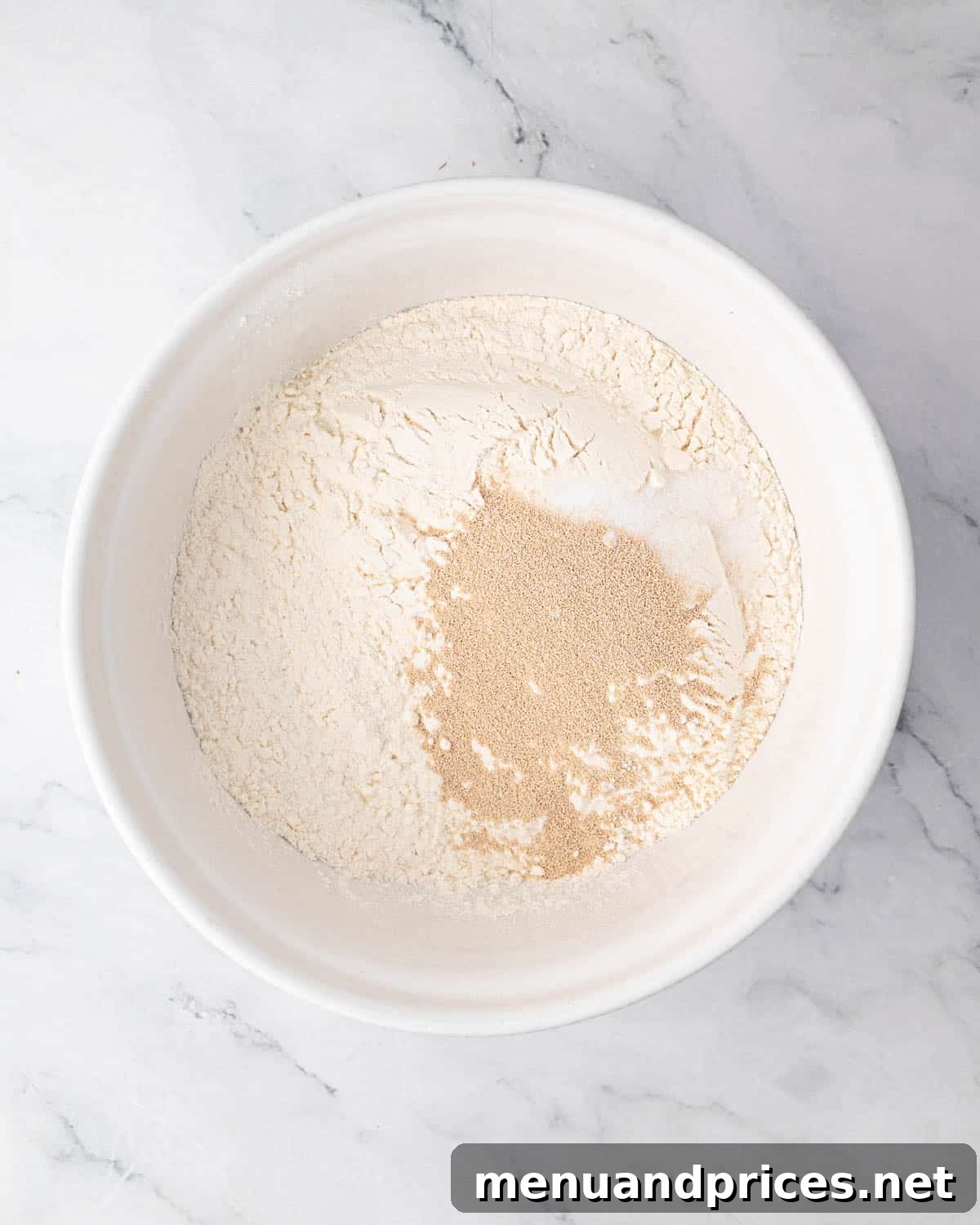
- Whisk Dry Ingredients: In a generously sized mixing bowl, combine the flour, salt, and instant yeast. Whisk them thoroughly to ensure the yeast and salt are evenly distributed throughout the flour. This sets the stage for uniform fermentation and flavor.
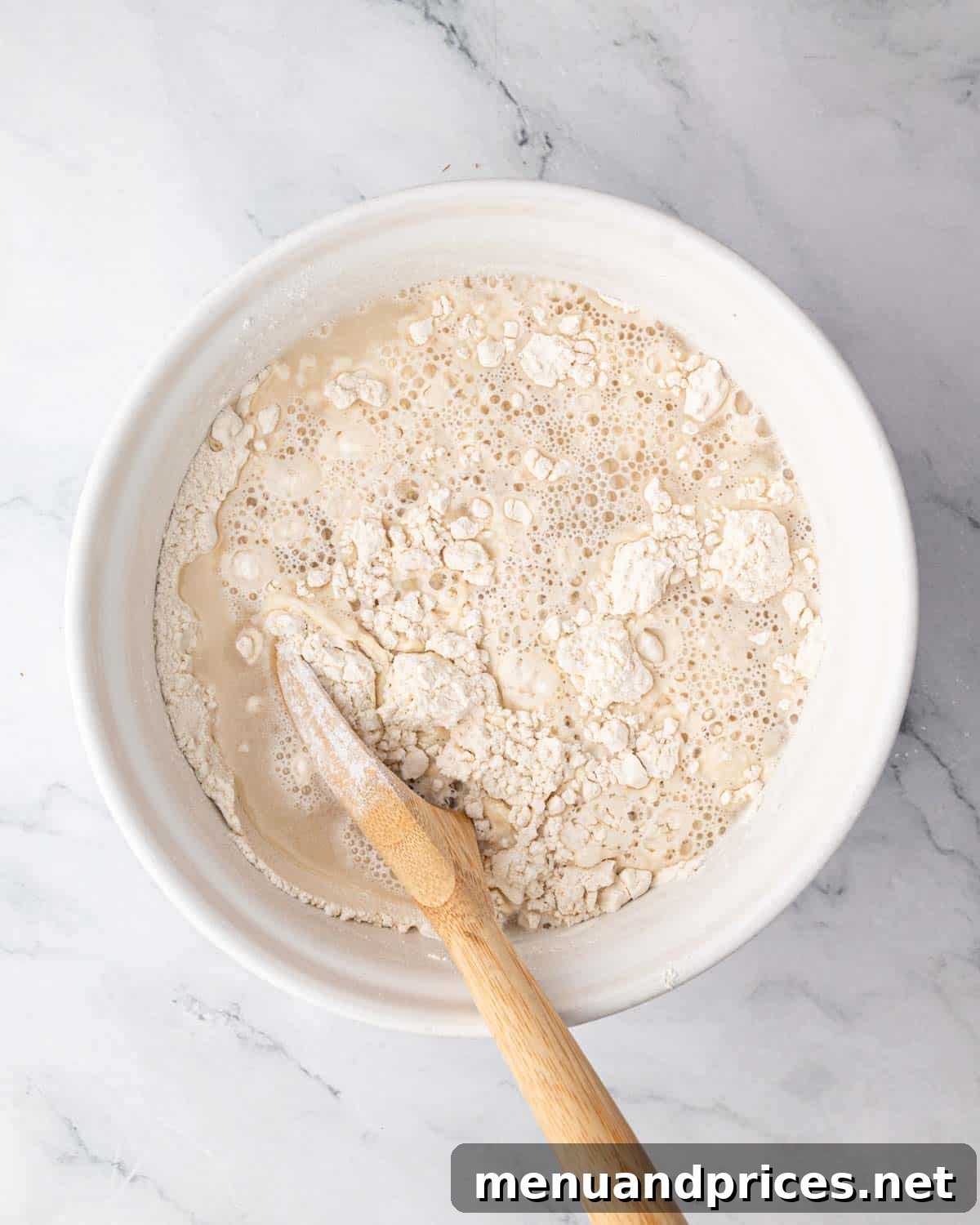
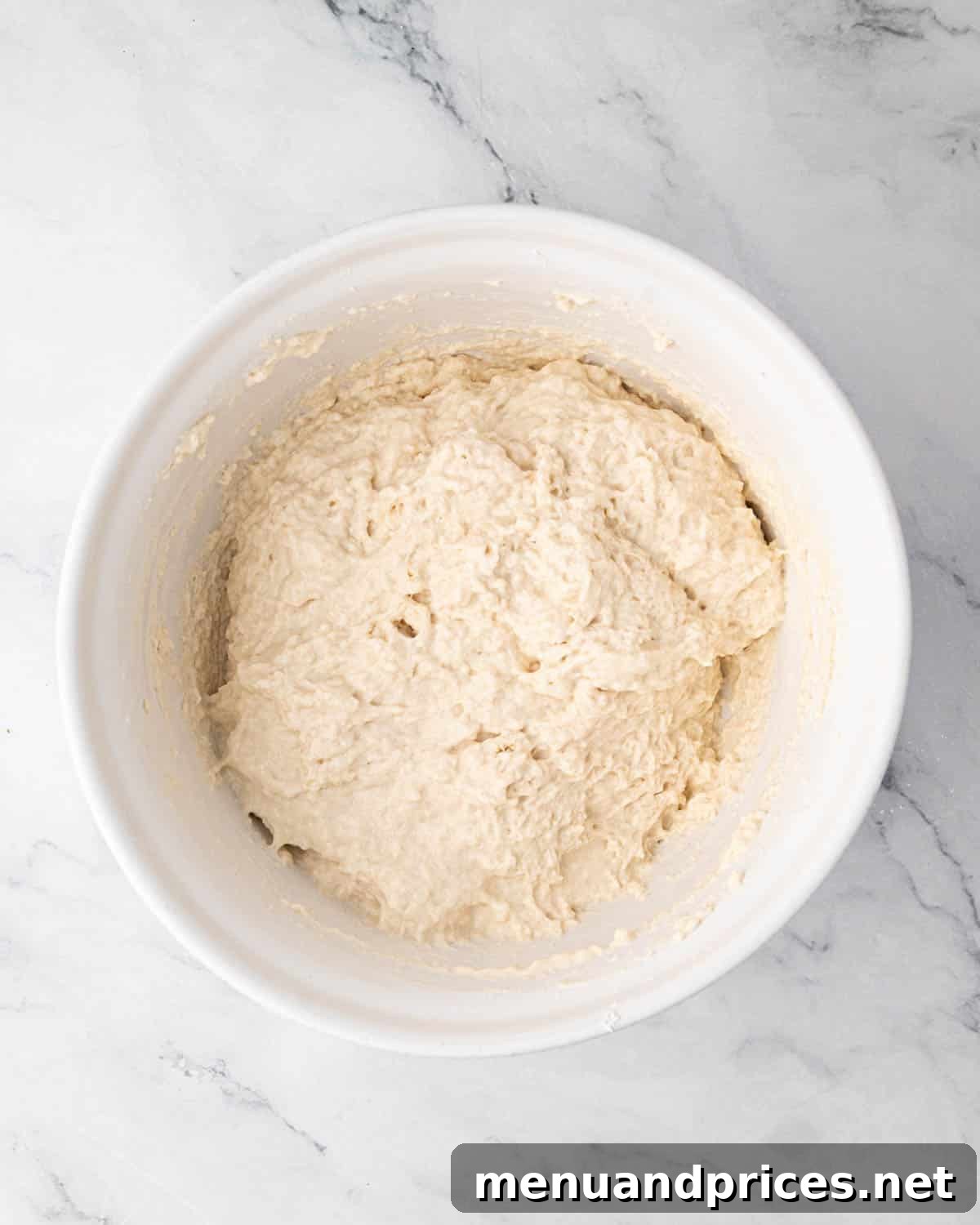
- Add Water & Mix: Pour in the lukewarm water. Using a sturdy spatula or a wooden spoon, mix until all the ingredients are just combined and the dough comes together in what’s known as a sticky, shaggy ball. At this stage, it won’t be smooth or elastic, and that’s perfectly normal. Avoid overmixing; gentle incorporation is key.
- First Rest (Autolyse): Cover the bowl with a clean kitchen towel or plastic wrap and let the dough rest undisturbed for 30 minutes. This essential step, often called an autolyse, allows the flour to fully hydrate and gluten development to begin naturally without much effort from you. It’s crucial for achieving the best taste and that signature airy texture in your finished focaccia.
2. The Overnight Magic: Cold Proofing for Deep Flavor and Texture
The cold proof is where the true flavor and exquisite texture of this focaccia develop. This slow fermentation is the secret to a bakery-worthy loaf:
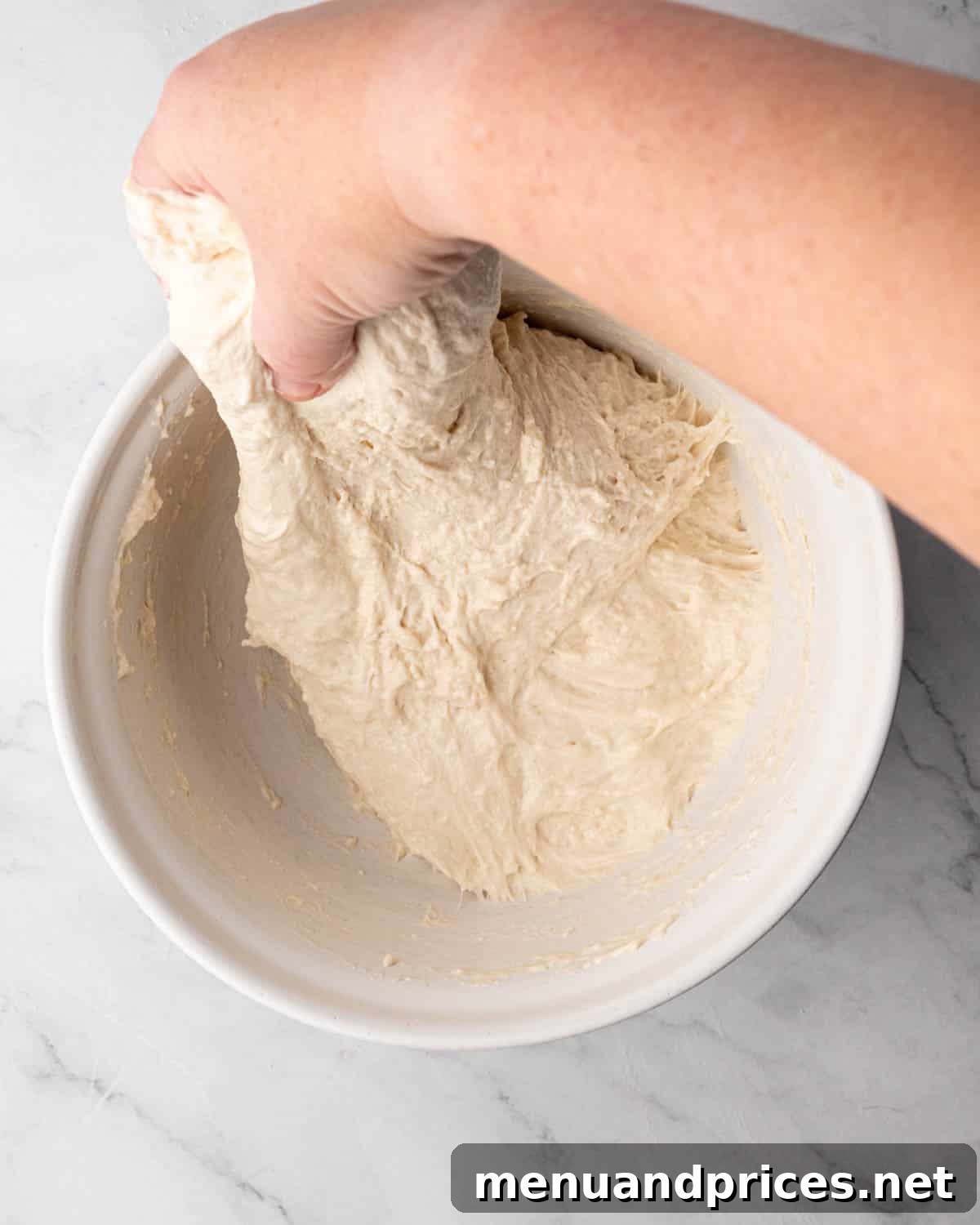
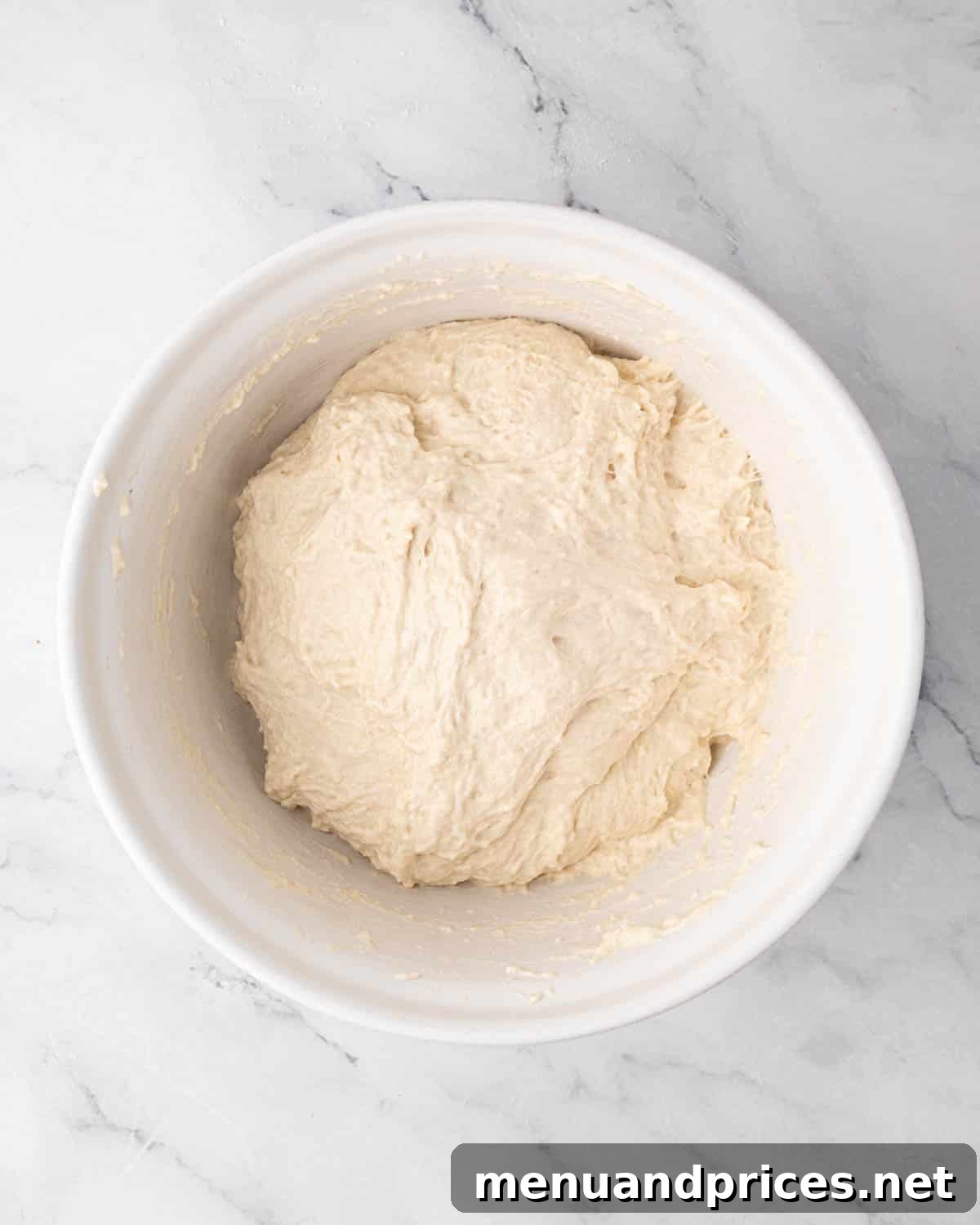
- Gentle Stretch and Fold: After the initial rest, perform one round of gentle stretch-and-fold. Lightly wet your hands (this prevents sticking), then grasp one edge of the dough, gently stretch it upwards, and fold it over the center of the dough. Rotate the bowl a quarter turn and repeat this process until all four edges have been stretched and folded towards the center. While technically optional, I highly recommend this step as it significantly helps in developing gluten structure without extensive kneading, contributing to a light, incredibly airy texture and an open crumb.
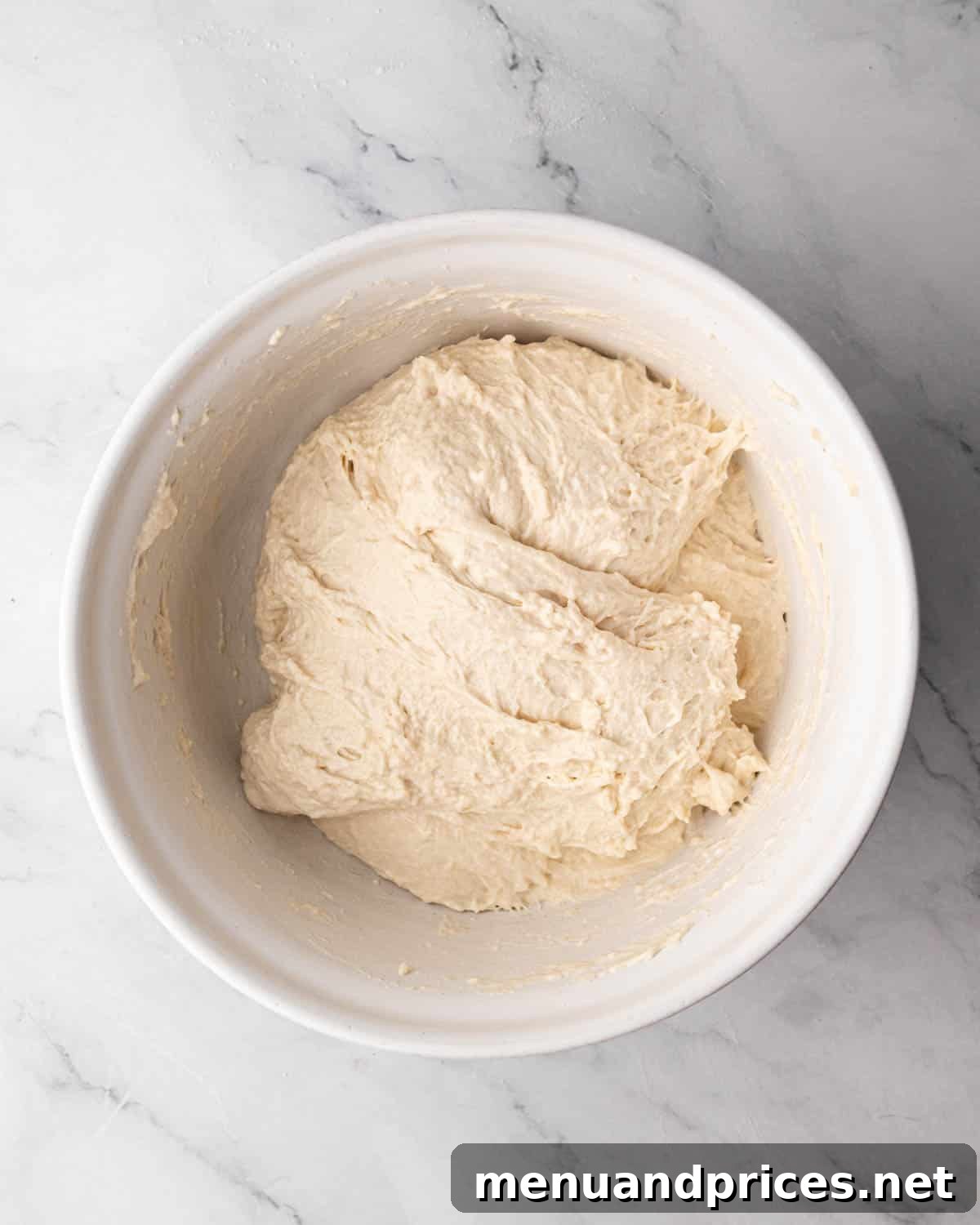
- Prepare for Cold Proof: Lightly grease a large, clean bowl with about 1 tablespoon of olive oil. Transfer the dough into this oiled bowl, turning it once to ensure it’s lightly coated in oil. This prevents drying out and sticking.
- Chill Overnight: Cover the bowl tightly with plastic wrap or a lid. Place the dough in the refrigerator and let it chill for at least 12 hours, and up to 36 hours. This long, cold proof is truly transformative. It allows the yeast to work slowly, developing complex flavors that simply can’t be achieved with a quick rise. It also improves the dough’s elasticity and extensibility, resulting in a superior texture and an incredibly open crumb.
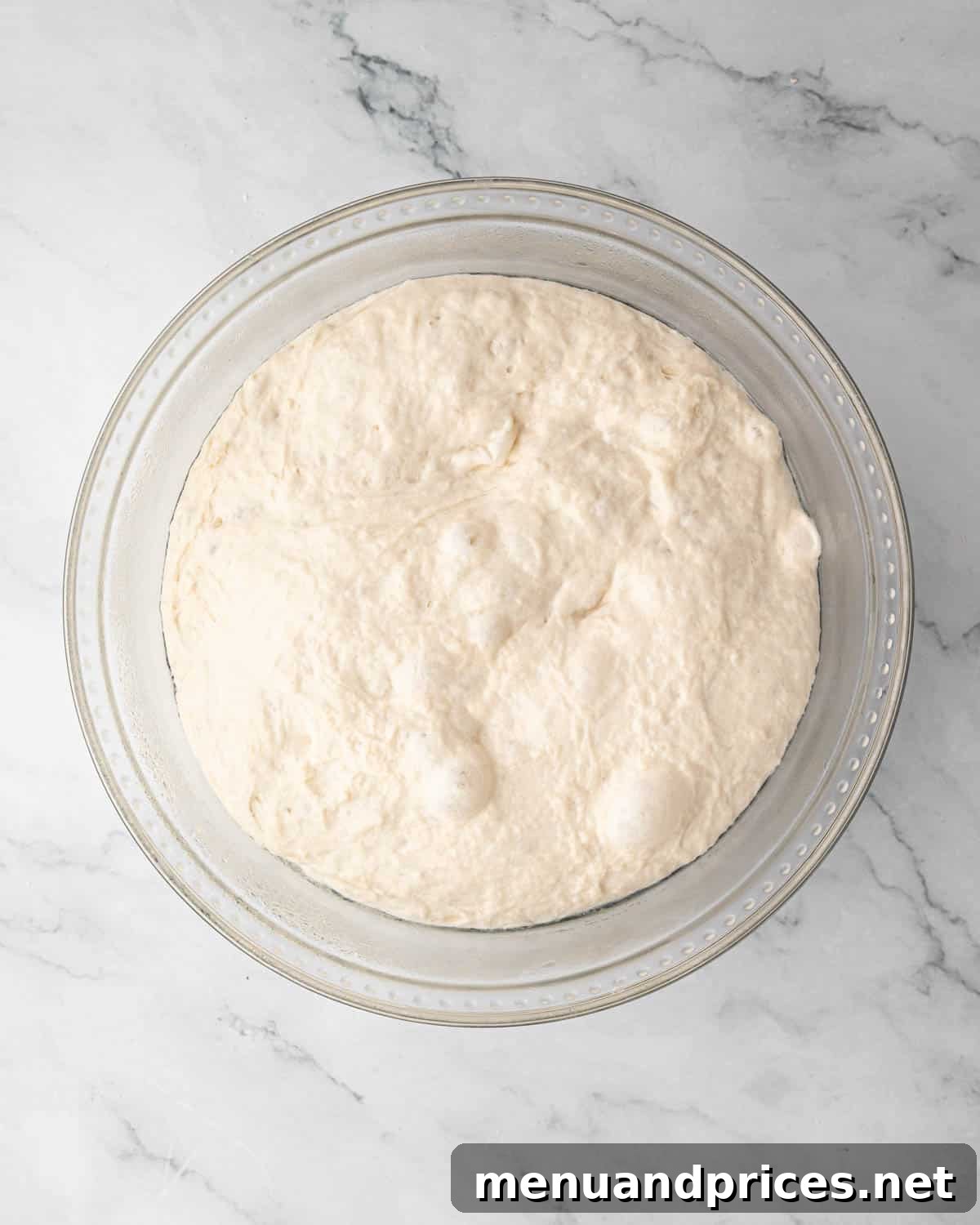
3. Prepare for Baking: Shaping, Dimpling & Topping
The final steps before baking bring your focaccia to life, preparing it for its glorious transformation in the oven:
- Prepare Baking Pan: Generously butter a 9×13-inch baking pan (or a similar size). Butter adds flavor and helps create a wonderfully crisp bottom crust. Then, drizzle 1-2 tablespoons of olive oil evenly over the butter. This double-layer of fat is key to focaccia’s signature crispy base.
- Transfer & Second Rise: Gently transfer the cold dough into the prepared pan. With lightly oiled fingertips, gently press the dough out towards the edges of the pan to fit. Do not force it; if it springs back, let it rest for 5-10 minutes before continuing to press. Once roughly shaped, set the pan aside, uncovered, to rest at room temperature for 1-2 hours. During this period, the dough will warm up and become noticeably puffy, indicating its final proof.
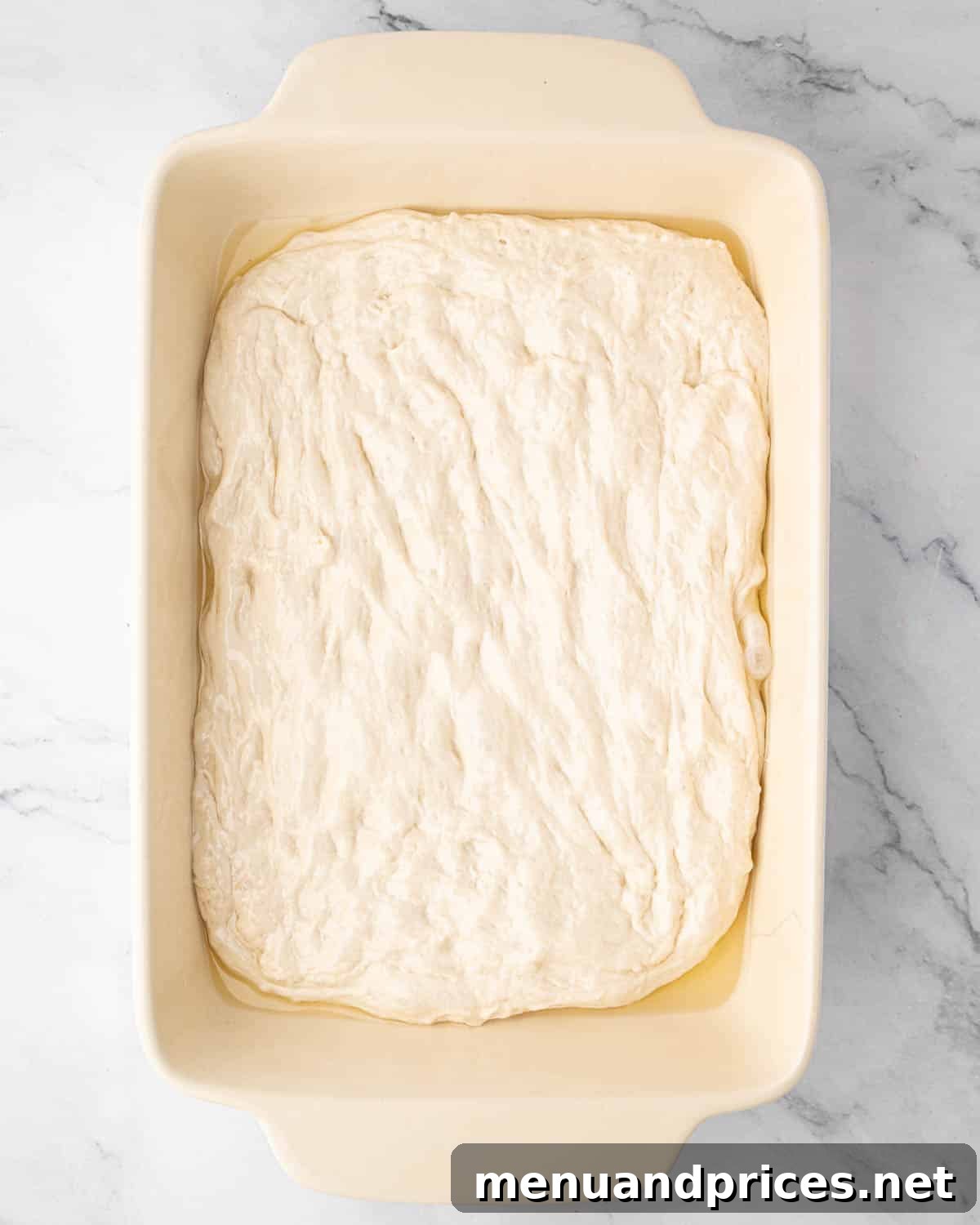
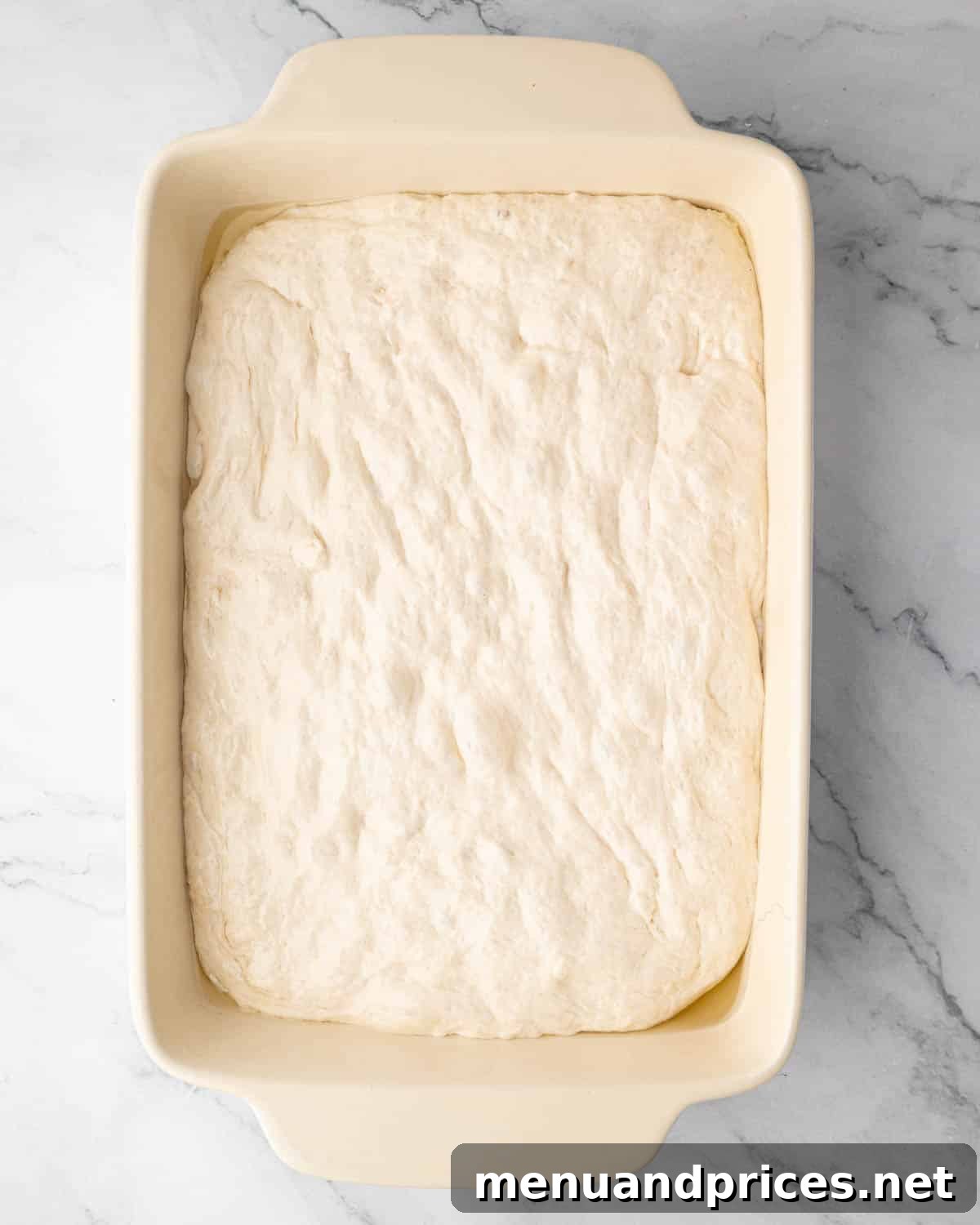
- Preheat Oven & Dimple: While the dough is finishing its proof, preheat your oven to 425°F (220°C). Once the oven is hot and the dough is puffy, lightly oil your fingertips again and create deep dimples across the entire surface of the dough. These dimples are characteristic of focaccia, providing pockets for olive oil and toppings, and preventing large air bubbles from forming.
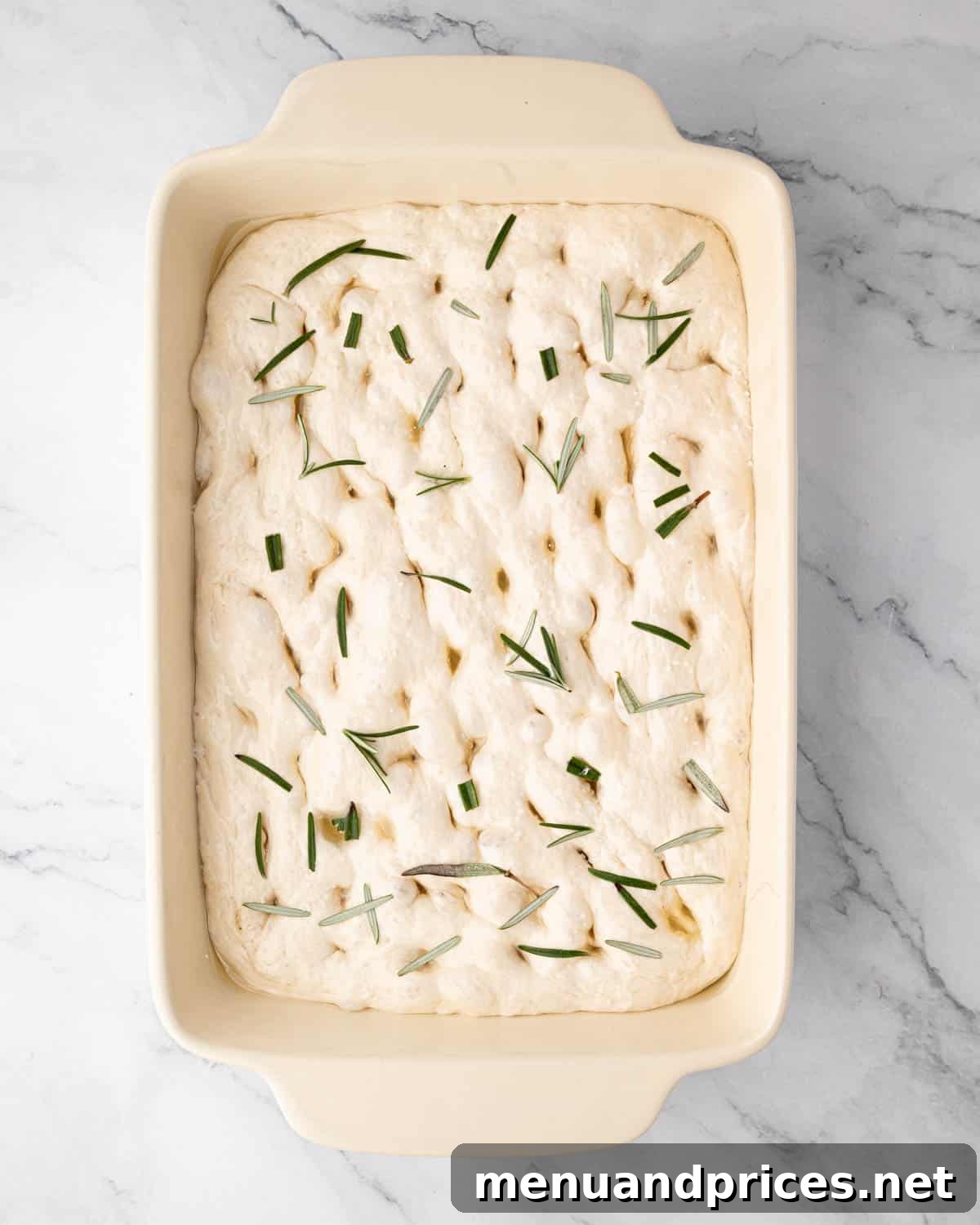
- Drizzle & Top: Drizzle another 1-2 tablespoons of high-quality olive oil over the dimpled dough. If using, sprinkle fresh rosemary leaves evenly over the surface, followed by a generous shower of flaky sea salt.
- Ensure Toppings Stick: Use your oiled fingertips to gently press the rosemary and salt slightly into the dimples. This ensures they adhere to the dough during baking and don’t fall off when sliced.
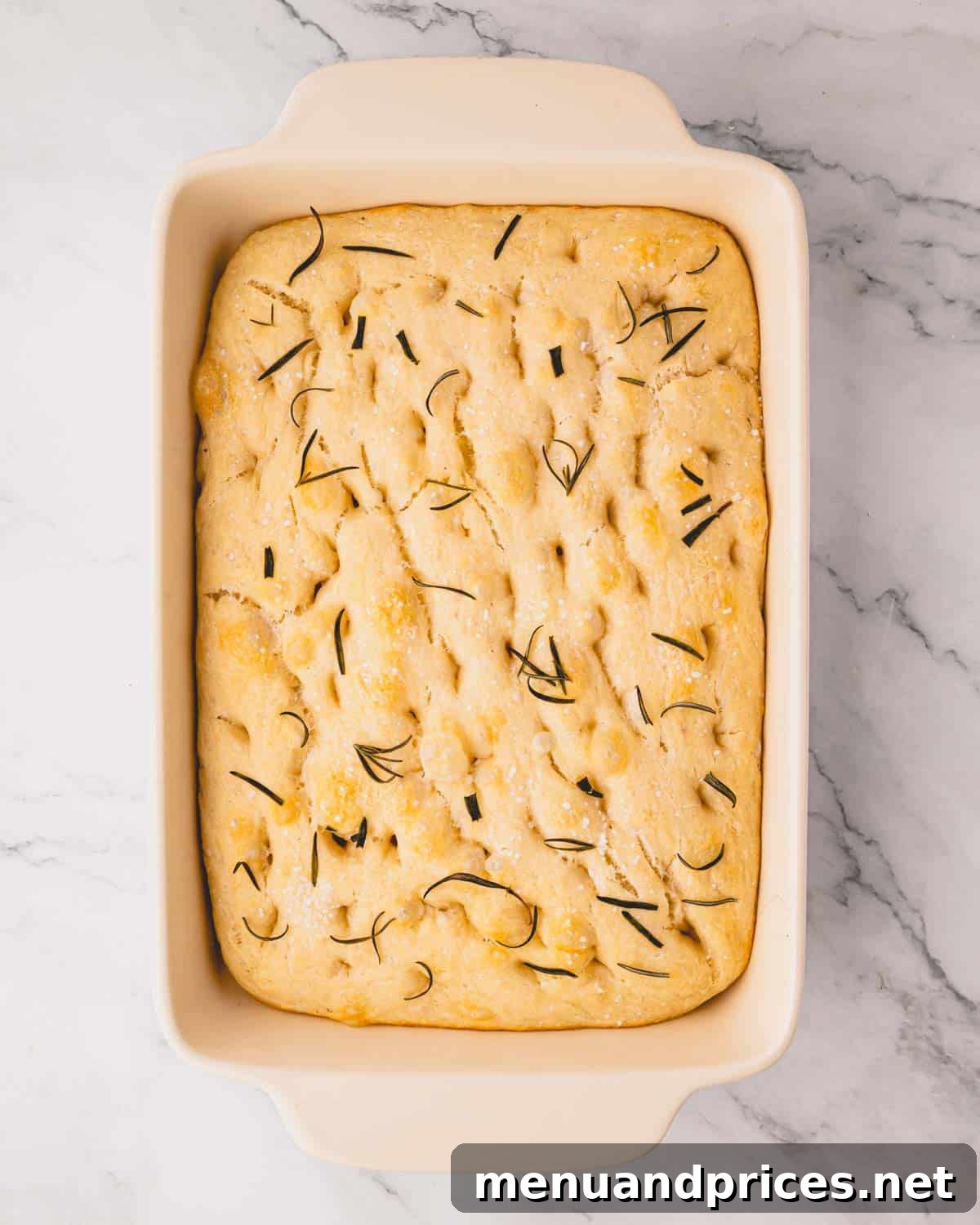
- Bake to Golden Perfection: Place the pan in the preheated oven and bake for 25-30 minutes, or until the focaccia is beautifully golden brown on top and wonderfully crisp on the bottom. Keep a close eye on it, as oven temperatures can vary.
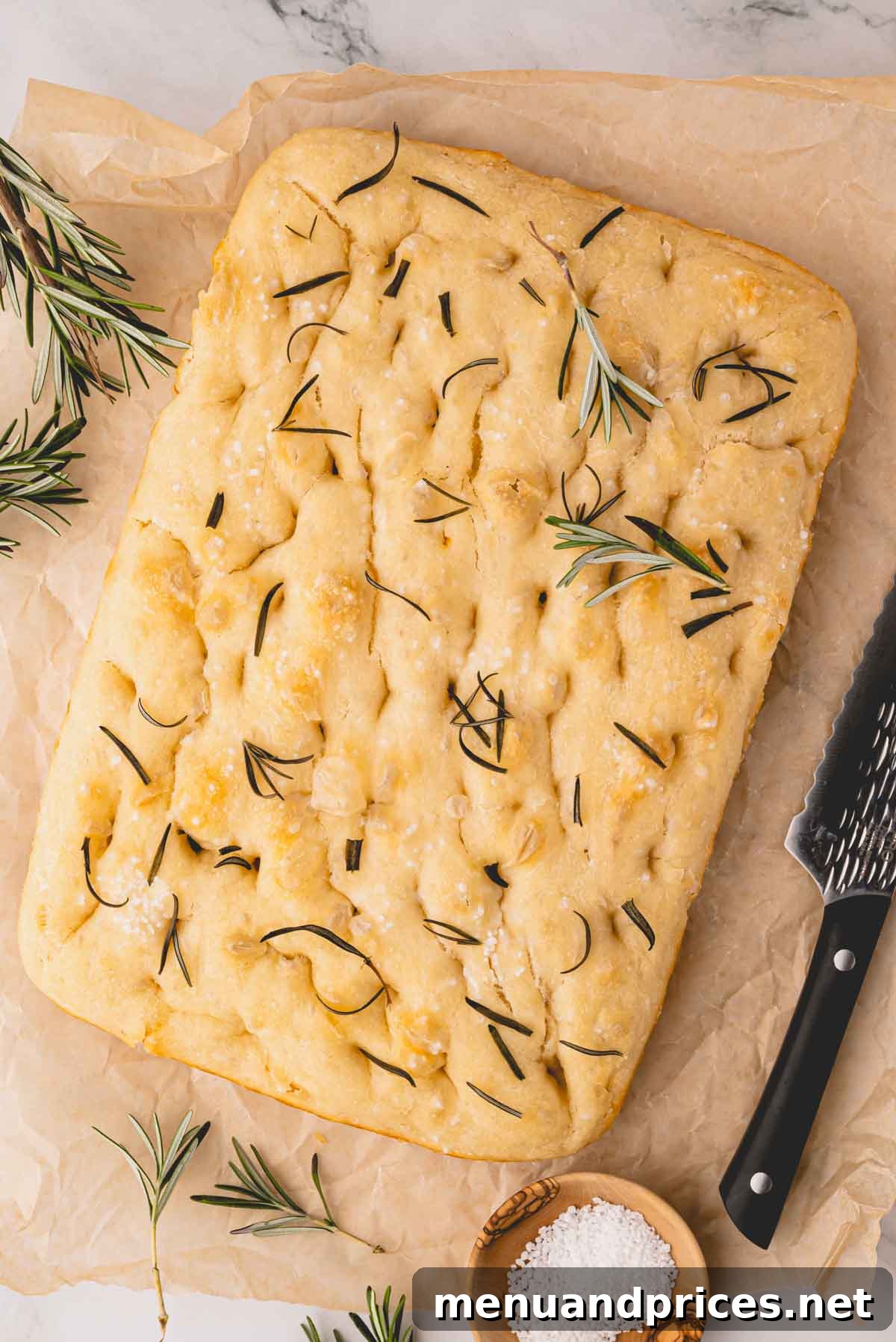
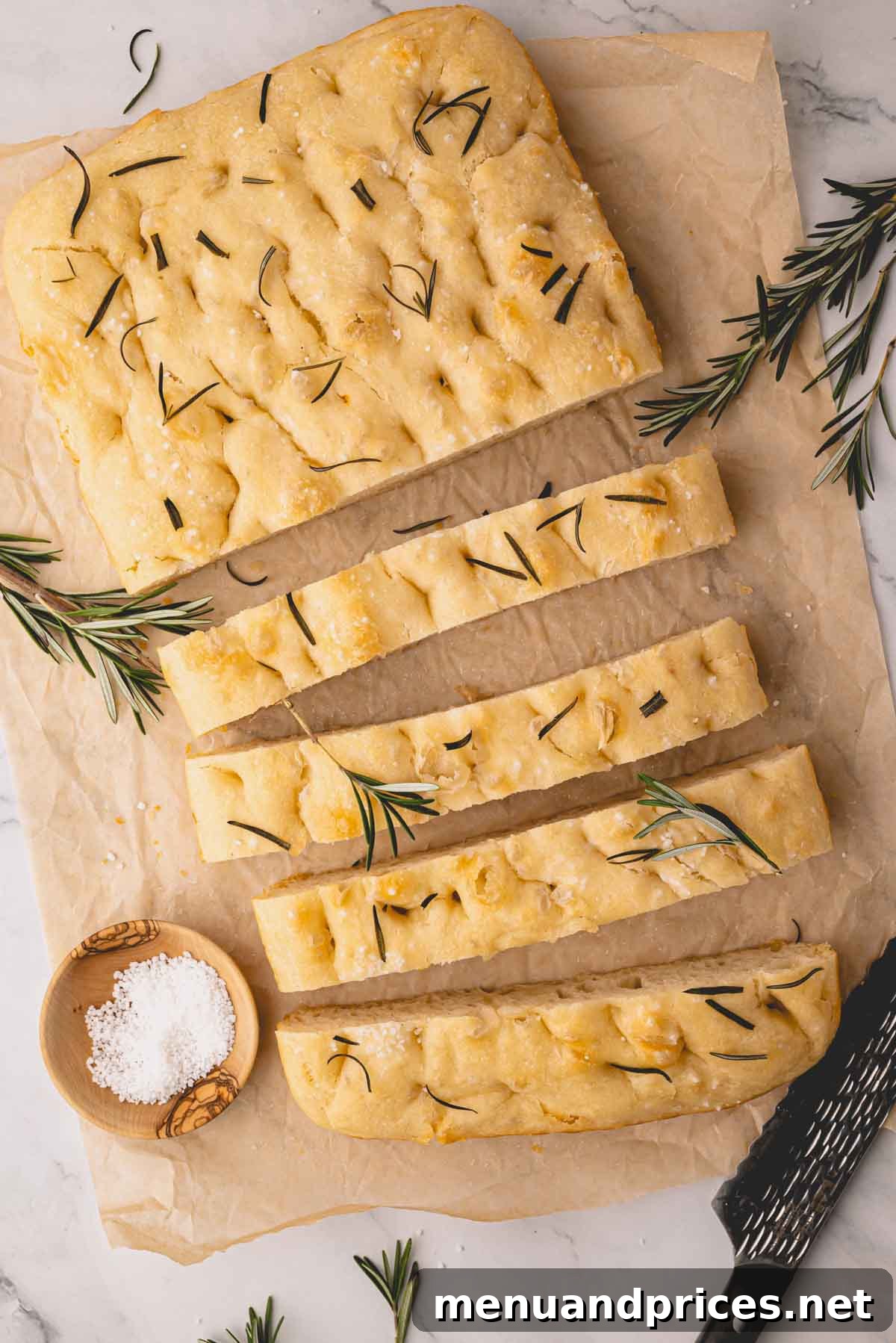
- Cool & Enjoy: Once baked, remove the focaccia from the oven. Carefully transfer it from the baking pan to a wire rack to cool for about 10 minutes before slicing. This short cooling period allows the internal structure to set, preventing it from becoming gummy, and ensures that crisp crust remains intact. Then, slice into squares or rectangles and savor every bite!
Make sure the toppings stick
To ensure your delicious toppings remain securely on your focaccia, use your fingers to gently press them into the dough’s dimples. This simple step prevents them from falling off during baking and slicing, ensuring every bite is flavorful.
Unleash Your Creativity with Mix-ins and Toppings
While classic rosemary and sea salt focaccia is sublime, don’t hesitate to personalize your loaf! Experiment with a variety of mix-ins and toppings to create a fancy, customized focaccia. Consider adding briny **olives**, sweet and savory **caramelized onions**, halved **cherry tomatoes** for a burst of freshness, or even unexpected delights like **figs** or **plums** for a sophisticated touch. Shredded **Parmesan** or **mozzarella cheese** can also be added for a wonderfully cheesy crust.
Expert Tips for Focaccia Success
Achieving bakery-quality focaccia is simpler than you think, especially when armed with these pro tips:
- Embrace Sticky Dough: Unlike many other bread doughs, focaccia dough is intentionally wet and sticky. This high hydration is precisely what creates those signature large, airy pockets and the light, open crumb that makes focaccia so appealing. Resist the strong urge to add more flour to make it easier to handle. A sticky dough is a happy dough, and it’s the key to the authentic texture we’re aiming for. Use lightly oiled or wet hands when handling to minimize sticking.
- Do Not Skip the Cold Proof: This is arguably the most critical step for exceptional focaccia. While I have tested and confirmed that a one-day focaccia loaf is possible, the overnight cold proof makes a dramatic difference. The slow fermentation process, which can last from 12 to 36 hours in the refrigerator, significantly improves the bread’s flavor, adding complexity and depth. It also enhances the dough’s elasticity and extensibility, resulting in a more tender, chewable texture and a more pronounced open crumb structure. Think of it as developing the bread’s character – it’s worth the wait!
- Be Gentle When Handling the Dough: After all the hard work your dough has put in to develop those beautiful air bubbles, the last thing you want to do is deflate them. Whether you’re transferring the dough to the pan, creating those iconic dimples, or gently pressing in your toppings, always use a light and delicate touch. Pressing too firmly can collapse the fragile gas pockets, leading to a denser loaf rather than the desired airy interior.
- Keep an Eye on Your Oven: Every oven has its quirks, and baking times can vary slightly. Therefore, it’s essential to monitor your focaccia bread recipe closely, especially towards the end of the baking cycle. You’ll know your focaccia is perfectly done when the top is a rich, golden brown and the bottom crust is audibly crisp. Don’t be afraid to lift the bread slightly to check the underside. Adjust the baking time as needed – a few extra minutes can be the difference between a pale loaf and a perfectly caramelized, flavorful crust. But be careful not to overbake and let it burn!
Delicious Ways to Serve Your Focaccia
Once you’ve mastered this easy focaccia bread recipe, a world of culinary possibilities opens up! Its versatile nature makes it suitable for almost any meal or occasion:
As a Side Dish or Appetizer: Focaccia is a magnificent accompaniment to hearty main courses. I particularly love serving it with Italian-inspired dishes like pesto ricotta stuffed pasta shells, the comforting simplicity of easy brown butter pasta, or a warming bowl of slow cooker ham, corn, and potato soup. Its ability to soak up rich sauces and gravies is unparalleled.
Part of an Appetizer Platter: Elevate your entertaining with focaccia as a centerpiece on an appetizer platter. Pair it with an assortment of cured meats, cheeses, olives, and delicious dips. It’s also fabulous alongside savory bites like cheesy bacon crackers, refreshing shrimp cocktail, and sweet-savory roasted stuffed dates. The rustic charm of focaccia adds an authentic touch to any spread.
A Base for Pizza or Sandwiches: Unleash your creativity by using focaccia as a robust base for gourmet pizzas or hearty sandwiches. Its thick, airy texture provides an excellent foundation. Layer on your favorite meats (think prosciutto or salami), cheeses (fresh mozzarella or provolone), fresh fruits, crisp veggies, and flavorful condiments. Try it with homemade basil pesto for an herbaceous kick, a drizzle of sweet and spicy hot honey, or even a tangy orange cranberry sauce for an unexpected twist. This transforms a simple loaf into a restaurant-worthy lunch or dinner right at home.
Make-Ahead Mastery: Preparing Focaccia in Advance
The beauty of this overnight focaccia recipe is its flexibility, making it an excellent choice for meal planning or entertaining. The cold proofing stage allows you to prepare much of the dough in advance:
Rest the prepared dough in the refrigerator for at least 12 hours to fully develop its rich flavor and structure. For even greater convenience, you can let it chill in the fridge for up to 36 hours before baking. This extended cold proof enhances complexity without compromising the texture. However, I advise against letting it go much longer than 36 hours, as prolonged fermentation can sometimes lead to an overly sour taste or a less airy and crisp final product. Plan your baking day around this window to ensure the best possible results.
Storing Your Homemade Focaccia
Proper storage ensures your delicious focaccia remains fresh and flavorful for as long as possible:
Once your focaccia has cooled completely, store it in an airtight container at **room temperature for up to 3 days**. To maintain its crispness, you might wrap it loosely in foil and then place it in the container. For longer storage, focaccia freezes beautifully. Wrap cooled slices or the entire loaf tightly in plastic wrap, then in aluminum foil, and **freeze for up to 3 months**.
To serve frozen bread, transfer it to the fridge overnight to thaw. Then, to refresh its texture and bring back that wonderful crisp crust, reheat it in a preheated oven at 350°F (175°C) for 10-15 minutes, or until it’s warmed through and the crust is revitalized. It will taste as good as freshly baked!
Focaccia FAQs: Your Questions Answered
The ultimate secret to truly exceptional focaccia lies in the resting and cold-proofing of the dough. Allowing the dough to chill in the refrigerator overnight (or even longer, up to 36 hours) is crucial. This extended, slow fermentation process not only allows the flavors to develop a profound complexity but also creates that signature airy, almost pillowy interior with a perfectly crisp crust. It’s a game-changer for texture and taste.
Focaccia bread contains beneficial healthy fats from the generous amount of olive oil used, which can be a positive aspect of its nutritional profile. However, it essentially shares many of the same core ingredients as most other bread recipes (flour, water, yeast, salt). Like any bread, it can certainly be part of a well-balanced diet when consumed in moderation. For specific dietary concerns or questions, it’s always best to consult with your doctor or a qualified nutritionist.
For this overnight focaccia recipe, and to achieve that desirable crispy exterior and golden-brown crust, I recommend leaving the dough uncovered while baking. Some recipes might suggest covering during an initial bake to prevent over-browning, but for this method, allowing it to bake openly from the start helps develop a beautiful, rustic crust. If you notice it browning too quickly, you can loosely tent it with foil, but typically, it’s not necessary.
While focaccia and pizza dough share similar ingredients, their key differences lie in hydration, texture, and intended use. Focaccia dough is generally much wetter and stickier, leading to a more open, airy, and bread-like crumb. It’s typically baked thicker, designed to be dimpled and drizzled with olive oil, resulting in a soft interior and a crisp, oily crust. Pizza dough, conversely, is usually less hydrated, producing a thinner, chewier base ideal for supporting heavy toppings and often baked at very high temperatures for a quick, bubbly crust.
While the overnight cold proof is highly recommended for optimal flavor development and texture, you can certainly make a quicker version. After the initial 30-minute rest and stretch-and-fold, allow the dough to proof at room temperature for 1-2 hours until it has visibly doubled in size. Then proceed with transferring it to the pan and the final room temperature proof (another 1-2 hours) before dimpling and baking. Be aware that the flavor will be less complex and the crumb slightly less airy than the overnight method, but it will still yield a delicious homemade focaccia.
Explore More Easy Bread Recipes
If you’ve enjoyed baking this focaccia, you’ll love exploring other simple and satisfying bread recipes from our collection:
- The Easiest and Fluffiest French Bread
- Caramelized Pear Quick Bread
- Decadent Chocolate Banana Bread
- Moist & Perfect Banana Bread Recipe

Easy Overnight Focaccia Bread
Comment
Print Recipe
Ingredients
- 4 cups (500 g) all-purpose flour or bread flour (for structure and crumb)
- 2–3 teaspoons kosher salt (for flavor and yeast control)
- 2 teaspoons instant yeast (for efficient rising)
- 2 cups (480 ml) lukewarm water ~95°F (to activate yeast)
- 4 tablespoons (52 g) high-quality olive oil divided (for flavor and crisp crust)
- Butter for greasing pan (for extra flavor and non-stick)
- Flaky sea salt such as Maldon or coarse pretzel salt (for texture and taste)
- 1–2 teaspoons fresh rosemary leaves optional (for aromatic, herbaceous flavor)
Instructions: Crafting Your Focaccia
-
In a large mixing bowl, thoroughly whisk together the flour, kosher salt, and instant yeast. Ensuring these dry ingredients are well combined is essential for consistent dough development.
-
Add the lukewarm water to the dry ingredients. Using a sturdy spatula or a wooden spoon, mix until the dough just comes together, forming a sticky and shaggy ball. Avoid overmixing; a rough consistency is desired at this stage.
-
Cover the bowl tightly with plastic wrap or a clean kitchen towel and let the dough rest at room temperature for 30 minutes. This allows the flour to hydrate fully, initiating gluten development.
-
After the initial rest, perform 1 gentle round of stretch-and-fold: lightly wet your hand to prevent sticking, grab an edge of the dough, gently stretch it upward, and fold it over the center of the dough.
-
Rotate the bowl a quarter turn and repeat this stretch-and-fold process until all four edges have been folded into the center. This step is optional but significantly helps in developing gluten for a wonderfully light and airy texture.
-
Lightly grease a large, clean bowl with 1 tablespoon of olive oil. Transfer the dough into this bowl, turning it once to ensure it’s evenly coated in oil.
-
Cover the bowl tightly and refrigerate for 12–24 hours. This long, cold proof is key to developing a rich flavor profile and encouraging an open, airy crumb structure. You can extend this up to 36 hours for even deeper flavor.
-
When you are ready to bake, generously butter a 9×13-inch baking pan (or a similar size). Then, drizzle 1–2 tablespoons of high-quality olive oil evenly over the buttered surface.
-
Gently transfer the cold dough into the prepared pan, carefully pressing it out towards the edges to fit. Let it rest at room temperature for 1–2 hours until it looks noticeably puffy and has relaxed into the pan. This is its final proof.
-
Preheat your oven to 425°F (220°C).
-
Once the oven is preheated and the dough is puffy, use oiled fingertips to create deep dimples all over the surface of the dough.
-
Drizzle another 1–2 tablespoons of olive oil generously over the dimpled dough. Sprinkle with fresh rosemary (if using) and a liberal amount of flaky sea salt. Gently press the toppings slightly into the dough to ensure they adhere during baking.
-
Bake for 25–30 minutes, or until the focaccia is beautifully golden brown on top and distinctively crisp on the bottom. Keep a watchful eye, as ovens can vary.
-
Carefully remove the focaccia from the pan and cool it on a wire rack for at least 10 minutes before slicing. This allows the internal structure to set and ensures maximum crispiness. Enjoy your delicious homemade focaccia!
⭐️ Did you make this recipe?
Please leave a review and let us know how you liked it!
Tips & Notes for Focaccia Perfection
Note 2: Embrace the Olive Oil: High-quality olive oil is absolutely key for rich flavor, an irresistibly crisp crust, and that signature airy crumb. Don’t be tempted to skimp on it, as it’s fundamental to focaccia’s character.
Note 3: Monitor Your Oven: Baking time can vary slightly depending on your specific oven’s calibration. Always check for a deep golden-brown top and a distinctly crisp bottom to ensure your focaccia is perfectly cooked through.
Note 4: Endless Variations: This recipe is incredibly versatile! Feel free to experiment with exciting variations by adding ingredients like briny olives, sweet caramelized onions, juicy cherry tomatoes, or even shredded cheese for a customized loaf.
Storage: Store cooled focaccia in an airtight container at room temperature for up to 3 days. For longer preservation, wrap it well and freeze for up to 3 months. To enjoy, thaw frozen bread overnight in the fridge, then refresh by reheating in a 350°F oven for 10–15 minutes until the crust is crisp again.
Nutrition Information (Estimated Per Serving)