

How to Dehydrate Peaches: A Comprehensive Guide to Preserving Summer Sweetness
Unlock the secret to enjoying the succulent taste of peaches long after summer ends with this ultimate guide to dehydrating peaches. This simple and incredibly rewarding process transforms fresh, juicy fruit into wonderfully chewy, intensely flavorful dried snacks. Forget complicated canning methods; dehydrating peaches offers a straightforward, two-part approach to fruit preservation that anyone can master. Get ready to capture summer’s golden goodness in every bite!

Why You’ll Adore Homemade Dehydrated Peaches
Dehydrated peaches aren’t just a snack; they’re a culinary treasure that allows you to savor the peak flavor of peach season all year round. Their convenience, concentrated sweetness, and versatility make them an absolute pantry essential. Here’s why you’ll fall in love with these golden gems:
- Intensely Delicious & Healthy Snacks: The dehydration process removes water, concentrating the natural sugars and flavors in fresh peaches. This means your dried peaches will boast an even more vibrant, sweet, and tangy taste than their fresh counterparts! Rich in fiber, vitamins, and minerals, they’re a smart choice for mindful eating, free from added sugars or preservatives often found in store-bought dried fruits.
- Remarkably Long-Lasting Preservation: One of the primary benefits of dehydrating peaches is their extended shelf life. By removing moisture, you inhibit the growth of mold and bacteria, allowing the dried fruit to remain fresh and delicious in your pantry for several months, or even up to a year with proper storage. This makes them a fantastic way to minimize food waste and always have a healthy snack on hand.
- Effortlessly Simple to Prepare: You might think preserving fruit is a daunting task, but dehydrating peaches is surprisingly simple. With just one main ingredient – fresh peaches – and the help of a food dehydrator, most of the work is done for you. The hands-on time is minimal, making it a perfect project for beginners and seasoned home preservers alike.
- Incredibly Versatile for Culinary Creations: While fresh, juicy peaches are undoubtedly wonderful in cobblers, homemade ice cream, and delicate cakes, dehydrated peaches open up a whole new world of culinary possibilities. They are perfect for adding a burst of concentrated peach flavor and chewy texture to your morning oatmeal, granola, homemade trail mix, muffins, scones, or even savory dishes like salads with goat cheese and nuts. Rehydrate them for sauces, purees, or baked goods when fresh peaches are out of season.
- Perfect for Emergency Preparedness & Camping: Their lightweight nature and long shelf life make dehydrated peaches an excellent addition to emergency food supplies, hiking packs, and camping meals. They provide essential energy and nutrients without taking up much space or requiring refrigeration.
From a quick, energizing bite to a delightful addition to your baking, dehydrated peaches are a testament to the simple joy of home preservation.
Selecting the Ideal Peaches for Dehydration
The foundation of exceptional dehydrated peaches lies in choosing the right fresh fruit. You’ll want varieties renowned for their robust, sweet flavor and a firm, yet juicy texture. These characteristics ensure that the peaches retain their delicious taste and pleasant chewiness once dried. Here are some of the top contenders for dehydration:
- Freestone Peaches: These are often considered the holy grail for any peach-based preparation that requires pit removal. The flesh of freestone peaches easily separates from the pit, making slicing incredibly quick and efficient. Varieties like ‘Reliance’, ‘Redhaven’, and ‘Contender’ are excellent freestone options known for their sweet flavor and vibrant color. Their ease of preparation significantly cuts down on your prep time.
- Clingstone Peaches: While the pit in clingstone peaches adheres more tightly to the flesh, requiring a bit more effort to remove, they are still highly suitable for dehydrating. Clingstone varieties often boast incredibly sweet and juicy flesh, which intensifies beautifully during the drying process. If you have access to ripe clingstone peaches and don’t mind the extra effort, they can yield wonderfully flavorful dried fruit. Look for varieties like ‘Early Elberta’ or ‘Dixie Red’.
- Elberta Peaches: A classic and beloved peach variety, the Elberta is celebrated for its superb flavor profile – a perfect balance of sweetness and tang – and its firm texture. These qualities make it an outstanding choice for dehydrating, as they hold their shape well and develop a rich, concentrated taste. Elberta peaches are typically freestone, adding to their appeal for processing.
- O’Henry Peaches: Known for their large size, attractive red-over-yellow skin, and firm, yellow flesh, O’Henry peaches offer a delightful sweet and tangy flavor. Their robust texture makes them exceptionally well-suited for dehydration, ensuring that the dried slices have a satisfying chew without becoming brittle.
- Donut Peaches (Saturn Peaches): These unique, flattened peaches are not only visually interesting but also fantastic for drying. Their naturally sweet taste and lower moisture content (compared to some other varieties) mean they dehydrate more quickly and consistently. Their distinctive shape also makes for fun, bite-sized dried snacks.
No matter which variety you choose, always select peaches that are ripe but still firm. They should have a fragrant aroma, vibrant color, and be free from any soft spots, bruises, or signs of mold. The quality of your fresh peaches directly impacts the quality of your dehydrated treats!
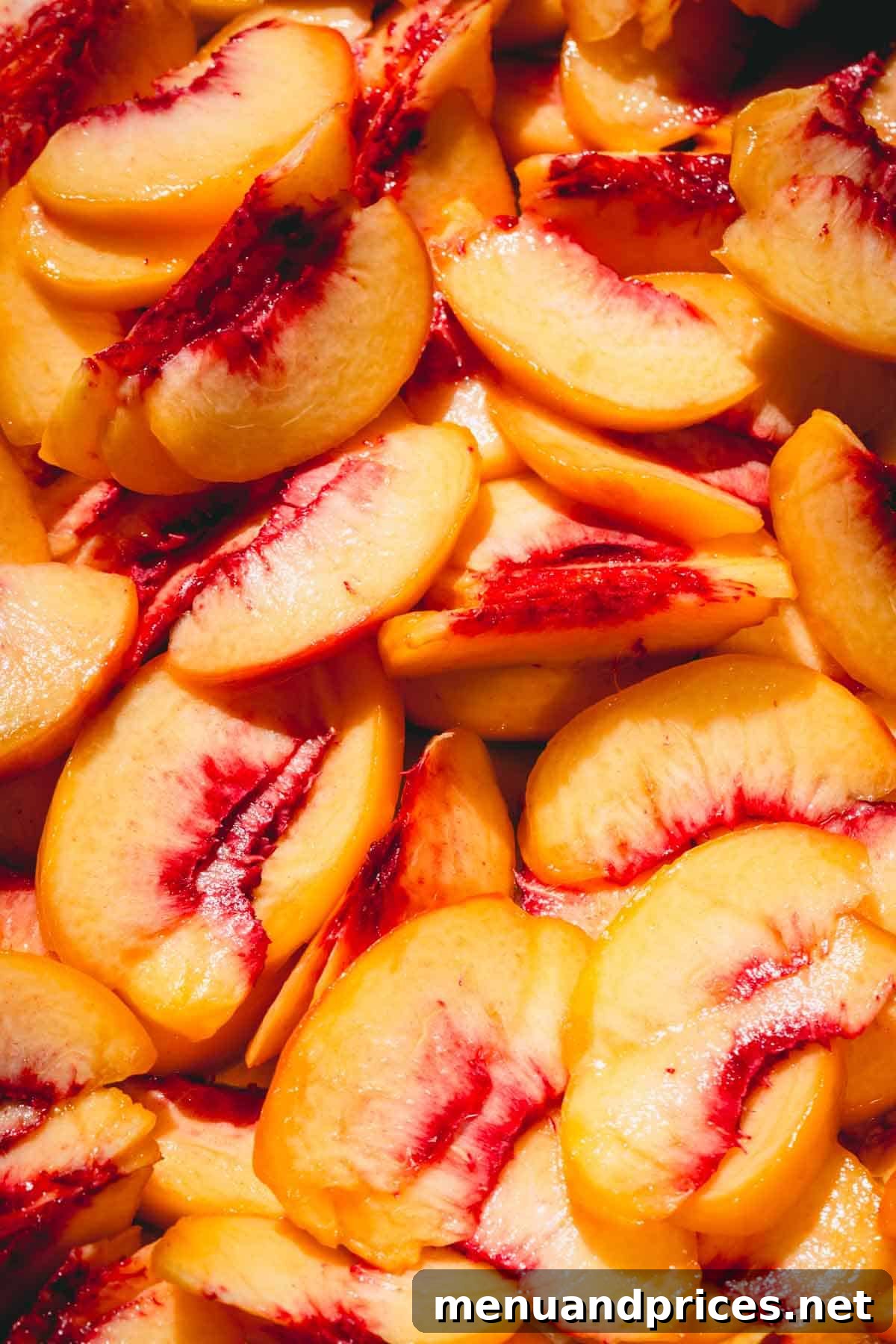
Step-by-Step Guide: How to Dehydrate Peaches Successfully
Dehydrating peaches is a rewarding culinary endeavor that, while requiring a bit of time for the drying process, is surprisingly easy and straightforward in terms of hands-on work. The key steps involve preparing the peaches by peeling and slicing them, followed by a gentle drying period in your dehydrator. Let’s walk through each stage to ensure you achieve perfectly preserved, delicious dried peaches.
1. Prepare and Peel the Peaches
While you can technically dehydrate peaches with the skin on, peeling them results in a more tender, appealing, and uniformly chewy dried product. The easiest and most effective method for peeling peaches is blanching, which quickly loosens the skin without cooking the fruit.
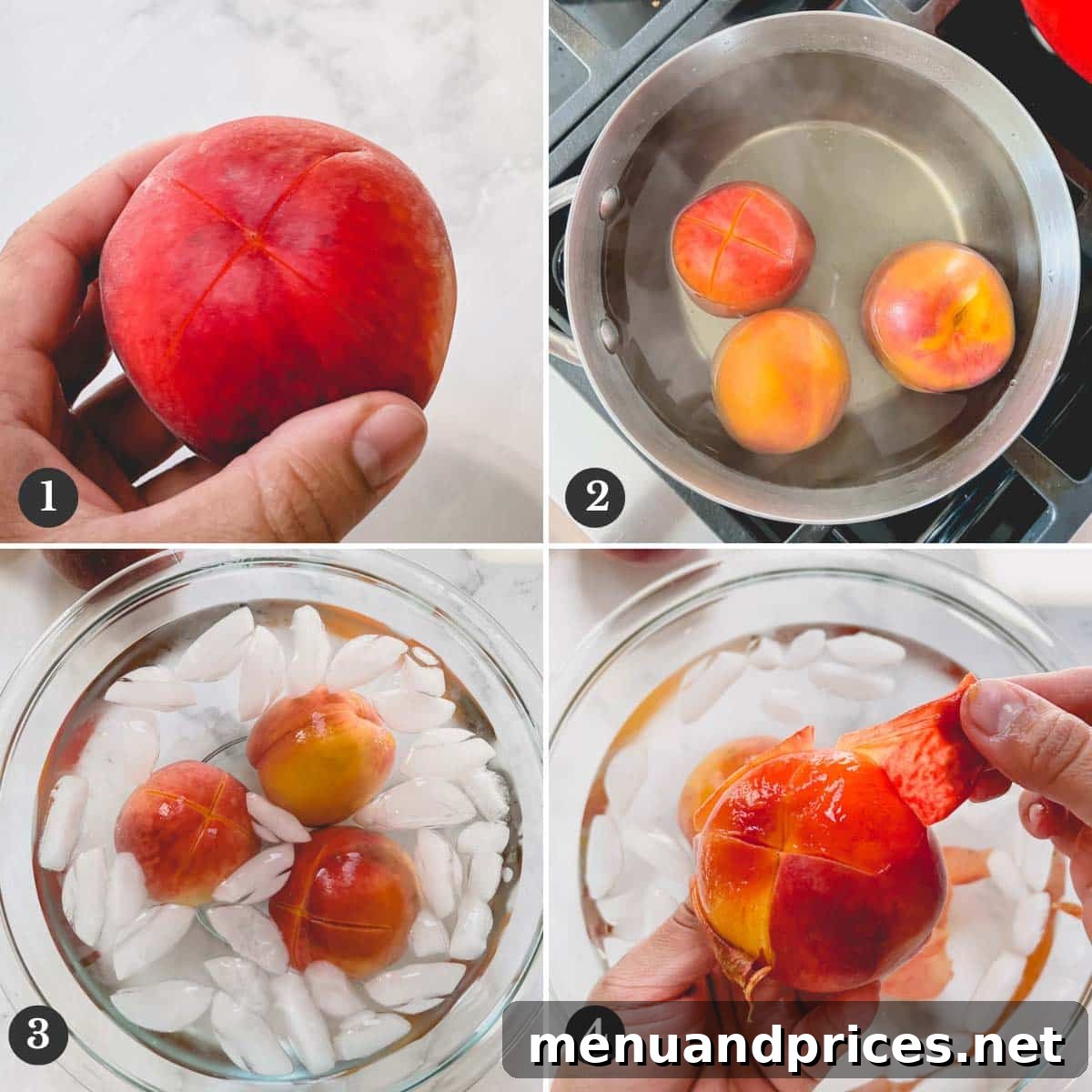
- Prepare Your Water Baths: Bring a large pot of water to a rolling boil. Simultaneously, prepare a large bowl filled with ice water, ensuring it’s ready for an immediate ice bath.
- Score the Peaches: Using a sharp paring knife, carefully cut a shallow ‘X’ into the bottom of each peach. This score helps the skin release more easily during blanching. Be mindful not to cut too deeply into the flesh.
- Blanch the Peaches: Reduce the heat of the boiling water to a gentle simmer. Carefully submerge 2-3 peaches (or as many as comfortably fit in a single layer without overcrowding) into the simmering water. Blanch them for approximately 30-60 seconds. The exact time depends on the ripeness and size of your peaches; you’re looking for the skin around the ‘X’ to just begin to wrinkle and loosen.
- Shock in Ice Water: Immediately transfer the blanched peaches from the simmering water to the ice water bath using a slotted spoon or spider skimmer. This “shocks” the peaches, stopping the cooking process and making the skin even easier to peel. Allow them to cool in the ice bath for a minute or two until they are comfortable to handle.
- Effortlessly Peel: Once cooled, gently pull the skin away from the peach, starting from the ‘X’ you scored earlier. The skin should slip off with remarkable ease. Discard the peels. If you encounter stubborn spots, you can use the paring knife to assist, but usually, it’s unnecessary. Repeat this process for all your peaches.
Crucial Tip: Avoid Mushy Peaches!
The blanching step is quick and delicate. Only submerge the peaches in the simmering water long enough for the peel to loosen – usually 30-60 seconds. Over-blanching will cause the peaches to become too soft and mushy, compromising the slightly firm, chewy texture we aim for in dehydrated fruit. A perfectly blanched peach will feel slightly softened on the outside but still firm on the inside.
2. Slice the Peaches with Precision
Uniform slicing is paramount for successful dehydration. This ensures that all peach slices dry at roughly the same rate, preventing some pieces from becoming over-dried and brittle while others remain too moist and prone to spoilage.
- Halve and Pit: Using your paring knife or a larger chef’s knife, cut each peeled peach in half, working around the pit. Gently twist the halves to separate them. If using a freestone peach, the pit should pop right out. For clingstone varieties, you may need to carefully pry or carve the pit out.
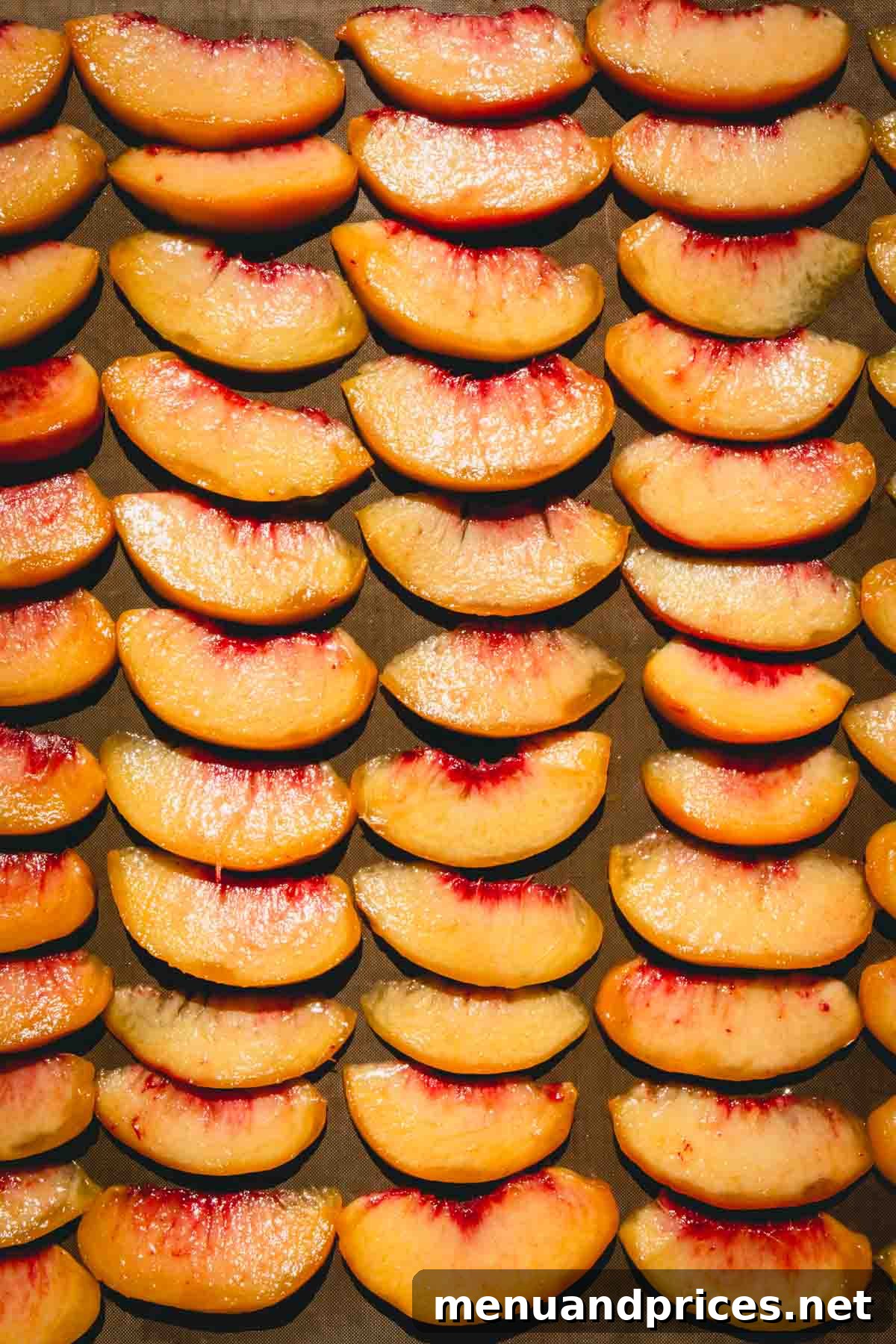
- Slice Uniformly: Once pitted, place each peach half cut-side down on your cutting board. Slice each half into uniform ¼-inch thick slices. Consistency is key here. Thicker slices will take longer to dry, while thinner ones might become too crispy. Aim for even thickness across all your slices to ensure optimal drying results.
- Consider Pre-treatment (Optional but Recommended): To prevent peaches from browning during the long drying process, you might consider a pre-treatment. A simple and natural method is to dip the slices in a solution of lemon juice and water (1 part lemon juice to 4 parts water) for 5-10 minutes. Pat them dry before placing them on trays. Ascorbic acid (Vitamin C) powder can also be used. This step enhances the visual appeal of your dried peaches.
- Arrange on Dehydrator Trays: Lay the peach slices in a single layer on your dehydrator trays. It’s highly recommended to line your trays with non-stick Teflon sheets or parchment paper, especially for juicy fruits like peaches, to prevent sticking and make removal easier. Ensure there is adequate space between slices for proper air circulation; avoid overcrowding the trays, as this will prolong drying time and lead to uneven drying.
3. Dehydrate the Peaches to Perfection
With your peaches prepped and arranged, it’s time to let the dehydrator work its magic. This stage requires patience, but the result is a bounty of sweet, chewy dried fruit.
- Set Dehydrator Temperature: Place the loaded trays into your dehydrator. Set the dehydrator temperature to 135°F (60°C). This temperature is ideal for fruits, as it’s warm enough to remove moisture efficiently without “cooking” the fruit, thereby preserving its nutrients, enzymes, and vibrant flavor.
- Monitor Drying Time: Allow the peaches to dry for approximately 14-18 hours. However, drying times can vary significantly based on factors like the thickness of your slices, the moisture content of the peaches, the humidity in your environment, and the specific model of your dehydrator.
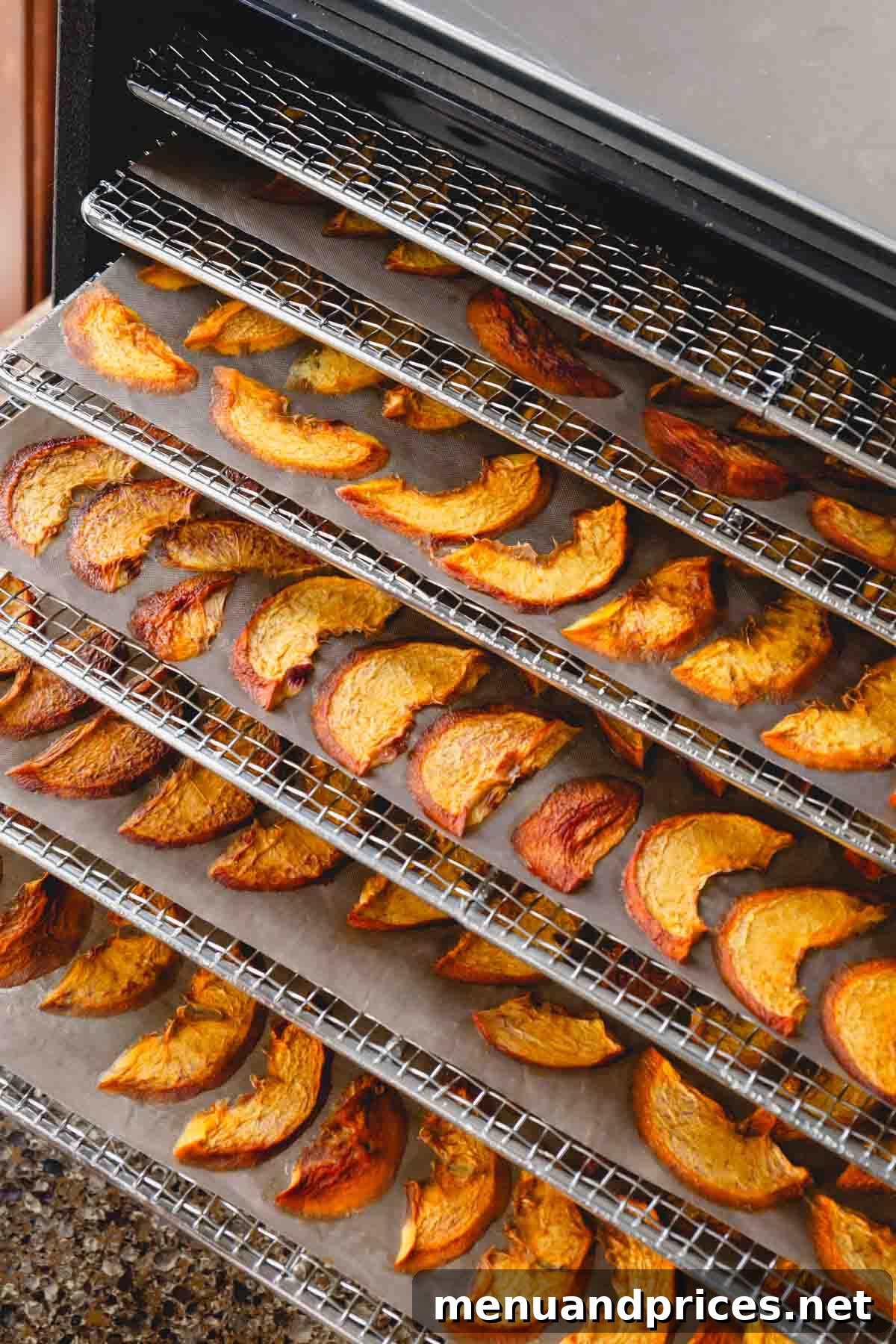
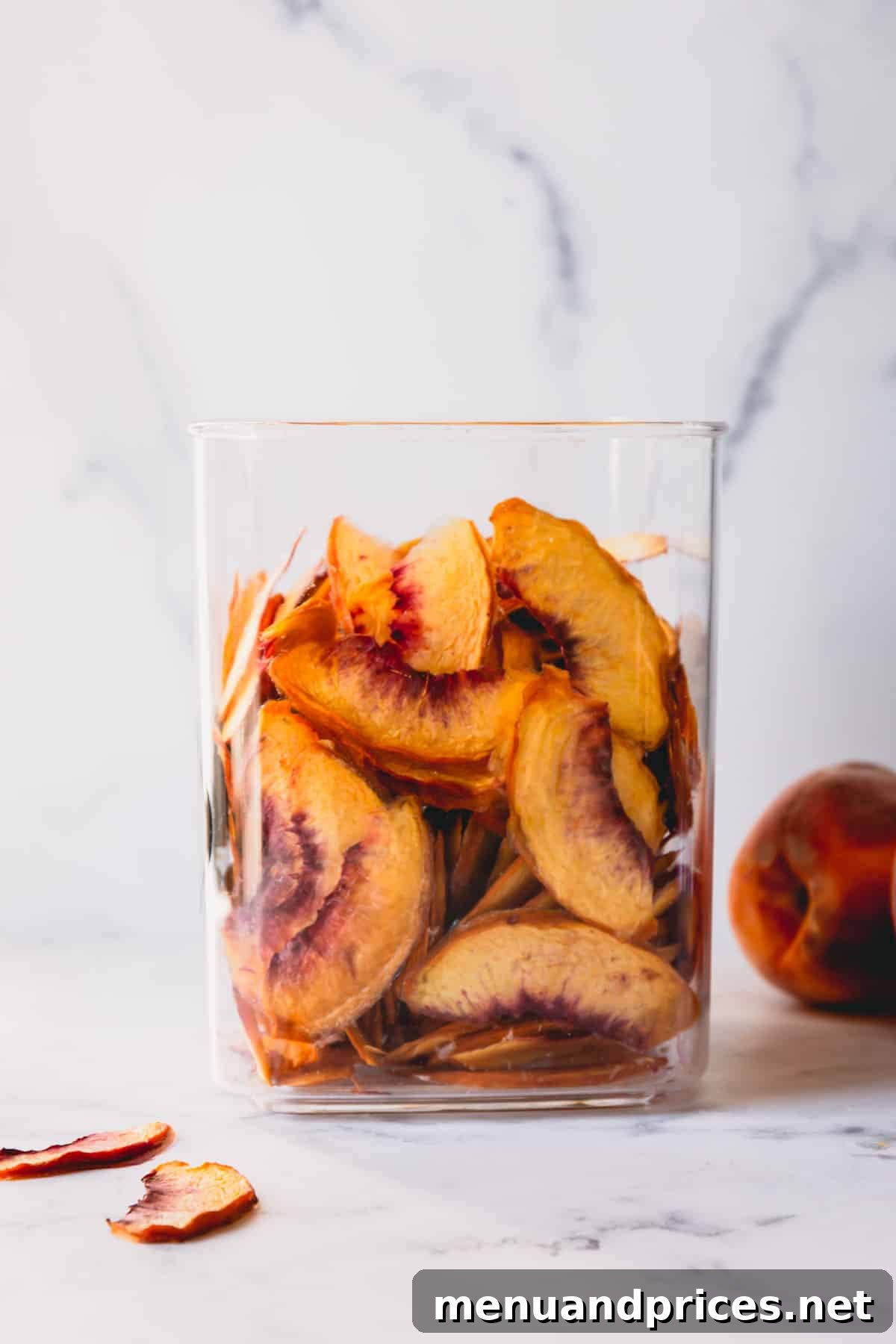
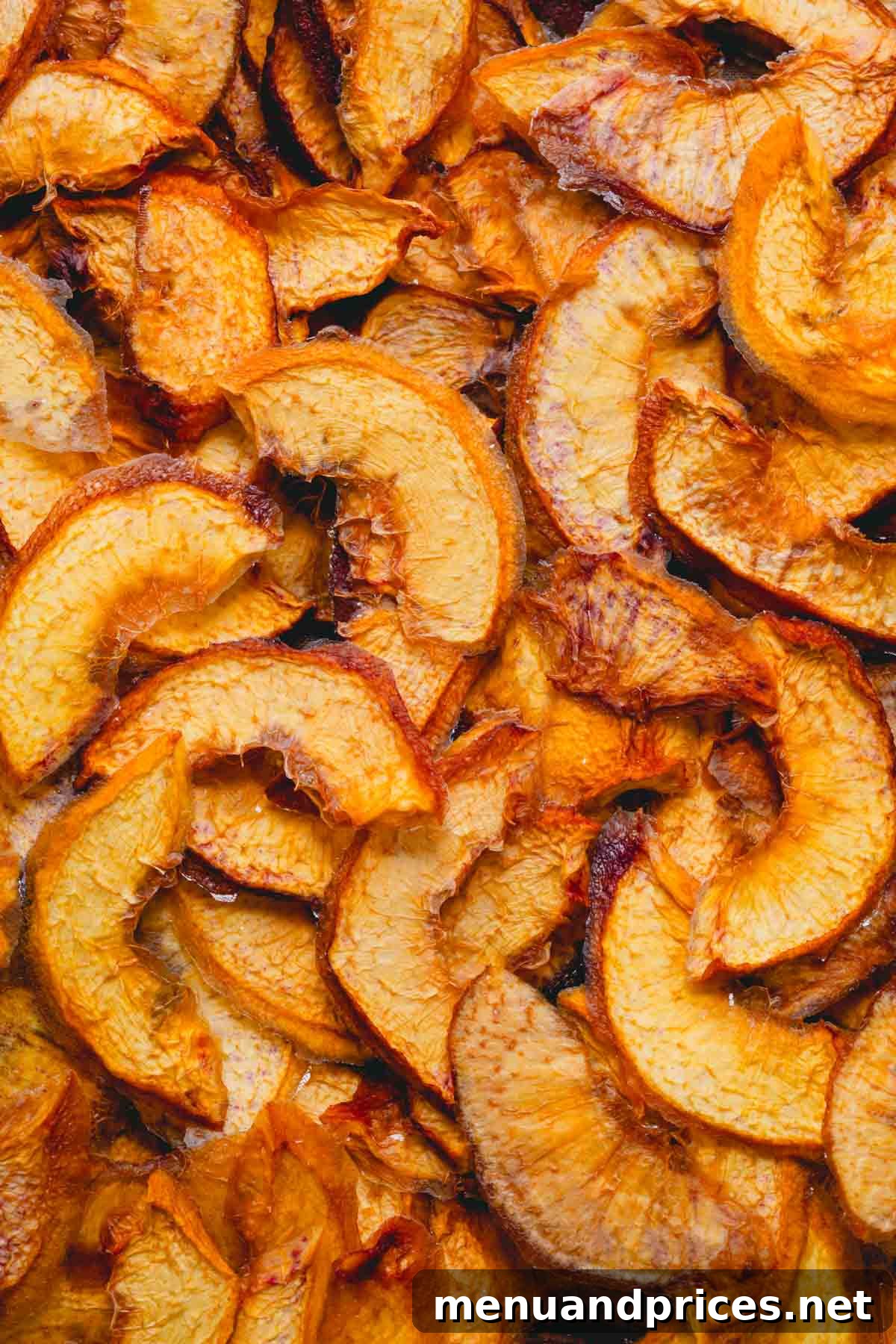
- Check for Dryness: Begin checking the peaches after about 12 hours and continue checking periodically until they are fully dry. A perfectly dehydrated peach slice should be leathery and pliable, not brittle, but also not soft or sticky in the center. When bent, it should crack but not break, and no moisture should be apparent when you squeeze a piece.
- Rotate Trays (Optional but Recommended): For more even drying, especially in dehydrators without a fan, consider rotating your trays periodically (every few hours) if your model doesn’t have a horizontal airflow system. This helps ensure all peaches dry evenly. Always check for dryness at different points on the trays, not just one spot.
- Cool Completely Before Storing: Once the peach slices are fully dry, turn off the dehydrator and let them cool completely on the trays or on a wire rack at room temperature. This is a critical step! Storing warm dried fruit will create condensation, which can lead to mold and spoilage.
Essential Equipment for Perfect Dehydrated Peaches
Investing in reliable equipment can significantly enhance your dehydrating experience and the quality of your dried fruit. Here are some trusted tools that I personally recommend for achieving consistently excellent results:
Excalibur Dehydrator
For over a decade, my 9-tray Excalibur Dehydrator has been a workhorse in my kitchen, consistently delivering outstanding results for everything from fruits and vegetables to jerky. Its horizontal airflow system ensures even drying without the need for constant tray rotation, saving you time and effort. It’s a true investment for serious home dehydrators.
Teflon Sheets
These reusable non-stick Teflon sheets are invaluable for dehydrating sticky fruits like peaches. They prevent the fruit from adhering to the dehydrator racks, making cleanup a breeze and ensuring easy removal of your perfectly dried slices without any tearing. A must-have accessory for any dehydrator owner.
Pro Tips for Dehydrating Peaches Like a Pro
Achieving perfectly dehydrated peaches every time is easy with a few expert insights. Keep these tips in mind to maximize flavor, texture, and longevity:
- Invest in a Quality Dehydrator: While various models exist, a high-quality food dehydrator with consistent heat and good airflow is crucial. As mentioned, I highly recommend a 9-tray Excalibur Dehydrator. Its robust design and efficient drying capabilities have made it my go-to for over a decade. A good dehydrator ensures even drying and prevents hot spots.
- Choose the Right Peaches: The quality of your raw ingredient directly impacts the final product. Always select ripe, firm peaches that are intensely fragrant and have vibrant, unblemished skin. Avoid any with soft spots, green patches (indicating under-ripeness), or signs of mold. Perfectly ripe peaches will offer the most concentrated flavor once dried.
- Ensure Uniform Slicing: This cannot be stressed enough. Slice your peaches into consistent ¼-inch thick pieces. Inconsistent sizing will lead to some pieces drying faster than others, resulting in a mix of brittle and still-moist fruit. A mandoline slicer can be helpful for achieving perfect uniformity if you’re processing a large batch.
- Pre-Treat to Prevent Browning: While optional, a quick dip in a lemon juice-water solution (1:4 ratio) or an ascorbic acid bath will prevent enzymatic browning, keeping your dried peaches a beautiful golden color. This doesn’t affect flavor significantly but greatly enhances visual appeal.
- Don’t Overcrowd Trays: Leave ample space between each peach slice on the dehydrator trays. Proper air circulation is vital for efficient and even drying. Overcrowding traps moisture and extends drying times.
- Rotate and Check Regularly: Even with a good dehydrator, it’s beneficial to rotate your trays periodically (every few hours) if your model doesn’t have a horizontal airflow system. This helps ensure all peaches dry evenly. Always check for dryness at different points on the trays, not just one spot.
- Learn More About Fresh Peaches: For comprehensive knowledge on selecting, peeling (including alternative methods), and storing fresh peaches, check out a dedicated guide like Peach 101. Understanding your fresh produce is the first step to successful preservation.
Expert Storage Tips for Long-Lasting Dehydrated Peaches
Proper storage is essential to maintain the quality, flavor, and extended shelf life of your homemade dehydrated peaches. Follow these guidelines to ensure your hard work pays off with delicious snacks for months to come:
- Conditioning is Key: After the peaches are fully dehydrated and completely cooled, it’s a good practice to “condition” them. Place the cooled dried peaches loosely in an airtight container (like a large jar) for 7-10 days. Shake the container daily. This allows any residual moisture to equalize throughout the fruit, preventing mold. If you see condensation inside the container, the peaches are not dry enough and need to go back into the dehydrator.
- Ensure Complete Cooling: This is a non-negotiable step. Make absolutely certain your dried peaches are thoroughly cooled to room temperature before transferring them to storage containers. Any lingering warmth will create condensation inside the sealed container, leading to moisture buildup, which is the perfect environment for mold and bacterial growth.
- Use Airtight Containers: The enemy of dried fruit is moisture and oxygen. Store dehydrated peaches in high-quality airtight containers to protect them from both. Glass mason jars with tight-fitting lids are an excellent, readily available option, as are heavy-duty freezer bags or vacuum-sealable bags.
- Choose a Cool, Dark Storage Location: Light and heat can degrade the quality and nutrients of your dried fruit over time. Always store your airtight containers in a cool, dark pantry, cupboard, or cellar. If you reside in a particularly hot or humid climate, or if your home temperature fluctuates significantly, storing dehydrated peaches in the refrigerator or even the freezer can further extend their shelf life and maintain optimal freshness.
- Consider Vacuum Sealing for Extended Shelf Life: For the longest possible storage duration – up to several years – vacuum sealing is highly recommended. Removing all oxygen drastically slows down oxidation and spoilage, preserving the flavor, color, and nutritional value of your dehydrated peaches for an extended period.
- Label and Date: Always label your containers with the contents (e.g., “Dehydrated Peaches”) and the date of preparation. This helps you track freshness and ensures you enjoy your fruit at its best.
By following these storage recommendations, you can confidently enjoy your delicious, homegrown dehydrated peaches for a significant time, truly making the most of the harvest.
Loved this guide? Pin it to save for later!
Pin This Recipe
Frequently Asked Questions About Dehydrating Peaches
Dehydrated peaches are incredibly versatile! They are fantastic as a standalone healthy snack, but also delicious when added to homemade trail mix, granola, oatmeal, and yogurt. You can chop them into baked goods like muffins, scones, or bread, or even use them in savory dishes such as salads with nuts and cheese. For a softer texture, they can be rehydrated and incorporated into smoothies, fruit tarts, cobblers, sauces, or compotes when fresh peaches are out of season.
Rehydrating dried peaches is a straightforward process. Simply place the dried peach slices in a bowl and cover them with warm water, fruit juice, or even a spirit like brandy (for adult recipes). Let them soak for about 30 minutes to an hour, or until they have softened to your desired texture. Drain any excess liquid and use them as you would fresh peaches in recipes. The rehydration time can vary depending on the thickness and dryness of your peach slices.
Yes, absolutely! Dehydrated peaches are a nutritious whole-food snack. They retain most of the vitamins and minerals found in fresh peaches, including Vitamin C, Vitamin A, and potassium. They are also an excellent source of dietary fiber, which aids digestion and promotes satiety. While they are naturally high in sugar (as the sugars are concentrated during drying), they contain no added sugars or artificial ingredients when prepared at home. They make a much healthier alternative to processed sugary snacks.
Dehydrated peaches offer a flavor profile similar to fresh peaches, but with a heightened sweetness and a more concentrated, tangy note. The removal of water intensifies their natural sugars, making them incredibly flavorful. Their texture is distinctively chewy and slightly leathery, offering a satisfying bite that is different from the crispness of some other dried fruits. Think of a rich, sweet, and slightly tart peach candy, but all natural!
Blanching is primarily used to easily remove the peach skin. While you can dehydrate peaches with the skin on, most people prefer to peel them for a more tender and appealing dried fruit snack. If you choose to keep the skin on, ensure the peaches are thoroughly washed. Blanching also helps to minimize browning and can slightly reduce drying time, making it a recommended step for optimal results.
When properly dehydrated until completely dry, cooled, and stored in an airtight container in a cool, dark place, homemade dehydrated peaches can last for 6-12 months. If you vacuum seal them, their shelf life can be extended to 2-3 years or even longer. Refrigeration or freezing can also significantly prolong their freshness, especially in humid climates.
Explore More Delicious Peach Recipes
If you’re a true peach enthusiast, your culinary adventures don’t have to stop at dehydrating! Here are more delightful ways to enjoy this versatile fruit:
- Refreshing Peach Iced Tea: A perfect beverage for a hot summer day.
- Homemade Peach Syrup: Drizzle over pancakes, waffles, or use in cocktails.
- Spiced Caramelized Peaches: A warm and inviting dessert or topping for ice cream.
- Creamy Peach Ice Cream: Indulge in a classic, homemade frozen treat bursting with peach flavor.

How to Dehydrate Peaches – The Recipe
By Shinee Davaakhuu
Transform your fresh summer peaches into delectable, long-lasting dried fruit snacks with this easy-to-follow recipe. Enjoy the concentrated sweetness and chewy texture of homemade dehydrated peaches all year round, perfect for snacking or adding to your favorite dishes.
Prep Time: 15 minutes (active)
Dehydration Time: 12-18 hours
Total Time: Approximately 12-18 hours 15 minutes
Yields: Varies depending on peach size (e.g., approximately 4-5 cups of dried peaches from 4-5 pounds of fresh peaches)
Ingredients
- Fresh peaches (select ripe, firm varieties like Freestone, Elberta, or O’Henry)
- Optional: Lemon juice (for pre-treatment)
Equipment
- 1 Food Dehydrator (e.g., Excalibur Dehydrator)
- Non-stick Teflon sheets or parchment paper (for dehydrator trays)
- Large pot
- Large bowl with ice water
- Sharp paring knife
- Slotted spoon or spider skimmer
- Airtight containers for storage
Instructions
Part 1: Preparing and Peeling the Peaches
- Bring a large pot of water to a rolling boil, then reduce the heat to a gentle simmer. Simultaneously, prepare a large bowl filled with ice water.
- Using a sharp paring knife, cut a large but shallow ‘X’ into the bottom of each peach.
- Carefully submerge 2-3 peaches into the simmering water and blanch for 30-60 seconds, or until the skin around the ‘X’ begins to loosen.
- Immediately transfer the blanched peaches to the large bowl of ice water using a slotted spoon. This stops the cooking process and makes peeling easier.
- Once cool enough to handle, gently pull the skin away from the peach, starting from the ‘X’. Discard the peels.
Part 2: Slicing and Dehydrating the Peaches
- Cut each peeled peach in half and remove the pit. Slice each half into uniform ¼-inch thick slices. Aim for consistency so they dry evenly.
- (Optional Pre-treatment): For brighter colored dried peaches, you can briefly dip the slices in a solution of 1 part lemon juice to 4 parts water for 5-10 minutes, then pat dry.
- Arrange the peach slices in a single layer on dehydrator trays lined with non-stick Teflon sheets or parchment paper. Ensure there’s enough space for air circulation between slices.
- Set your food dehydrator temperature to 135°F (60°C).
- Dehydrate the peach slices for 12-18 hours. The exact time will depend on peach thickness, moisture content, and dehydrator model.
- The peaches are fully dry when they are leathery and pliable, not brittle, and no moisture can be squeezed out of the center. When bent, they should crack but not break.
- Turn off the dehydrator and let the peach slices cool completely on the trays or a wire rack at room temperature. This is crucial for preventing mold during storage.
- Once thoroughly cooled, transfer the dehydrated peach slices to airtight containers for storage.
Tips & Notes
Peach Selection: For best results, choose ripe but firm peaches. Freestone varieties are easiest to pit. Elberta, O’Henry, and Donut (Saturn) peaches are excellent choices for their flavor and texture. Avoid overly soft or bruised fruit.
Storing Dehydrated Peaches: Ensure peaches are completely cool before storing. Place them in airtight containers (mason jars are ideal) and store in a cool, dark pantry. For longer shelf life (up to several years), consider vacuum sealing them. Conditioning for a week in a loosely sealed container, shaking daily, can help equalize any remaining moisture and prevent mold.
Nutrition Information
(Approximate values per 1 peach serving before dehydration)
- Servings: 1 peach
- Calories: 32 kcal
- Carbohydrates: 8g
- Protein: 1g
- Fat: 0.2g
- Sugar: 6g
- Sodium: 10mg
Please note: Nutritional information is an estimate and can vary based on peach size, ripeness, and specific preparation methods.
Course: Dessert, Snack
Cuisine: American
⭐️ Did you make this recipe?
We’d love to hear from you! Please leave a review and share your feedback on how you liked it!

Did you try this recipe?
Leave a rating and your feedback. Thank you!