
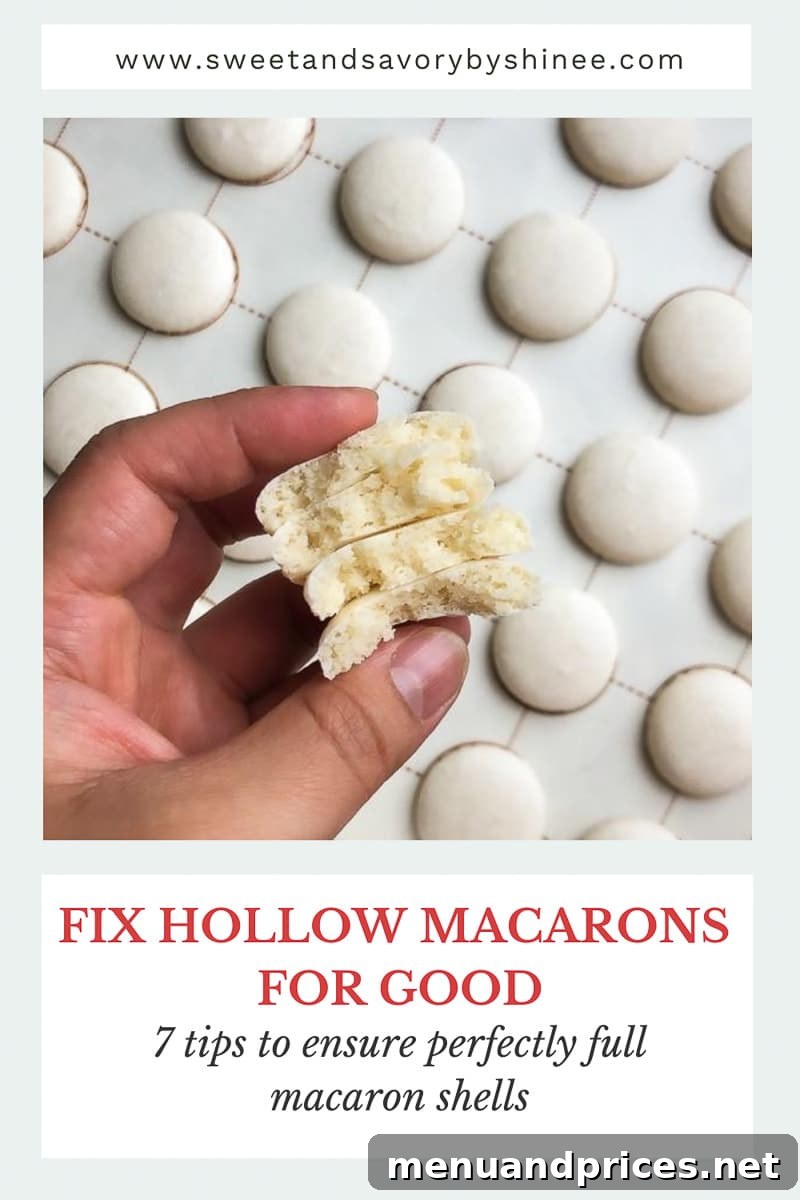
Say goodbye to the disappointment of hollow macarons forever! This comprehensive guide brings together time-tested techniques and expert insights to help you achieve those coveted, perfectly full macaron shells with stunning ease. Prepare to master the art of macaronage and delight in consistently flawless results.
Loved this article? Pin it for later!
Pin It on Pinterest
You’ve meticulously followed every step: the smooth, glossy tops have formed, and the delicate “feet” have risen perfectly. You eagerly anticipate biting into your creation, only to discover a disheartening, empty cavity inside! The frustration of encountering hollow macarons after hours of careful baking is a feeling many bakers, including myself, know all too well.
For years, I battled with this persistent issue, even while using what I considered the most reliable macaron recipe. It felt like a riddle without a solution. But through extensive experimentation, countless batches, and a deep dive into the science of macaron making, I finally unlocked the secrets to consistently achieving perfectly full shells. And the good news? You’re in the right place to discover these very same solutions!
This guide distills years of experience into actionable tips designed to transform your macaron journey. No more guesswork, no more wasted ingredients – just a clear path to baking beautiful, full-bodied macarons every single time.
Are Macarons Supposed to Be Hollow? Deciphering the Perfect Shell
The question of whether macarons should be hollow is nuanced, with a short answer that is both “yes” and “no.” It’s crucial to distinguish between a minor gap and a true structural flaw.
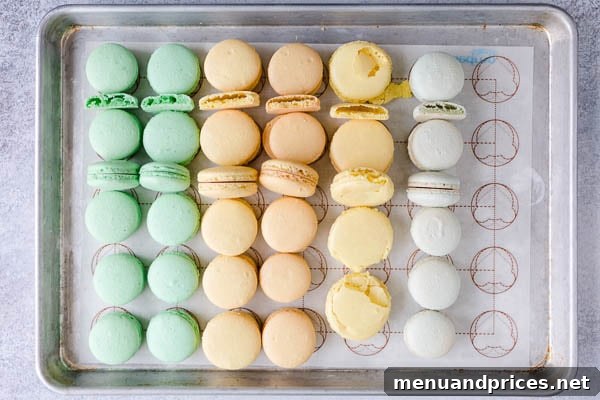
Firstly, let me reassure you: a small gap or a few tiny air pockets within your macaron shells are generally not a cause for concern. A truly successful macaron should boast smooth, sturdy tops, distinct ruffled “feet” at the base, and a stable, straight bottom. If these characteristics are present, a minimal space between the delicate outer shell and the chewy internal center, or minor air pockets, is perfectly acceptable and common. In fact, many professional bakers consider a slight internal gap to be part of the macaron’s unique charm and texture.
Observe the green and pale blue macarons in the image above; these exemplify a successful outcome. Once these shells are filled with a delicious buttercream, ganache, or jam, and allowed to “matur” overnight in the refrigerator, any small internal gaps will naturally fill and soften. The filling permeates the shell, creating a unified, delightful bite, and any initial hollowness becomes virtually unnoticeable to the palate and eye. This maturation process is key to developing the iconic tender-chewy texture.
However, hollow macarons become a significant problem when the interior is completely empty, forming a large, cavernous space. In such cases, the top shell often feels fragile, brittle, and can easily crack or crumble with the slightest touch, even before filling. This indicates a fundamental structural issue that compromises the integrity and enjoyment of the macaron.
The primary drawback of these severely hollow macarons is their poor eating quality. Even after being filled and matured, they tend to shatter and crumble unsatisfyingly when bitten into, rather than offering that desired delicate chew. They lack the structural integrity to hold the filling properly and often feel dry or insubstantial. This is the kind of hollowness we aim to prevent and correct.
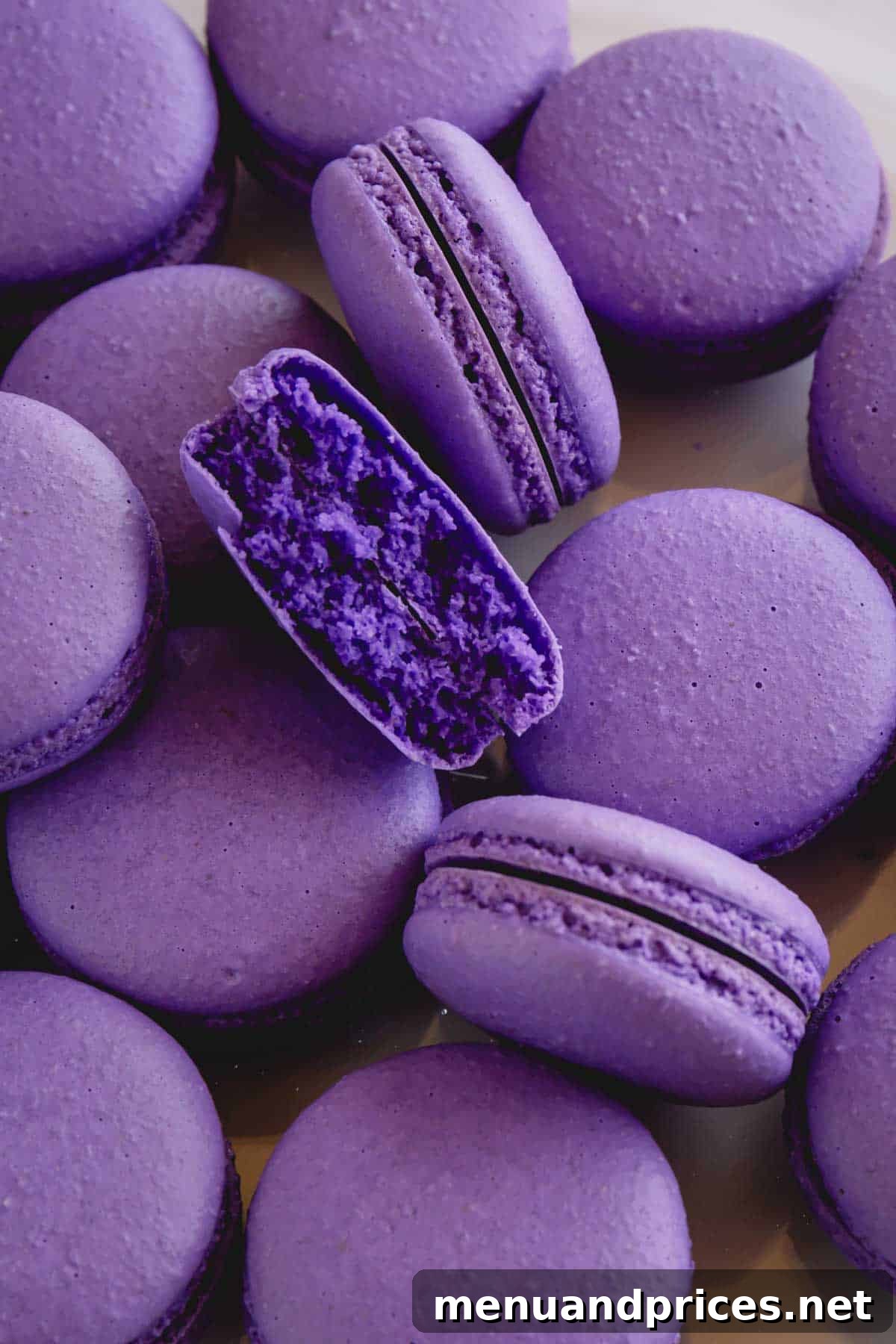
Understanding the Causes: Why Your Macarons Turn Out Hollow
Achieving a perfectly full macaron shell is often seen as the holy grail of macaron baking. When they turn out hollow, it’s usually due to one or more specific factors affecting the delicate balance of air, moisture, and structure during the baking process. Understanding these common culprits is the first step toward correcting the issue.
- Weak Meringue: The meringue forms the backbone of your macaron batter. If it’s not whipped to the correct consistency and stability, it won’t be able to adequately support the structure of the macaron, leading to collapse during baking or cooling. A weak meringue means the air incorporated is not strong enough to hold its shape, resulting in an empty space inside.
- Over-mixed Batter (Macaronage Issues): The “macaronage” stage, where dry ingredients are folded into the meringue, is perhaps the most critical. Over-mixing deflates the meringue, causing the batter to become too thin and runny. This excessive loss of air prevents the shells from rising properly and maintaining a sturdy internal structure, often resulting in a shell that is too thin and collapses inwards.
- Improper Piping Technique: How you pipe your macaron shells can significantly impact their internal structure. If the batter is piped unevenly, if air pockets are trapped during piping, or if the piping bag is not held correctly, it can lead to inconsistent air distribution within the shell, contributing to hollowness.
- Under-baked Macarons: This is arguably one of the most frequent reasons for hollow shells. If macarons are removed from the oven before their internal structure has fully set and dried out, the steam trapped inside will condense and cause the partially cooked interior to collapse as they cool. The shell might look perfect on the outside but will be frustratingly hollow within.
Now that we’ve identified the primary causes behind hollow macaron shells, let’s dive into practical, actionable strategies to prevent these issues and ensure your next batch is perfectly filled and irresistible.
Mastering Macarons: Proven Strategies to Fix Hollow Shells
As highlighted, hollow macarons can stem from various points in the baking process, from meringue preparation to oven temperature. Achieving consistently full shells requires a methodical approach and a willingness to fine-tune your technique. While it may involve some dedicated testing to truly perfect your method, the following comprehensive tips are designed to guide you every step of the way towards flawless, full macarons.
TIP #1: Whip Your Meringue Low and Slow for Ultimate Stability
The foundation of a perfect macaron is an incredibly stable and robust meringue. The secret to achieving this stability lies in whipping your egg whites “low and slow” at a consistent speed from start to finish. This method allows the egg proteins to gradually unfold and create a dense network of tiny, uniform air bubbles. These small, consistent bubbles are far stronger and more resilient than large, uneven ones formed by high-speed whipping, leading to a thick, sturdy meringue that can beautifully support the macaron’s structure during baking.
In recent years, I’ve refined my meringue technique for even greater consistency. Instead of gradually incorporating sugar in small increments, I now combine the egg whites with the entire amount of sugar, cream of tartar (which helps stabilize the meringue), and a pinch of salt right at the beginning. This allows the sugar to dissolve more thoroughly and gently strengthen the egg white structure. Then, using my KitchenAid stand mixer, I set the speed to a moderate ‘4’ and let it whip undisturbed. This consistent, medium speed creates a luxurious, thick, and stable meringue that holds stiff peaks beautifully without being over-whipped or brittle.
If you’re using an electric handheld mixer, aim for a medium speed setting as well. The principle remains the same: steady, moderate whipping encourages the formation of a fine, uniform air structure, which is crucial for preventing collapse and ensuring your macaron shells are perfectly full.
TIP #2: Master Macaronage – Avoid Over-Mixing the Batter
The macaronage stage, where you fold your dry ingredients (almond flour and powdered sugar) into your meticulously prepared meringue, is critically important. Over-mixing at this stage is a common pitfall that leads to deflated meringue, lost air, and ultimately, hollow macarons. The goal is to achieve a batter consistency that is fluid enough to flow but still retains enough body to hold its shape when piped.
You’ll know your macaron batter is perfectly mixed when it reaches the “lava” or “ribbon” stage. This means that when you lift your spatula, the batter should fall off in a continuous, thick ribbon that slowly melts back into the rest of the batter within approximately 10 to 15 seconds. If it flows too quickly, it’s over-mixed; if it breaks off or takes too long to melt back, it’s under-mixed. Over-mixing destroys the delicate air bubbles within the meringue, making the batter too thin to support the macaron’s structure, causing it to spread excessively and often resulting in hollow, fragile shells. Err on the side of slightly under-mixing rather than over-mixing, as a few extra folds can always be added. Observe this short Instagram video to see how I precisely test if my macaron batter has reached the ideal consistency.
TIP #3: Flawless Piping – Master the Proper Technique
Beyond the batter itself, the way you pipe your macaron shells plays an incredibly significant role in their final structure and in preventing hollowness. Proper piping ensures even distribution of batter and minimizes trapped air, contributing to a consistently full interior.
- Maintain a 90° Angle: Always hold your pastry bag perpendicular to your baking mat or parchment paper, directly above the center of where you want to pipe the macaron. This vertical angle helps the batter to spread evenly outwards from the center, creating a perfectly round shape with a consistent dome. Piping at an angle can result in lopsided shells and uneven internal structure.
- Apply Consistent Pressure: Squeeze the pastry bag from the top with firm, consistent pressure. This ensures a steady flow of batter, allowing the macaron to form in one smooth motion without interruption. Inconsistent pressure can lead to uneven batter thickness, which can trap air or create weak spots that contribute to hollowness.
- Pipe to Desired Size, No Swirling: Continue to squeeze until the batter has expanded to your desired macaron size. Once the macaron reaches its full diameter, quickly stop squeezing and lift the bag straight up. Avoid any swirling, twisting, or drawing motions with the piping bag, as these movements can introduce unwanted air pockets or distort the delicate structure of the piped batter. A clean, upward lift minimizes the formation of “nibs” or peaks, further contributing to smooth, full shells.
For a visual demonstration, consider watching this piping technique in action. Seeing the process can often clarify what written instructions might leave unclear.
TIP #4: Optimize with a Smaller Piping Tip
While the overall piping technique is vital, the specific size of your piping tip can also make a noticeable difference in achieving perfectly full macaron shells. For creating uniform, perfectly round circles, a quality round piping tip is indispensable. In the past, I frequently used a Wilton 1A tip, which is a popular choice among macaron bakers.
However, after experimenting, I discovered a significant improvement in my macaron shells when I transitioned to a slightly smaller piping tip. This change remarkably led to shells that were consistently 100% full, completely eliminating even those minor, acceptable gaps. While the precise scientific explanation might be subtle, my hypothesis is that a smaller opening allows the macaron batter to be piped more densely onto the baking sheet. This increased density within the piped shape could help in better trapping and distributing the air bubbles, preventing them from coalescing into larger, hollow cavities during the baking process.
My current go-to piping tip is the Wilton 2A, which offers a slightly narrower opening than the 1A. On occasion, especially for smaller macarons, I even opt for a Wilton 12 tip. Don’t underestimate the impact of this seemingly minor adjustment; it can be a game-changer for improving the internal structure of your macarons.
TIP #5: The Critical Role of Baking – Avoid Under-Baking Macarons
From countless observations and troubleshooting sessions with fellow bakers, I can confidently assert that under-baked macarons are, without a doubt, the most common reason for persistent hollow shells. This issue arises when macarons are removed from the oven too soon, before their internal structure has fully dried out and set. What happens then is a critical collapse: as the under-baked macarons cool, the steam trapped inside condenses, causing the still-fragile interior to deflate and creating that frustrating hollow space.
Fortunately, this is an issue with a clear and straightforward solution. Here’s how to ensure your macarons are perfectly baked through:
- Ensure Accurate Oven Temperature: An oven that runs too hot will cause the macaron shells to brown and set on the outside prematurely, while the inside remains undercooked and wet. Conversely, an oven that is too cool might not provide enough heat for the “feet” to rise properly or for the interior to dry. Crucial Tip: Invest in an oven thermometer. Most built-in oven thermostats can be inaccurate by as much as 25-50 degrees Fahrenheit. An external thermometer provides a precise reading, allowing you to adjust your oven temperature for optimal macaron baking.
- Thoroughly Preheat Your Oven: Patience is key here. Always allow your oven to preheat sufficiently before placing your macarons inside. I recommend turning your oven on for at least 30 minutes, or even longer, after it indicates it has reached the target temperature. The first 30 minutes are often when your oven temperature will fluctuate the most, especially after opening the door. A fully saturated, stable oven temperature ensures consistent heat distribution, which is vital for the macaron’s delicate structure to rise and set evenly without collapsing. The macaron shells should not wobble on their feet when gently nudged if they are fully baked.
Bonus Tips for Consistently Full Macarons
Beyond the core techniques, a few additional insights can further enhance your macaron success and help eliminate any lingering hollowness issues:
- Opt for Store-Bought Powdered Sugar: While it might seem like a minor detail, the type of powdered sugar you use can influence your macaron’s internal structure. Commercial powdered sugar (also known as confectioners’ sugar) typically contains a small amount of cornstarch (often 3-5%). This cornstarch plays a beneficial role by absorbing excess moisture and contributing to a slightly “meatier” or denser macaron interior, which helps in preventing hollowness. Conversely, homemade powdered sugar often lacks this cornstarch, making the batter potentially more prone to structural issues. Important Note: I do NOT recommend adding additional cornstarch directly to your meringue or dry ingredients, as this can alter the delicate balance of the recipe; simply rely on the cornstarch already present in store-bought powdered sugar.
- Embrace the Maturation Process: If, despite your best efforts, your freshly baked macarons still exhibit a slight gap at the top, do not despair! This is where the magic of maturation comes in. Once you fill your macaron shells with your chosen ganache, buttercream, or jam, place them in an airtight container in the refrigerator for at least 24 hours (or even up to 48 hours for optimal results). During this maturation period, the moisture from the filling gradually migrates into the macaron shell, softening it and, crucially, helping to fill in any minor internal gaps. The shells will become wonderfully chewy, and the flavors will meld beautifully, making any initial slight hollowness completely disappear. This step is essential for achieving the iconic soft-chewy texture and robust flavor profile that defines a perfect macaron.
By diligently applying these time-tested tips and being patient with the process, you’ll be well on your way to conquering hollow macarons once and for all. I genuinely hope these detailed strategies empower you to bake perfect, full-shelled macarons every time. Please do share your success stories and newfound confidence in the comments below – your journey inspires others!
Watch Our Comprehensive Video Guide
Beyond Hollowness: Your Ultimate Macaron Troubleshooting Guide
Are you encountering other challenges in your macaron baking journey? Don’t let common issues deter you! Explore our comprehensive Macaron Troubleshooting Guide, where we address a wide range of problems and provide expert solutions to help you achieve macaron perfection.
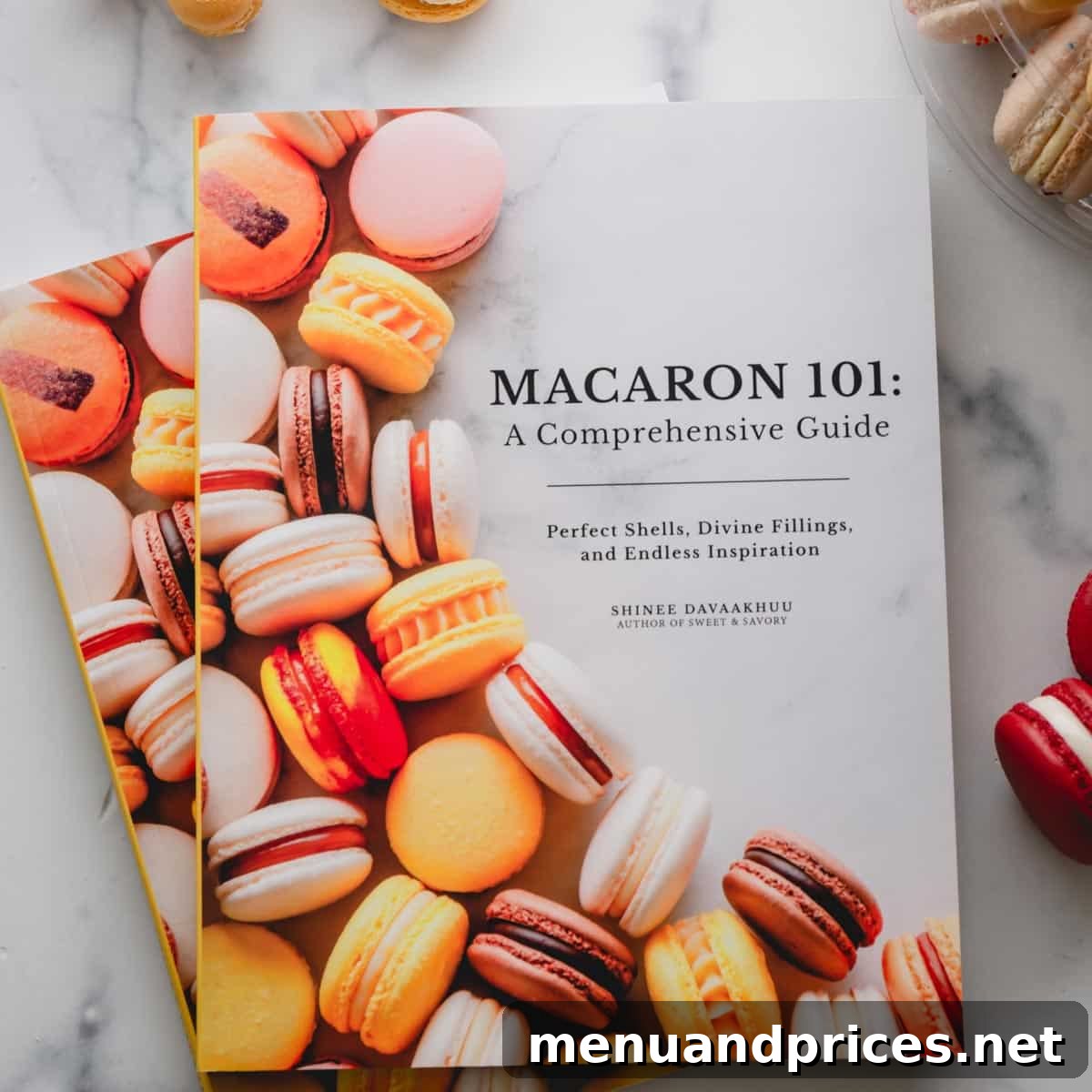
Macaron 101: Your Comprehensive Guide to Perfection
Unlock the secrets of French macarons and master the art of creating your own signature flavors with our definitive cookbook!