
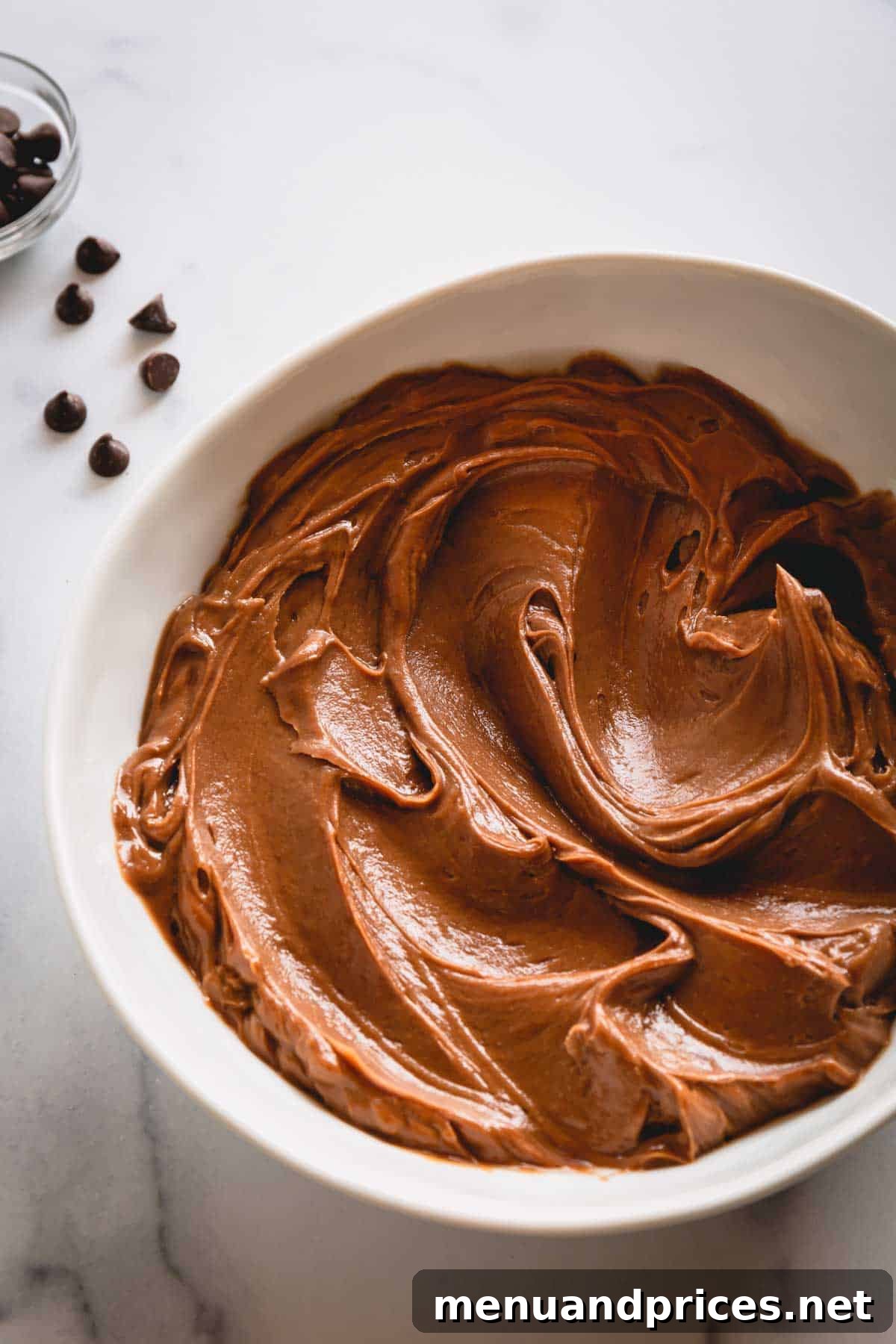
Mastering Silky Smooth Chocolate French Buttercream (No Sugar Syrup Required!)
Prepare to elevate your baking with a frosting that redefines decadence: this silky smooth, ultra-light, and subtly sweet chocolate French buttercream. Forget the stress of finicky hot sugar syrups or complicated double boilers; our simple and foolproof version makes achieving this luxurious confection a breeze. Unlike its American counterpart, French buttercream boasts a uniquely rich, custard-like taste and an unparalleled melt-in-your-mouth texture, thanks to its signature ingredient: egg yolks. It’s the perfect blend of subtle sweetness and profound richness, destined to become your go-to frosting for any elegant dessert.
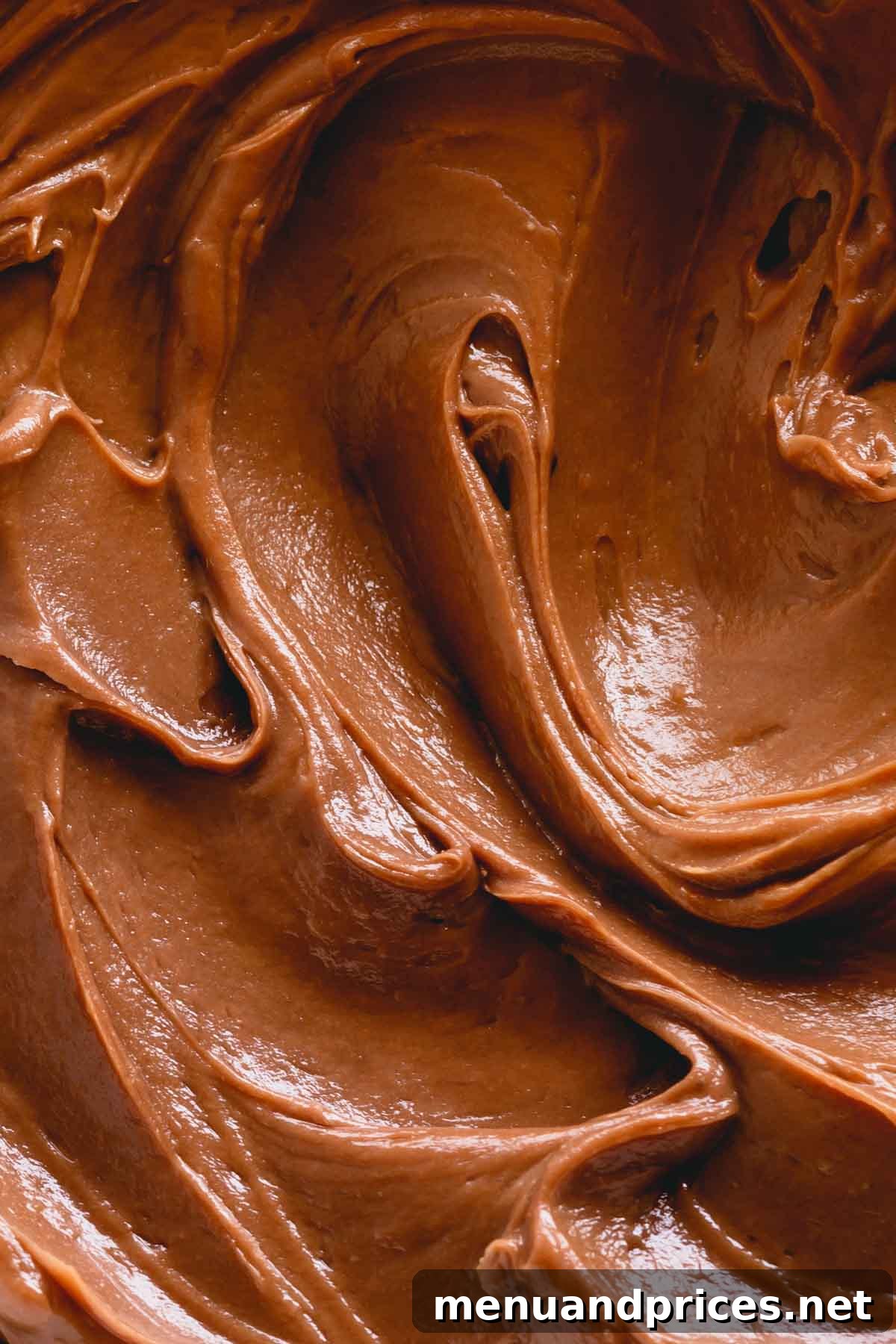
Why This Easy Chocolate French Buttercream Recipe Will Become Your Favorite
If you’ve yet to experience the magic of chocolate French buttercream, you’re in for an absolute culinary delight. This recipe stands out from other buttercreams, offering a sophisticated flavor and texture that transforms ordinary desserts into extraordinary creations. Here’s why you’ll fall in love with our simplified approach:
- Effortless Preparation: Say goodbye to culinary anxieties! This foolproof recipe eliminates the need for a candy thermometer, a cumbersome double boiler, or handling dangerously hot sugar syrup. We’ve found an ingenious shortcut that delivers equally impressive, if not superior, results with minimal fuss, making French buttercream accessible to every home baker.
- Rapid Results: Despite its gourmet appeal, this decadent chocolate French buttercream can be whipped up and ready to pipe onto your favorite treats in as little as 15 minutes. It’s perfect for last-minute celebrations or spontaneous baking sessions, proving that luxury doesn’t have to be time-consuming.
- Unrivaled Decadence: Experience a truly intense, deep chocolate flavor that’s perfectly balanced by a subtle sweetness. This buttercream tastes like a luxurious, stable version of gourmet chocolate pastry cream, leaving a lasting impression with every bite. The richness from the egg yolks combined with premium chocolate creates an unforgettable taste profile.
- Versatile Application: Its sublime, melt-in-your-mouth texture is incredibly stable and pipeable, making it ideal for a wide array of confections. Whether you’re filling delicate macarons, frosting fluffy cupcakes, decorating an elegant layer cake, or even enhancing tarts and choux pastries, this stable buttercream holds its shape beautifully while offering an exquisite eating experience.
Traditionally, French buttercream recipes involve carefully drizzling hot sugar syrup into whipping egg yolks, a technique that can be intimidating. Our innovative method simplifies this crucial step, allowing you to achieve the same smooth, rich, and stable frosting without the complexity. It’s truly a game-changer for homemade gourmet desserts.
Key Ingredients for Perfectly Silky Chocolate French Buttercream
Crafting this exceptional French buttercream starts with understanding the role each ingredient plays in achieving its signature texture and profound chocolate flavor. Here’s a closer look at what you’ll need and why each component is crucial:
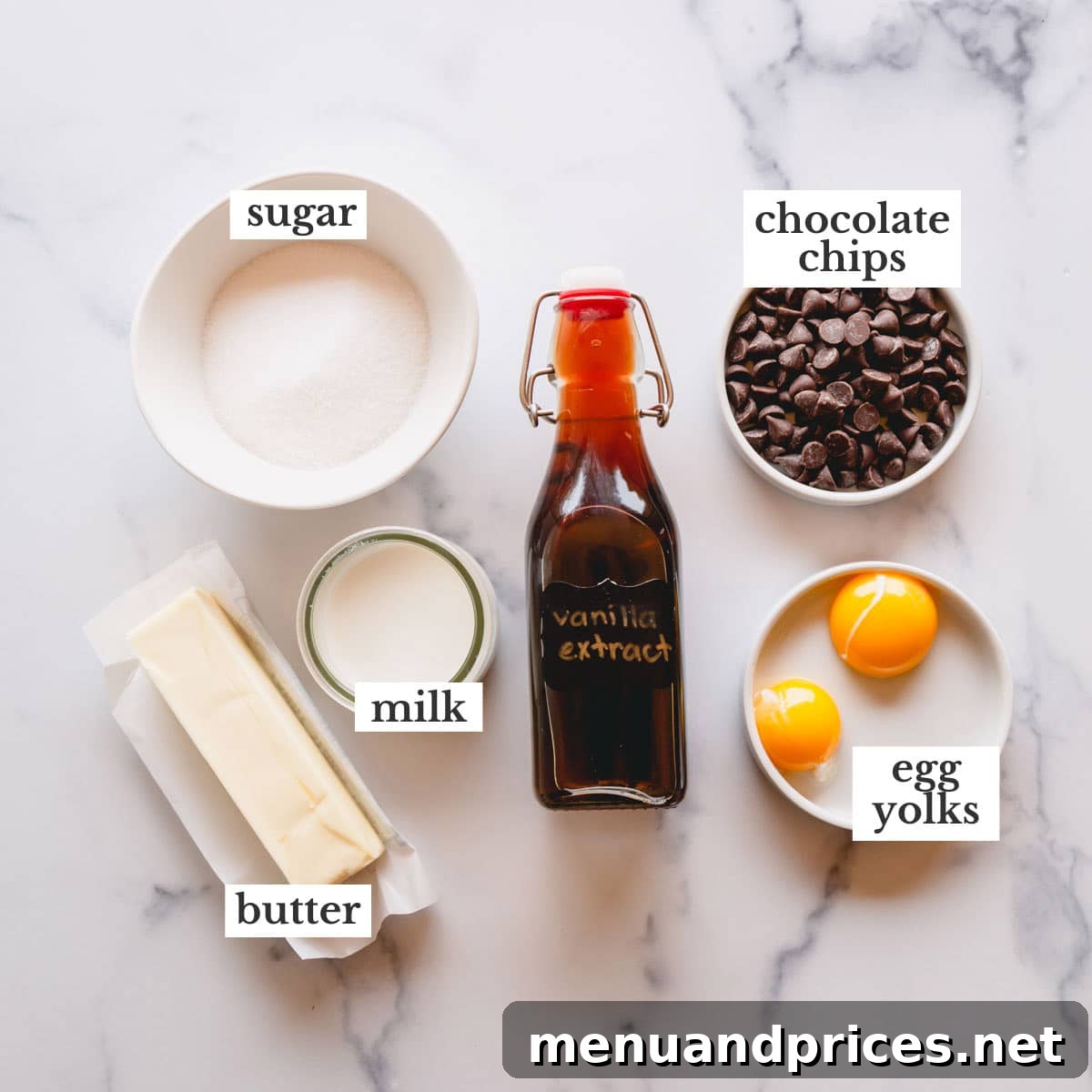
- Egg Yolks: The defining characteristic of French buttercream, egg yolks are what lend it an unmatched richness, a beautiful pale yellow hue, and an incredibly silky smooth, almost custard-like texture that melts seamlessly on your tongue. They contribute to the frosting’s luxurious mouthfeel and delicate flavor, setting it apart from lighter meringues or denser American styles. Always opt for fresh, large egg yolks for optimal emulsion and flavor.
- Granulated Sugar: Unlike the powdered sugar commonly used in American buttercream, granulated sugar is utilized here. There’s no need to fret about a grainy texture; as you vigorously beat the sugar with the egg yolks, it completely dissolves, creating a frosting that is wonderfully smooth and notably less cloyingly sweet. This method ensures a delicate balance of flavor without any gritty residue, allowing the chocolate to truly shine.
- Unsalted Butter: Generous amounts of high-quality unsalted butter are absolutely essential for the characteristic melt-in-your-mouth texture and the structural stability required for elegant piping. The temperature of your butter is paramount: it must be softened but still cool to the touch. This precise temperature allows it to properly emulsify with the egg yolk mixture, resulting in a stable, creamy, and spreadable consistency. Cold butter will create lumps, while melted butter will lead to a soupy mess.
- Chocolate: The choice of chocolate profoundly impacts the final flavor profile and intensity of your buttercream.
- Milk Chocolate: If you prefer a sweeter, creamier, and milder chocolate note, milk chocolate is an excellent choice.
- Semi-Sweet Chocolate: Offers a perfectly balanced chocolate flavor that’s neither too sweet nor too bitter, making it a popular and versatile choice for most palates.
- Dark Chocolate: For the most intense, sophisticated, and less sweet chocolate experience, opt for dark chocolate. Choose a percentage that suits your preference for bitterness and cocoa depth.
We highly recommend using high-quality melted chocolate over cocoa powder for a truly deep, profound, and rich chocolate flavor that permeates the entire buttercream. Melted chocolate provides a luxurious smoothness and depth that cocoa powder alone simply cannot achieve.
Chef’s Tip: Elevating Chocolate Flavor
For the most intense and luxurious chocolate flavor, always opt for good quality melted chocolate (whether milk, semi-sweet, or dark) over cocoa powder. We’ve thoroughly tested both methods, and melted chocolate consistently delivers a richer, more profound taste and a smoother, more decadent finish to your French buttercream. It truly makes a noticeable difference in the final product’s quality.
Crafting Your Silky Chocolate French Buttercream: Step-by-Step Guide
Making this irresistible chocolate French buttercream is surprisingly simple, especially with our no-fuss method. Follow these detailed steps, complete with insights and tips, to create a perfect batch every time. The full recipe card with exact measurements is provided below, but here’s an overview of the process to guide you through each stage:
-
Prepare the Custard Base (Yolk and Sugar Mixture)
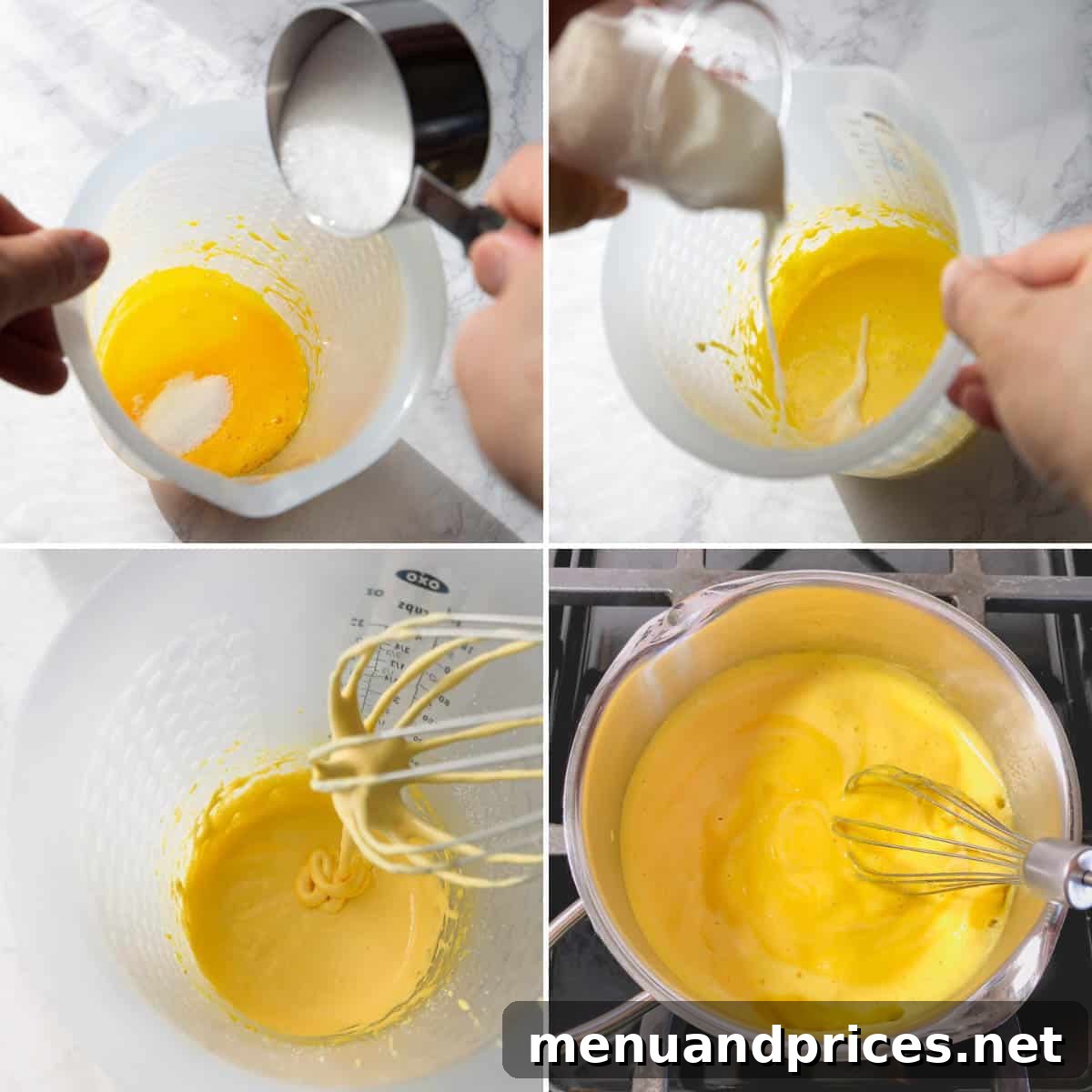
In a large mixing bowl, ideally one with high sides to prevent splatters during vigorous mixing, combine the fresh egg yolks and granulated sugar. Using an electric hand mixer or an immersion blender with a whisk attachment, beat the mixture vigorously. Continue whisking until the mixture turns noticeably pale yellow, becomes fluffy, and approximately doubles in volume. This vigorous action helps the granulated sugar dissolve completely into the yolks, ensuring a smooth, non-grainy base. Once pale and airy, gently stir in the milk until it is just combined. This initial step is crucial for the overall texture of your buttercream.
Pro-Tip for Initial Mixing
Using a large bowl with high sides is highly recommended during the vigorous mixing of egg yolks and sugar. This simple precaution prevents the mixture from spraying out of the bowl, helping to keep your kitchen clean and your preparation efficient and enjoyable.
-
Cook the Egg Yolk Mixture to a Pudding Consistency

Observe the egg yolk mixture as it transforms into a thick, luxurious pudding-like consistency, the perfect foundation for your buttercream. Carefully scrape the prepared egg yolk and milk mixture into a small saucepan. Place the saucepan over low heat, ensuring the heat is gentle and even. Stir the mixture continuously and frequently with a silicone spatula or whisk. Cook for approximately 5 to 10 minutes, or until the mixture visibly thickens and achieves a consistency similar to that of a rich pudding or a thick pastry cream. This gentle heating process pasteurizes the egg yolks and creates a stable, foundational base for your buttercream. Immediately transfer the cooked custard into a clean, separate bowl to stop the cooking process and allow it to cool slightly. It is absolutely vital that this mixture is no longer piping hot when you proceed to add the butter.
-
Gradually Incorporate the Butter for Creaminess
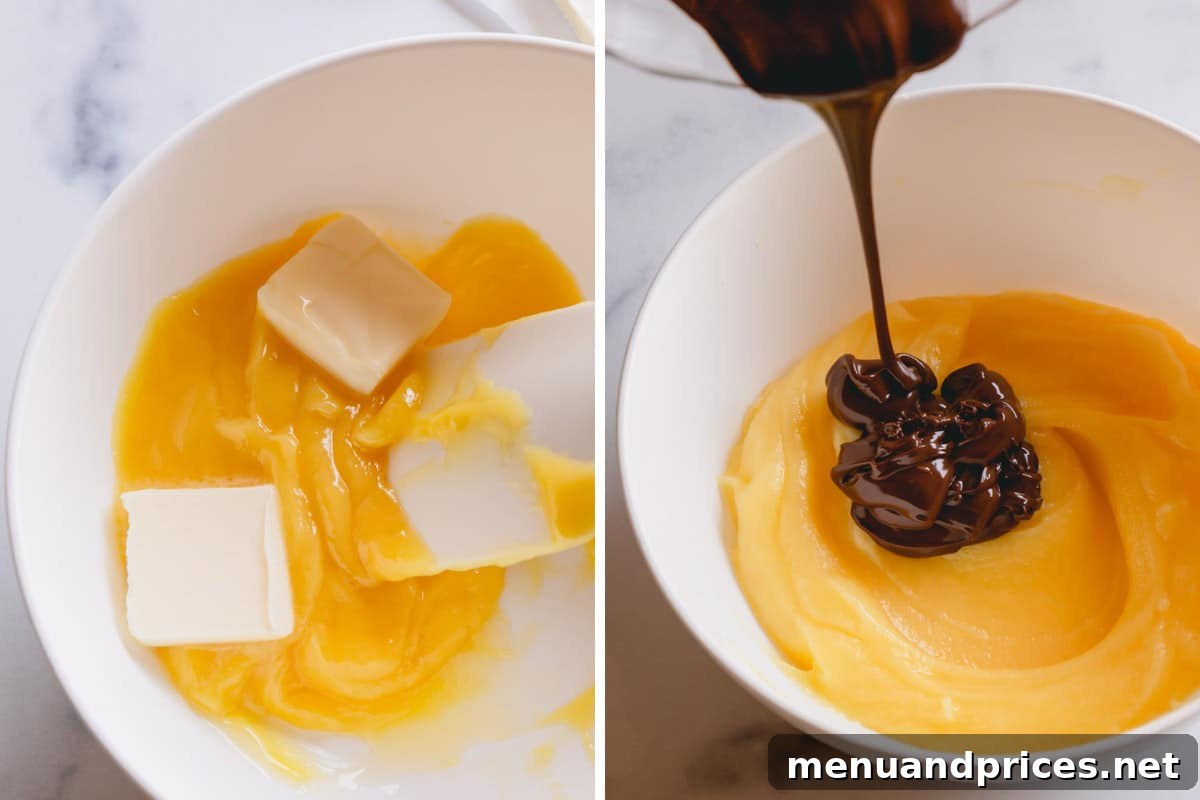
Once the egg yolk custard has cooled slightly (it should still be warm to the touch, but not hot enough to melt butter instantly), begin adding the softened unsalted butter. Add the butter in three separate additions, mixing thoroughly after each addition. You can use your silicone spatula for this, or switch to a hand mixer on low speed for better incorporation. The mixture might appear to look curdled or separated initially, but this is normal. Continue mixing patiently; as the butter fully emulsifies with the custard, it will come together into a beautifully smooth, creamy, and cohesive consistency. Scrape down the sides of the bowl as needed to ensure everything is well combined.
-
Melt and Crucially, Cool the Chocolate
Place your chosen chocolate chips (semi-sweet, milk, or dark, depending on your preference) in a microwave-safe bowl. Microwave them in short 30-second increments at 50% power, stirring well after each interval, until the chocolate is completely melted and smooth. Alternatively, you can melt the chocolate over a double boiler for a more controlled process. Once melted, set the chocolate aside and allow it to cool completely to room temperature. This step is incredibly critical for the success of your buttercream.
Critical Chocolate Cooling Tip
Never, under any circumstances, add piping hot or even warm melted chocolate to your egg yolk and butter mixture. If the chocolate is too warm, it will instantly melt the softened butter in your buttercream base, resulting in a soupy, greasy, and unusable frosting. Patience in cooling the chocolate ensures a perfect, stable, and smooth buttercream every time.
Witness the transformation as butter and chocolate are expertly folded into the custard, creating a cohesive and stunning buttercream. -
Combine for Ultimate Chocolate Perfection
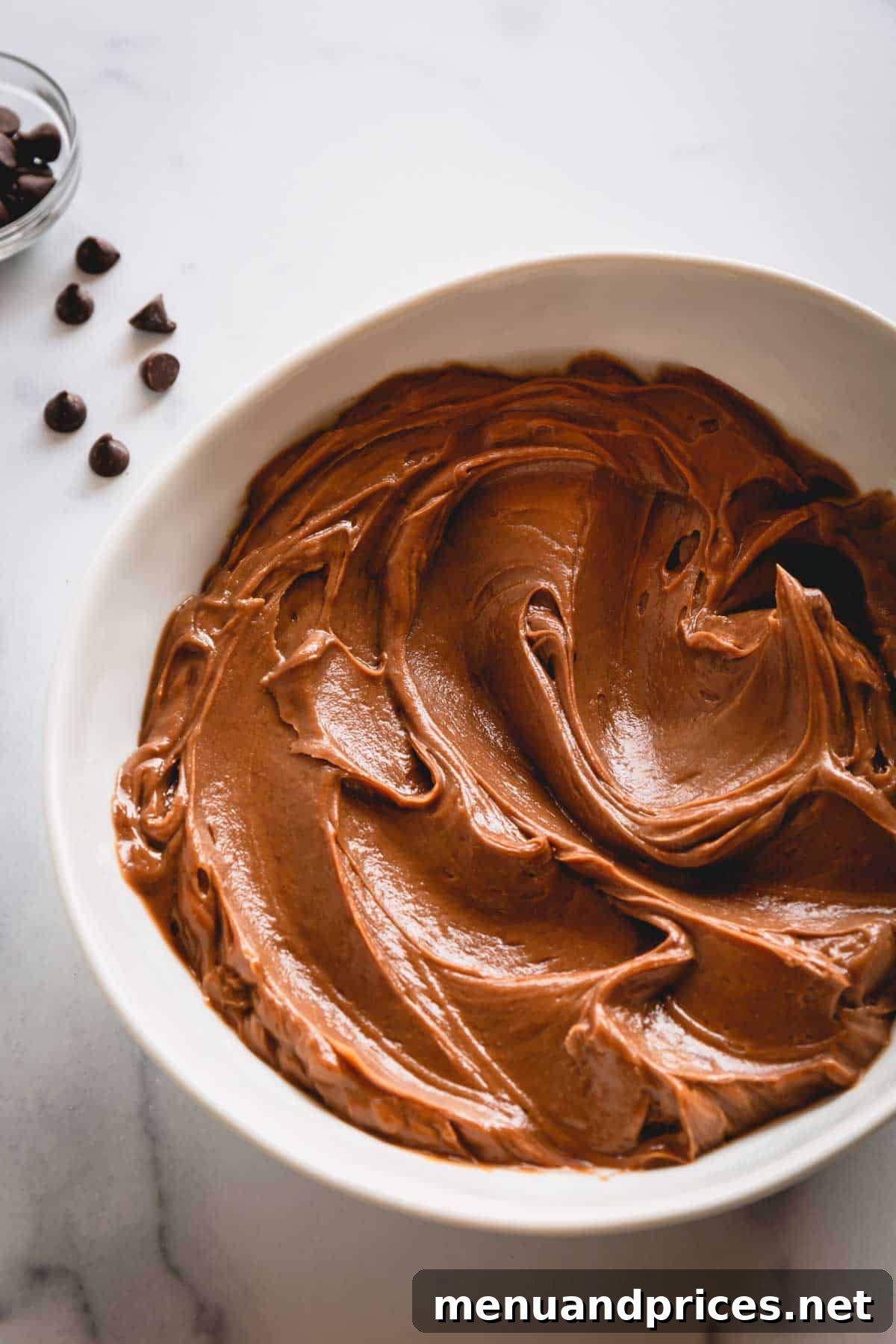
Once the melted chocolate has cooled sufficiently to room temperature, add it to the prepared egg yolk and butter mixture. Begin mixing gently at first to incorporate, then increase the speed of your hand mixer until the chocolate is fully blended, and the buttercream is uniformly smooth, glossy, and beautifully chocolatey. Continue to mix for an additional 2-3 minutes until you achieve a light, fluffy consistency, if desired. This final whipping aerates the buttercream, making it even more delectable and pipeable.
Expert Tips for French Buttercream Perfection
Achieving the perfect chocolate French buttercream is all about precision and understanding a few key principles. Keep these expert tips in mind to guarantee a flawless, stable, and delicious result every time you make it:
- Butter Temperature is Paramount: This cannot be stressed enough, as it is the most common pitfall for buttercream makers.
- Too Cold: If your butter is too cold or hard, it won’t emulsify properly with the egg yolk custard. This will result in tiny, un-melted butter lumps throughout your buttercream, leading to a textured, rather than smooth and luxurious, finish.
- Too Warm/Melted: Conversely, if your butter is too soft (borderline melted), or if your egg yolk mixture is still too hot when the butter is added, your buttercream will break and turn into a soupy, greasy mess.
- The Sweet Spot: Ideally, the butter should be softened but still cool to the touch. When gently pressed with a finger, it should leave a distinct dent without feeling oily or melting. This perfect consistency allows it to blend seamlessly into the custard base, creating a stable and luscious emulsion.
- Whip for Your Desired Texture: The final whipping stage significantly impacts the buttercream’s lightness and appearance.
- Light and Airy: For a supremely light and airy texture, perfect for frosting cakes and cupcakes, whip the finished buttercream with an electric hand mixer for an additional 2-3 minutes after all ingredients are combined. This aerates the frosting, making it lighter in color, incredibly fluffy, and easy to pipe.
- Dense and Stable: For delicate fillings like macarons, where a denser, more stable buttercream is desired to prevent squishing, you might prefer to use it unwhipped or only very lightly whipped.
- Troubleshooting Consistency Issues: Don’t despair if your buttercream doesn’t come out perfect on the first try; it’s often easily fixable.
- Buttercream is Too Loose to Pipe: If your buttercream feels too soft, soupy, or runny, don’t panic! Simply place the bowl into the refrigerator for 15-20 minutes. Check its consistency periodically, as over-chilling will make it too firm to work with. Once slightly firmed up, you can re-whip it if needed to restore its smooth texture.
- Buttercream is Too Firm/Lumpy/Curdled: If your buttercream is too stiff, has small lumps of butter, or appears curdled, it likely means your butter was too cold or wasn’t fully softened when it was incorporated. To remedy this, let the buttercream sit at room temperature for a short while to allow the butter to warm up slightly, then give it another vigorous stir or whip. For stubborn lumps, you can carefully warm a small portion (about a tablespoon) of the buttercream over a double boiler or in the microwave for just a few seconds until it’s barely melted, then mix it back into the main batch, whipping until smooth. Be extremely cautious not to melt the entire batch.
- Cleanliness is Key: Ensure all your bowls, spatulas, and whisk attachments are spotlessly clean and completely free of any grease or water residue. Any contaminants can prevent the delicate emulsion from forming correctly, leading to a broken or unstable buttercream.
- Taste and Adjust: Always taste your buttercream before using it on your desserts. You can always add a tiny pinch of salt to balance the sweetness, a few more drops of extract for added flavor dimension, or even a bit more melted chocolate for a deeper cocoa impact.
Delicious Variations and Creative Uses for French Buttercream
While our chocolate French buttercream is a star in its own right, the true beauty of French buttercream lies in its incredible versatility. It’s highly customizable, allowing you to create an array of exciting flavors and colors to perfectly complement any dessert. Here are some ideas to spark your culinary imagination:
- Flavorful Extracts: A few drops of high-quality extract can completely transform your buttercream. Experiment with almond, coconut, maple, coffee, amaretto, or even a hint of mint extract for a refreshing twist. Remember the golden rule of extracts: start with less, as you can always add more to intensify the flavor, but you can’t remove it if you add too much. A little truly goes a long way with concentrated extracts!
- Vibrant Colors: To add a stunning pop of color to your buttercream, always opt for gel food coloring. Unlike traditional liquid food coloring, which can thin out and loosen the delicate texture of your buttercream, gel colors are highly concentrated and won’t alter the consistency. You can find a wide range of vibrant gel food colorings at your local craft store, baking supply shop, or online retailers.
- Exciting Flavor Infusions and Mix-ins: Go beyond simple extracts and incorporate other delicious elements for unique flavor profiles:
- Caramel Sauce: Gently swirl in some homemade or high-quality store-bought caramel sauce for a luxurious salted caramel chocolate French buttercream. This adds a wonderful depth and sweetness.
- Nut Butters: Blend in a spoonful of creamy peanut butter, almond butter, or hazelnut butter for a nutty twist that pairs beautifully with chocolate. Ensure the nut butter is smooth and at room temperature.
- Matcha Powder: For an earthy, slightly bitter, and beautifully vibrant green variation, incorporate high-quality ceremonial grade matcha powder. This creates a sophisticated flavor pairing.
- Fruit Purees/Sauces: Gently fold in a well-reduced and cooled raspberry, strawberry, or cherry sauce for a fruity chocolate combination. Ensure the puree is thick and free of excess moisture to maintain the buttercream’s stability.
- Espresso Powder: For an intensified chocolate flavor, dissolve a teaspoon of instant espresso powder in a tiny amount of hot water, cool it, and add to the buttercream.
- Versatile Serving Suggestions: This French buttercream isn’t just for topping; its stable and rich nature makes it suitable for various applications:
- Macaron Filling: Its dense yet delicate texture and incredible flavor make it the ultimate filling for crisp, airy macarons.
- Cupcake Frosting: Pipe it generously onto vanilla, chocolate, red velvet, or even coffee-flavored cupcakes for an elegant finish.
- Layer Cake Filling & Frosting: Creates an elegant, stable filling between cake layers and a smooth, professional-looking exterior for celebratory cakes.
- Dessert Enhancer: Serve as a luxurious dollop alongside fresh berries, a warm brownie, a slice of pound cake, or a scoop of vanilla bean ice cream.
- Choux Pastry Filling: Ideal for filling classic French éclairs, cream puffs (profiteroles), or even croquembouche for a truly impressive dessert.
Storing Your Homemade Chocolate French Buttercream
Proper storage is essential to ensure your beautiful, homemade French buttercream stays fresh, delicious, and ready for your next baking adventure. French buttercream, due to its significant content of egg yolks and butter, requires careful handling to maintain its quality and food safety.
- Refrigeration (Short-Term Storage): For immediate use within a few days, transfer any leftover buttercream to an airtight container. It can be safely refrigerated for up to 3 days. When you’re ready to use it, allow the buttercream to sit at room temperature for approximately 20-30 minutes, or until it reaches a thick but spreadable consistency. It might appear slightly stiff or separated initially; a quick re-whip with a hand mixer can help restore its smooth, fluffy texture and make it perfectly workable again.
- Freezing (Long-Term Storage): French buttercream freezes exceptionally well, making it a fantastic make-ahead option! Place it in a freezer-safe, airtight container, ensuring there’s minimal air exposure. Store it in the freezer for up to 3 months without compromising its quality. This is an excellent way to prepare ahead for future baking projects, holidays, or spontaneous dessert cravings.
- Thawing and Rejuvenating: To thaw frozen buttercream, simply transfer the container to the refrigerator overnight. Once fully thawed, bring it to room temperature on your countertop. At this stage, it might appear curdled, separated, or somewhat greasy. This is completely normal and easily fixable! Give it a thorough whip with an electric hand mixer on medium-high speed until it becomes smooth, creamy, and fluffy again. It will return to its original luscious consistency, ready for piping or spreading.
Always ensure your buttercream is covered tightly to prevent it from absorbing odors from the refrigerator or freezer, and to maintain its freshness and texture.
Frequently Asked Questions About French Buttercream
What’s the fundamental difference between French buttercream and American buttercream?
The primary difference lies in their base ingredients. American-style buttercream is typically made by whipping softened butter with powdered (confectioners’) sugar, often with milk or cream, resulting in a very sweet, dense, and thick frosting. French buttercream, on the other hand, is distinguished by its use of egg yolks and granulated sugar, which are cooked together to form a rich custard-like base before softened butter is incorporated. This process yields a buttercream that is inherently richer, less sweet, incredibly silky smooth, and boasts a unique, delicate texture reminiscent of a luxurious pastry cream, with a subtle eggy flavor.
Does French buttercream need to be refrigerated, given its egg content?
Yes, absolutely. Because French buttercream is made with both raw (though cooked in our recipe) egg yolks and butter, it is perishable and requires refrigeration. If left at room temperature for an extended period, especially in warm environments, the butter will soften, cause the emulsion to break, and the buttercream will lose its pipeable structure, freshness, and food safety. Always store it in an airtight container in the fridge to preserve its quality and prevent spoilage.
Why is my French buttercream soupy or too soft?
A soupy or overly soft buttercream is almost always a sign that your butter was too soft to begin with, or more commonly, that the egg yolk mixture was still too warm (piping hot) when the softened butter was added. The excessive heat caused the butter to melt instead of emulsifying properly with the custard base. To fix this, simply place your buttercream in the refrigerator for 20-30 minutes to allow the butter to firm up slightly, then remove and re-whip it. Be careful not to chill it for too long, or it will become too hard to re-whip effectively.
Why is my French buttercream lumpy or appears curdled?
Lumpy or curdled buttercream usually indicates that your butter was too cold or wasn’t fully softened to the correct consistency when it was incorporated into the egg yolk mixture. When butter is too cold, it won’t blend smoothly, preventing the emulsion from forming properly. To remedy this, let the buttercream sit at room temperature for a short while to allow the butter to warm up and soften a bit more, then give it another vigorous stir or whip with an electric mixer. If stubborn lumps persist, you can carefully warm a small portion (about a tablespoon) of the buttercream over a double boiler or in the microwave for just a few seconds (watching closely!) until it’s barely melted, then mix it back into the main batch, whipping until smooth. Avoid overheating, as this will cause the entire batch to melt.
Can I make French buttercream ahead of time for busy baking schedules?
Yes, French buttercream is an excellent make-ahead frosting, which is a fantastic time-saver for busy bakers! You can prepare it in advance and store it in an airtight container in the refrigerator for up to 3 days, or freeze it for up to 3 months. Just remember the crucial step of bringing it back to room temperature and giving it a good re-whip before use to restore its perfect smooth and fluffy consistency.
Is French buttercream suitable for cakes at outdoor events or in warm climates?
Due to its high butter and egg yolk content, French buttercream is more sensitive to heat than some other frosting types (like certain ganaches or shortening-based buttercreams). It can soften, sag, and even melt in very warm environments or direct sunlight. For outdoor events in hot weather, or if your desserts will be displayed for a long time, consider using a more heat-stable frosting like Swiss or Italian meringue buttercream. If you choose French buttercream, ensure your desserts are kept in a cool, air-conditioned environment until serving.
Explore More Decadent Buttercream Recipes
If you’ve loved mastering this chocolate French buttercream, why not expand your repertoire with other delectable frosting creations? Each offers a unique texture and flavor profile to perfectly complement your diverse baking projects and sweet cravings.
- Salted Caramel Swiss Meringue Buttercream
- Chocolate Swiss Meringue Buttercream
- Easy Pistachio Buttercream
- Salted Caramel Buttercream Frosting
- Pistachio Cream Filling (French Buttercream)
Chocolate French Buttercream
By Shinee Davaakhuu
This homemade chocolate French buttercream is incredibly silky smooth, ultra-light, and subtly sweet. Our simple and foolproof version requires no double boiler or finicky hot sugar syrup, making it an easy-to-master, decadent frosting perfect for any home baker’s repertoire.
Prep Time: 15 minutes
Cook Time: 0 minutes
Total Time: 15 minutes
Yields: 1 cup (approximately 240g)
Ingredients
- 2 large egg yolks
- ¼ cup (50g) granulated sugar
- 3 ½ tablespoons milk
- ½ cup (115g) unsalted butter, softened (Refer to Note 1 below for ideal butter temperature)
- 3 tablespoons (40g) semi-sweet chocolate chips (Refer to Note 2 below for chocolate options)
Equipment
- Electric hand mixer or immersion blender with whisk attachment
- Small saucepan
- Silicone spatula
- At least two mixing bowls (one large, one medium)
Instructions
- Prepare Egg Yolk Base: In a large mixing bowl (preferably with high sides to prevent splatters), whisk together the egg yolks and granulated sugar using an electric hand mixer or immersion blender. Beat vigorously until the mixture turns pale yellow, becomes fluffy, and the granulated sugar is mostly dissolved. Stir in the milk until just combined.
- Cook to Custard: Transfer the egg yolk mixture into a small saucepan. Heat over low heat, stirring frequently and continuously with a spatula or whisk. Cook for about 5-10 minutes, or until the mixture visibly thickens to a consistency resembling pudding or thick pastry cream. Immediately pour the cooked custard into a clean, separate bowl and let it cool slightly. Ensure it is no longer piping hot before proceeding.
- Incorporate Butter: Once the custard has cooled to a warm temperature (it should not be hot enough to melt butter instantly), gradually add the softened unsalted butter in three separate batches. Mix well with a silicone spatula or hand mixer on low speed after each addition until the butter is fully incorporated and the mixture is smooth and creamy. The buttercream may look curdled initially; continue mixing until it comes together.
- Melt and Cool Chocolate: Melt the chocolate chips in a microwave-safe bowl using short 30-second increments at 50% power, stirring well after each interval, until the chocolate is fully melted and smooth. Alternatively, melt over a double boiler. Set the melted chocolate aside and allow it to cool completely to room temperature before using.
- Final Mix for Chocolate Perfection: Add the cooled melted chocolate to the prepared egg yolk and butter mixture. Mix with a hand mixer until the chocolate is fully incorporated, and the buttercream is uniformly smooth, glossy, and beautifully chocolatey. For a lighter, airier texture, continue whipping for another 1-2 minutes.
⭐️ Did you make this recipe? Please leave a review and let us know how you liked it!
Tips & Notes
Yields: This recipe typically yields approximately 1 cup (240g) of rich, silky chocolate French buttercream, enough to generously frost a dozen cupcakes or fill an 8-inch layer cake.
Note 1 (Butter Temperature): The butter should be softened but still cool to the touch. When gently pressed, it should leave a distinct dent without melting or feeling oily. This ideal temperature is crucial for proper emulsion and a stable buttercream that won’t separate or become soupy.
Note 2 (Chocolate Choice): You can use milk chocolate, semi-sweet chocolate, or dark chocolate chips depending on your preference. Milk chocolate will yield a sweeter, creamier frosting, while dark chocolate will provide a more intense, less sweet, and sophisticated chocolate flavor. Always opt for good quality chocolate for the best taste.
Storing Tips:
- Refrigerate: Transfer any leftover buttercream to an airtight container and refrigerate for up to 3 days. Before using, let it sit at room temperature for approximately 20-30 minutes until it’s thick but spreadable. A quick re-whip will restore its smooth texture.
- Freeze: French buttercream freezes beautifully! Place it in a freezer-safe, airtight container and store in the freezer for up to 3 months.
- Thawing: To thaw, transfer the frozen buttercream to the refrigerator overnight. Once thawed, bring it to room temperature. It may appear curdled; simply whip it with a hand mixer until it becomes smooth and fluffy again.
Nutrition Information (Per Serving, Approximate)
(Please note: Nutritional values are estimates and can vary based on specific ingredients and preparation methods.)
- Calories: 57 kcal
- Carbohydrates: 3g
- Protein: 0.4g
- Fat: 5g
- Sugar: 3g
- Sodium: 31mg
Course: Dessert, Filling, Frosting
Cuisine: French